Sometimes courage is knowing when to walk away from what you once worked so hard to enter.
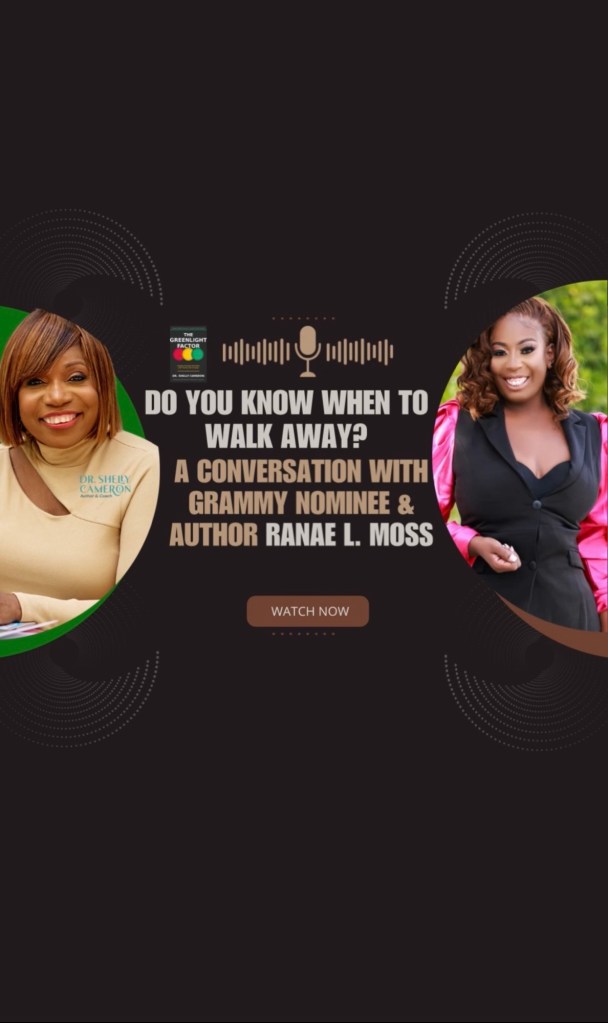
How do you know when it’s time to stop, pause and reassess, or confidently move forward? In this inspiring author conversation, Renea L. Moss, also known on stage as Rai Renea, joins Dr. Shelly Cameron to explore life’s transitions, career decisions, personal growth, and the importance of recognizing when it’s time for a change.
What You’ll Learn in This Conversation
• How to recognize when it’s time to walk away from a situation.
• How to approach career changes and major life transitions.
• Why pausing to assess your options can lead to better decisions.
• How to recognize opportunities that align with your goals and values.
• How The GreenLight Factor can help you navigate uncertainty with greater clarity.
Whether you’re considering a career change, exploring a new opportunity, or wondering what comes next, this conversation offers thoughtful perspectives to help you decide your next step.
Happy listening and do share your one key takeaway!
If you walk in the footprints of others, you will never make your own.
Constant change, presence and influence, systemic coaching, wellbeing and resilience, purpose and meaning are among the trends associated with the growing coaching evolution. As I shared in 2024 Executive Coaching trends, the executive coaching industry is undergoing a significant shift. Organizations are moving away from viewing coaching as a luxury reserved for senior executives and toward seeing it as a strategic business investment that improves leadership capability, retention, and organizational resilience.
Here are 10 trends every leader should know. As you review, note however that:
Ai is changing coaching, but leaders still need wisdom.
Data matters, but judgment matters more.
Leadership transitions are becoming constant rather than occasional.
The best executive coaches bring a proven framework, not just conversations.
1. Coaching as a Strategic Business Tool
Executive coaching is becoming tied directly to measurable business outcomes rather than personal development alone. Organizations increasingly expect coaches to demonstrate impact on:
Leadership effectiveness
Employee engagement
Succession planning
Change management
Productivity
Retention
Opportunity: Coaches who speak the language of business and ROI will have an advantage.
2. Leadership During Constant Change
Organizations no longer experience occasional change. They operate in continual transition. Executives seek coaching around:
Organizational restructuring
Mergers
Economic uncertainty
Ai disruption
Hybrid leadership
Crisis management
This aligns closely with transition-based leadership frameworks such as the GreenLight leadership model.
3. Ai as a Coaching Companion (Not Replacement)
Artificial intelligence is increasingly being used for:
Reflection prompts
Leadership assessments
Meeting summaries
Development planning
Accountability reminders
However, Ai cannot replace:
Trust
Emotional intelligence
Ethical judgment
Difficult conversations
Human wisdom
The future appears to be Ai-assisted coaching, rather than Ai replacing experienced executive coaches.
4. Data-Driven Coaching
Organizations want evidence. Growing use of:
Leadership assessments
360-degree feedback
Behavioral analytics
Progress dashboards
Coaching metrics
Clients increasingly ask:
“How do we know coaching worked?”
Coaches who combine qualitative insights with measurable outcomes are becoming more competitive.
5. Coaching the Entire Leadership Pipeline
Instead of coaching only CEOs, organizations are investing in:
Leadership development is becoming earlier and more continuous.
6. Executive Presence and Influence
Technical expertise alone is no longer sufficient. Many organizations view presence as a competitive leadership capability. Demand continues to grow for coaching in:
Executive presence
Strategic communication
Board presentations
Influencing without authority
Personal branding
Visibility
7. Well-Being, Resilience, and Sustainable Leadership
Burnout has shifted coaching conversations. Organizations increasingly recognize that exhausted leaders cannot sustain high performance. Executives seek support with:
Decision fatigue
Stress management
Energy management
Resilience
Sustainable performance
Work-life integration
8. Coaching Around Purpose and Meaning
More senior leaders are asking questions beyond career advancement:
What legacy am I creating?
What’s next?
Is my work meaningful?
How do I align my values with my leadership?
Purpose-driven leadership coaching is expanding, particularly among experienced executives and those approaching career transitions.
9. Team and Systemic Coaching
Organizations increasingly want coaches who can work with leadership teams, not just individuals. The coach becomes a facilitator of collective leadership effectiveness. This includes:
Team dynamics
Executive alignment
Cross-functional collaboration
Psychological safety
Organizational culture
10. Niche Expertise Wins
The market is becoming crowded with general coaches. Organizations increasingly seek specialists in areas such as:
Healthcare leadership
Government leadership
Women in leadership
Family business succession
Leadership transitions
Founder coaching
Board readiness
Global leadership
A clearly defined specialty often differentiates coaches more effectively than broad, generic offerings.
Essentially, while coaching methods continue to evolve, one reality remains unchanged: leaders still face moments when everything looks right on paper, yet something doesn’t feel right. Technology can provide information. Assessments can provide data. But discerning when to stop, pause, or move forward remains one of leadership’s most important skills. That’s where frameworks, not just conversations create lasting value.
All I want for Christmas is …. the Pain to go away! The Pain of Not knowing what to do about your next steps has many effects. And year-end triggers deep reflection. Here are a few pain points:
Underdeveloped Potential:
Talented individuals Stay Stuck in survival mode. They fail to unlock their genius because no one helps them think strategically about their Growth.
Career Plateau
Professionals with great resumes stall out due to poor networking, weak positioning, or self-limiting beliefs.
Global Irrelevance
In our rapidly changing world where soft skills, emotional intelligence, and AI adaptability are important assets, people fall behind.
Silent Suffering
Many carry silent frustrations. “I’m better than this, but I don’t know how to rise”.
COACHING is the bridge out of that quiet despair 💥 If One or two resonate of these pain points resonated with you:
Sometimes God brings times of transition to create transformation. ~Lynn Cowell
Transition is not a sign that something’s gone wrong. It’s often a sign that something deeply right is trying to emerge.
Whether you’re navigating a career pivot, stepping into leadership, returning to yourself after raising children, grieving a loss, starting over, or simply outgrowing who you used to be — you are not lost.
You are in motion. And motion is sacred.
Transitions Aren’t Detours
So many of us have been taught to treat transitions like detours. Inconveniences. Delays. But in my experience — and maybe in yours too — transitions are not detours. They are invitations. Invitations to pause. To listen. To lead our lives more deliberately.
There’s a quote I love:
Sometimes when you’re in a dark place, you think you’ve been buried but actually you’ve been planted
So if you’re feeling buried right now — by uncertainty, or fear, or change — know this: You’re not stuck. You’re becoming.
Whether it’s career change, motherhood, empty nesting, loss, or reinvention — transitions are not delays. They’re sacred invitations to pause, realign, and step into something deeper.
Who You Are Becoming is Just as Important as What You’re Doing
Our default in transition is to rush into action. Update the resume. Apply for roles. Rebrand the business. Hustle harder. But what if the first step wasn’t “What should I do?” What if it was: “Who am I becoming?”
Because clarity doesn’t come from more motion. It comes from alignment. From asking:
What do I no longer want to carry?
What am I being called to step into?
What version of me is ready to emerge?
This is your opportunity to shape your next self, not just your next job title, or business pivot, or life chapter.
You Don’t Have to Navigate This Alone
One of the hardest things about transitions? They can feel so lonely. Especially for women who are used to being the strong ones, the fixers, the go-to for everyone else.
But here’s what I want to say to you today: You are not alone. And you’re not the only one feeling “in between.”
Let this season be one where you ask for help. Where you find community. Where you give yourself permission to rebuild — slowly, honestly, bravely.
Because you don’t have to have it all figured out to move forward. You just have to decide you’re worth the becoming.
Wrapping it Up
So if you’re in transition today — good. It means you’re alive. It means something inside you is shifting. Growing. Healing. Honor that.
You don’t need to go back to who you were. You are being invited to rise into who you’re becoming.
And I promise — she is worth the wait.
Going through a transition and feeling confused? Let’s connect
You gain strength, courage and confidence by every experience in which you really stop to look fear in the face — Eleanor Roosevelt
Uncertainty and fear are common these days as both federal government and private sector battles with job security.
Government jobs once thought of as the most secure are now being eroded. Employees across the board are now forced to adapt quickly or be left behind.
In this video, Chris Daley, and I in my capacity of Certified Master leadership Coach, explore the emotional and practical challenges faced by workers who experience sudden, unexpected job loss. We share how professionals across various industries can arrive at work only to be told their positions had been eliminated—with little to no warning.
The video briefly examines:
📍The initial shock and emotional impact of unexpected termination
📍Common corporate practices that leave employees in the dark
📍Immediate financial concerns and survival strategies
📍The psychological journey from disbelief to acceptance
📍Practical steps to take after job loss.
Whether you’re currently dealing with sudden unemployment or want to prepare for corporate uncertainty, this video offers both emotional support and actionable advice for those facing one of life’s most challenging professional transitions.
If you or someone you know has been affected, DM to connect.
If you’re an employer or business leader who needs help with business transition, reach out today and get the help you need to do it the right way.
You can get excited about the future. The past won’t mind. ~Hillary DePiano
The end of the year naturally invokes a period of career reflection, which serves as a psychological milestone that compels professionals to pause and assess their journey. As the calendar approaches its final weeks, individuals are instinctively drawn to introspection, triggered by a combination of cultural traditions, personal goal-setting practices, and an innate human desire for growth and meaning. This time of reflection is fueled by the contrast between the year’s accomplishments and unfulfilled aspirations, creating the opportunity for honest self-evaluation (hint …that common ideal weight loss plan).
The approaching new year symbolizes renewal and potential, encouraging professionals to reflect on their career trajectory, measure progress against past objectives, and recalibrate their professional vision. Factors like annual performance reviews, financial assessments, industry shifts, and personal life changes converge during this period, making it an ideal time to critically reflect on career satisfaction, skill development, alignment with long-term goals, and potential opportunities for growth or transformation.
Consequently, here are a number of pointers that discusses this period of reflection along with recommendation. Not a self-starter , we can help.
Natural Evaluation Period
Annual performance reviews
Reflecting on past year’s achievements
Setting new personal goals
Psychological reset moment
Emotional Triggers
Holiday season brings perspective
Family gatherings prompt life discussions
Increased time for self-reflection
Motivation from new year anticipation
Professional Burnout
Accumulated workplace stress
Desire for meaningful change
Recognizing current job’s limitations
Seeking personal fulfillment
External Evaluation
Social conversations about resolutions
Seeing others make bold moves
Increased motivational content
Feeling inspired by potential
Strategic Approach
Budget reassessment
Career growth opportunities
Market trend observations
Personal development planning
Motivational Approach
Embrace fear as growth signal
Start with small, low-risk steps
Build confidence gradually
Seek professional guidance
Create solid transition plan
Recommended Actions
Self-assessment
Skill inventory
Informational interviews
Part-time exploration
Professional coaching
Continuous learning
Are you experiencing any of these signs? If so, it’s time to do something about it. Adapt the motivational approach along with the recommended actions. But if you need the expertise of a coach who can help. Better yet, purchase a gift certificate for a friend experiencing these signs and help him/her kick off the new year with a difference.
Fears are paper tigers. You can do anything you decide to do. You can act to change and control your life; and the process is its own reward. —Amelia Earhart
Fear is real. Sometimes it retards us. Most times it’s just in our mind yet causes us to feel stuck, unable to make the move that we desire. Common is the fear to leave a career, change jobs, or reach for that promotion as we question ourselves. So, we stay where we are and before long months turn into years, years into decades and we remain in the same place.
So what can you do about it? Here is a concise breakdown of career change fears and year-end motivation.
Are you experiencing any of these signs? If so, it’s time to do something about it. Talk with a trusted friend or coach who can help. Better yet, purchase a gift certificate for a friend experiencing these signs and help him/her kick off the new year with a different start. Conquer those transition doubts.
If it scares you, it might be a good thing to try. ~Seth Godin
Lisa, a technology manager, and Michael, a software team supervisor, met for lunch and commiserated about their professional frustrations. Lisa, despite her generous salary, felt increasingly disconnected from her role leading the IT division. Michael was overwhelmed by constant organizational changes and felt trapped in a cycle of overwork without appropriate compensation. His primary aspiration was career advancement, hoping to break through the ceiling that currently limited his professional growth.
Their conversation highlighted a widespread workplace challenge that often becomes more pronounced during the year-end period, when professionals reflect on their career trajectories. Have you noticed similar sentiments among your colleagues or loved ones? Perhaps a thoughtful gift of career coaching could provide the guidance and perspective needed to navigate professional challenges.
🎯 Power Hour: Single session for immediate career clarity
🎯 Career Catalyst: 2 sessions to kickstart transformation
🎯 Growth Journey: 4 sessions for deeper career development
🎯 Total Transformation: 8 sessions for complete career reinvention
🌟 Holiday Special: – up to 35% off all packages through December 24 – Bonus career assessment with 4+ sessions – Digital gift certificate for easy gifting – Valid for 3 months from purchase.
Don’t let mental blocks control you. Set yourself free. Confront your fear and turn the mental blocks into building blocks.
Dr. Roopleen
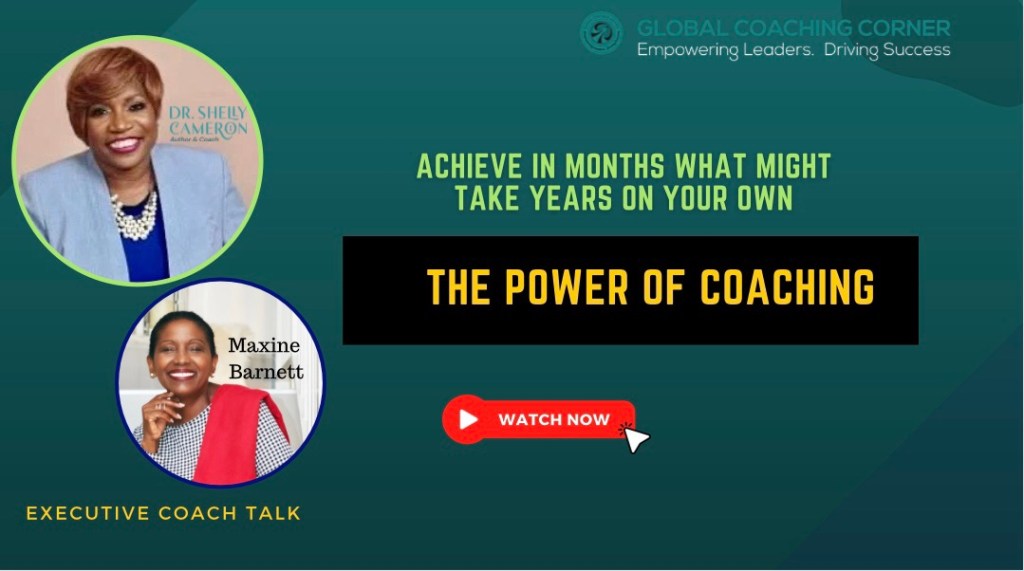
Whether you feel stuck in your career, overwhelmed as a supervisor or simply want to maximize your performance, coaching could be the key to achieving in months what might take years alone. The top signs you will benefit from working with a coach are discussed in the video.
You feel stuck and unable to move forward.
You are struggling to Balance work, life and personal commitments.
You are in a Leadership role but feel out of your depth.
You are going through significant life or career transition.
Invest less than 10 minutes to watch this video and discover the power of coaching for yourself! The returns could change the trajectory of your personal and professional life.
Natalie, a frustrated high school graduate, had been in and out of jobs for four years after graduating high school. She was referred for coaching because she was annoyed at the way employers treated her and she refused to accept it. The lack of income did not help as she needed to meet her needs.
This situation is common among young adults who are in the early stages of their career and ‘waiting’ for their ideal job (and yessss among others with years of experience too). The 15 Strategies listed can be adapted to secure employment, gain valuable experience and bring you closer to your ideal career.
Career Goals: 15 Steps To Success
1. Apply For Entry-Level Positions
Target entry-level positions in your field of interest.
Look for internships, apprenticeships, or part-time positions to gain hands-on experience.
2. Enhance Your Resume
Highlight relevant skills, coursework, and any extracurricular activities.
Tailor your resume for each application to match the specific job requirements.
3. Networking
Attend industry events, workshops, and networking mixers.
Connect with professionals on LinkedIn and engage in conversations.
4. Online Job Platforms
Explore job search platforms like LinkedIn, Indeed, Glassdoor, and company websites.
Set up job alerts to receive notifications for relevant positions.
5. Temporary Work or Freelancing
Consider taking temporary positions or freelancing opportunities to build your skills and network.
Platforms like Upwork or Fiverr can be good for freelancing gigs.
6. Professional Development
Take online courses or certifications to enhance your skills.
Mention ongoing learning initiatives on your resume to showcase your commitment to personal and professional development.
7. Volunteer Work
Offer your time to non-profit organizations or community projects.
Volunteering can provide valuable experience and demonstrate your dedication.
8. Informational Interviews
Reach out to professionals in your field for informational interviews.
Gather insights, seek advice, and express your eagerness to learn from their experiences.
9. Create Online Portfolio
Build an online portfolio showcasing your projects, coursework, or any freelance work.
Include a link to your portfolio on your resume and LinkedIn profile
10. Skill Development
Identify skills in demand within your industry and work on acquiring them.
Online platforms like Coursera, Udemy, or Skillshare offer a variety of courses.
11. Professional Social Media Presence
Ensure your LinkedIn profile is complete and professional.
Share relevant content and engage with professionals in your field.
12. Industry Research
Stay informed about trends and changes in your desired industry.
Use this knowledge to tailor your applications and interviews.
13. Career Counseling Services
Seek guidance from career counseling services offered by educational institutions or career centers.
They can provide insights into job opportunities and help you refine your career goals.
14. Participate in Job Fairs
Attend job fairs, both virtual and in-person, to connect with employers and explore potential opportunities.
15. Soft Skills Development
Work on developing essential soft skills such as communication, teamwork, and adaptability.
These skills are often highly valued by employers.
Remember, the job search process can take time, and being open to various opportunities can lead to unexpected but valuable experiences. Stay persistent, connect with a coach, maintain a positive attitude, and continuously refine your approach based on feedback and experiences.
As a leadership coach who has help many transition their careers in business and entrepreneurship, I was curious when I came across MSN’s Andrew Herring’s story on careers that will disappear in the next decade. Here I share.
Is Your Job On The List?
Drivers. Not sure if I am ready to be driven around by driverless cars, but ready or not, it’s coming.
Customer Service Reps were the ones we couldn’t live without. These days we have to since we cannot get a ‘human‘ on the phone. Besides, who wants to speak with anyone anyways in this text era?
Factory workers. No surprise here considering automation.
Travel Agents. They are more travel smart but airlines direct sales to our emails, we keep forgetting their value.
Bank Tellers. Can’t recall the last time I went into a bank line. Drive through, online check negotiations and direct deposits from employers, this is believable.
Proofreaders. I still like this especially as an author but lots of software available, so this is not so far-fetched.
Receptionists. Wonder who will I see when I walk into brick-and-mortar businesses? Hotel check-ins, direct to agent services, I guess?
Bookkeepers. Who uses them anyway when Ai keeps track and easily track expenses, reconcile and fast generate reports?
Data EntryClerks. Check what your phone scan feature can do. Yep, it can easily read handwriting and convert it into digital text. Absolutely convenient.
Telemarketers. I think my 91-year-old uncle will miss answering the phone angrily. It seems the calls never stop these days.
So, there you have it. Ensure that the job of your dreams still exists before you invest in it. Otherwise, are there any jobs missing from the list? Or should any be removed? Please share. We would love to hear!