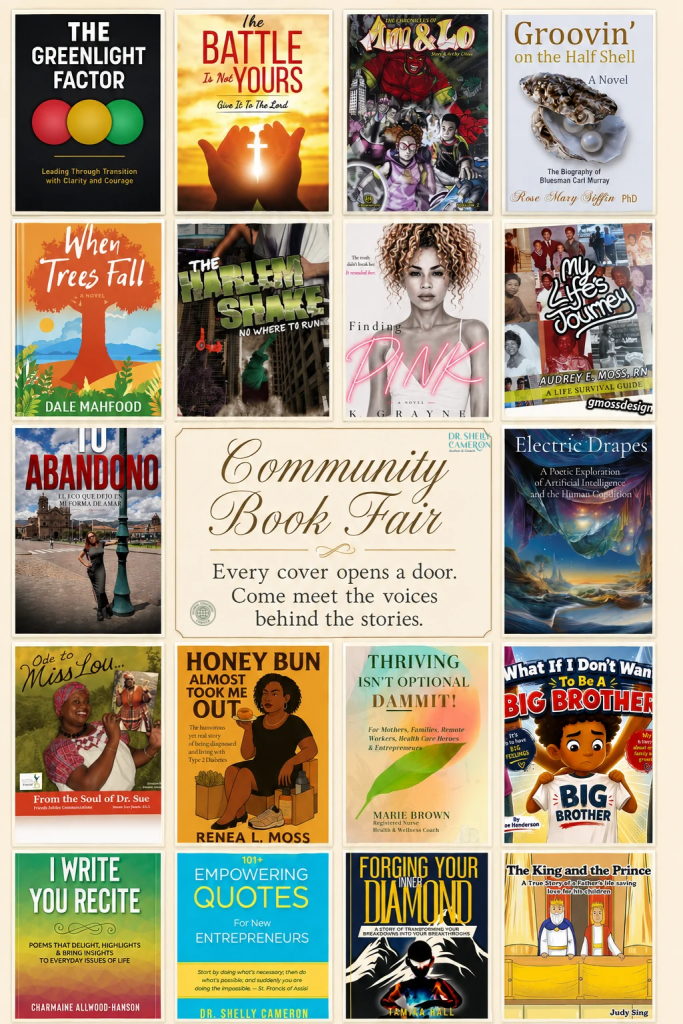

10+ Books That Awaken Emotions

Some books wound by spreading harm; others hurt by awakening truths, memories, and emotions we can no longer ignore.

A couple of years ago, I boarded an eight-hour flight to London. As I settled into my seat, I noticed a gentleman a few rows ahead holding a newly released copy of Prince Harry’s memoir. I gasped with curiosity and immediately asked what he thought of the book. Smiling, he explained that he had just purchased it at the airport and was intrigued by the prospect of learning some of the royal family’s closely guarded stories.

Books have the power to educate, inspire, challenge, and transform. They can also evoke hurt in different ways. Some promote hatred, damage reputations, or spread harmful ideas. Others awaken grief, revisit trauma, expose painful family experiences, or challenge readers and leaders to confront uncomfortable truths.

The books listed below offer examples of these different forms of hurt. Their inclusion does not necessarily mean that they were written to cause harm. Instead, they demonstrate how books can affect individuals, families, communities, and society, sometimes destructively, and at other times in ways that encourage reflection, healing, accountability, or change.

Here are 10 examples representing different ways books can cause hurt:

  1. Mein Kampf by Adolf Hitler
    An example of writing that promotes hatred, antisemitism, racial superiority, and division.
  2. The Protocols of the Elders of Zion
    A fabricated antisemitic text that spread damaging conspiracy theories and contributed to hatred against Jewish people.
  3. The Turner Diaries by William Luther Pierce
    A violent extremist novel that promotes racial hatred and has been associated with real-world acts of violence.
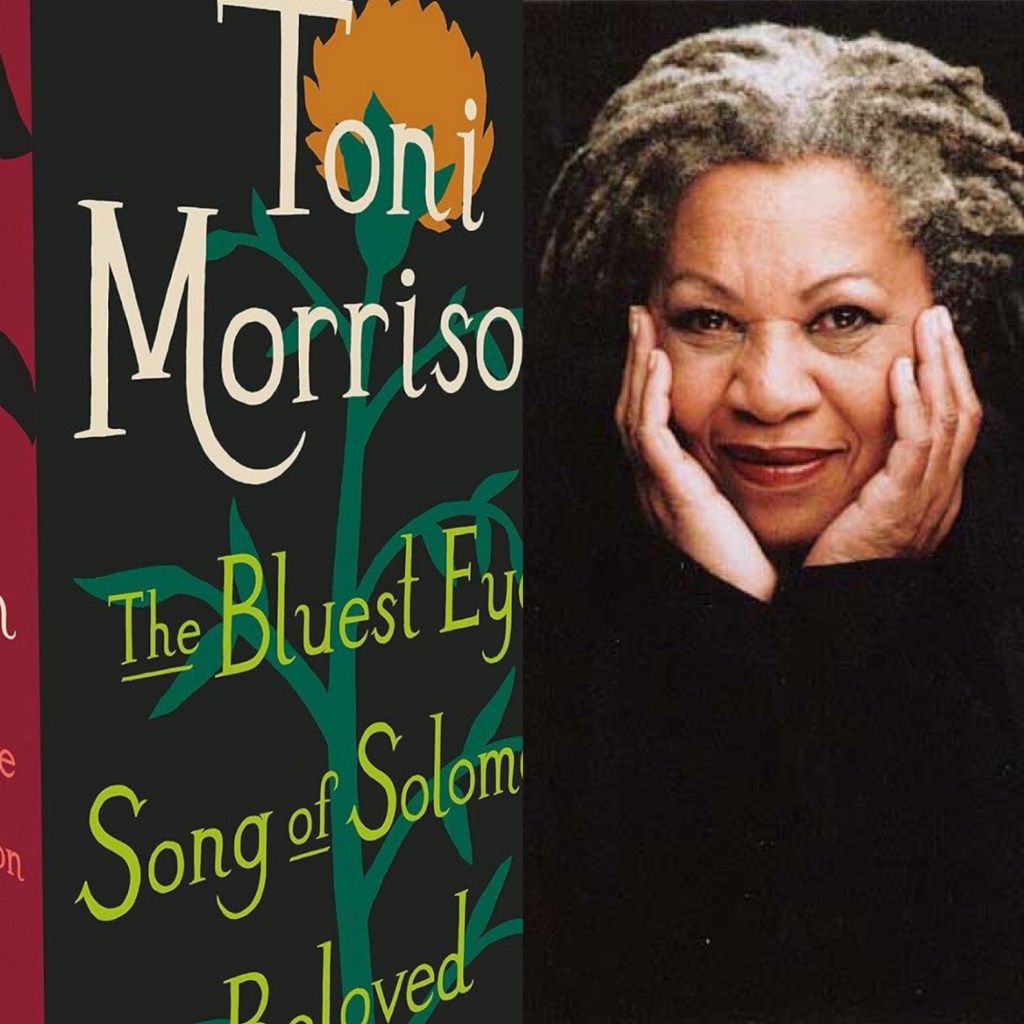
  4. Beloved by Toni Morrison
    A powerful novel that can cause emotional pain by confronting slavery, trauma, motherhood, loss, and memories that refuse to disappear. Its pain has a purposeful, truth-telling function.
  5. The Year of Magical Thinking by Joan Didion
    A memoir about grief that may awaken melancholy, loneliness, and longing—particularly for readers who have lost someone close.
  6. Spare by Prince Harry (2023)
    Its disclosures about grief, family conflict, royal life, and private relationships may cause hurt to the writer, the people discussed, and readers experiencing similar family divisions. The publisher describes it as a work of “revelation, self-examination” and grief. Penguin Random House
  7. I’m Glad My Mom Died by Jennette McCurdy (2022)
    This memoir confronts parental control, childhood exploitation, eating disorders, and a complicated mother-daughter relationship. Its painful honesty may be liberating for some readers and distressing for others. Simon & Schuster
  8. The Woman in Me by Britney Spears (2023)
    Spears discusses fame, relationships, motherhood, lost autonomy, and her conservatorship. Such revelations may reclaim the author’s voice while also affecting the people whose actions and relationships are described. Simon & Schuster
  9. Crying in H Mart by Michelle Zauner (2021)
    A memoir about losing a mother, cultural identity, food, and grief. It can awaken melancholy and longing in readers who have experienced bereavement or fear losing their connection to family and culture. Penguin Random House
  10. Know My Name by Chanel Miller (2019)
    Miller recounts sexual assault, the legal process, trauma, identity, and healing. The book may reopen painful memories, but it also demonstrates how writing can help someone reclaim a story previously told by others. Harvard Kennedy School
  11. My Safe Place Is With You by Dr. Shelly Cameron This inspirational book falls within the category of books derived from sadness and pain that ultimately guide the reader toward healing. It acknowledges seasons of vulnerability, uncertainty, loneliness, and longing while encouraging readers to find safety, comfort, and renewed hope through faith. Its words may awaken difficult emotions, but the hurt serves a restorative purpose, reminding readers that they do not have to face painful seasons alone.

Bonus: Two leadership books that create productive discomfort

11.Dare to Lead by Brené Brown
This book can “hurt” constructively by asking leaders to examine vulnerability, fear, trust, values, shame, and the ways they protect themselves from difficult conversations. Brené Brown

12. The Five Dysfunctions of a Team by Patrick Lencioni
It can be uncomfortable because leaders and teams may recognize their own absence of trust, fear of conflict, lack of commitment, avoidance of accountability, and inattention to results. The hurt comes from honest organizational self-recognition. The Table Group

These examples also demonstrate an important distinction. The first three can cause harm by promoting hate or violence, while others may cause pain by helping readers confront grief, trauma, history, and difficult truths.

Are there any books that you can falls into this category that you can recommend? Please share, we would love to hear.

Cheers!

5 Things Organizing Community Events Taught Me About Leadership

Leadership is not always standing at the center of the room. Sometimes it is building the room, opening the doors and giving others a place to be seen.

I’ve spent over two decades studying leadership, coaching leaders, and writing about what it takes to lead well. But organizing our community author showcase is prime.

With more than 40 authors converging at the Fred Lippman Cultural Center in the City of Hollywood, Florida, the lineup includes my own presentation co-partnered with Fort Lauderdale’s Jamaica Brew Festival Co-founder, Dale Mahfood. A panel on building author brand, poetry, and a slate of featured authors, this event has become an unexpected classroom. Here’s what it has taught me.

1. Leadership is Choreography, Not Control

You cannot control 40 authors. You can only choreograph the conditions for them to shine. Every author arrives with a different personality, a different genre, a different idea of what “success” for the day looks like. My job isn’t to manage each of them into compliance, it’s to build a structure flexible enough to hold that many voices without losing coherence. That’s a lesson I’ve taught in leadership development for years. Living it, in real time, with real logistics and real personalities, is a different kind of learning altogether.

2. The Panel is a Microcosm of the Whole Event

Curating the panel on building author brand has been its own leadership exercise. Choosing who sits at that table, what questions get asked, and how the conversation is sequenced is really about clarifying a shared message from different perspectives. That’s what leadership often is: not silencing distinct voices, but helping them harmonize around a purpose bigger than any one of them.

3. Behind-the-Scenes Work is Still Leadership

I’ve long been more comfortable letting the work speak rather than putting myself forward. This event has stretched that. I’m not just organizing from behind the curtain this time, I’m also presenting, which means stepping into visibility while still holding the operational threads together. Leadership doesn’t always look like standing at the podium; sometimes it’s making sure the podium, the poetry reading, and the featured author segment all run on time so everyone else can have their moment.

4. Poetry and Prose Remind Me Leadership Needs Range

Weaving poetry alongside author presentations and a business-minded panel has reminded me that leadership isn’t one register. Sometimes it calls for strategy and structure. Sometimes it calls for space; for feeling, for art, for the parts of a message that a bullet point can’t carry. A good leader, like a good event, knows when to shift registers.

5. Community Events Reveal Leadership at Full Scale

With 40+ authors, a cultural center, and multiple event formats layered into one day, nothing exposes gaps in planning, communication, or delegation faster than a live event with a fixed date. There’s no theoretical framework that substitutes for the real-time problem-solving this requires and that, more than any case study, is where leadership is truly learned.

As the event approaches, I’m struck by how much this process mirrors the leadership principles I’ve spent my career researching and teaching: clarity of purpose, distributed voice, adaptability, and the discipline to serve something larger than yourself. Sometimes the best leadership lessons don’t come from a classroom or a book, they come from the folding chairs and program schedules of a community event.

5 Ways Readers Can Support Authors

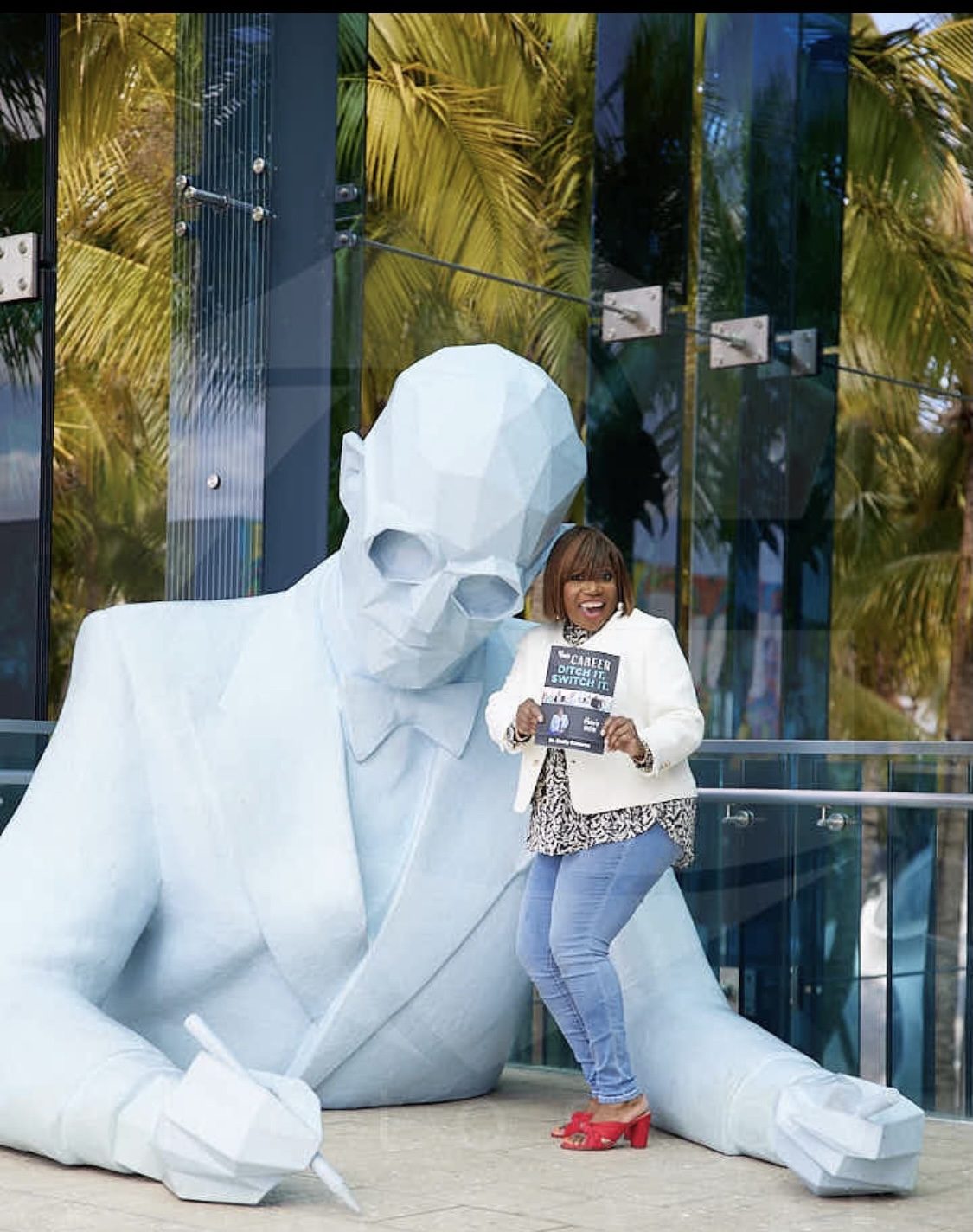
Book and Art statue

A book may be written by one person, but it travels farther when readers choose to carry its message forward.

Writing a book is often a deeply personal accomplishment, but an author’s journey does not end when the book is published. Authors must then work to help readers discover, trust, and connect with their work. Often this happens while managing the costs of publishing, promotion, and public appearances.

When authors speak about meaningful support, they frequently mention more than book sales. They remember the reader who left a thoughtful review, recommended the book to a friend, shared a social media post, attended an event, or introduced them to a new opportunity. These actions may seem small, but collectively they help authors expand their reach and remain encouraged.

Here are five practical ways readers can support authors and help meaningful stories and ideas reach a wider audience.

  1. Buy their books
    Purchase directly from the author when possible, as this may provide greater financial support.
  2. Leave an honest review
    Reviews on Amazon, Goodreads, Barnes & Noble, and other platforms help increase a book’s credibility and visibility.
  3. Share the book with others
    Recommend it to friends, book clubs, libraries, schools, or community organizations that may find it valuable.
  4. Engage with the author online
    Follow, like, comment on, and share the author’s posts. Consistent engagement helps their work reach new readers.
  5. Invite the author to participate
    Consider them for interviews, podcasts, speaking engagements, workshops, book clubs, panels, or community events.

Essentially, supporting an author goes beyond buying a book. Read it. Review it. Recommend it. Share it. Invite the author into new rooms.

How have you supported an author? Do share. We would love to hear.

Cheeers!

I Want to Write My Life Story. But Where Do I Even Begin?

We write with open hands, and not with fists. ~Beth Kephart

Early in life, my mom wanted to write her life story. A trailblazer, she was one of the country’s first female automobile mechanic who was later fired for getting pregnant. Decades later she passed away without collating the details, as only she could.

The most overpowering reason to write your story is because if you don’t, that version of the story dies with you. That’s what happened with my mom. Today, I am a writer of several books, but it would be remiss of me to think that I could capture details the way she would have if only she had written them herself.

I also reflect on the life of Dolly Parton who wrote many songs with tales of female experiences such as “Working-9-to-5, What a Way to Make a Living.” The world was her stage and through her legacy, she left her indelible mark because she chose to capture and impact many through her songwriting endeavors.

So, I encourage you to write. There is only person who holds the full, lived truth of your experience. Not the polished version other people saw, not the résumé version, not even the version your closest family remembers, but the real one. The one with the doubt and the mess and the moment things actually turned. Once you’re gone, that’s gone. No one can reconstruct it from the outside.

Here’s How Writers Recommend That You Write Your Life Story

In a public forum, a woman shared her desire to write her life story. With confusion she asked, “where do I start?” As members chimed in, I captured some of their feedback to encourage, lead, and guide her how to get it done. Here I share a few:

  1. Write as if you are telling a friend what happened.
  2. Begin with a diary of your current life
  3. Break it down into three parts ages 0 to 21; 22 to 40; 41 to 65. Then make some bullet points of major parts of your life during those periods. Then flesh out each bullet point into a chapter. As you do this, you will remember more things, and more chapters will be born. But breaking the whole down into bite-size chunks like this will help you get started.
  4. You could think of 3-5 of the most impactful moments of your life, both your lowest and highest times. From there you can inquire into your internal state of mind and emotions. Then you will probably begin to connect the dots from other events in your life which will help fill and tell your story.
  5. Just start writing now. What you write will not be the finished article, but just get on with it. Worry about formatting and how to publish later.
  6. Keep the pressure of where to start off of you. Just write something, and then something else, and then something else.
    A beta reader for my novel suggested a late chapter in my novel was the ideal starting chapter. So, I moved it and he was right.
  7. If you have never been a “writer,” this may be much more challenging than you think. Writing a book is hard enough when writing fiction and essays. Journaling is something you may have always practiced and enjoy doing. It’s not impossible to learn for a specific goal, but it may be quite challenging.
  8. From your earliest memory put dates on the entry. When you remember other things from those times you can add them later.
  9. I’d start with the moment or experience that still feels the most alive to you, rather than worrying about telling your entire life story from beginning to end. Write that scene as honestly as you can and let the memories and meaning unfold from there. You don’t need to have the whole structure figured out before you begin. Once you have some pages down, you can start seeing the themes and moments that deserve to become chapters. Most importantly, don’t worry about making it perfect on the first draft. Just tell your story.
  10. Easy. Start writing one memory or scar or grief or shame at a time
  11. All stories need a plot ARC, character ARC, theme, conflict, tension, and resolution. Find those and write.
  12. I did mine–birth to enlistment, 22-year enlistment and post military. (First 18-years, next 22-years and then invite things as they happened). Write everything you can remember. Cut things out later
  13. Think of best or worst thing you ever experienced. Then, jump on your board and ride that wave with your full passion. Not tough. Just need to jump.
    Editing comes later.
  14. Unless the beginning was terrible or horrific or shocking in some way, don’t start there. That’s so boring. Honestly ask yourself, is your life story interesting? Not to you, a friend, a neighbor, or someone who loves or even likes you… but to a complete stranger.
  15. I kind of want to do this too. I thought of starting with a description of the hospital I was born in and a story my mom always told about a man in the waiting room offering to buy a baby. My dad allegedly punched him for asking to buy me. Is it true? Who knows? But kind of a cool story. This was in 1957.
    You could begin by describing the weather the day you were born. (You can look that up). A pregnancy anecdote your mother told; what was going on in the world; etc.
  16. A good way is remembering short stories and then grow them, if you want chronologically after the stories are in place. Also, I read other biographies and finally would ask myself why I am writing it and why would someone who doesn’t know me would want to read it
  17. I’ve just published the final part of my memoir. Two books in all. Once you begin more memories will flood your head. If something happened that defined you, start there. The Following chapters could be looking back. Then continue into the future. Please just start writing, it will come together, you will feel it’s right.
  18. I was told when I began that memoirs only sell if you are famous and debut novels barely sell. My second book released the 15th of August went straight to number 1 on new releases on kindle true crime. Don’t let anyone put you off. Just start writing

Hmm, interesting recommendations. What has been your experience? Do share. We would love to hear.

Cheers!

Why Does It Hurt So Bad?

To Focus is to Achieve

The shorter way to do many things is to only do one thing at a time. ~ Mozart

Knife in the right. Fruit in the left. Both hands occupied, me attempting to sit on the kitchen bar stool while adjusting its height was a sure recipe for disaster. And so, it did. Multi-tasking doesn’t work in all situations.

Down I went; fruit, knife, bar stool and me! Wham! I felt that sharp pain as the one-legged bar stool knocked sharply into my right rib! My oldest and her hubby ran to the rescue! But the damage was already done. It’s as though the wind was knocked out of me. I lay on the ground writhing in pain beyond 10-minutes.

When I finally accepted help to get up, I felt like I wanted to simply lay flat. I staggered in hasty retreat to bed. But could hardly get in. The pain was too much to bear and I could hardly breathe. Why does it hurt so bad, I pondered?

The night ended with the Emergency Room Physician telling me post X-Ray that I had bruised by rib, and the healing and pain would ease in three weeks! Internet searches recounted with 4-6 weeks recovery. Others who have gone through it, said the pain lingers beyond that.

Left in daily excruciating pain marked by sleepless nights, that’s the tale of my multi-tasking mishap. Work, sleep, appointments all interrupted but it could have been worse.

While there’s life, there’s hope.

The Multi-Tasking Learning

Balance and foresight is important. Multitasking has its limits that leaders should be mindful of. Brown University’s Dr. Jennifer Davis, among others, share hidden costs:

  • More mistakes: Dividing your attention can increase your error rate by up to 50%.
  • Mental exhaustion: Switching tasks drains your brain’s energy and leaves behind mental blocks.
  • Higher stress: Juggling demands raises your heart rate, blood pressure, and anxiety levels.
  • Blocked creativity: Constantly shifting focus robs the working memory needed for deep, creative thought.

So self-leaders take heed. Manage multi-tasking. The urge to get things done all at once can lead to sad consequences, like mine.

What are your tales and views on multi-tasking? Do share, we would love to hear.

Cheers!

Have You Reflected Long Enough Or Is It Time to Decide?

Not every opportunity requires an immediate yes.

And not every hesitation means no. Sometimes, we simply need a YellowLight.

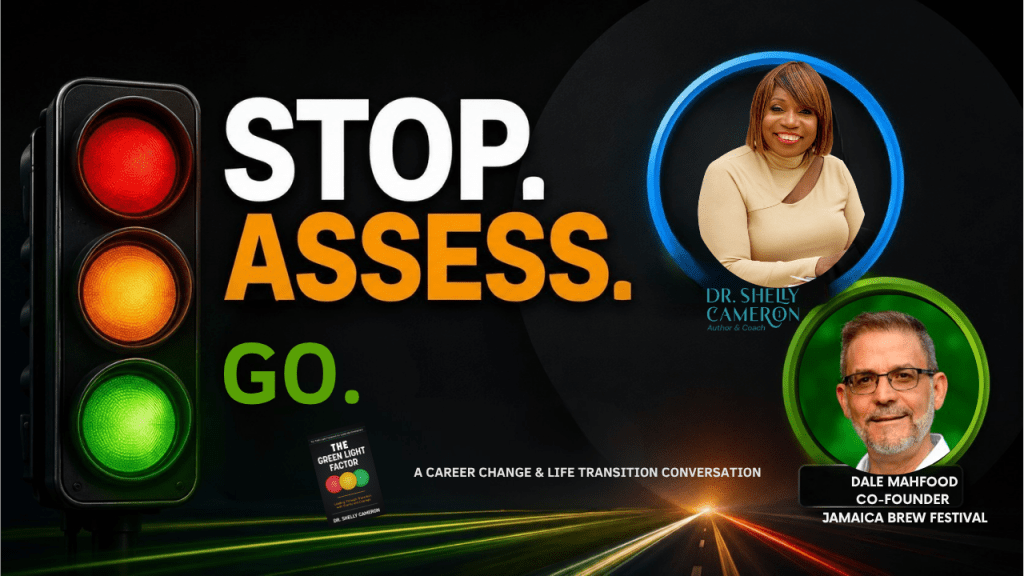
In a recent conversation about The GreenLight Factor, we discussed the RedLight, YellowLight and GreenLight framework for navigating career changes, life transitions and leadership decisions.

One viewer raised a thoughtful question:

How do you know when a YellowLight situation needs more reflection versus simply making the decision and moving on?

It made me pause. Reflection is valuable. It gives us space to examine what we’re feeling, gather information, consider consequences and determine whether an opportunity aligns with where we are, and where we’re going.

But reflection can also become a hiding place.

  • We can think.
  • And rethink.
  • Analyze.
  • And analyze again.

Eventually, we have to ask: Am I still gathering information, or am I afraid to make the decision?

For me, that’s an important distinction. If critical information is missing, the consequences are significant, or something still feels misaligned, stay at the YellowLight a little longer.

But if you have the information, you need and find yourself repeatedly circling the same questions, perhaps the YellowLight has already done its job.

The goal isn’t to eliminate uncertainty before moving forward. The goal is to gain enough clarity to make an intentional decision.

And sometimes that decision is GreenLight: Go.

Sometimes it’s RedLight: Stop.

Either can be the right decision.

As you move into a new week, perhaps this is your opportunity to ask:

🔴 What do I need to stop?

🟡 What deserves more reflection?

🟢 What am I ready to move forward with?

And maybe one final question:

Have I reflected long enough, or is it simply time to decide?

I recently had the opportunity to explore these ideas in a conversation about career change, life transitions and The GreenLight Factor: Leadership Framework. I’ll share the video for anyone who would like to listen to the full conversation.

Questions, thoughts? Do share, we would love to hear.

Cheers!

When Everything Looks Good But Still Feels Wrong

Broken Crayons still color. ~Lifehack

You have the job. The title. The experience. Maybe even the salary you once hoped for. From the outside, everything looks good.

So why doesn’t it feel right?

This is a question many successful professionals quietly wrestle with. Sometimes we remain in situations because they still look like success. We worked hard to get there. Other people admire what we’ve accomplished. Walking away, or even questioning it, can feel ungrateful or irresponsible.

Growth Has a Way of Making Yesterday’s Dream Feel Different Today

  • What once challenged you may now drain you.
  • What once excited you may no longer inspire you.
  • What once aligned with your goals may no longer align with who you’re becoming.

That doesn’t automatically mean it’s time to leave. It may simply mean it’s time to pause. Before making a major career, business, or life decision, give yourself permission to ask:

What has changed?
Is it the environment, or me?

What am I feeling?
Am I tired, frustrated, burned out, bored, or genuinely ready for something different?

What am I holding onto?
Is it purpose, or is it comfort, fear, status, or other people’s expectations?

A resilience mindset that can help us re‑evaluate when things feel wrong.

What would alignment look like now?

Not every uncomfortable season requires an exit. Sometimes we need rest. Sometimes we need boundaries. Sometimes we need a new challenge within the same environment. And sometimes, after careful reflection, we realize that we’ve simply outgrown where we are. The goal isn’t to make a quick move.

The goal is to understand the signal before deciding what comes next.

If everything in your life looks good but something still feels wrong, don’t ignore that feeling. Pause. Reflect. Listen. You may not need an immediate answer. You may simply need enough quiet to hear the question you’ve been too busy to ask.

Reflection: What in your life still looks right on paper, but deserves another look? Do share. We would love to hear!

Cheers!

100,000 Views: A Journey Through My Most-Read Articles

Don’t wait for opportunities. Create them. ~ Bruce Lee

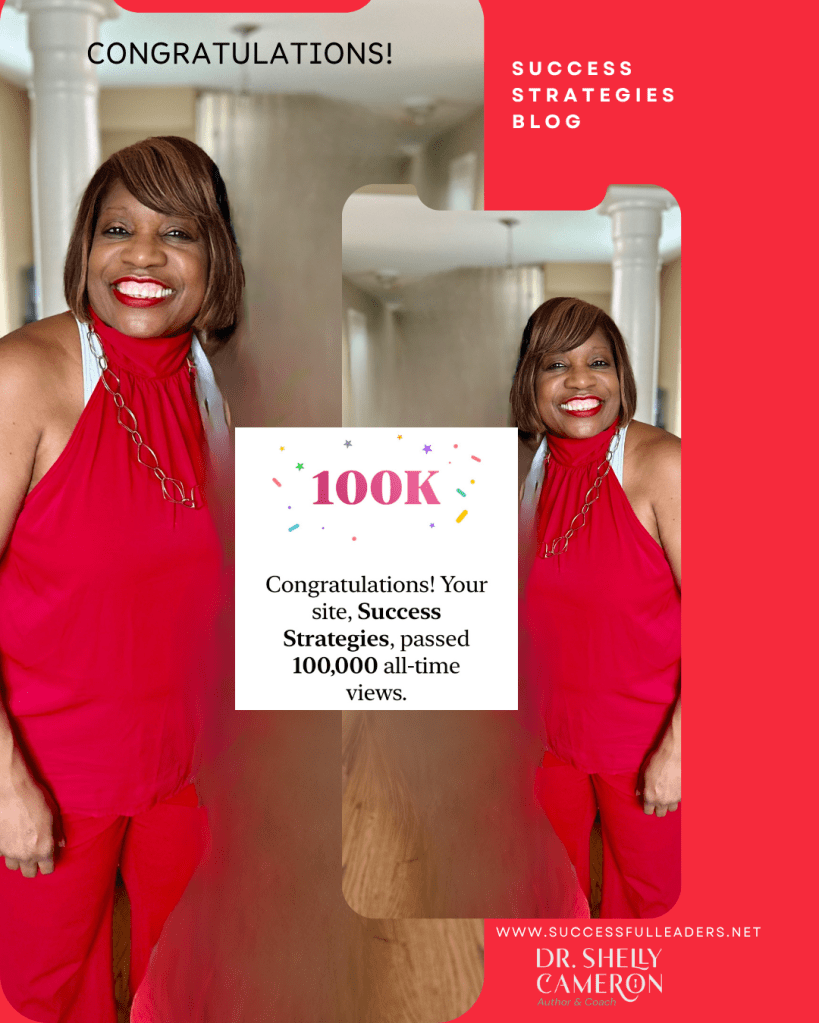
Recently, I received a message from WordPress that stopped me in my tracks: 100,000 all-time blog views. As grateful as I am for the milestone, I quickly realized that this isn’t really my story, it’s ours.

Every view represents someone who paused for a few moments to read an article. Someone looking for encouragement during a season of change. Someone seeking clarity, inspiration, a fresh perspective, or simply a quiet moment to reflect. Whether you’ve been reading for years or have only recently discovered this blog, thank you for allowing me to be part of your journey.

To celebrate this milestone, I wanted to do something a little different. Over the next four weeks, I’ll be opening the archives and sharing collections of some of the most-read articles from this blog. Rather than organizing them by date, I’ve grouped them by the themes that have shaped my writing over the years:

  • Reflections for the Journey
  • Leadership
  • Writer’s Corner
  • Life’s Serenity

Each collection represents a different part of my journey as a leadership coach, author, researcher, and lifelong learner. Some articles may make you pause and think. Others may inspire your next step, spark your creativity, or simply remind you to slow down and enjoy the journey.

Whether you’re revisiting an old favorite or discovering these articles for the first time, I hope you’ll find something that speaks to where you are today. Thank you for reading, sharing, and growing alongside me. Here’s to the next chapter.

Below are ten reader favorites that invite us to pause, reflect, and reconnect with what matters most. I hope one, or perhaps several, will encourage you this week.

Reflections for the Journey: 10 Reader Favorites

Below are ten reader favorites that invite us to pause, reflect, and reconnect with what matters most. I hope one—or perhaps several—will encourage you this week.

  1. When Everything Stops
  2. The Power of U-Turns
  3. Must Go Faster
  4. Quiet Isn’t Always Peace…
  5. When It’s Time For Something New…
  6. If Your Life Was A Book...
  7. The Journey. Keep Going
  8. Fear of Dying With Unaccomplished Dreams
  9. The Rear View
  10. Don’t Stop Believing: 10 Songs That Inspire

Which article resonated with you the most? Do share. We would love to hear.

Cheers!
What Can Exposure Do for You?

Exposure is the act of placing yourself deliberately, in environments that are bigger, faster, or more demanding than the ones you currently occupy.

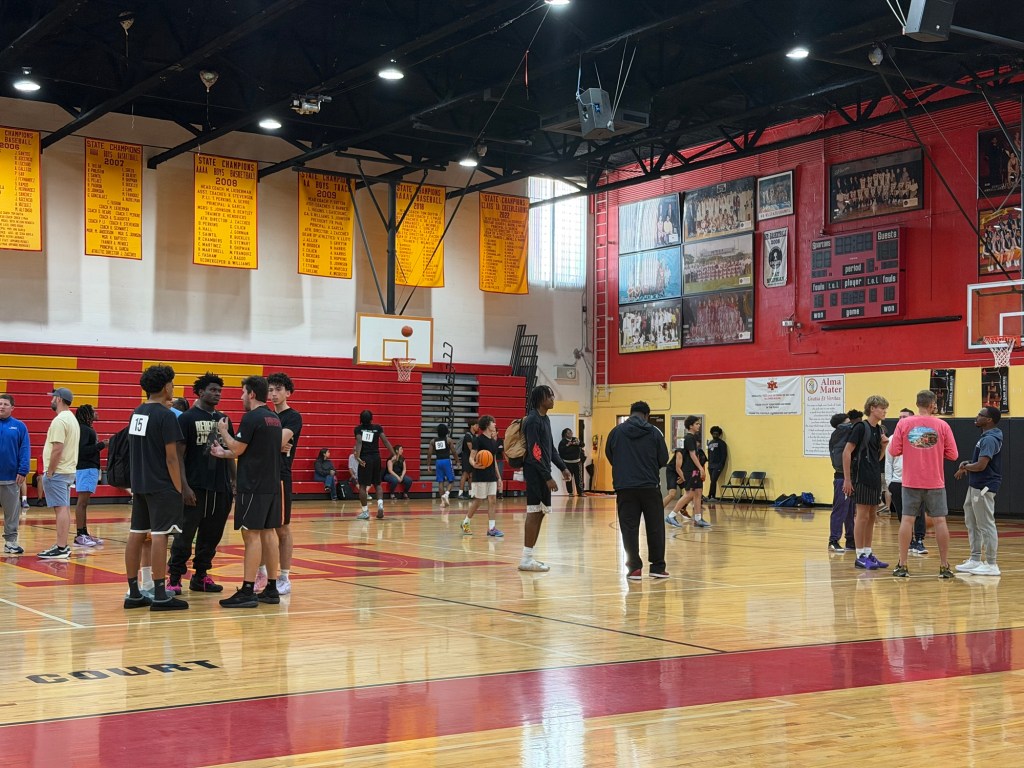
Outdoor basketball court with ball on ground and sunset over water

Perhaps the most terrible (or wonderful) thing that can happen to an imaginative youth…is to be exposed without preparation to the life outside his or her own sphere.

Stepping into new arenas whether on the court, in the boardroom, and everywhere in between, can change the trajectory of your life.

It started as a simple conversation about basketball camp.

My teenage nephew had been eyeing a summer program. It was one of those intensive week-long camps where serious young players come together to train, compete, and grow. Was it about the drills? The coaches? The three-point shooting clinics? Sure, partly. But when we sat down and talked about why it really mattered, one word kept rising to the surface:

Exposure

The more I thought about it, the more I realized that exposure isn’t just a basketball concept. It might be one of the most underrated forces in human development. For athletes, yes. But just as powerfully for aspiring leaders, young professionals, and anyone standing at the edge of something new, wondering whether to jump.

What Exposure Actually Means

We throw the word around casually. “It’ll be good exposure.” But what are we really saying?

Exposure is the act of placing yourself deliberately, in environments that are bigger, faster, or more demanding than the ones you currently occupy. It’s the difference between reading about competition and feeling it. Between hearing about leadership and practicing it under pressure.

For my nephew, basketball camp means going up against players who are better than him. It means his weaknesses will be visible to coaches, to peers, to himself. That sounds uncomfortable because it is. But that discomfort is precisely the point. Exposure forces an honest accounting. You learn, very quickly, where you actually stand.

The Three Gifts Exposure Gives You

1. A Realistic Mirror

Most of us live inside a bubble. It might be our neighborhood team, our school, our workplace, our friend group. Within that bubble, we develop a sense of who we are and what we’re capable of. Sometimes that sense is accurate. Often, it isn’t.

Exposure shatters the bubble, gently or not so gently.

When my nephew steps onto a court with players from across the state, kids who have been training just as hard, maybe harder, he will get a truer picture of his game. Not to discourage him, but to inform him. What needs work? Where does he genuinely excel? What habits has he developed that will not hold up at a higher level?

Leaders face the exact same reckoning. A manager who’s brilliant within their own team can be humbled the moment they sit at a table with peers from other organizations. That humbling isn’t failure, it’s information. And information is the raw material of growth.

2. A Larger Network

Here’s a truth that sounds almost too practical: the people in the room matter as much as the experience itself.

At basketball camp, my nephew won’t just learn from coaches. He will meet players from different cities, with different stories and different styles. Some of those connections will fade. A few might last for years. One might lead somewhere he can’t yet imagine, a friendship, a recommendation, or an opportunity down the road.

This is exactly how exposure works for aspiring leaders. Conferences, stretch assignments, cross-functional projects, mentorship programs. These aren’t just resume builders. They are relationship laboratories. Every new environment you enter expands the constellation of people who know your name, your work, and your character.

Networks built through shared experience are different from networks built through LinkedIn requests. They carry weight because they carry memory.

3. An Expanded Sense of What’s Possible

Perhaps the most quietly powerful gift of exposure is this: it rewires your imagination.

When you have only ever seen one way of doing things, that way feels like the way. Exposure introduces you to other ways, other styles of play, other models of leadership, other definitions of excellence. And once you have seen them, you can’t unsee them.

My nephew might watch a point guard at camp move in a way he’s never seen before and suddenly realize that style of play is available to him, too. He didn’t know to want it until he saw it. That’s what exposure does. It expands the menu.

For leaders, this might look like visiting a company with a radically different culture, or watching a mentor handle a crisis with grace you didn’t know was possible, or sitting in a room where someone younger than you is making decisions with a confidence that quietly raises your standards for yourself.

Exposure Requires Courage

Let’s not romanticize this too much. Exposure can be uncomfortable, even painful. It requires showing up in spaces where you are not yet the expert. It requires being seen before you’re ready. It requires the willingness to look at least temporarily, like someone who doesn’t have it all figured out.

That’s a lot to ask. Especially of a teenager. Especially of someone who has worked hard to project confidence in their current environment.

But here’s the thing about leaders who consistently grow; they develop a tolerance for being the least experienced person in the room. They learn to treat that feeling not as a threat to their identity, but as a signal that they’re in the right place.

The discomfort of exposure is the sensation of your ceiling rising.

How to Seek Exposure Intentionally

Exposure doesn’t always announce itself. Sometimes you have to go looking for it. Here’s how to start:

  • Say yes to the uncomfortable invitation. The panel you weren’t sure you were qualified for. The networking event in an unfamiliar industry. The stretch project that scares you a little. Say yes first, and figure out the rest after.
  • Choose environments that challenge your assumptions. Seek out people who think differently, lead differently, and have succeeded by different paths than you have mapped out for yourself.
  • Reflect on what you observe. Exposure without reflection is just tourism. After every new experience, ask yourself: What surprised me? What did I learn about my own gaps? What do I want to try differently?
  • Be patient with the timeline. Exposure plants seeds. Some of them take years to grow. Don’t measure the value of an experience only by what it produces immediately.

Back to the Basketball Court

Are you willing to step

into the room?

My nephew is going to that camp. He will face players who are faster, more polished, maybe more confident. He will have moments of doubt and moments of revelation. He will come home with sore legs, new connections, and if he’s paying attention, a clearer sense of both who he is and who he could become.

That’s not a small thing. That’s everything.

Whether you’re sixteen and chasing a dream on a basketball court, or thirty-five and stepping into your first leadership role, or fifty and pivoting into something entirely new, exposure is available to you. It’s not reserved for the “already-great”. It’s how the ordinary become exceptional.

So the question isn’t whether exposure can do something for you.

The question is: are you willing to step into the room?

Sometimes the most important thing you can do is simply show up somewhere bigger than where you have been.

How have you experienced exposure in your personal growth? Do share, we would love to hear.

Cheers!

Authors This is For You If You Are Experiencing These 4 Signs

when you have something to do life will not allow you to move forward until you do it. ― Iyanla Vanzant

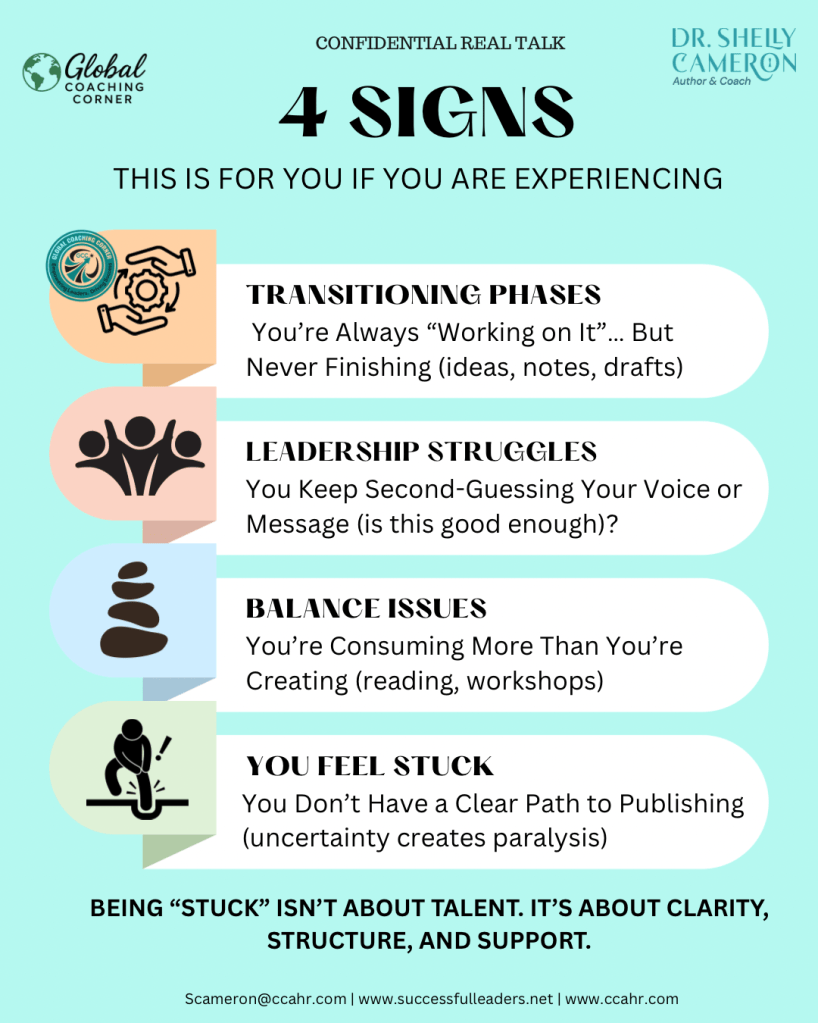
When you have something to do, life will not allow you to move forward until you do it. So if you caught that writing bug and can’t seem to let it go, then follow that lead. How can you know? Here are for signs that both aspiring and seasoned authors are stuck.

1. You’re Always “Working on It”… But Never Finishing

You have ideas, drafts, notes, and even chapters. But nothing gets completed.
You keep tweaking, rewriting, or starting over instead of moving toward a finished manuscript.

What’s really happening: Perfectionism or lack of structure is keeping you in motion, but not in progress.

2. You Keep Second-Guessing Your Voice or Message

You wonder: “Is this good enough?” “Will anyone read this?” “Should I change direction?” So you rewrite, dilute your message, or abandon strong ideas.

What’s really happening: Lack of clarity and confidence is causing you to disconnect from your authentic voice.

3. You’re Consuming More Than You’re Creating

You’re reading books, watching writing videos, attending workshops. But not actually writing consistently.

What’s really happening: You’re hiding in “learning mode” to avoid the discomfort of execution.

4. You Don’t Have a Clear Path to Publishing

You have written (or started writing), but you don’t know what comes next. Self-publish? Traditional? Hybrid? So, the manuscript sits… and sits.

What’s really happening: Uncertainty about the publishing process is creating paralysis.

Know that being “stuck” isn’t about talent, it’s about clarity, structure, and support. As an author of 11 books, I have been there and now teach the process throughout different communities. If you identified with any of the signs and need help, let’s connect now and get you moving. Clarity is on the other side of the ‘Ask’.

Happy Writing!

The GreenLight Factor FAQs

The GreenLight Factor

Understanding the GreenLight Factor’s leadership framework from the ground up

Q1  What is the GreenLight Factor?

The GreenLight Factor is a leadership framework created by Dr. Shelly Cameron that helps individuals move from a state of waiting and hesitation into purposeful, confident action. It is built on a core insight from Dr. Cameron’s research and coaching experience: most people are not held back by a lack of talent or opportunity. They are held back by waiting for a green light that was never going to come from the outside. The framework teaches leaders how to give themselves that green light.

Q2  Where did the idea come from?

The GreenLight Factor grew out of Dr. Cameron’s two decades of leading and coaching professionals in the global healthcare industry. It combines with her GreenLight book series and the groundbreaking research on Caribbean American leaders published in the Journal of American Academy of Business. A recurring pattern emerged: the most successful leaders shared a specific set of behaviors and mindsets that allowed them to move decisively, even in uncertain conditions. The GreenLight Factor distills those patterns into a teachable, actionable framework.

Q3  Who is the GreenLight Factor designed for?

It is designed for anyone who has ever felt ready but held back. This includes emerging leaders stepping into their first leadership role, mid-career professionals navigating a transition, aspiring authors and entrepreneurs, and community changemakers who want to lead with greater intention and impact. It is especially relevant for the 18 to 30 age group, where leadership identity is still forming and external validation is often sought before internal confidence is found.

Q4  What does the GreenLight Factor teach?

While the full framework is delivered through coaching and workshops, the GreenLight Factor addresses three core areas:

. 1. Identify the RedLight

What is keeping you stuck? The fears, limiting beliefs, external expectations, or self-doubt that are blocking your forward movement.

. 2. Build internal clarity and conviction

Define your values, your vision, and your leadership identity on your own terms, not what looks impressive to others.

. 3. Move with momentum and strategy

Set goals that align with who you are, create accountability structures, and develop the confidence to act even when conditions are imperfect.

Q5  Is the GreenLight Factor a coaching program, a book, or a workshop?

It is all three in different forms. The framework is delivered through one-on-one coaching with Dr. Cameron, through group workshops and speaking engagements, and is embedded throughout her published works. Whether you encounter it on stage, in a session, or in a book, the core principles remain consistent.

Q6  How is it different from other leadership frameworks?

Many leadership frameworks focus on skills, how to manage, delegate, communicate, or strategize. The GreenLight Factor starts one level deeper: with identity and permission. It addresses the internal barrier that most leadership training skips entirely. The moment when a capable person stops waiting for someone else to confirm they are ready and begins leading from their own conviction. It is particularly powerful for first-generation leaders, emerging leaders from underrepresented communities, and anyone whose background has conditioned them to seek approval before acting.

Q7  Can the GreenLight Factor be applied in organizations?

Absolutely. Organizations that invest in the GreenLight Factor for their teams see a shift in how people show up. More initiative, more ownership, more willingness to lead without being told to. It is especially effective as part of onboarding programs for new managers, emerging leader development programs, and diversity initiatives focused on retaining and developing high-potential talent.

Q8  What is the connection between the GreenLight Factor and the 30 Under 30 program?

Dr. Cameron’s decade of service as Chief Judge and Advisor for the 30 Under 30 Changemakers’ Program has deeply informed the GreenLight Factor. Evaluating hundreds of emerging leaders over ten years gave her a unique window into what separates those who are already leading from those who are still waiting and what it takes to bridge that gap. The GreenLight Factor is in many ways her answer to what she observed: a framework built specifically to accelerate the journey from emerging to impactful.

Q9  How do I learn more or experience the GreenLight Factor?

Connect with Dr. Cameron through Global Coaching Corner for one-on-one coaching, invite her to speak at your event or organization, or follow both Instagram pages, @drshellyc_success and @global_coaching_corner, where GreenLight Factor content is shared regularly. Stay tuned for upcoming workshops and published resources here on the blog or social media.

Before You Read The GreenLight Factor, Meet the Woman Who Lived It

I Am Woman

Every book has a story behind it. This one is mine.

Before The GreenLight Factor existed as a book, it existed as a life. A series of roles, rooms, and relationships that quietly shaped everything I now know about leadership.

I want to do something I don’t always make time for: properly introduce myself. Not just my credentials, but the journey behind them.

I Am a Certified Master Leadership Coach

This isn’t a title I hold lightly. Becoming a Certified Master Leadership Coach meant times of deep study, practice, and honest self-examination. It means I have sat across from myriads of leaders. Leaders at all levels and helped them find what was already inside them.

The greatest coaching insight I have ever received? The green light is rarely about permission from the outside. It’s about permission from within.

I was recognized for exemplary service within the community. As a result, I continue my quest to help Crown the Next Generation. Being the strategic leader behind the 30 Under 30 Emerging Leader in Washington DC, is testament to my commitment to emerging leadership development. I have served as Chief Judge and celebrated the 10th Anniversary of the program in 2026.

There is nothing more powerful than watching a young leader step into their own green light.

I Led HR Strategy Across the Andina & Caribe Region for a Big Pharma Company

Operating across cultures, languages, and borders taught me that leadership is not one-size-fits-all. The best leaders I encountered, and tried to be, were the ones who led with both strategy and soul. Who understood that behind every organizational chart is a human being trying to do meaningful work.

That experience is woven into every page of this book.

I Served Four Terms as VP of the Hospitality & Human Resource Association of Broward County (HHRABC), FL and President of the Writers Group of South Florida

I have always believed that leadership must extend beyond the walls of any organization. Community leadership taught me that showing up especially when no one is keeping score, is one of the most important things a leader can do. And leading a writers’ group? That lit a fire in me that culminated from my other books on leadership, success, inspiration and faith.

And Now, here’s my Newest Book

The GreenLight Factor is the book I wish I’d had at the beginning of my leadership journey.

It’s not a manual. It’s a mirror. A roadmap built from real experiences. It exemplifies the wins, the pivots, the moments of doubt. The breakthroughs that came when I finally stopped waiting for someone else to give me permission to lead boldly. I wrote it for:

  • The leader who knows they are capable of more but keeps waiting for the “right” moment.
  • The professional who has been told to wait their turn.
  • Anyone who has ever dimmed their own light to make others more comfortable.

Your green light is already on.

One More Thing

If you stay around long enough, you will also learn that I am a mom to two incredibly driven, slightly workaholic adult children who work in the corporate world. I take partial credit and full responsibility for any overachieving tendencies. 😄

And I am grandmom to two basketball players and yes… two dogs; one a beagle who is without question the wisest member of my younger daughter’s household. These dogs are the greatest teacher of strategic rest I have ever encountered.

I share all of this not to show you that the path to this book was not a straight line. It was a full, layered, beautifully imperfect leadership journey.

And that’s exactly what The GreenLight Factor is about.

Thank you for being here. Follow along. The best is yet to come.

💚 With purpose.

Success Strategies

Motivate. Inspire Your Personal Growth & Development | Global Coaching Corner

Travel with Intent

A photographer's view of the world - words and images to inspire your travels and your dreams

Answering daily prompts

In this blog I'm attempting to answer wordpress daily prompts

Alex Tafur

Property Maintenance

Poesy Perspectives

embrace the magic

GREENLiGHT

When God Says Go

HEALTH | INSPIRATION

Health, Reflection, and Poetry for the Journey of Life

My Sister My Friend

Family. Youth. Parenting