
Who Are Emerging Leaders?

Leadership is unlocking people’s potential to become better.

~Bill Bradley

Inspire others to shine and you will ignite a chain reaction of positive change.

A dialogue began during a session on leaders and their development. I decided to delve further by deeply veering into the topic. Discovered that it is a rich and important conversation that sits at the intersection of leadership development theory, generational expectation, and evaluation equity. Here’s a deeper dive as we breakdown this topic.

Emerging Leaders Characteristics?

Emerging leaders are individuals in the early stages of their leadership journey. They are actively developing their skills, identity, and influence, but not yet at a place of sustained, institutionalized leadership. In research literature, emerging leadership is characterized by three things:

1.Potential over proof. The emphasis is on trajectory where someone is heading, not just what they have already accomplished. Howard Gardner’s work on developmental intelligence makes clear that leadership capacity unfolds over time, not all at once.

2.Learning through doing. Emerging leaders grow by being in the work, making mistakes, gaining feedback, and iterating. This is distinct from experienced leaders, who are expected to execute with consistency.

3.Context dependency. A young person leading a neighborhood initiative at 19 may be demonstrating the same core competencies as a mid-level corporate manager. The distinction lies in the different arena they operate in. One with far fewer resources and far less institutional support.

For the 18–30 age range specifically, research from the Center for Creative Leadership notes that this cohort is navigating identity formation alongside leadership formation. Essentially, this is a dual developmental burden that older leaders simply did not carry at the same career stage.

The Real Tension: Impact vs. Development

The debate being described takes into account the question, are they making deep impact or just learning? This reflects a false binary that can quietly disadvantage young leaders, particularly those from underrepresented communities.

The truth is: learning IS impact when done in community. A 20-year-old who organizes a voter registration drive and turns out 50 first-time voters is both developing their leadership AND creating measurable community change. These are not mutually exclusive.

The problem arises when seasoned leaders apply an experienced leader lens to an emerging leader context. This creates what scholars call developmental mismatch. Essentially, evaluating someone by a standard designed for a stage they haven’t reached yet.

The deeper issue is that “impact” is often unconsciously defined by visible, large-scale outcomes, e.g. numbers, events, funding raised. But leadership science (and my own research on Caribbean American leaders) tells us that transformational influence often begins quietly. It is a mentoring relationship, a cultural shift in a small organization, a peer who was pulled back from the edge.

Bridging the Gap: A Framework for Equitable Evaluation

Here is a practical framework that could guide organizational evaluators in assessing emerging leaders fairly. This is grounded in developmental leadership theory:

1. Evaluate Against a Developmental Rubric, Not an Achievement Rubric The question shouldn’t be “How big was the impact?” but rather “How sophisticated was the leadership relative to their age, resources, and context?” A tiered rubric with age-anchored benchmarks helps evaluators calibrate expectations appropriately.

2. Assess Five Dimensions, Not Just Outcomes Rather than focusing on what was accomplished, evaluate:

  • Initiative — Did they identify a need and act on it without being told?
  • Influence — Did they move others toward a shared goal?
  • Reflection — Can they articulate what they learned and how they would grow?
  • Resilience — Did they navigate setbacks?
  • Reach — What was the ripple effect, even if small in scale?

3. Contextualize the Playing Field A young leader with institutional backing (a university, a nonprofit, a mentor network) has a structural advantage over one working with no resources in an under-served community. Evaluators should be trained to add context points, not penalize for resource gaps.

4. Separate Potential from Performance and Score Both A strong evaluation system might include two scores: one for demonstrated impact (what they did) and one for leadership potential (the quality of thinking, character, and vision they showed). This prevents high-potential candidates from being overlooked because their circumstances limited their output.

5. Train Evaluators in Developmental Bias Awareness Many managers don’t realize they are applying a “polished professional” standard to a “learning in public” candidate. A short pre-evaluation calibration session with sample profiles discussed as a group, creates shared understanding and reduces inconsistency across organizations.

6. Let the Candidate Define Their Own Impact Ask candidates directly: “What does success look like at your stage of development?” This echoes my own mantra to define success for yourself. This encourages self-awareness and gives evaluators a window into how intentionally the candidate is approaching their personal growth.

The Bottom Line

Emerging leaders should be evaluated on the quality of their leadership journey, not just the quantity of their outcomes. The goal of programs like the Ignite Caribbean 30 Under 30 is not simply to reward those who have already arrived. It is to identify, affirm, and accelerate those who are on their way. That distinction has to be built into how organizational evaluators prepare for the performance review process.

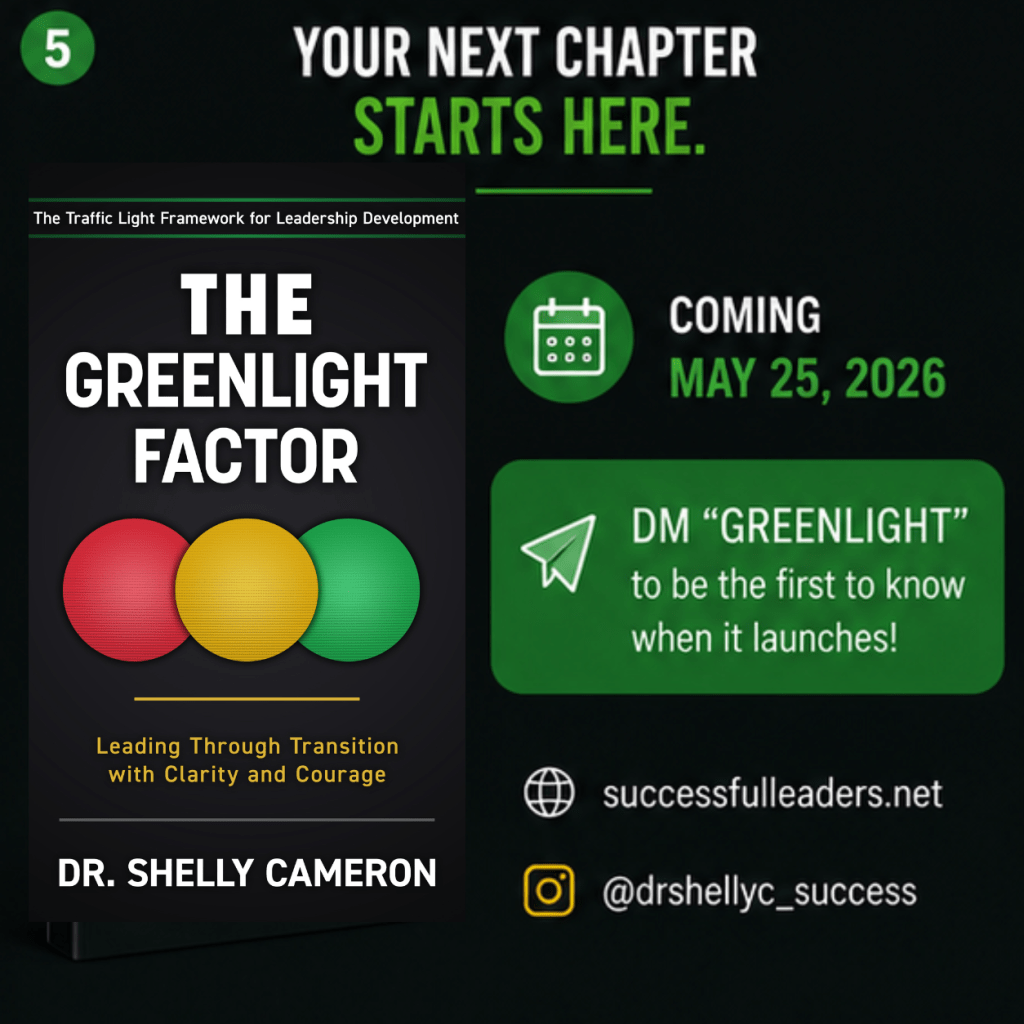
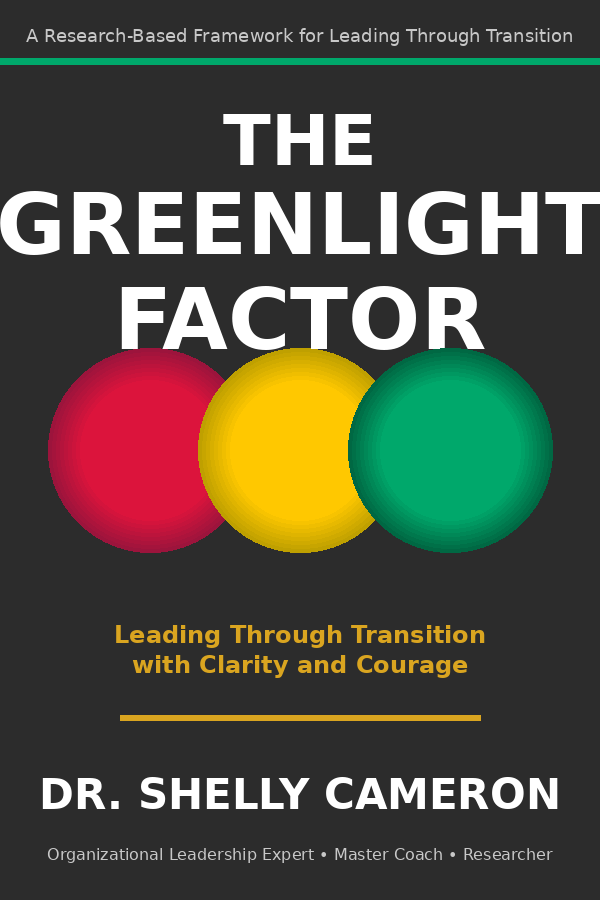
After ten years of judging hundreds of emerging leaders, one pattern kept showing up, the most extraordinary nominees were not the ones with the biggest platforms or the most resources. They were the ones who had already given themselves permission to lead. They did not wait for a title, a stage, or a panel of judges to tell them they were ready. That observation, among others can be gleaned from the book, The GreenLight Factor (a Leadership Development Framework). Get your copy or join the lab today.

What process does your organization use to ensure equity across performance review assessments? Do share. We would love to hear.

Cheers!

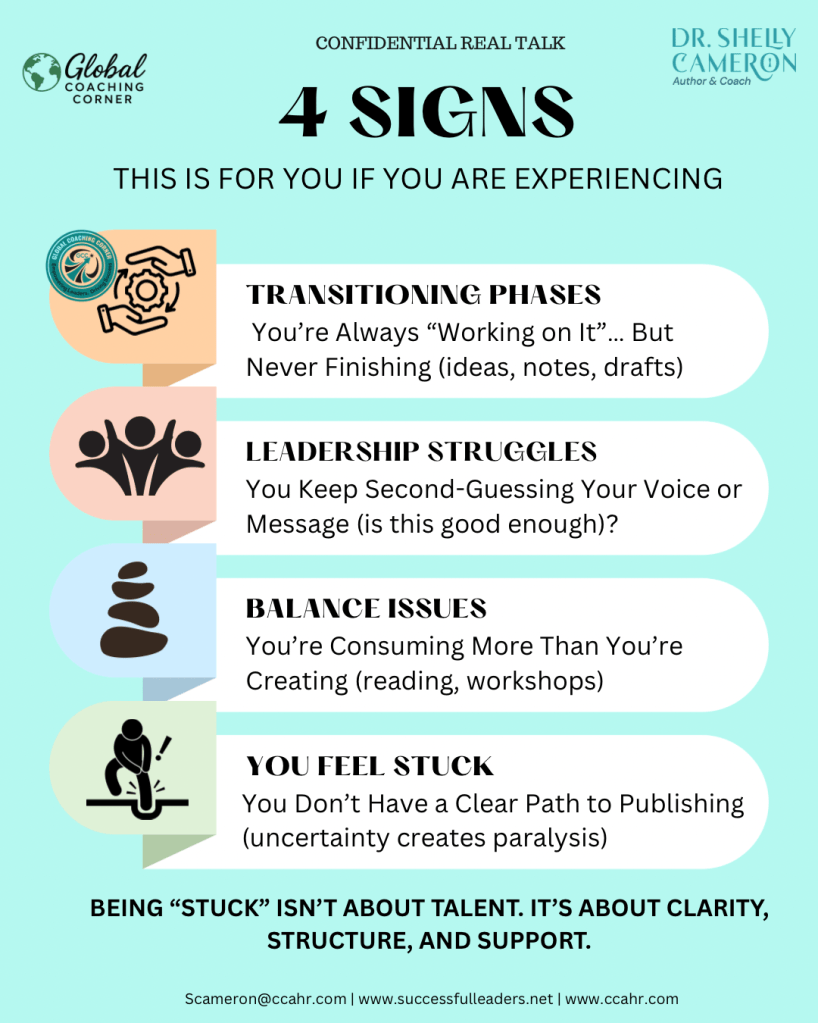
Authors This is For You If You Are Experiencing These 4 Signs

when you have something to do life will not allow you to move forward until you do it. ― Iyanla Vanzant

When you have something to do, life will not allow you to move forward until you do it. So if you caught that writing bug and can’t seem to let it go, then follow that lead. How can you know? Here are for signs that both aspiring and seasoned authors are stuck.

1. You’re Always “Working on It”… But Never Finishing

You have ideas, drafts, notes, and even chapters. But nothing gets completed.
You keep tweaking, rewriting, or starting over instead of moving toward a finished manuscript.

What’s really happening: Perfectionism or lack of structure is keeping you in motion, but not in progress.

2. You Keep Second-Guessing Your Voice or Message

You wonder: “Is this good enough?” “Will anyone read this?” “Should I change direction?” So you rewrite, dilute your message, or abandon strong ideas.

What’s really happening: Lack of clarity and confidence is causing you to disconnect from your authentic voice.

3. You’re Consuming More Than You’re Creating

You’re reading books, watching writing videos, attending workshops. But not actually writing consistently.

What’s really happening: You’re hiding in “learning mode” to avoid the discomfort of execution.

4. You Don’t Have a Clear Path to Publishing

You have written (or started writing), but you don’t know what comes next. Self-publish? Traditional? Hybrid? So, the manuscript sits… and sits.

What’s really happening: Uncertainty about the publishing process is creating paralysis.

Know that being “stuck” isn’t about talent, it’s about clarity, structure, and support. As an author of 11 books, I have been there and now teach the process throughout different communities. If you identified with any of the signs and need help, let’s connect now and get you moving. Clarity is on the other side of the ‘Ask’.

Happy Writing!

Finding Direction in Uncertainty: A Faith Journey

Sunbeams piercing through tall, mossy trees over a dirt path in a lush green forest.

Easter is a reminder that new life follows surrender. What looks like an ending… is often a beginning.

So many of us are waiting for clarity before we move.
Waiting for certainty before we act.

But here’s what I have learned, and what I share in my book GreenLight: When God Says Go:

🟢 God doesn’t give the full roadmap upfront.
🟢 He gives direction at the intersection.
🟢 He speaks as we walk.

This Easter, you have been feeling stuck at some point. Stuck in a decision, in your career, your purpose, or your next step, Start walking with Him again. Through prayer. Through stillness. Through trust.

Because your “green light” is not random. It’s revealed in relationship.

This book was created to help you:
• Hear God more clearly
• Strengthen your prayer life
Move forward with confidence and faith

🌿 He is risen, and so is your next step

Blessings overflow.

Why I Wrote GreenLight: And The Problem I Kept Watching People Get Wrong

I’ve watched a lot of talented people make the same mistake.

Not the same decision, the same kind of mistake. The pattern shows up in different forms, at different career stages, for people in wildly different circumstances. But underneath the surface details, it’s always the same thing: they are making a significant decision from a place that isn’t theirs. From pressure, or expectation, or exhaustion, or the accumulated weight of what success is supposed to look like at their stage of life. And they’re moving fast, because our culture rewards speed and treats deliberation as hesitation.

The results are predictable. Not always dramatic. Sometimes just the slow accumulation of misalignment. The career that looks successful and feels hollow. The role that seemed right and slowly reveals itself as wrong. The decision made in the right direction for the wrong reasons, which turns out to matter more than most people expect.

I started writing The GreenLight Factor because I kept seeing this happen to people who deserved better tools.

The Intersection Nobody Prepares You For

We spend enormous resources preparing people to lead forward. How to execute, how to manage, how to navigate complexity and build teams and drive results. These are real and valuable skills. They are not the skills that determine whether someone builds a career and a life that is actually theirs.

The skill that determines that is navigational. It’s the capacity to arrive at a crossroads. A genuine moment of decision about direction, commitment, and cost, and make a wise choice rather than a reactive one. To know when to stop, when to pause, and when to go. And to do that from a foundation of genuine self-knowledge and clear values rather than from whatever the moment is asking of you.

Most people were never taught this. Not formally, not systematically. They navigate by instinct and imitation, or they follow the path that generates the most external validation, or they make decisions the way they have always made them and wonder why the results keep feeling off. The framework was not available to them.

The Greenlight Factor is an attempt to make it available.

Why traffic lights

The metaphor came from real life. From noticing how often the language people use when they are at a decision point is already traffic language. They talk about things feeling like a red flag. About needing to pause. About the sense that they should be moving but can’t quite go.

The language was already there. What was missing was the framework.

Traffic signals work because they are universal and instantly understood. You don’t need to learn them. You internalized them as a child. Red means stop. Yellow means proceed with caution. Green means go. The framework translates that universal language into the territory of leadership transitions. The moments when you have to figure out whether to halt your current trajectory, pause for reflection and recalibration, or move forward with confidence.

Three signals. Infinite intersections. The same need at every one, to read what’s actually showing, and honor it.

What The Book Is And Isn’t

The GreenLight Factor is not a book about how to make faster decisions. It’s a book about how to make wiser ones, and those two things are not the same. Some of the most important moves in the book involve slowing down, pausing deliberately, and sitting with uncertainty long enough to understand what it’s actually telling you.

It’s not a book about career optimization in the conventional sense. The people in the book’s pages are not chasing maximum achievement. They are navigating toward lives that are genuinely theirs, aligned with their values, suited to their actual wiring, chosen from the part of them that knows what they need rather than the part that knows what looks impressive.

And it’s not a book about having all the answers. It’s a book about developing the capacity to sit with the questions long enough to find the ones that matter, and to trust what you find when you do.

Who It’s For

  • It’s for the person who has everything they are supposed to want, yet can’t figure out why it doesn’t feel like enough.
  • The person who is standing at an intersection they can’t name, feeling a signal they don’t have language for. The person who keeps almost moving and doesn’t know why they are still parked.
  • It’s for the person watching someone they care about make a decision that doesn’t look right from the outside, and not knowing how to say so in a way that lands.
  • It’s for anyone who has learned to lead forward and is still figuring out how to lead wisely.

That’s the problem I kept watching people get wrong. And this book is my best attempt at the framework that helps.

The traffic light doesn’t create the intersection. It just helps you navigate it safely. You’re already at an intersection. The question is whether you’re reading the signal.

The Greenlight Factor: Leading Through Transition is coming soon. Follow along here for more on the framework, the stories behind it, and the intersections that define how we lead our lives.

Cheers!

Author Community Showcase

Life has no limitations, except the ones you make. ~Les Brown

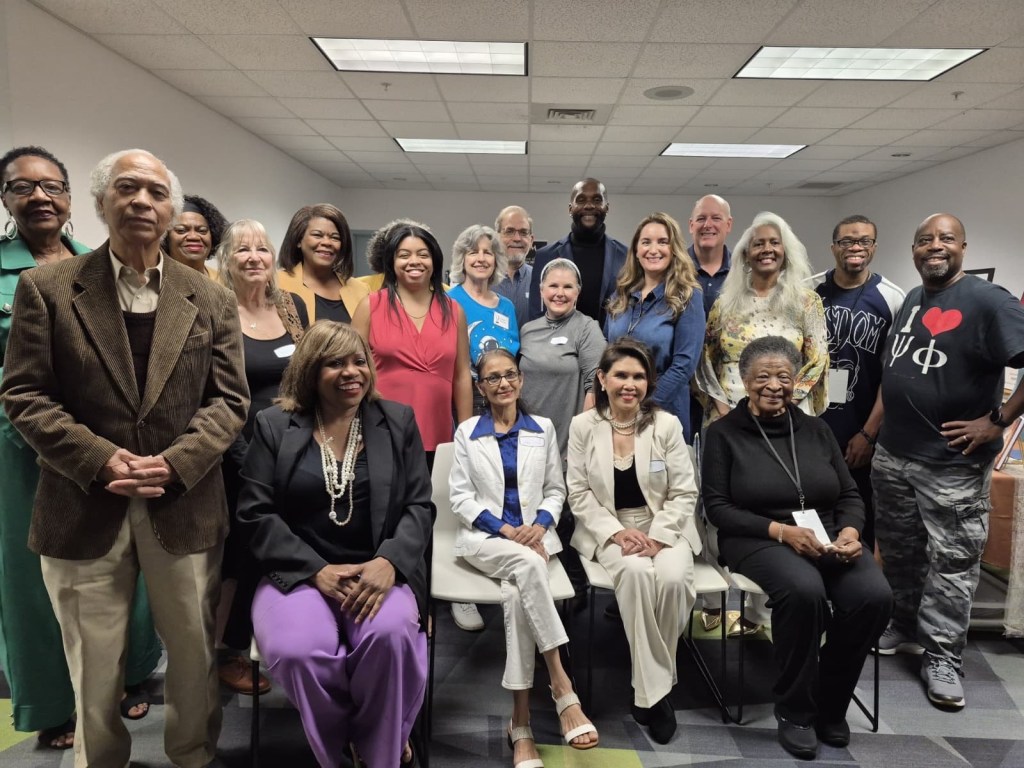
Such an honor to facilitate the gathering of leaders and creatives. The influence, and impact reminds me of why I engage in the work of leadership development.

The intrigue on the faces of attendees, aspiring, debut and seasoned authorpreneurs left a lasting impact. The Greenlight Leadership Factor was definitely felt.

Located minutes from the Broward Mall, the West Regional Library provided the perfect location for easy accessibility for both authors and patrons.

The rich learnings and takeaways was indeed a vibe. Can’t wait to build the craft as the learnings excite.

Thanks to all who made the event a success Dale Mahfood for moderating the panel discussion with Dr Rose Stiffin Filmmaker Jeff Carroll
and Bles Chavez-Bernstein
led to an engaging time with the community. Event hosted by West Regional Library in partnership with Writers Group of South Florida

As the saying goes,

Writers write. Readers read. Together they are one.

Cheers!

5 Self-Published Authors Who Made it Big & How You Can Too

1. E.L. James – Fifty Shades of Grey

  • Starting Point: Self‑published as an e‑book and print‑on‑demand.
  • Breakthrough: Went viral through online word-of-mouth and book clubs.
  • Result: Sold over 150 million copies; major movie trilogy.
  • Lesson: Leverage niche communities (like book clubs, online forums) to spark buzz.

2. Hugh Howey – Wool

  • Starting Point: Released short dystopian story independently on Amazon.
  • Breakthrough: Readers demanded more; he expanded it into a series.
  • Result: Bestseller, foreign rights sales, and Apple TV+ adaptation Silo.
  • Lesson: Listen to your audience and let their feedback shape your next steps.

3. Colleen Hoover – Slammed

  • Starting Point: Self‑published in 2012 while working a full‑time job.
  • Breakthrough: Book bloggers and social media amplified her work.
  • Result: Multiple #1 NYT bestsellers; Netflix adaptation of It Ends With Us.
  • Lesson: Build genuine relationships with influencers and reviewers.

4. Andy Weir – The Martian

  • Starting Point: Posted story for free on his blog, then on Kindle for $0.99.
  • Breakthrough: Readers recommended it heavily; caught publisher’s and Hollywood’s attention.
  • Result: NYT bestseller and Oscar-nominated film starring Matt Damon.
  • Lesson: Offer value first—sometimes giving content away builds your biggest fanbase.

5. Amanda Hocking – Trylle Trilogy

  • Starting Point: Self‑published paranormal romance e‑books.
  • Breakthrough: Priced affordably and marketed directly to YA readers online.
  • Result: Over 1 million copies sold; multi‑million‑dollar deal with St. Martin’s Press.
  • Lesson: Use smart pricing and targeted marketing to quickly grow sales.

Takeaway for Aspiring Authors

Self‑publishing is no longer “Plan B.” It’s a proven path to bestseller lists, film deals, and global readership—if you combine quality writing with smart marketing.

Your next step:

  • Identify your audience
  • Engage them before your book launches
  • Use online platforms to amplify your reach

Master Decision-Making with the GreenLight Leadership Framework

Subscribe to continue reading

Subscribe to get access to the rest of this post and other subscriber-only content.

23 Ways To Fight Writers Block

I am struggling to get inspiration to continue writing a story I started. What do I do? ~New writer

Writers often face that daunting moment when the initial excitement fades and the blank page becomes a fighting nightmare. You may be many chapters in, or just past the opening scene, losing momentum is one of the most common challenges in the creative process. But the good news is that writer’s block and motivational slumps are not permanent. They are signals that you need to shift your approach. Reconnect with your story’s core or simply give yourself permission to write imperfectly.

Here are 23 strategies offered by seasoned authors. These are designed to help you rediscover your pulse and move ahead with renewed energy. Yep, sometimes inspiration can feel frustrating and out of reach. That’s when you dig deep. Adopt a strategy or two to use whenever the writing drought hits.

How To Get Back in the Writing Game

  1. Read books
  2. Keep writing
  3. Go for an isolated nature walk
  4. Relax. The story will write itself if you stop worrying about it
  5. Keep a journal for each project. Write why you can’t think of anything to write
  6. Free write your story until you get a flow going
  7. Follow the advice of keep writing. But be prepared to write stuff you don’t feel okay with. This is how you break the barrier
  8. Write for the sake of writing.
  9. Draw inspiration: music and movies. Inspiration is fuel. Don’t wait for it to fall in your lap
  10. Move. Exercise. It Stimulates your brain
  11. Try dancing
  12. Write one true sentence about your story and repeat it until you get some momentum
  13. Outline the next couple of chapters. Start high level then fill in details. Keep iterating. Often you find there is something in your story that is giving you doubt and this helps to resolve that too
  14. Go hiking with friends and bounce ideas off them
  15. Walk away. Write another book. Sometimes you need space to think
  16. Go on “Artiste Date” (solo excursion somewhere you like). This will help your creative. You need to stock the pond to catch anything worthwhile
  17. Add a new character
  18. Write another element: poetry, prose, scripts
  19. Keep writing. Some days it’s inspiring and exciting. Other days its drudgery. But you sit down and keep writing
  20. Do art. Draw, music, painting, dance, even cooking. Get that creative right brain firing on all cylinders
  21. Make a list of ‘why you like your story and why you’re writing it
  22. Write the ending and then go back and write your way to it
  23. Think “what if”. What if your character got abducted? What if another love comes along? What if the treasure you sought in the jungle housed vampires? Don’t dismiss ideas. Just write them down and then brainstorm it further.

Are you a writer? Is a tip or two missing? Do share. We would love to hear.

Cheers!
How to Answer ‘Why Did You Leave Your Previous Employer’?

“Change is not a threat, it’s an opportunity. Survival is not the goal,  transformative success is.” — Seth Godin 

I was asked the question how do I respond when asked “why did I leave my previous employer.” I decided to share the response through this scenario.

John’s longtime supervisor transferred to another region, leaving him under new management. Unfortunately, the transition wasn’t smooth—his new supervisor was inexperienced, and their working styles didn’t align. Before long, John was placed on a performance plan with reasons that weren’t clearly defined.

As the situation unfolded, John was given the option to either continue under the plan or move on. After thoughtful consideration and advice from trusted mentors, he chose to resign.

While the experience was challenging, John views it as a turning point. It clarified the kind of environment in which he does his best work—one with clear expectations, collaborative leadership, and mutual respect.

Why did you leave your previous employer?

In interviews, the inevitable “Why did you leave?” question can be answered truthfully yet professionally. In John’s case, he felt overwhelmed and contacted his coach to identify how to appropriately respond. The focus should be on what he learned and how he’s now positioned to contribute more effectively in a role that aligns with his strengths.

Stay Truthful Without Oversharing

How someone frames their exit can make a huge difference in how a future employer perceives them. If an employee was asked to resign, the goal is to stay truthful without oversharing, keep it professional, and pivot the conversation back to strengths and fit.

Here are some ways they can respond depending on the situation:

1. Frame It as a Mutual Decision

  • “The role turned out not to be the best fit for my strengths and career goals. After discussions with leadership, we mutually agreed it would be best for me to move on.”
    This works well if they don’t want to sound negative or defensive.

2. Emphasize Reorganization / Role Misalignment

  • “The company was restructuring, and my role was impacted. While I gained valuable experience, it was the right time to look for opportunities better aligned with my skills.”
    Neutralizes blame and shows adaptability.

3. Focus on Growth & Future

  • “I realized that the position wasn’t the right long-term fit. I decided to transition out so I could pursue opportunities where I can contribute at a higher level.”
    Reframes the resignation as intentional rather than forced.

4. Highlight Lessons Learned

  • “That experience taught me a lot about [communication, leadership, project management, etc.]. I’m now looking forward to applying those lessons in a new environment where I can thrive.”
    Shows maturity, resilience, and a forward-looking attitude.

5. Keep It Brief & Positive

If pressed further:

  • “I’d prefer to focus on the value I can bring to this role. I’m confident the skills I developed will be an asset here.”
    Avoids being dragged into negativity or long explanations.

Avoid:

  • Speaking negatively about the past employer.
  • Using words like “fired,” “forced,” or “terminated” unless directly asked (then explain calmly and factually).
  • Sounding evasive—short, honest, positive answers work best.

If you are in this situation, we hope this helps as a brief guide on how to handle the situation as you transition into new role.

On the other hand, have you ever experienced a case like this? How did you handle this rather sensitive career journey? Do share, we would love to hear.

Maximize Holiday Book Sales: A Month by Month Guide

Effective preparation sets the stage for success and sparks creativity

Authors write, publish and leave expecting miracles. It doesn’t happen. Authorship happens mostly by accident as writers choose to share what’s on their hearts. It might be a memoir, poetry, fiction or non-fiction. As their passion unfold, they write then later realize that they have suddenly been thrust into entrepreneurship! How do they get those books off bookstore shelves? Selected on amazon? Shared among family and friends? It behooves them to sit, pray, and wonder why their books just remains stagnant. Most often these are excellent stories that remains dormant for years, not gleaned by readers.

Realizing this pattern, the Writers Group of South Florida held a workshop. Hosted by the West Regional Library in Plantation. This initiative was facilitated by Dr. Shelly Cameron. Here’s a summary of the takeaway points that attendees authors gleaned.

AUGUST – SEPTEMBER: Build the Foundation & Warm Up Your Audience

  • Update book cover, blurb, and Amazon listing with holiday-friendly touches.
  • Secure podcast, blog, and media features for October–December.
  • Plan holiday content calendar (mix of promos, tips, behind-the-scenes, giveaways).
  • Launch pre-order bonuses or limited-time bundles.

October: Visible Campaign & Early Gift Push

  • Submit to gift guides, bloggers, and niche media lists.
  • Collaborate with other authors for holiday bundles or giveaways.
  • Feature reader testimonials and reviews on social media.
  • Run Early Bird discounts to attract early shoppers.

November: Holiday Sales Mode

  • Run a gratitude-themed campaign for Thanksgiving.
  • Offer Black Friday/Cyber Monday E-Book discounts or signed copy specials.
  • Partner with local stores for Small Business Saturday promotions.
  • Send an email countdown series leading up to Thanksgiving.

December: Final Holiday Push

  • Promote e-Books and gift certificates for last-minute shoppers.
  • Run a “12-Days-of-Christmas” themed social media series.
  • Position your book for New Year’s resolutions or inspiration.
  • Post thank-you messages and celebrate your readers

PRO TIPS for Conversions

  • Author Branding Matters: Use consistent holiday visuals across all platforms.
  • Offer Multiple Formats: Paperback, e-Book, Audio-book—make it easy to gift.
  • Make It Shareable: Create “I’m gifting this book!” social media graphics for readers to post.
  • Always Include a Call-to-Action: Don’t just post pretty images—always link to buy.
  • Track & Adjust: Watch which promos get clicks and double down on what works.

There you have it. Did one, two or a few of the above stand out for you? As a published author, which will you adopt? Do share, we would love to hear.

Happy Promoting!

Top 12 Places to Donate Your Books

With so many books to choose from, you’ll have the hard part of deciding which one to donate.

On Instagram I shared the hard task of purging my books. I have a million with little or no storage space. But what happened was…. During my purge, I ended up reading and re-claiming books.

I decided to share my work (purge in process), and an interested person asked, “where can you donate books?” I responded briefly but decided to post more here on the blog.

Popular and Unique Places to Donate Books

Local Donation Options

  1. Public Libraries
    • Many libraries accept gently used books for their collections or book sales.
    • Call ahead—they often have specific donation days or guidelines.
  2. Schools & Colleges
    • Especially helpful for children’s books, young adult novels, and textbooks.
    • Contact local principals, librarians, or teachers to ask if they need donations.
  3. Community Centers / YMCA / Local Clubs
    • Often accept books for literacy programs, tutoring, or community libraries.
  4. Hospitals & Nursing Homes
    • They may accept clean, gently used books for waiting rooms or patient use.
  5. Churches / Faith-Based Organizations
    • Great place to donate devotionals, spiritual books, or children’s materials.

Charitable Organizations

  1. Goodwill or Salvation Army
    • Accepts a wide range of books. Proceeds support their employment programs.
  2. Habitat for Humanity ReStores
    • Some locations take books to sell in support of housing projects.
  3. Books for Africa / Books Through Bars / Better World Books
    • Organizations that distribute books to under-served communities locally or globally.
  4. Little Free Library

Online / Specialized Options

  1. Freecycle.org / Buy Nothing Groups (Facebook)
    • Offer books locally for free and connect with those who want them.
  2. Local Prison Programs
    • Many prisons accept paperback books only. Check with local chaplains or nonprofits.
  3. Book Drives / Literacy Nonprofits
    • Check with local literacy organizations or Rotary Clubs—they may be running book drives.

From Manuscript to Bestseller: Unleash Your Publishing Potential

If you want to change the world, pick up your pen and write.

Martin Luther

Listen to the recording here

Are you a writer with a story burning to be told, but feeling overwhelmed by the traditional publishing maze? Listen to this electrifying workshop facilitated by Dr. Shelly Cameron on behalf of Nova Southeastern University’s Alvin Sherman Library. The tips and tricks will transform your publishing dreams from wishful thinking to strategic action.

In this game-changing discussion, you’ll discover the exact blueprint successful self-published authors use to launch their books, build their audience, and generate real income. We’ll pull back the curtain on the traditional vs self-publishing industry, revealing insider strategies that most writers never learn—from choosing the right platforms and mastering digital formatting to marketing techniques that actually sell books. Whether you’re a first-time author or a seasoned writer looking to take control of your publishing journey, this session promises to equip you with practical, immediately actionable insights. Stop waiting for someone else to validate your story. Listen and Learn how to become the author you’ve always dreamed of being—on your own terms, with your own power. Don’t miss your chance to revolutionize your writing career.

Key Insights: Publishing Questions from Authors You Must Know

Many questions were asked throughout the presentation. Here are a 14.

  1. Should you use Ai for Book cover designs?
  2. Are authors required to let readers know that you used Ai?
  3. What is the full marketing potential for a book?
  4. How do you translate a book into another language?
  5. How do you negotiate speaking fees for your book?
  6. Are there any supporting groups to guide on how to format books on KDP?
  7. How can you hire someone to help with publishing?
  8. I’m doing away with writing the Foreword or comments on back of book. What’s the trend?
  9. Do you have resources to look for the audiobooks?
  10. How much can editors charge for beginner writers?
  11. How do you copyright a book?
  12. How do you find someone to edit your work?
  13. How can I get more exposure for sales other than amazon?
  14. Do I have to be a published author to be an editor?

If you’re interested in publishing your book, listen to the presentation and accompanying responses. If you need help, we are passionate about publishing. Reach out for help today and realize your publishing dream!

Happy Writing!

Travel with Intent

A photographer's view of the world - words and images to inspire your travels and your dreams

Answering daily prompts

In this blog I'm attempting to answer wordpress daily prompts

Alex Tafur

Property Maintenance

Poesy Perspectives

embrace the magic

GREENLiGHT

When God Says Go

HEALTH | INSPIRATION

Health, Reflection, and Poetry for the Journey of Life

My Sister My Friend

Family. Youth. Parenting

Kamileon Photography

Your Focus. Our Lens.