I arrived in Rome on a solo trip with one carry-on and no itinerary. What I did have was a desire and an idea.
Sometimes, that is how a new chapter begins.
We often imagine that people who make bold moves have everything figured out. They know exactly where they are going, how each day will unfold, and what they will do if something goes wrong.
My trip did not begin with that kind of certainty. It began with a willingness to go.
Looking back, I see a connection to the framework I share in The GreenLight Factor: knowing when to stop, when to assess, and when to move forward.
Stop: What Are You Waiting For?
There are good reasons to pause before making a decision. There are also times when waiting becomes a habit.
We wait for company. For permission. For the perfect moment. For enough confidence to feel no fear at all.
Traveling alone invites a question that reaches beyond travel: Am I waiting because something needs attention, or because I am uncomfortable taking the next step?
That distinction matters when we are considering a career change, starting a business, accepting a leadership role, or making a small change we have postponed for months.
The RedLight gives us an opportunity to stop and examine what is holding us back.
Assess: What Do You Actually Need to Begin?
A desire can point us toward something meaningful. It still deserves examination.
What matters about this opportunity? What resources are available? What needs preparation? What are the consequences of moving, or continuing to wait?
The YellowLight is where we consider those questions honestly.
My trip is not a suggestion to approach every life decision without an itinerary. Leaving a job, launching a business, and visiting another country each require different preparation. The useful question is whether we have enough clarity to take the next appropriate step, even when the entire journey remains uncertain.
For someone exploring a new career, that step might be a conversation with a person already doing the work.
For an entrepreneur, it might be testing an idea with a potential customer.
For a leader, it might be asking the question you have been hesitant to raise.
Go: Allow the Journey to Unfold
Rome gave me a way to think about moving forward without having every detail arranged. I could make decisions along the way. That is an important part of the GreenLight moment. We act on what we understand, pay attention to what we learn, and adjust when necessary.
Confidence can grow through that process. Each decision gives us experience to draw on when the next one arrives.
A GreenLight does not promise that everything will be easy. It signals that it may be time to put our preparation and judgment into practice.
What Is Your Rome?
Perhaps your “Rome” is a place you have wanted to visit. Perhaps it is a course, a book, a business idea, or a conversation that could change your direction.
It may be something quite small: protecting an hour for your own goals or finally making an appointment.
Ask yourself:
Stop: What is holding me back?
Assess: What do I need to understand or prepare?
Go: What is one thoughtful step I can take?
I took one carry-on to Rome. The experience gave me a story I could carry into other parts of my life. A reminder that a desire deserves attention, an idea deserves examination, and sometimes the next step deserves a yes.
The GreenLight Factor explores those moments of decision: when to stop, when to assess, and when to move forward with clarity and courage.
At twenty-eight, the room applauded her. At thirty-two, she wondered whether she had deserved it.
Imagine a young leader standing proudly among her fellow 30 Under 30 honorees. Cameras flash. Her family cheers. For a moment, she sees what others see: promise, ability, impact. Then life moves forward. A promotion stretches her. A project falls short. Former peers seem to be moving faster.
She opens an application for an opportunity she wants. Then closes it.
Maybe they overestimated me.
In coaching emerging leaders, I often encounter this tension: people recognized for their accomplishments who later struggle to trust their abilities. The recognition was real. So is the doubt.
Consider: Have new challenges made you question everything you have already demonstrated?
That question opens our reflection on imposter syndrome and how we can acknowledge uncertainty without allowing it to decide our next step.
Imagine preparing for an opportunity you once prayed for. You have the experience. You have done the work. Others believe you are capable. Yet, just before you begin, a quiet thought interrupts:
What if they discover I am not as good as they think?
Perhaps it happens before leading a meeting, publishing a book, teaching a class, or starting a business. Even after years of preparation, you question whether you belong.
This Sunday, pause and consider: Have you been dismissing the very growth you once prayed to experience?
What is imposter syndrome?
Imposter syndrome, also called the impostor phenomenon, describes difficulty accepting your accomplishments and abilities despite evidence of competence. You may credit success to luck, minimize your contribution, or fear being exposed as a fraud. Although commonly called a syndrome, it is not a formal mental health diagnosis. ~K. Weir
It may sound like:
“They chose me because there was no one else.”
“Anyone could have done what I did.”
“If I ask for help, they will realize I am not qualified.”
“I need another qualification before I can begin.”
There is room for honest self-assessment. We all have skills to develop. But needing to learn something does not erase what we already know.
A Sunday perspective: Bring your doubts to God
In Exodus 3–4, Moses responds to God’s assignment with questions about his adequacy and ability to speak. His hesitation offers a familiar picture: seeing the responsibility ahead and feeling painfully aware of personal limitations.
We can recognize ourselves in that moment.
Faith does not require us to pretend we feel confident. We can bring uncertainty into prayer, seek wise counsel, prepare carefully, and move forward with humility.
Humility allows us to acknowledge both our gifts and our need for help. We can thank God for an ability without denying the effort through which it developed.
Self-doubt is not proof of weak faith. It is something we can meet with honesty, compassion, and support.
Five ways to work through imposter feelings
1. Separate the feeling from the evidence. Write down the thought troubling you. Then ask: What facts support this conclusion? What facts challenge it? Feeling unprepared for a particular task may identify a useful learning need. Feeling incapable of everything deserves closer examination.
2. Keep a record of your growth. Save meaningful feedback, completed projects, and examples of problems you have solved. Include the effort behind each achievement. Review these when you find yourself explaining every success away.
3. Give yourself permission to learn. Replace “I should already know everything” with “I can contribute while continuing to develop.” Set realistic standards and ask questions when needed. Competence includes recognizing when to seek help.
4. Let someone trustworthy see the struggle. Speak with a mentor, coach, or supportive colleague who can offer honest perspective. Evidence review, realistic expectations, and supportive conversations are among the approaches psychologists recommend for managing impostor feelings.
5. Take one manageable step. Prepare the presentation. Share the draft. Ask the question. Choose an action appropriate to your skills and responsibilities, then reflect on what actually happened. Allow experience to inform your confidence.
Also consider your environment. Exclusion, bias, and repeated messages that you do not belong can contribute to impostor feelings. Addressing those conditions matters alongside personal reflection.
If self-doubt persistently disrupts your daily life or causes significant distress, consider speaking with a qualified mental health professional.
Your Sunday reflection
Before the new week begins, sit quietly with these questions:
Where am I discounting my preparation or contribution?
What do I need to learn, and what can I already offer?
Whose support would help me see myself more accurately?
What is one thoughtful step I can take this week?
Using the GreenLight approach: Stop and notice the doubtful thought. Assess it against evidence, prayer, preparation, and wise counsel. Then Go with a practical next step.
You do not have to feel completely confident to make a meaningful contribution. Give yourself permission to grow into the responsibility before you.
This week, may you recognize your gifts, accept support, and take your next step with courage.
Sometimes courage is knowing when to walk away from what you once worked so hard to enter.
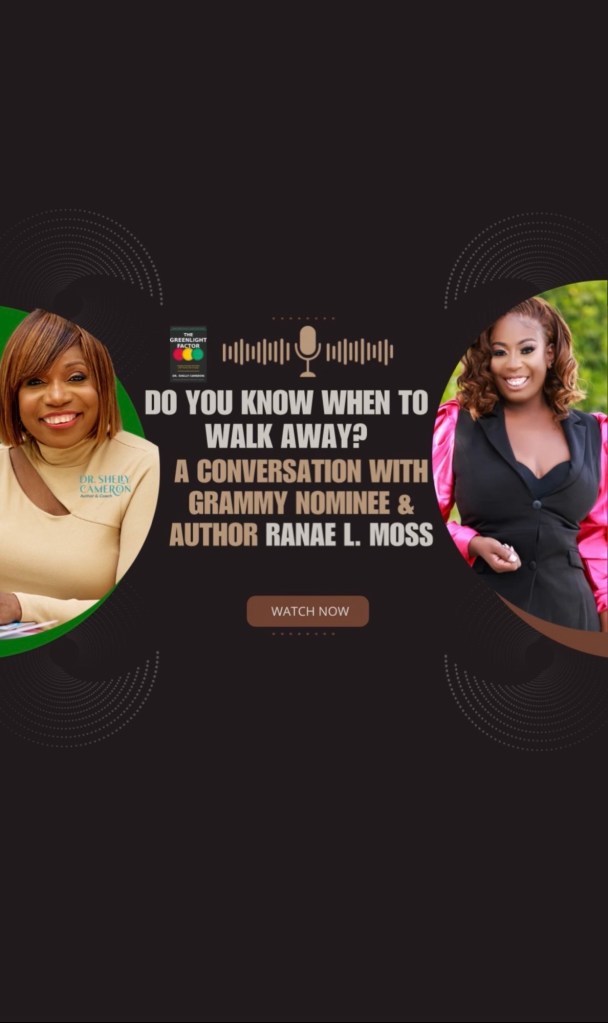
How do you know when it’s time to stop, pause and reassess, or confidently move forward? In this inspiring author conversation, Renea L. Moss, also known on stage as Rai Renea, joins Dr. Shelly Cameron to explore life’s transitions, career decisions, personal growth, and the importance of recognizing when it’s time for a change.
What You’ll Learn in This Conversation
• How to recognize when it’s time to walk away from a situation.
• How to approach career changes and major life transitions.
• Why pausing to assess your options can lead to better decisions.
• How to recognize opportunities that align with your goals and values.
• How The GreenLight Factor can help you navigate uncertainty with greater clarity.
Whether you’re considering a career change, exploring a new opportunity, or wondering what comes next, this conversation offers thoughtful perspectives to help you decide your next step.
Happy listening and do share your one key takeaway!
Leadership is not only about how far we go. It is also about who we help move forward.
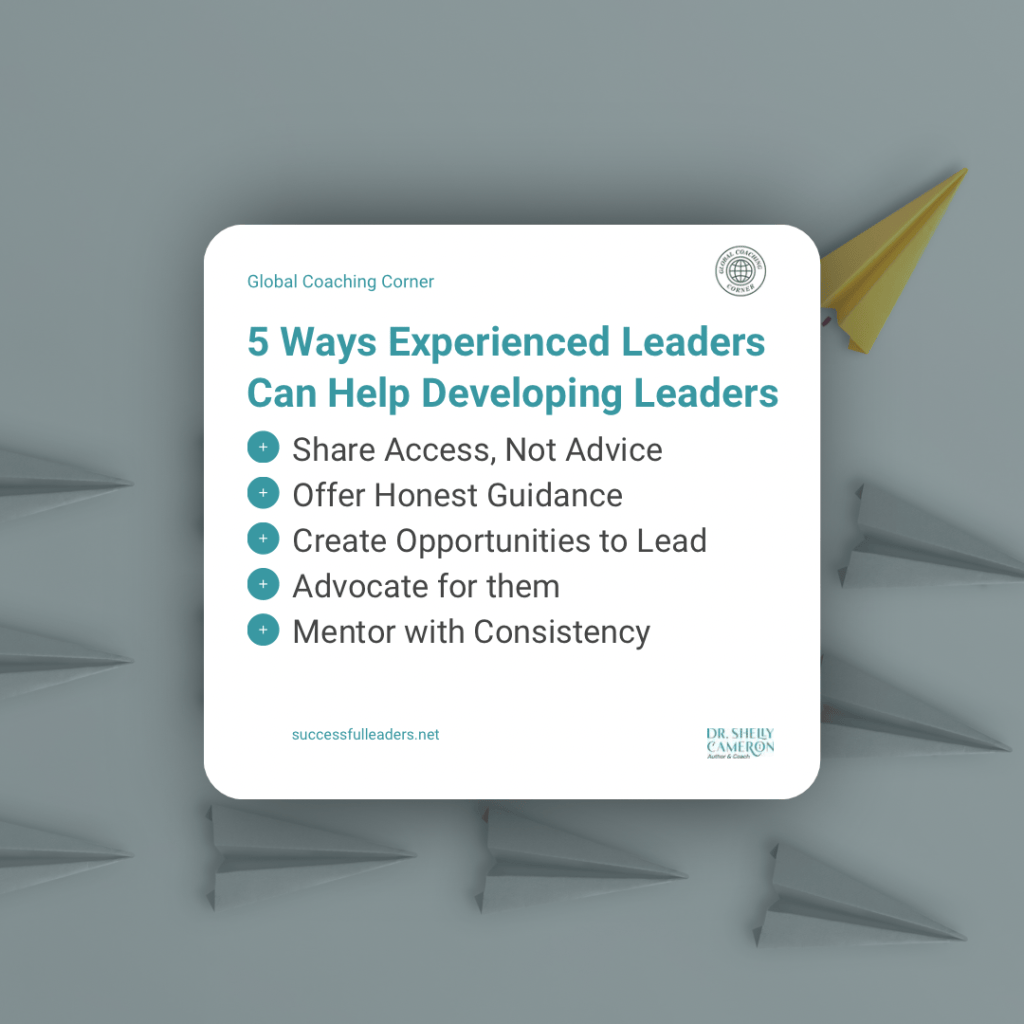
Experienced leaders have knowledge, relationships, and access that can make a meaningful difference in the development of emerging leaders.
Sometimes support looks like advice. At other times, it means opening a door, sharing a name in a room, creating an opportunity, or simply remaining present.
5 Ways to Prepare The Next Generation of Leaders
Here are five ways experienced leaders can help prepare the next generation to lead.
Share access, not just advice Invite aspiring leaders into meetings, events, professional networks, and rooms where they can learn and build relationships.
Offer honest guidance Provide thoughtful feedback, share lessons from your own experiences, and help them recognize potential blind spots.
Create opportunities to lead Give them meaningful projects, visible assignments, or decision-making responsibilities that strengthen their confidence and skills.
Advocate for them Recommend them for promotions, leadership programs, speaking opportunities, board service, and other growth opportunities.
Mentor with consistency Check in regularly, listen without judgment, celebrate their progress, and encourage them through setbacks and transitions.
Who helped open a door for you? Do share. We would love to hear.
Coachability is the ability to accept advice with courage and the emotional awareness that allows us to grow, mature, and succeed. ~Gary P. Rohrmayer
Great leaders don’t wait for a crisis to grow. They invest in their growth before the pressure demands it. Here’s why leadership coaching deserves a place in your development.
1. You can’t see your own blind spots. The higher you rise, the less honest feedback you receive. A coach holds up the mirror that your title, your team, and your calendar won’t. What you can’t see may be exactly what’s limiting your impact.
2. Clarity beats busyness. Many leaders confuse motion with progress. Coaching creates the pause to ask: Am I leading toward what matters, or just reacting to what’s urgent?
3. Your growth sets the ceiling for your team’s growth. Organizations rarely outgrow the leaders at the top. When you develop, your culture, your communication, and your results follow.
4. Leadership is lonely, and it doesn’t have to be. Coaching offers a confidential, judgment-free space to think out loud, test bold ideas, and work through hard decisions without having to appear certain.
5. Real change needs accountability. Insight alone doesn’t transform behavior. A coach helps turn good intentions into consistent action that lasts.
Pause and reflect: When was the last time someone challenged you to think differently about how you lead?
The leaders who grow fastest aren’t the ones with all the answers. They’re the ones brave enough to keep asking better questions.
Ready to lead at a higher level? Let’s start the conversation.
Managers are asked to guide everyone else. Who helps them prepare for the conversations that matter most?”
Picture a manager leaving a difficult team meeting. She knows the work must improve, but she is unsure how to give honest feedback without discouraging the employee. By the next meeting, the conversation still has not happened.
That hesitation is familiar in many workplaces. Managers are expected to set direction, support performance, handle change, and keep people engaged. Yet they often have little space to practice the conversations those responsibilities require.
The need is becoming more urgent. Gallup reports that global manager engagement fell from 31% in 2022 to 22% in 2025. Its research also points to clear expectations, frequent feedback, and development conversations as practices that shape team engagement.
A workshop can introduce these skills. Coaching helps a manager use them when a real conversation feels uncomfortable. Before the next meeting, a manager can pause and ask:
Stop: What assumption am I making about this employee?
Assess: What expectation needs to be clearer, and what do I need to hear?
Go: What specific conversation will I have, and when will we follow up?
Developing managers means giving them room to reflect, rehearse, act, and learn from the result. When we invest in those everyday decisions, we strengthen the people responsible for supporting everyone else.
“Leadership is revealed not only by the words we speak, but also by what our words awaken in others.“
I was speaking with an aspiring author who has written about an experience with a vendor. As I listened, I gleaned that he was writing to vent. But a whole book? Yikes!
It is hardly surprising, then, that books written by politicians, public figures, and those sharing stories of survival, or revealing the private lives of the rich and famous, have become commonplace. Consider the late Princess Diana. Decades after her death, her brother has published a book that revisits aspects of Diana’s story, this time from his perspective.
Naturally, books have the power to educate, encourage, entertain, and transform. They can introduce us to unfamiliar worlds, help us understand other people, and give language to experiences we could never explain on our own.
But books can also hurt.
Sometimes that hurt is intentional. Sometimes it results from careless writing. At other times, the pain comes not from anything harmful in the book, but from the memories, emotions, and longings the words awaken within the reader.
Responsible authors do not avoid every difficult truth. They communicate it with wisdom, fairness, compassion, and respect for human dignity. They understand that their words may travel farther and remain longer than they ever anticipated.
Before we speak, write, publish, or post, perhaps we should pause and ask:
What might these words do once they leave my hands?
Words can unite people, but they can also divide them. Books that portray a race, religion, nationality, gender, culture, or community as inferior can reinforce prejudice and inflame hatred.
When writers repeatedly describe certain groups as dangerous, dishonest, unintelligent, or unworthy, readers may begin to accept those portrayals as truth. Stereotypes are no longer merely words on a page; they can influence how people are treated in workplaces, schools, communities, and public life.
Freedom of expression is important, but writers must also recognize the influence their words can carry. A book should not become a weapon that gives people permission to hate.
2. Books That Malign Reputations
Some books hurt by damaging the reputation of another person. This can occur through false accusations, distorted stories, exaggerated accounts, or the careless disclosure of private information.
Even when authors are telling their own stories, other people may be part of those experiences. Writing honestly does not remove the responsibility to write fairly. Personal pain can shape how an event is remembered, but one person’s perspective may not represent the entire truth.
Before publishing sensitive information about another person, writers should ask:
Is this information true and supported?
Is it necessary to the story?
Am I sharing it to provide understanding or to seek revenge?
Could identifying this person cause unnecessary harm?
Have I distinguished between fact, memory, opinion, and interpretation?
A published accusation can follow someone for years. Once damaging words are released, they are difficult to retrieve.
3. Books Derived From Sadness and Pain
Not every book that hurts is harmful. Some books are born from heartbreak, trauma, disappointment, illness, loss, or years of silent suffering.
Writing can help authors process experiences they have been unable to express aloud. Their words may also become a source of comfort for readers who recognize their own pain in the story.
However, writing from a wound requires care. When the pain is still raw, the author may unintentionally write from anger rather than understanding. The book may reveal more than the author is emotionally prepared to share or reopen wounds that have not yet begun to heal.
Pain can produce powerful writing, but publication should not be confused with healing. An author may need time, reflection, wise counsel, or professional support before sharing deeply personal experiences with the world.
The goal is not to remove the pain from the story. It is to give that pain meaning, direction, and purpose.
4. Books That Ignite Melancholy and Longing
Some books hurt gently.
They remind us of childhood homes, people we once loved, dreams we abandoned, traditions that disappeared, or seasons of life we can never revisit. A familiar setting, a line of dialogue, or the description of an old song can awaken feelings that have been resting quietly for years.
These books ignite melancholy, a tender sadness mixed with longing for what once was or what might have been.
Yet this kind of hurt can be meaningful. It reminds us that we have loved, hoped, belonged, and experienced moments worth remembering. A book may cause us to grieve, but it may also help us appreciate what shaped us.
Sometimes the ache is evidence that the words reached a place within us that needed to be acknowledged.
5. Books That Reopen Trauma
Books dealing with abuse, violence, discrimination, war, illness, or death can unexpectedly trigger painful memories. While difficult subjects should not be avoided, authors and publishers can handle them responsibly.
A brief content note can prepare readers without diminishing the impact of the story. Sensitive experiences should be presented with care rather than used merely for shock, attention, or entertainment.
Writers should consider not only whether a painful scene is powerful, but whether it is necessary and how it may affect those who have lived through similar experiences.
6. Books That Mislead
Books can also hurt when they present misinformation as truth. In areas such as health, history, faith, finance, leadership, and personal development, inaccurate claims can influence serious decisions.
A confident writing style does not make information credible. Authors have a responsibility to research carefully, cite reliable sources, acknowledge uncertainty, and avoid making promises their evidence cannot support.
False information may sell books, but it can also cost readers their money, relationships, opportunities, and well-being.
7. Books That Shame the Reader
Some books motivate through encouragement. Others attempt to motivate through shame. They suggest that people who are struggling simply lack discipline, faith, ambition, intelligence, or commitment.
This approach ignores the complexity of human life. Readers may be facing grief, illness, discrimination, financial hardship, family responsibilities, or circumstances the author has never experienced.
A helpful book challenges readers without humiliating them. It tells the truth while leaving room for compassion, dignity, and hope.
When Hurt Has a Purpose
There is a difference between writing that causes pain and writing that causes harm.
A book may make us uncomfortable because it confronts injustice, exposes wrongdoing, challenges a belief, or reveals a truth we would rather avoid. That discomfort may be necessary for learning and change. Harmful writing, however, dehumanizes, deceives, humiliates, exploits, or attacks without a meaningful purpose. Authors should therefore ask not only, “What do I want to say?” but also:
“What might these words do once they leave my hands?”
Writers cannot control every reader’s reaction, but they can write with truth, fairness, compassion, and responsibility. The strongest books are not necessarily those that avoid pain. They are the ones that handle pain carefully and lead the reader toward greater understanding.
Books can hurt. But when written with wisdom and purpose, they can also help us heal.
Of the seven reasons listed, which resonates most? Any missing that you would like to add? Do share. We would love to hear.
Some books wound by spreading harm; others hurt by awakening truths, memories, and emotions we can no longer ignore.
A couple of years ago, I boarded an eight-hour flight to London. As I settled into my seat, I noticed a gentleman a few rows ahead holding a newly released copy of Prince Harry’s memoir. I gasped with curiosity and immediately asked what he thought of the book. Smiling, he explained that he had just purchased it at the airport and was intrigued by the prospect of learning some of the royal family’s closely guarded stories.
Books have the power to educate, inspire, challenge, and transform. They can also evoke hurt in different ways. Some promote hatred, damage reputations, or spread harmful ideas. Others awaken grief, revisit trauma, expose painful family experiences, or challenge readers and leaders to confront uncomfortable truths.
The books listed below offer examples of these different forms of hurt. Their inclusion does not necessarily mean that they were written to cause harm. Instead, they demonstrate how books can affect individuals, families, communities, and society, sometimes destructively, and at other times in ways that encourage reflection, healing, accountability, or change.
Here are 10 examples representing different ways books can cause hurt:
Mein Kampf by Adolf Hitler An example of writing that promotes hatred, antisemitism, racial superiority, and division.
The Protocols of the Elders of Zion A fabricated antisemitic text that spread damaging conspiracy theories and contributed to hatred against Jewish people.
The Turner Diaries by William Luther Pierce A violent extremist novel that promotes racial hatred and has been associated with real-world acts of violence.
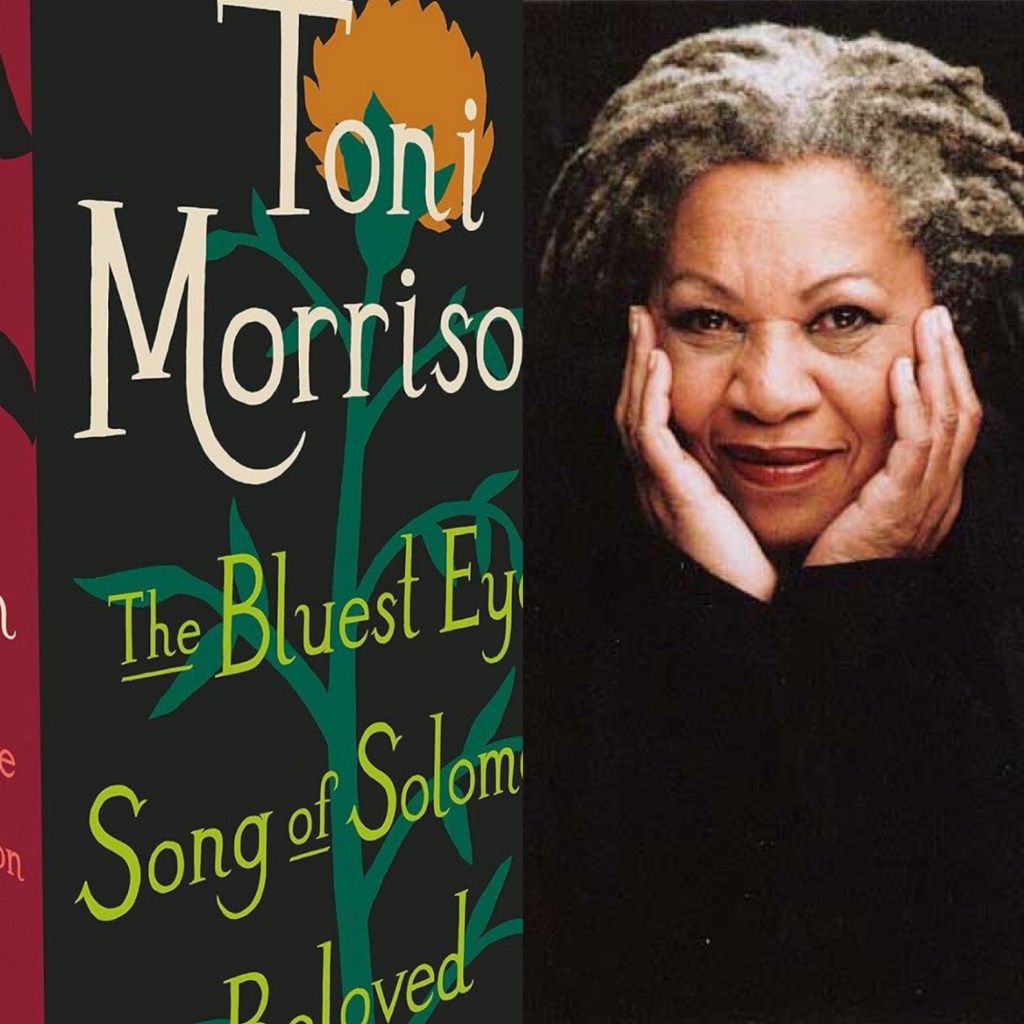
Beloved by Toni Morrison A powerful novel that can cause emotional pain by confronting slavery, trauma, motherhood, loss, and memories that refuse to disappear. Its pain has a purposeful, truth-telling function.
The Year of Magical Thinking by Joan Didion A memoir about grief that may awaken melancholy, loneliness, and longing—particularly for readers who have lost someone close.
Spare by Prince Harry (2023) Its disclosures about grief, family conflict, royal life, and private relationships may cause hurt to the writer, the people discussed, and readers experiencing similar family divisions. The publisher describes it as a work of “revelation, self-examination” and grief. Penguin Random House
I’m Glad My Mom Died by Jennette McCurdy (2022) This memoir confronts parental control, childhood exploitation, eating disorders, and a complicated mother-daughter relationship. Its painful honesty may be liberating for some readers and distressing for others. Simon & Schuster
The Woman in Me by Britney Spears (2023) Spears discusses fame, relationships, motherhood, lost autonomy, and her conservatorship. Such revelations may reclaim the author’s voice while also affecting the people whose actions and relationships are described. Simon & Schuster
Crying in H Mart by Michelle Zauner (2021) A memoir about losing a mother, cultural identity, food, and grief. It can awaken melancholy and longing in readers who have experienced bereavement or fear losing their connection to family and culture. Penguin Random House
Know My Name by Chanel Miller (2019) Miller recounts sexual assault, the legal process, trauma, identity, and healing. The book may reopen painful memories, but it also demonstrates how writing can help someone reclaim a story previously told by others. Harvard Kennedy School
My Safe Place Is With Youby Dr. Shelly Cameron This inspirational book falls within the category of books derived from sadness and pain that ultimately guide the reader toward healing. It acknowledges seasons of vulnerability, uncertainty, loneliness, and longing while encouraging readers to find safety, comfort, and renewed hope through faith. Its words may awaken difficult emotions, but the hurt serves a restorative purpose, reminding readers that they do not have to face painful seasons alone.
Bonus: Two leadership books that create productive discomfort
11.Dare to Lead by Brené Brown This book can “hurt” constructively by asking leaders to examine vulnerability, fear, trust, values, shame, and the ways they protect themselves from difficult conversations. Brené Brown
12. The Five Dysfunctions of a Team by Patrick Lencioni It can be uncomfortable because leaders and teams may recognize their own absence of trust, fear of conflict, lack of commitment, avoidance of accountability, and inattention to results. The hurt comes from honest organizational self-recognition. The Table Group
These examples also demonstrate an important distinction. The first three can cause harm by promoting hate or violence, while others may cause pain by helping readers confront grief, trauma, history, and difficult truths.
Are there any books that you can falls into this category that you can recommend? Please share, we would love to hear.
Leadership is not always standing at the center of the room. Sometimes it is building the room, opening the doors and giving others a place to be seen.
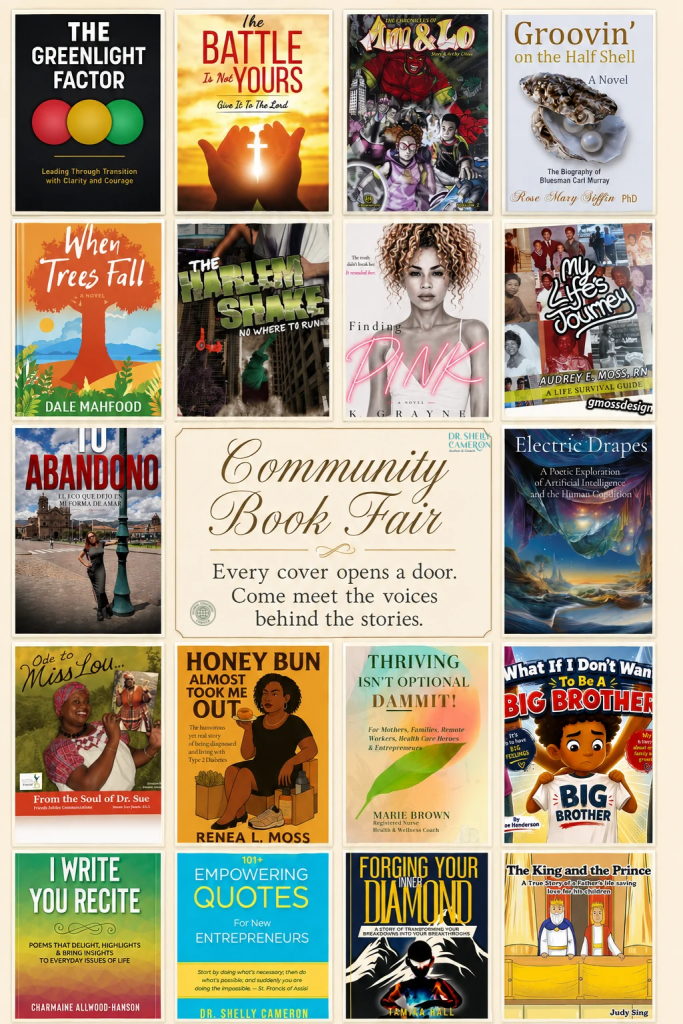
I’ve spent over two decades studying leadership, coaching leaders, and writing about what it takes to lead well. But organizing our community author showcase is prime.
With more than 40 authors converging at the Fred Lippman Cultural Center in the City of Hollywood, Florida, the lineup includes my own presentation co-partnered with Fort Lauderdale’s Jamaica Brew Festival Co-founder, Dale Mahfood. A panel on building author brand, poetry, and a slate of featured authors, this event has become an unexpected classroom. Here’s what it has taught me.
1. Leadership is Choreography, Not Control
You cannot control 40 authors. You can only choreograph the conditions for them to shine. Every author arrives with a different personality, a different genre, a different idea of what “success” for the day looks like. My job isn’t to manage each of them into compliance, it’s to build a structure flexible enough to hold that many voices without losing coherence. That’s a lesson I’ve taught in leadership development for years. Living it, in real time, with real logistics and real personalities, is a different kind of learning altogether.
2. The Panel is a Microcosm of the Whole Event
Curating the panel on building author brand has been its own leadership exercise. Choosing who sits at that table, what questions get asked, and how the conversation is sequenced is really about clarifying a shared message from different perspectives. That’s what leadership often is: not silencing distinct voices, but helping them harmonize around a purpose bigger than any one of them.
3. Behind-the-Scenes Work is Still Leadership
I’ve long been more comfortable letting the work speak rather than putting myself forward. This event has stretched that. I’m not just organizing from behind the curtain this time, I’m also presenting, which means stepping into visibility while still holding the operational threads together. Leadership doesn’t always look like standing at the podium; sometimes it’s making sure the podium, the poetry reading, and the featured author segment all run on time so everyone else can have their moment.
4. Poetry and Prose Remind Me Leadership Needs Range
Weaving poetry alongside author presentations and a business-minded panel has reminded me that leadership isn’t one register. Sometimes it calls for strategy and structure. Sometimes it calls for space; for feeling, for art, for the parts of a message that a bullet point can’t carry. A good leader, like a good event, knows when to shift registers.
5. Community Events Reveal Leadership at Full Scale
With 40+ authors, a cultural center, and multiple event formats layered into one day, nothing exposes gaps in planning, communication, or delegation faster than a live event with a fixed date. There’s no theoretical framework that substitutes for the real-time problem-solving this requires and that, more than any case study, is where leadership is truly learned.
As the event approaches, I’m struck by how much this process mirrors the leadership principles I’ve spent my career researching and teaching: clarity of purpose, distributed voice, adaptability, and the discipline to serve something larger than yourself. Sometimes the best leadership lessons don’t come from a classroom or a book, they come from the folding chairs and program schedules of a community event.
A book may be written by one person, but it travels farther when readers choose to carry its message forward.
Writing a book is often a deeply personal accomplishment, but an author’s journey does not end when the book is published. Authors must then work to help readers discover, trust, and connect with their work. Often this happens while managing the costs of publishing, promotion, and public appearances.
When authors speak about meaningful support, they frequently mention more than book sales. They remember the reader who left a thoughtful review, recommended the book to a friend, shared a social media post, attended an event, or introduced them to a new opportunity. These actions may seem small, but collectively they help authors expand their reach and remain encouraged.
Here are five practical ways readers can support authors and help meaningful stories and ideas reach a wider audience.
Buy their books Purchase directly from the author when possible, as this may provide greater financial support.
Leave an honest review Reviews on Amazon, Goodreads, Barnes & Noble, and other platforms help increase a book’s credibility and visibility.
Share the book with others Recommend it to friends, book clubs, libraries, schools, or community organizations that may find it valuable.
Engage with the author online Follow, like, comment on, and share the author’s posts. Consistent engagement helps their work reach new readers.
Invite the author to participate Consider them for interviews, podcasts, speaking engagements, workshops, book clubs, panels, or community events.
Essentially, supporting an author goes beyond buying a book. Read it. Review it. Recommend it. Share it. Invite the author into new rooms.
How have you supported an author? Do share. We would love to hear.