I Want to Write My Life Story. But Where Do I Even Begin?

We write with open hands, and not with fists. ~Beth Kephart

Early in life, my mom wanted to write her life story. A trailblazer, she was one of the country’s first female automobile mechanic who was later fired for getting pregnant. Decades later she passed away without collating the details, as only she could.

The most overpowering reason to write your story is because if you don’t, that version of the story dies with you. That’s what happened with my mom. Today, I am a writer of several books, but it would be remiss of me to think that I could capture details the way she would have if only she had written them herself.

I also reflect on the life of Dolly Parton who wrote many songs with tales of female experiences such as “Working-9-to-5, What a Way to Make a Living.” The world was her stage and through her legacy, she left her indelible mark because she chose to capture and impact many through her songwriting endeavors.

So, I encourage you to write. There is only person who holds the full, lived truth of your experience. Not the polished version other people saw, not the résumé version, not even the version your closest family remembers, but the real one. The one with the doubt and the mess and the moment things actually turned. Once you’re gone, that’s gone. No one can reconstruct it from the outside.

Here’s How Writers Recommend That You Write Your Life Story

In a public forum, a woman shared her desire to write her life story. With confusion she asked, “where do I start?” As members chimed in, I captured some of their feedback to encourage, lead, and guide her how to get it done. Here I share a few:

  1. Write as if you are telling a friend what happened.
  2. Begin with a diary of your current life
  3. Break it down into three parts ages 0 to 21; 22 to 40; 41 to 65. Then make some bullet points of major parts of your life during those periods. Then flesh out each bullet point into a chapter. As you do this, you will remember more things, and more chapters will be born. But breaking the whole down into bite-size chunks like this will help you get started.
  4. You could think of 3-5 of the most impactful moments of your life, both your lowest and highest times. From there you can inquire into your internal state of mind and emotions. Then you will probably begin to connect the dots from other events in your life which will help fill and tell your story.
  5. Just start writing now. What you write will not be the finished article, but just get on with it. Worry about formatting and how to publish later.
  6. Keep the pressure of where to start off of you. Just write something, and then something else, and then something else.
    A beta reader for my novel suggested a late chapter in my novel was the ideal starting chapter. So, I moved it and he was right.
  7. If you have never been a “writer,” this may be much more challenging than you think. Writing a book is hard enough when writing fiction and essays. Journaling is something you may have always practiced and enjoy doing. It’s not impossible to learn for a specific goal, but it may be quite challenging.
  8. From your earliest memory put dates on the entry. When you remember other things from those times you can add them later.
  9. I’d start with the moment or experience that still feels the most alive to you, rather than worrying about telling your entire life story from beginning to end. Write that scene as honestly as you can and let the memories and meaning unfold from there. You don’t need to have the whole structure figured out before you begin. Once you have some pages down, you can start seeing the themes and moments that deserve to become chapters. Most importantly, don’t worry about making it perfect on the first draft. Just tell your story.
  10. Easy. Start writing one memory or scar or grief or shame at a time
  11. All stories need a plot ARC, character ARC, theme, conflict, tension, and resolution. Find those and write.
  12. I did mine–birth to enlistment, 22-year enlistment and post military. (First 18-years, next 22-years and then invite things as they happened). Write everything you can remember. Cut things out later
  13. Think of best or worst thing you ever experienced. Then, jump on your board and ride that wave with your full passion. Not tough. Just need to jump.
    Editing comes later.
  14. Unless the beginning was terrible or horrific or shocking in some way, don’t start there. That’s so boring. Honestly ask yourself, is your life story interesting? Not to you, a friend, a neighbor, or someone who loves or even likes you… but to a complete stranger.
  15. I kind of want to do this too. I thought of starting with a description of the hospital I was born in and a story my mom always told about a man in the waiting room offering to buy a baby. My dad allegedly punched him for asking to buy me. Is it true? Who knows? But kind of a cool story. This was in 1957.
    You could begin by describing the weather the day you were born. (You can look that up). A pregnancy anecdote your mother told; what was going on in the world; etc.
  16. A good way is remembering short stories and then grow them, if you want chronologically after the stories are in place. Also, I read other biographies and finally would ask myself why I am writing it and why would someone who doesn’t know me would want to read it
  17. I’ve just published the final part of my memoir. Two books in all. Once you begin more memories will flood your head. If something happened that defined you, start there. The Following chapters could be looking back. Then continue into the future. Please just start writing, it will come together, you will feel it’s right.
  18. I was told when I began that memoirs only sell if you are famous and debut novels barely sell. My second book released the 15th of August went straight to number 1 on new releases on kindle true crime. Don’t let anyone put you off. Just start writing

Hmm, interesting recommendations. What has been your experience? Do share. We would love to hear.

Cheers!

Have You Reflected Long Enough Or Is It Time to Decide?

Not every opportunity requires an immediate yes.

And not every hesitation means no. Sometimes, we simply need a YellowLight.

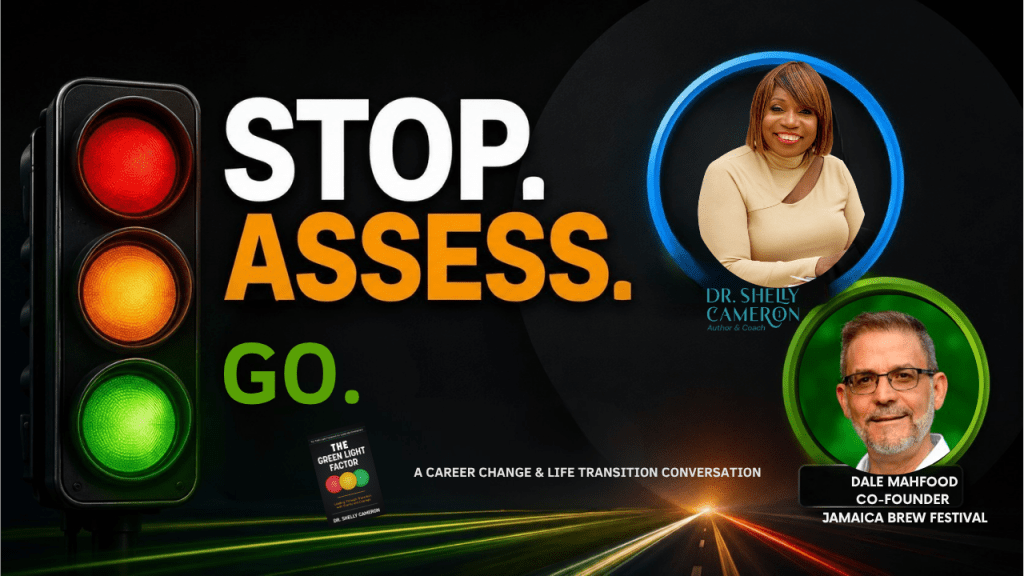
In a recent conversation about The GreenLight Factor, we discussed the RedLight, YellowLight and GreenLight framework for navigating career changes, life transitions and leadership decisions.

One viewer raised a thoughtful question:

How do you know when a YellowLight situation needs more reflection versus simply making the decision and moving on?

It made me pause. Reflection is valuable. It gives us space to examine what we’re feeling, gather information, consider consequences and determine whether an opportunity aligns with where we are, and where we’re going.

But reflection can also become a hiding place.

  • We can think.
  • And rethink.
  • Analyze.
  • And analyze again.

Eventually, we have to ask: Am I still gathering information, or am I afraid to make the decision?

For me, that’s an important distinction. If critical information is missing, the consequences are significant, or something still feels misaligned, stay at the YellowLight a little longer.

But if you have the information, you need and find yourself repeatedly circling the same questions, perhaps the YellowLight has already done its job.

The goal isn’t to eliminate uncertainty before moving forward. The goal is to gain enough clarity to make an intentional decision.

And sometimes that decision is GreenLight: Go.

Sometimes it’s RedLight: Stop.

Either can be the right decision.

As you move into a new week, perhaps this is your opportunity to ask:

🔴 What do I need to stop?

🟡 What deserves more reflection?

🟢 What am I ready to move forward with?

And maybe one final question:

Have I reflected long enough, or is it simply time to decide?

I recently had the opportunity to explore these ideas in a conversation about career change, life transitions and The GreenLight Factor: Leadership Framework. I’ll share the video for anyone who would like to listen to the full conversation.

Questions, thoughts? Do share, we would love to hear.

Cheers!

What Are You Afraid To Ask For?

Asking for help is not a sign of weakness – it is the greatest sign of strength. ~Kendra Scott

I was walking through Walmart when an older gentleman spotted me passing by and immediately asked for help. His wife was on FaceTime, but he couldn’t hear her. “Why can’t I hear her?” he asked, placing the phone in my hand before I could even respond. I turned up the volume, and just like that, he was back in conversation with his wife. He was so relieved that he never even stopped to say thank you.

I smiled and walked away. What stayed with me wasn’t the missing “thank you.” It was how easily he had asked a complete stranger for help. He had a problem. He saw someone who might be able to help. So he simply asked.

I was happy to help. But the encounter made me think: How often does this happen around us?

Asking for help is not a sign of weakness – it is the greatest sign of strength. ~Kendra Scott

As the world becomes increasingly digital, some people are unintentionally being left behind. Seniors may struggle with technology that was never part of their everyday lives. Employees arrive at work to discover that a familiar system has changed, sometimes with little or no advance training. Even something as routine as paying a bill can now require navigating an online portal, or facing a late fee for not using the new process correctly.

QR codes. Apps. Online registrations. Electronic programs. Digital payments. Even giving our tithes and offerings has increasingly moved online.

Technology may make life more convenient for many of us, but for others, it can make a once-simple task feel unnecessarily complicated.

And sometimes, there is no real choice. Learn the system, ask someone for help, or risk being left behind.

That’s what brought me back to the gentleman in Walmart. He didn’t pretend to understand. He didn’t allow embarrassment to stop him. He had a problem, saw someone who might be able to help, and he asked.

Perhaps there is a lesson in that for us all as leaders.

Love Letter to Jamaica

The land of my birth

Oh Island in the sun

I Came across a post on Jamaica Independence Day online and thought why not join the fun. Without skipping a beat, I chimed in my participation:

The culture, food, vibes, the unity.

If I was going to write a love letter to Jamaica, I’d tell of the beauty, the solace, the scenes of the seas, the ability to breathe in the island’s serenity and beauty. It’s Irie. Its love.

It’s the land of my birth.

When Everything Looks Good But Still Feels Wrong

Broken Crayons still color. ~Lifehack

You have the job. The title. The experience. Maybe even the salary you once hoped for. From the outside, everything looks good.

So why doesn’t it feel right?

This is a question many successful professionals quietly wrestle with. Sometimes we remain in situations because they still look like success. We worked hard to get there. Other people admire what we’ve accomplished. Walking away, or even questioning it, can feel ungrateful or irresponsible.

Growth Has a Way of Making Yesterday’s Dream Feel Different Today

  • What once challenged you may now drain you.
  • What once excited you may no longer inspire you.
  • What once aligned with your goals may no longer align with who you’re becoming.

That doesn’t automatically mean it’s time to leave. It may simply mean it’s time to pause. Before making a major career, business, or life decision, give yourself permission to ask:

What has changed?
Is it the environment, or me?

What am I feeling?
Am I tired, frustrated, burned out, bored, or genuinely ready for something different?

What am I holding onto?
Is it purpose, or is it comfort, fear, status, or other people’s expectations?

A resilience mindset that can help us re‑evaluate when things feel wrong.

What would alignment look like now?

Not every uncomfortable season requires an exit. Sometimes we need rest. Sometimes we need boundaries. Sometimes we need a new challenge within the same environment. And sometimes, after careful reflection, we realize that we’ve simply outgrown where we are. The goal isn’t to make a quick move.

The goal is to understand the signal before deciding what comes next.

If everything in your life looks good but something still feels wrong, don’t ignore that feeling. Pause. Reflect. Listen. You may not need an immediate answer. You may simply need enough quiet to hear the question you’ve been too busy to ask.

Reflection: What in your life still looks right on paper, but deserves another look? Do share. We would love to hear!

Cheers!

The Cost of Never Pausing …

When was the last time you stopped long enough to think?

We have always believed that the busiest person is the most successful. Our calendars are full. Our phones never stop buzzing. We rush from one meeting to another, answer emails late into the night, and celebrate how much we accomplished in a single day. Yet one question quietly lingers:

When was the last time you stopped long enough to think?

Many leaders have mastered the art of moving forward but forgotten the discipline of pausing. Ironically, some of life’s biggest mistakes are not made because we lacked talent or opportunity. They happen because we never gave ourselves time to reflect.

Why Reflection Matters

Reflection is not laziness. It is not wasting time. It is one of the most productive investments a leader can make.

A pause allows us to step back from the noise and ask questions that busyness never permits:

  • Am I still moving toward what truly matters?
  • Is this decision aligned with my values?
  • What have I learned from this experience?
  • What needs to change before I continue?
  • Am I leading others well while neglecting myself?

Without reflection, we can spend years climbing a ladder only to discover it was leaning against the wrong wall.

When Leaders Should Pause

There is no perfect schedule for reflection, but there are moments when it becomes essential.

After a major success.
Celebrate the achievement, but also ask, What contributed to this outcome? What should we repeat? What could be even better next time?

After disappointment or failure.
Instead of immediately moving on, pause to understand what happened. Reflection transforms setbacks into wisdom.

Before making an important decision.
The pressure to respond quickly can be overwhelming, but not every decision requires an immediate answer. Sometimes the best leadership move is to create space for careful thought.

During seasons of transition.
Whether beginning a new role, changing careers, launching a business, or entering retirement, transitions deserve thoughtful reflection. Clarity often comes before confidence.

When life feels overwhelming.
Sometimes exhaustion is not a sign that we need to work harder. It is a signal that we need to slow down long enough to regain perspective.

The Hidden Cost of Never Pausing

When we never stop to reflect, we may begin to:

  • Repeat the same mistakes.
  • Make reactive rather than intentional decisions.
  • Lose sight of our purpose.
  • Neglect our health and relationships.
  • Mistake activity for progress.
  • Continue saying “yes” to opportunities that should have been “no.”

The cost is often invisible at first, but over time it becomes significant.

Your Next Pause

Reflection does not require a weekend retreat or hours of uninterrupted time. Sometimes fifteen quiet minutes with a journal, a walk-through nature, sitting by the beach, or simply turning off your phone is enough to hear what constant activity has been drowning out.

Some of our greatest insights arrive not while we are rushing, but while we are still.

This Sunday, give yourself permission to pause.

  • Look back with gratitude
  • Look back with honesty
  • Look ahead with intention

Because the leaders who pause are often the leaders who move forward with the greatest clarity.

Reflect:
What is one area of your life or leadership that deserves your undivided attention before you take your next step?

The Most Important Leader You’ll Ever Lead

I sat in the stillness of the morning dew. Birds chirping quietly. Soft breeze moving through treetops amidst the dew heavy grasses. The cool, still air of sunrise created the perfect moment for my thoughts to breathe.

As I mentally listed the many roles I carry; author, coach, mentor, leadership developer, colleague, mom, and more; I realized someone was missing from the list.

Me.

In the hustle and bustle of life, I had quietly disappeared from my own list. Sadly, that isn’t uncommon. Many leaders become so committed to serving others that they forget to lead themselves.

With trailing thoughts the question arose, Who is the most important person you will ever lead?” It isn’t your team. It isn’t your organization. It isn’t your family.

It’s You

Yes, you. We spend a great deal of time learning how to lead others: our teams, organizations, and families. But the most important leadership journey begins much closer to home. It begins with leading ourselves.

Self-leadership is the daily practice of managing our thoughts, choices, attitudes, and actions before expecting others to follow our example. It isn’t about perfection. It’s about intentional growth.

The strongest leaders aren’t always the loudest voices in the room. They’re often the ones who have learned to pause before reacting, stay true to their values, admit when they’re wrong, and keep growing long after they have earned the title.

Every day presents us with Choices:

  • Will I let fear make this decision?
  • Will I choose comfort over growth?
  • Will I respond, or simply react?

Those quiet decisions shape our leadership more than our title ever will. As you prepare for the week ahead, take a moment to reflect:

  • What habit is helping me become a better leader?
  • What mindset do I need to leave behind?
  • What one courageous step will I take this week?

Leadership isn’t built in a single moment. It’s built one decision at a time.

The quality of your leadership tomorrow depends on how well you lead yourself today.

What is one self-leadership habit you’re committed to strengthening this week?

Before You Read The GreenLight Factor, Meet the Woman Who Lived It

I Am Woman

Every book has a story behind it. This one is mine.

Before The GreenLight Factor existed as a book, it existed as a life. A series of roles, rooms, and relationships that quietly shaped everything I now know about leadership.

I want to do something I don’t always make time for: properly introduce myself. Not just my credentials, but the journey behind them.

I Am a Certified Master Leadership Coach

This isn’t a title I hold lightly. Becoming a Certified Master Leadership Coach meant times of deep study, practice, and honest self-examination. It means I have sat across from myriads of leaders. Leaders at all levels and helped them find what was already inside them.

The greatest coaching insight I have ever received? The green light is rarely about permission from the outside. It’s about permission from within.

I was recognized for exemplary service within the community. As a result, I continue my quest to help Crown the Next Generation. Being the strategic leader behind the 30 Under 30 Emerging Leader in Washington DC, is testament to my commitment to emerging leadership development. I have served as Chief Judge and celebrated the 10th Anniversary of the program in 2026.

There is nothing more powerful than watching a young leader step into their own green light.

I Led HR Strategy Across the Andina & Caribe Region for a Big Pharma Company

Operating across cultures, languages, and borders taught me that leadership is not one-size-fits-all. The best leaders I encountered, and tried to be, were the ones who led with both strategy and soul. Who understood that behind every organizational chart is a human being trying to do meaningful work.

That experience is woven into every page of this book.

I Served Four Terms as VP of the Hospitality & Human Resource Association of Broward County (HHRABC), FL and President of the Writers Group of South Florida

I have always believed that leadership must extend beyond the walls of any organization. Community leadership taught me that showing up especially when no one is keeping score, is one of the most important things a leader can do. And leading a writers’ group? That lit a fire in me that culminated from my other books on leadership, success, inspiration and faith.

And Now, here’s my Newest Book

The GreenLight Factor is the book I wish I’d had at the beginning of my leadership journey.

It’s not a manual. It’s a mirror. A roadmap built from real experiences. It exemplifies the wins, the pivots, the moments of doubt. The breakthroughs that came when I finally stopped waiting for someone else to give me permission to lead boldly. I wrote it for:

  • The leader who knows they are capable of more but keeps waiting for the “right” moment.
  • The professional who has been told to wait their turn.
  • Anyone who has ever dimmed their own light to make others more comfortable.

Your green light is already on.

One More Thing

If you stay around long enough, you will also learn that I am a mom to two incredibly driven, slightly workaholic adult children who work in the corporate world. I take partial credit and full responsibility for any overachieving tendencies. 😄

And I am grandmom to two basketball players and yes… two dogs; one a beagle who is without question the wisest member of my younger daughter’s household. These dogs are the greatest teacher of strategic rest I have ever encountered.

I share all of this not to show you that the path to this book was not a straight line. It was a full, layered, beautifully imperfect leadership journey.

And that’s exactly what The GreenLight Factor is about.

Thank you for being here. Follow along. The best is yet to come.

💚 With purpose.
Finish 2025 Strong: Leadership Lessons from Thanksgiving

Recalibrate… Finish Strong

Thanksgiving may have passed, but the spirit of gratitude is one of the most powerful leadership tools we carry into the rest of the year.

This is the season where leaders shift from reflection to readiness. While many people slow down mentally, high-impact leaders use this window to recalibrate. It’s not about rushing to finish tasks. It’s about finishing the year with clarity and intention.

Gratitude sharpens our focus.
It grounds our decisions.
And it reminds us that leadership is not measured only by what we achieve, but by who we become along the way.

As we move toward the close of 2025, here’s a question I encourage leaders to sit with:

What is ONE decision you can make right now that will set you up for meaningful growth in 2026?

This may be a decision to:
• Delegate more intentionally
• Step into a new direction
• Release what no longer aligns
• Seek clarity before making your next move
• Invest in development (your own or someone else’s)

The weeks between Thanksgiving and New Year are the most underestimated leadership window, and yet one of the most powerful. Small shifts made now create profound momentum in the new year.

If you are a leader navigating transition, stepping into a new role, launching something new, or simply needing clarity for 2026, support is available.

And if you know someone in your organization, circle, or family who needs that guidance… this season is the perfect time to gift it.

Let’s finish strong, lead with intention, and walk boldly into the year ahead.

Elevate Your Leadership: Key Questions to Shape 2026

Who looks outside dreams; who looks inside, awakens. ~Carl Jung

As the year closes, the most effective leaders are the ones who pause long enough to evaluate, realign, and elevate. These 12 questions are designed to help you step confidently into 2026 with clarity, courage, and intention.

Take a moment to reflect on each. Use them to guide your vision, your team, and your next level of growth. Strong leadership doesn’t happen by accident. It’s built through awareness, alignment, and action.

Reflection Questions

1. What are my top 3 leadership wins from 2025?


2. What drained my energy this year, and why?


3. What habits strengthened my leadership?


4. What habits weakened it?


5. What opportunities did I ignore that I should revisit?


6. What does success look like for me in 2026?


7. What limiting belief must I leave behind?


8. Who do I need to become next year?


9. What relationships do I need to nurture?


10. What boundaries do I need to create?


11. What skills must I develop or sharpen?


12. What is ONE bold move I will take before Jan. 31?

If you’d like support creating a strategic leadership plan for the new year, join the year-end and January coaching sessions. This is designed for leaders in transition and professionals preparing for a stronger 2026.

What will you do differently next year? Which question resonated with you the most? Do share. We would love to hear.

Cheers!

Morning Rituals in Rural Mendez: Coffee and Nature

A walk in nature walks the soul back home. –Mary Davis

Meandering rural life—Mendez to be exact. All is quiet. Birds chirping as early morning risers stir. One waiting atop the yard’s fence. Scrolling, watching social media platforms, my guess. Others busy collecting water from tanks to prepare breakfast. Shower, get refreshed as each forge ahead getting ready for the day—whatever lies ahead.

Taxis, the main source of transportation, make haste on the soon to be busy road. They look, at times toot, to alert waiting passengers.

Coffee With a View

Coffee in hand, it was my chance to review the surroundings. The skeletons of a huge Mango tree await its next fruit-bearing season. Coconut tree sears high above the sky—as if saying to the others, “dare to rise above me.” Oh the power to see above and beyond everything. Banana leaves flicker against its stem. The Ackee tree buds promises of the country’s national dish and breakfast cravings. And Oh, the sways of the delicious avocado tree. A sure replica of island life in the land of wood and water–Jamaica to be exact.

I peer into the distance to see my grandpa’s grave—memories of decades gone by. I envision life as he too saw it.

Cheers as you too take time out to think about rural life.

Success Strategies

Motivate. Inspire Your Personal Growth & Development | Global Coaching Corner

Travel with Intent

A photographer's view of the world - words and images to inspire your travels and your dreams

Answering daily prompts

In this blog I'm attempting to answer wordpress daily prompts

Alex Tafur

Property Maintenance

Poesy Perspectives

embrace the magic

GREENLiGHT

When God Says Go

HEALTH | INSPIRATION

Health, Reflection, and Poetry for the Journey of Life

My Sister My Friend

Family. Youth. Parenting