What Can Exposure Do for You?

Exposure is the act of placing yourself deliberately, in environments that are bigger, faster, or more demanding than the ones you currently occupy.

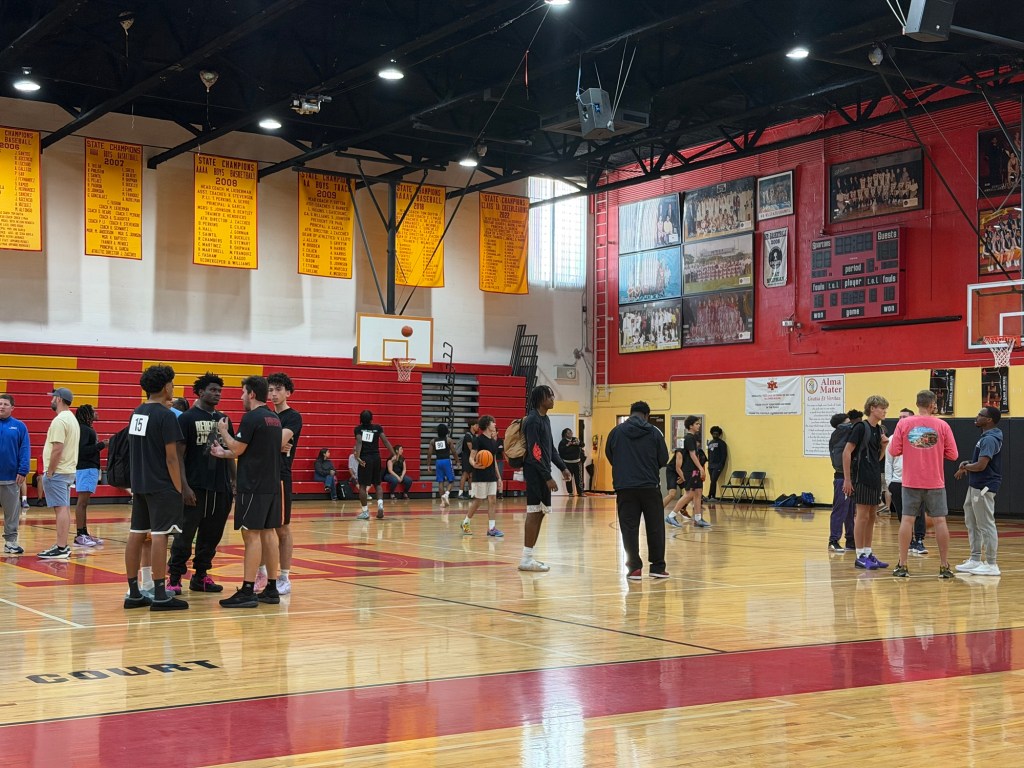
Outdoor basketball court with ball on ground and sunset over water

Perhaps the most terrible (or wonderful) thing that can happen to an imaginative youth…is to be exposed without preparation to the life outside his or her own sphere.

Stepping into new arenas whether on the court, in the boardroom, and everywhere in between, can change the trajectory of your life.

It started as a simple conversation about basketball camp.

My teenage nephew had been eyeing a summer program. It was one of those intensive week-long camps where serious young players come together to train, compete, and grow. Was it about the drills? The coaches? The three-point shooting clinics? Sure, partly. But when we sat down and talked about why it really mattered, one word kept rising to the surface:

Exposure

The more I thought about it, the more I realized that exposure isn’t just a basketball concept. It might be one of the most underrated forces in human development. For athletes, yes. But just as powerfully for aspiring leaders, young professionals, and anyone standing at the edge of something new, wondering whether to jump.

What Exposure Actually Means

We throw the word around casually. “It’ll be good exposure.” But what are we really saying?

Exposure is the act of placing yourself deliberately, in environments that are bigger, faster, or more demanding than the ones you currently occupy. It’s the difference between reading about competition and feeling it. Between hearing about leadership and practicing it under pressure.

For my nephew, basketball camp means going up against players who are better than him. It means his weaknesses will be visible to coaches, to peers, to himself. That sounds uncomfortable because it is. But that discomfort is precisely the point. Exposure forces an honest accounting. You learn, very quickly, where you actually stand.

The Three Gifts Exposure Gives You

1. A Realistic Mirror

Most of us live inside a bubble. It might be our neighborhood team, our school, our workplace, our friend group. Within that bubble, we develop a sense of who we are and what we’re capable of. Sometimes that sense is accurate. Often, it isn’t.

Exposure shatters the bubble, gently or not so gently.

When my nephew steps onto a court with players from across the state, kids who have been training just as hard, maybe harder, he will get a truer picture of his game. Not to discourage him, but to inform him. What needs work? Where does he genuinely excel? What habits has he developed that will not hold up at a higher level?

Leaders face the exact same reckoning. A manager who’s brilliant within their own team can be humbled the moment they sit at a table with peers from other organizations. That humbling isn’t failure, it’s information. And information is the raw material of growth.

2. A Larger Network

Here’s a truth that sounds almost too practical: the people in the room matter as much as the experience itself.

At basketball camp, my nephew won’t just learn from coaches. He will meet players from different cities, with different stories and different styles. Some of those connections will fade. A few might last for years. One might lead somewhere he can’t yet imagine, a friendship, a recommendation, or an opportunity down the road.

This is exactly how exposure works for aspiring leaders. Conferences, stretch assignments, cross-functional projects, mentorship programs. These aren’t just resume builders. They are relationship laboratories. Every new environment you enter expands the constellation of people who know your name, your work, and your character.

Networks built through shared experience are different from networks built through LinkedIn requests. They carry weight because they carry memory.

3. An Expanded Sense of What’s Possible

Perhaps the most quietly powerful gift of exposure is this: it rewires your imagination.

When you have only ever seen one way of doing things, that way feels like the way. Exposure introduces you to other ways, other styles of play, other models of leadership, other definitions of excellence. And once you have seen them, you can’t unsee them.

My nephew might watch a point guard at camp move in a way he’s never seen before and suddenly realize that style of play is available to him, too. He didn’t know to want it until he saw it. That’s what exposure does. It expands the menu.

For leaders, this might look like visiting a company with a radically different culture, or watching a mentor handle a crisis with grace you didn’t know was possible, or sitting in a room where someone younger than you is making decisions with a confidence that quietly raises your standards for yourself.

Exposure Requires Courage

Let’s not romanticize this too much. Exposure can be uncomfortable, even painful. It requires showing up in spaces where you are not yet the expert. It requires being seen before you’re ready. It requires the willingness to look at least temporarily, like someone who doesn’t have it all figured out.

That’s a lot to ask. Especially of a teenager. Especially of someone who has worked hard to project confidence in their current environment.

But here’s the thing about leaders who consistently grow; they develop a tolerance for being the least experienced person in the room. They learn to treat that feeling not as a threat to their identity, but as a signal that they’re in the right place.

The discomfort of exposure is the sensation of your ceiling rising.

How to Seek Exposure Intentionally

Exposure doesn’t always announce itself. Sometimes you have to go looking for it. Here’s how to start:

  • Say yes to the uncomfortable invitation. The panel you weren’t sure you were qualified for. The networking event in an unfamiliar industry. The stretch project that scares you a little. Say yes first, and figure out the rest after.
  • Choose environments that challenge your assumptions. Seek out people who think differently, lead differently, and have succeeded by different paths than you have mapped out for yourself.
  • Reflect on what you observe. Exposure without reflection is just tourism. After every new experience, ask yourself: What surprised me? What did I learn about my own gaps? What do I want to try differently?
  • Be patient with the timeline. Exposure plants seeds. Some of them take years to grow. Don’t measure the value of an experience only by what it produces immediately.

Back to the Basketball Court
Are you willing to step

into the room?

My nephew is going to that camp. He will face players who are faster, more polished, maybe more confident. He will have moments of doubt and moments of revelation. He will come home with sore legs, new connections, and if he’s paying attention, a clearer sense of both who he is and who he could become.

That’s not a small thing. That’s everything.

Whether you’re sixteen and chasing a dream on a basketball court, or thirty-five and stepping into your first leadership role, or fifty and pivoting into something entirely new, exposure is available to you. It’s not reserved for the “already-great”. It’s how the ordinary become exceptional.

So the question isn’t whether exposure can do something for you.

The question is: are you willing to step into the room?

Sometimes the most important thing you can do is simply show up somewhere bigger than where you have been.

How have you experienced exposure in your personal growth? Do share, we would love to hear.

Cheers!
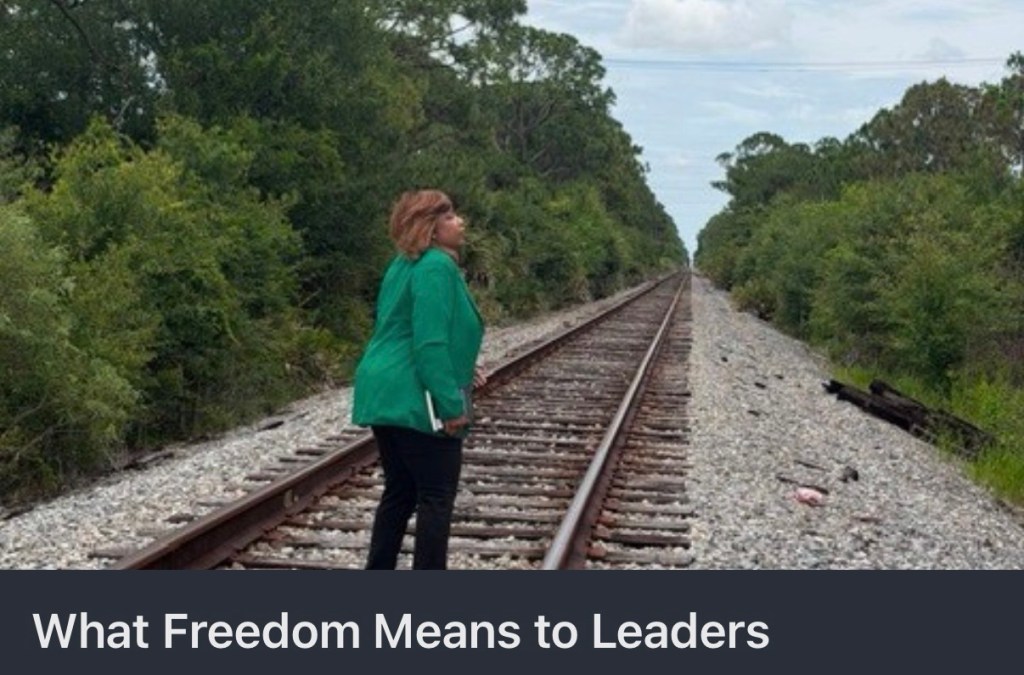
What If Your Next Step Doesn’t Come With Full Clarity: Just a Green Light?

I was speaking to a graduating class filled with aspiring leaders at a university. Some were confident. Others were still figuring things out. Many were quietly asking themselves, “What’s next for me?”

The beautiful thing about learning is that no one can take it away from you. ~ B.B. King

The question tugged what if your next step doesn’t come with full clarity but just from a green light? I was reminded of this recently while reflecting on a moment with aspiring leaders. It one of those times that makes you pause. I was speaking to a graduating class filled with aspiring leaders at a university. Some were confident. Others were still figuring things out. Many were quietly asking themselves, “What’s next for me?”

What stayed with me wasn’t just the opportunity to speak… It was the weight and privilege of being in a position to influence how someone thinks about their next step.

Because leadership doesn’t begin when someone gets a title.
It begins in moments like those.
At intersections.
In seasons of uncertainty, decision-making, and quiet reflection.

Over the years, I’ve come to understand this more deeply. People aren’t just looking for answers. They are looking for clarity. They are looking for the confidence to move forward, or the wisdom to pause.

That’s the heart behind the work I continue to do. Whether in a conference room, a coaching session, or a leadership lab, the mission remains the same:
to support aspiring and emerging leaders as they navigate their path, intentionally.

It’s also the foundation behind my GreenLight framework, helping individuals discern when it’s time to stop, assess, or move forward with conviction.

And while the stages may look different today, the calling hasn’t changed. I’m still committed to showing up in spaces where growth is happening, and where leaders are becoming.

If you’re in a season of transition, decision, or seeking clarity in your leadership journey, know that you don’t have to navigate it alone.

The journey continues.

The GreenLight Factor FAQs

The GreenLight Factor

Understanding the GreenLight Factor’s leadership framework from the ground up

Q1  What is the GreenLight Factor?

The GreenLight Factor is a leadership framework created by Dr. Shelly Cameron that helps individuals move from a state of waiting and hesitation into purposeful, confident action. It is built on a core insight from Dr. Cameron’s research and coaching experience: most people are not held back by a lack of talent or opportunity. They are held back by waiting for a green light that was never going to come from the outside. The framework teaches leaders how to give themselves that green light.

Q2  Where did the idea come from?

The GreenLight Factor grew out of Dr. Cameron’s two decades of leading and coaching professionals in the global healthcare industry. It combines with her GreenLight book series and the groundbreaking research on Caribbean American leaders published in the Journal of American Academy of Business. A recurring pattern emerged: the most successful leaders shared a specific set of behaviors and mindsets that allowed them to move decisively, even in uncertain conditions. The GreenLight Factor distills those patterns into a teachable, actionable framework.

Q3  Who is the GreenLight Factor designed for?

It is designed for anyone who has ever felt ready but held back. This includes emerging leaders stepping into their first leadership role, mid-career professionals navigating a transition, aspiring authors and entrepreneurs, and community changemakers who want to lead with greater intention and impact. It is especially relevant for the 18 to 30 age group, where leadership identity is still forming and external validation is often sought before internal confidence is found.

Q4  What does the GreenLight Factor teach?

While the full framework is delivered through coaching and workshops, the GreenLight Factor addresses three core areas:

. 1. Identify the RedLight

What is keeping you stuck? The fears, limiting beliefs, external expectations, or self-doubt that are blocking your forward movement.

. 2. Build internal clarity and conviction

Define your values, your vision, and your leadership identity on your own terms, not what looks impressive to others.

. 3. Move with momentum and strategy

Set goals that align with who you are, create accountability structures, and develop the confidence to act even when conditions are imperfect.

Q5  Is the GreenLight Factor a coaching program, a book, or a workshop?

It is all three in different forms. The framework is delivered through one-on-one coaching with Dr. Cameron, through group workshops and speaking engagements, and is embedded throughout her published works. Whether you encounter it on stage, in a session, or in a book, the core principles remain consistent.

Q6  How is it different from other leadership frameworks?

Many leadership frameworks focus on skills, how to manage, delegate, communicate, or strategize. The GreenLight Factor starts one level deeper: with identity and permission. It addresses the internal barrier that most leadership training skips entirely. The moment when a capable person stops waiting for someone else to confirm they are ready and begins leading from their own conviction. It is particularly powerful for first-generation leaders, emerging leaders from underrepresented communities, and anyone whose background has conditioned them to seek approval before acting.

Q7  Can the GreenLight Factor be applied in organizations?

Absolutely. Organizations that invest in the GreenLight Factor for their teams see a shift in how people show up. More initiative, more ownership, more willingness to lead without being told to. It is especially effective as part of onboarding programs for new managers, emerging leader development programs, and diversity initiatives focused on retaining and developing high-potential talent.

Q8  What is the connection between the GreenLight Factor and the 30 Under 30 program?

Dr. Cameron’s decade of service as Chief Judge and Advisor for the 30 Under 30 Changemakers’ Program has deeply informed the GreenLight Factor. Evaluating hundreds of emerging leaders over ten years gave her a unique window into what separates those who are already leading from those who are still waiting and what it takes to bridge that gap. The GreenLight Factor is in many ways her answer to what she observed: a framework built specifically to accelerate the journey from emerging to impactful.

Q9  How do I learn more or experience the GreenLight Factor?

Connect with Dr. Cameron through Global Coaching Corner for one-on-one coaching, invite her to speak at your event or organization, or follow both Instagram pages, @drshellyc_success and @global_coaching_corner, where GreenLight Factor content is shared regularly. Stay tuned for upcoming workshops and published resources here on the blog or social media.

Before You Read The GreenLight Factor, Meet the Woman Who Lived It

I Am Woman

Every book has a story behind it. This one is mine.

Before The GreenLight Factor existed as a book, it existed as a life. A series of roles, rooms, and relationships that quietly shaped everything I now know about leadership.

I want to do something I don’t always make time for: properly introduce myself. Not just my credentials, but the journey behind them.

I Am a Certified Master Leadership Coach

This isn’t a title I hold lightly. Becoming a Certified Master Leadership Coach meant times of deep study, practice, and honest self-examination. It means I have sat across from myriads of leaders. Leaders at all levels and helped them find what was already inside them.

The greatest coaching insight I have ever received? The green light is rarely about permission from the outside. It’s about permission from within.

I was recognized for exemplary service within the community. As a result, I continue my quest to help Crown the Next Generation. Being the strategic leader and archetect behind the 30 Under 30 Emerging Leader in Washington DC, is testament to my commitment to emerging leadership development. I have served as Chief Judge and now working towards celebrating the 10th Anniversary of the program in June.

There is nothing more powerful than watching a young leader step into their own green light.

I Led HR Strategy Across the Andina & Caribe Region for a Big Pharma Company

Operating across cultures, languages, and borders taught me that leadership is not one-size-fits-all. The best leaders I encountered, and tried to be, were the ones who led with both strategy and soul. Who understood that behind every org chart is a human being trying to do meaningful work.

That experience is woven into every page of this book.

I Served as VP of the Hospitality & Human Resource Association of Broward County (HHRABC), FL and President of the Writers Group of South Florida

I have always believed that leadership must extend beyond the walls of any organization. Community leadership taught me that showing up especially when no one is keeping score, is one of the most important things a leader can do. And leading a writers’ group? That lit a fire in me that culminated from my other books on leadership, success, inspiration and faith.

And Now, here’s my Newest Book

The GreenLight Factor is the book I wish I’d had at the beginning of my leadership journey.

It’s not a manual. It’s a mirror. A roadmap built from real experiences. It exemplifies the wins, the pivots, the moments of doubt. The breakthroughs that came when I finally stopped waiting for someone else to give me permission to lead boldly.

I wrote it for the leader who knows they are capable of more but keeps waiting for the “right” moment. For the professional who has been told to wait their turn. For anyone who has ever dimmed their own light to make others more comfortable.

Your green light is already on.

One More Thing

If you stay around long enough, you will also learn that I am a mom to two incredibly driven, slightly workaholic adult children who work in the corporate world. I take partial credit and full responsibility for any overachieving tendencies. 😄

And I am grand mom to two dogs, one a beagle. Who are without question the wisest members of my youngest household. These dogs are the greatest teacher of strategic rest I have ever encountered.

I share all of this not to show you that the path to this book was not a straight line. It was a full, layered, beautifully imperfect leadership journey.

And that’s exactly what The GreenLight Factor is about.

Thank you for being here. Follow along. The best is yet to come.

💚 With purpose.

There Was A Season When I Said “Yes” To Everything

There was a season when I said “yes” to everything.

  • Yes to leading.
  • Yes to supporting.
  • Yes to helping.
  • Yes to solving problems that weren’t mine to solve.

And I told myself it was because I was being kind. But in reality, I was also overextending, over-giving, and undervaluing my time.

One of the turning points came while building programs for a local community partnership. I loved the mission. I loved the people. I loved seeing people gain confidence and direction.

But at some point I had to ask myself:

If I’m doing professional-level leadership work, why am I treating it like a casual favor? That moment changed how I lead.

  • I didn’t stop serving.
  • I didn’t stop giving.

I simply began doing it with structure, boundaries, and sustainability. Because I’ve learned this:

  • You can be a generous leader without becoming a doormat.
  • You can be kind without being depleted.
  • You can serve your community without abandoning yourself.

And if you’ve been carrying too much “because you’re capable” this is your reminder:

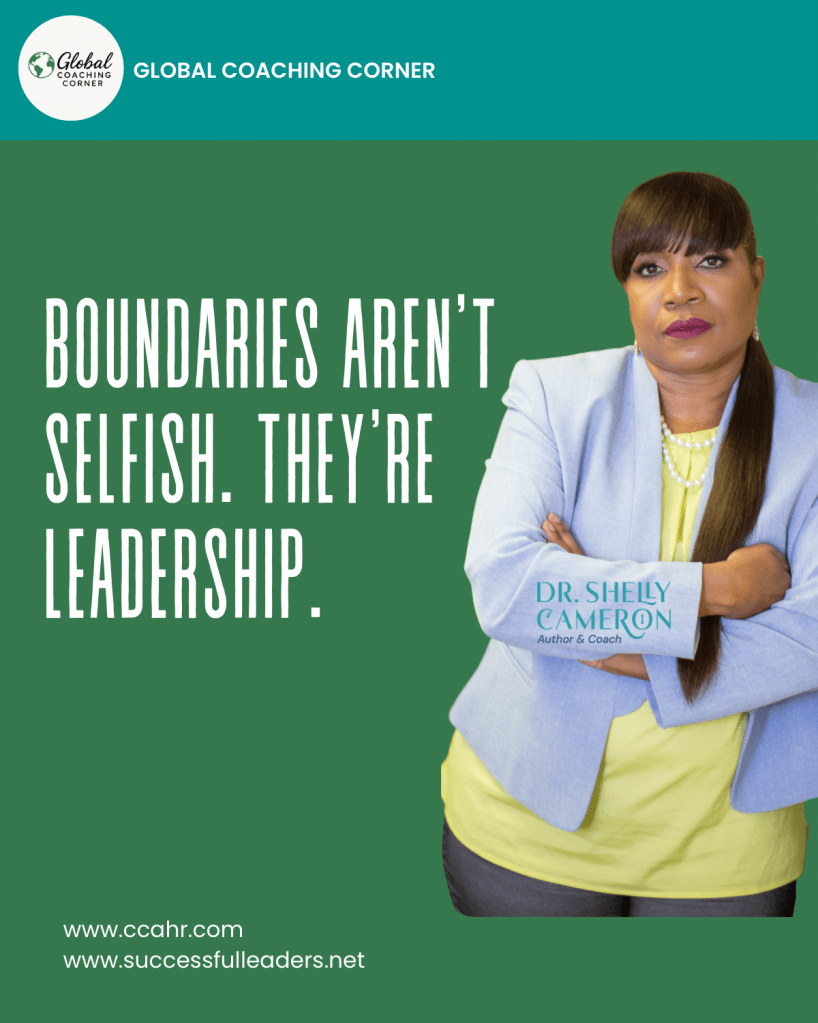
Boundaries aren’t selfish. They’re leadership.

Join the Boundary Lab seminar. Create your own boundaries.

The Hidden Cost Of No Boundaries

Time spent rescuing is time not spent leading.

It’s the Hard truth. Leaders who say ‘yes’ to everything often:

🔭Get seen as Dependable
But not Strategic

🔭Helpful
But not high-level

Because time spent rescuing is time NOT spent leading.

BOUNDARIES create space for:

  • Thinking
  • Strategy
  • Growth
  • Influence

Without them you stay Stuck in reactive mode. Ask yourself, are you Leading or constantly rescuing?

If your leadership feels reactive instead of intentional, it’s not a motivation problem. It’s a boundary problem.

Coaching helps leaders set professional boundaries without guilt or fear. Let’s chat about our boundaries lab if this resonates.

Cheers!

Overly Nice Leaders Burn Out

Being a “Nice” leader without Boundaries often lead to:

•Overcommitment
•Emotional exhaustion
•Resentment
•Being the default problem-solver for everyone

Support doesn’t mean self-sacrifice.
Availability doesn’t mean 24/7

Boundaries are not unkind.
They are a leadership skill

The leaders who last long-term learn how to say:

🔭I can help. Here’s when
🔭That’s not mine to carry
🔭Let’s find a better process

If you feel stretched thin but still “showing up” for everyone…
It may not be a workload issue
It may be a Boundary Gap.

If this resonates, let’s explore.

Leadership Lesson from Grief: Lean on Your Team

Strength In Life’s Dark Times

My respect for Grieving loss began when I was in elementary/ primary school. I accompanied my grandmother to many funerals. Once I overheard someone asking which side of the family she belonged. She replied, “I don’t even know her.”

Decades later I found myself doing the same thing. Attending funerals to support members of the church I did not even know.

Naturally, as years progressed, I too would lose loved ones including the closest, my mom. Consequently, I was fortunate to have the support of my coworkers and church family. I discovered the burden of grief was made lighter having others around.

It’s the same when leading others despite the type of organization or group you belong. Having others around makes the workflow an easier process. Essentially smoother. We never have to carry the load ourselves.

So today, if you’re a leader, lean on the support of your team. Delegate to those with the relevant skillsets. Doing so makes the workload lighter.

…And if you’re grieving, do the same. Initially, you may need to grieve alone. But as the days progress and arrangements need to be made, accept the support of friends, relatives and colleagues. Most have your best interest at heart.

Remember, together we rise.

Elevate Your Leadership: Key Questions to Shape 2026

Who looks outside dreams; who looks inside, awakens. ~Carl Jung

As the year closes, the most effective leaders are the ones who pause long enough to evaluate, realign, and elevate. These 12 questions are designed to help you step confidently into 2026 with clarity, courage, and intention.

Take a moment to reflect on each. Use them to guide your vision, your team, and your next level of growth. Strong leadership doesn’t happen by accident. It’s built through awareness, alignment, and action.

Reflection Questions

1. What are my top 3 leadership wins from 2025?


2. What drained my energy this year, and why?


3. What habits strengthened my leadership?


4. What habits weakened it?


5. What opportunities did I ignore that I should revisit?


6. What does success look like for me in 2026?


7. What limiting belief must I leave behind?


8. Who do I need to become next year?


9. What relationships do I need to nurture?


10. What boundaries do I need to create?


11. What skills must I develop or sharpen?


12. What is ONE bold move I will take before Jan. 31?

If you’d like support creating a strategic leadership plan for the new year, join the year-end and January coaching sessions. This is designed for leaders in transition and professionals preparing for a stronger 2026.

What will you do differently next year? Which question resonated with you the most? Do share. We would love to hear.

Cheers!

How Can A Business Owner Overcome Fear of Marketing? 4 Steps-To-Success

Overcome Marketing Fear

At a networking event, a bold Networker spoke about her reluctance to use social media. She was hesitant about using it. She asked herself “why not enroll into a social media class?

How can a business owner overcome this fear? This is a powerful and timely question especially as we get close to the peak of the biggest holiday season. Most business owners are confident in their work but hesitant about visibility.

4 Ways to Overcome the Fear of Marketing as a Business Owner

Many business owners love what they do but freeze when it’s time to promote their work. They fear sounding “salesy,” being judged, or stepping into the spotlight. Yet, marketing isn’t about ego, it’s about service and connection. Here are some tips to negate that fear.

  1. Reframe “marketing” as “helping.”

Marketing is simply communicating the value of what you offer to people who need it. When you shift from “selling” to “serving,” fear loses its grip.
Ask yourself: Who needs this solution? How can I make it easier for them to find me?

  1. Start with authenticity, not perfection.

You don’t need perfect videos, fancy funnels, or flawless captions. You just need a clear message and consistency. Share your why, your story, and the transformation you help others achieve. Authenticity builds trust faster than polished perfection.

  1. Use your strengths.

If writing comes naturally, blog or post.
If you’re a people person, go live or network.
If you’re visual, create short reels or carousel posts.
Play to your natural communication style instead of forcing what feels unnatural.

  1. Build confidence through small wins.

Set simple, repeatable goals, one post a week, one short video, one client testimonial shared. Every time you take action, your comfort zone expands.

  1. Get coached through the fear.

A leadership or business coach can help you uncover the root cause of your fear. Whether it’s fear of rejection, comparison, or visibility and replace it with confidence and clarity.

Coaching helps you align your mindset, message, and methods so you can show up as a confident leader of your brand.


Coaching helps you align your mindset, message, and methods so you can show up as a confident leader of your brand.

Remember:
As with the business owner we spoke about, she learnedd that she did not have to love marketing, she just needed to see it as part of her leadership. She did and was happy to shout the benefits.

Remember, your voice, your story, and your offer could be the answer someone is praying for. Don’t let fear keep you silent.

Have you been hesitant to step out and share your work? Do share. We would love to hear.

Need help to make the move? Attend GreenLight Leadership Coaching Workshop

Cheers!

Why Smart Leaders Get Stuck at Crossroads & How to Move Forward

Subscribe to continue reading

Subscribe to get access to the rest of this post and other subscriber-only content.

Spooky Leadership: 3 Frights That Haunt the Workplace (and How to Fix Them) …

Spooky Leadership

Do one thing everyday that scares you.

As the spooky season approaches, it’s not just ghosts and goblins giving people chills. Sometimes leadership habits can be downright spooky!

1. The Invisible Leader

Disappears when the team needs them most. No feedback, no presence, just crickets.

FIX: Show up. Visibility builds trust. A simple check-in can turn uncertainty into motivation.

2.The Zombie Communicator

Repeats the same messages with no real emotion or connection. Team meetings feel lifeless.

FIX: Revive communication! Be intentional, listen actively, and personalize your message.

3.The Vampire of Ideas

Sucks up all the credit and leaves others drained. Recognition? Nowhere in sight.

FIX: Share the spotlight. Empower your team and celebrate contributions publicly.

This season, take a moment to unmask your leadership style. Make sure you are not the one haunting your workplace and if you are, let’s connect to clear the spookiness.

Are there thoughts you would like to add? Do share. We would love to hear.

Cheers!
Travel with Intent

A photographer's view of the world - words and images to inspire your travels and your dreams

Answering daily prompts

In this blog I'm attempting to answer wordpress daily prompts

Alex Tafur

Property Maintenance

Poesy Perspectives

embrace the magic

GREENLiGHT

When God Says Go

HEALTH | INSPIRATION

Health, Reflection, and Poetry for the Journey of Life

My Sister My Friend

Family. Youth. Parenting

Kamileon Photography

Your Focus. Our Lens.