The Most Important Leader You’ll Ever Lead

I sat in the stillness of the morning dew. Birds chirping quietly. Soft breeze moving through treetops amidst the dew heavy grasses. The cool, still air of sunrise created the perfect moment for my thoughts to breathe.

As I mentally listed the many roles I carry; author, coach, mentor, leadership developer, colleague, mom, and more; I realized someone was missing from the list.

Me.

In the hustle and bustle of life, I had quietly disappeared from my own list. Sadly, that isn’t uncommon. Many leaders become so committed to serving others that they forget to lead themselves.

With trailing thoughts the question arose, Who is the most important person you will ever lead?” It isn’t your team. It isn’t your organization. It isn’t your family.

It’s You

Yes, you. We spend a great deal of time learning how to lead others: our teams, organizations, and families. But the most important leadership journey begins much closer to home. It begins with leading ourselves.

Self-leadership is the daily practice of managing our thoughts, choices, attitudes, and actions before expecting others to follow our example. It isn’t about perfection. It’s about intentional growth.

The strongest leaders aren’t always the loudest voices in the room. They’re often the ones who have learned to pause before reacting, stay true to their values, admit when they’re wrong, and keep growing long after they have earned the title.

Every day presents us with Choices:

  • Will I let fear make this decision?
  • Will I choose comfort over growth?
  • Will I respond, or simply react?

Those quiet decisions shape our leadership more than our title ever will. As you prepare for the week ahead, take a moment to reflect:

  • What habit is helping me become a better leader?
  • What mindset do I need to leave behind?
  • What one courageous step will I take this week?

Leadership isn’t built in a single moment. It’s built one decision at a time.

The quality of your leadership tomorrow depends on how well you lead yourself today.

What is one self-leadership habit you’re committed to strengthening this week?

The Future of Executive Coaching: 10 Trends Every Leader Should Know

If you walk in the footprints of others, you will never make your own.

Constant change, presence and influence, systemic coaching, wellbeing and resilience, purpose and meaning are among the trends associated with the growing coaching evolution. As I shared in 2024 Executive Coaching trends, the executive coaching industry is undergoing a significant shift. Organizations are moving away from viewing coaching as a luxury reserved for senior executives and toward seeing it as a strategic business investment that improves leadership capability, retention, and organizational resilience.

Here are 10 trends every leader should know. As you review, note however that:

  • Ai is changing coaching, but leaders still need wisdom.
  • Data matters, but judgment matters more.
  • Leadership transitions are becoming constant rather than occasional.
  • The best executive coaches bring a proven framework, not just conversations.

1. Coaching as a Strategic Business Tool

Executive coaching is becoming tied directly to measurable business outcomes rather than personal development alone. Organizations increasingly expect coaches to demonstrate impact on:

  • Leadership effectiveness
  • Employee engagement
  • Succession planning
  • Change management
  • Productivity
  • Retention

Opportunity: Coaches who speak the language of business and ROI will have an advantage.

2. Leadership During Constant Change

Organizations no longer experience occasional change. They operate in continual transition. Executives seek coaching around:

  • Organizational restructuring
  • Mergers
  • Economic uncertainty
  • Ai disruption
  • Hybrid leadership
  • Crisis management

This aligns closely with transition-based leadership frameworks such as the GreenLight leadership model.

3. Ai as a Coaching Companion (Not Replacement)

Artificial intelligence is increasingly being used for:

  • Reflection prompts
  • Leadership assessments
  • Meeting summaries
  • Development planning
  • Accountability reminders

However, Ai cannot replace:

  • Trust
  • Emotional intelligence
  • Ethical judgment
  • Difficult conversations
  • Human wisdom

The future appears to be Ai-assisted coaching, rather than Ai replacing experienced executive coaches.

4. Data-Driven Coaching

Organizations want evidence. Growing use of:

  • Leadership assessments
  • 360-degree feedback
  • Behavioral analytics
  • Progress dashboards
  • Coaching metrics

Clients increasingly ask:

“How do we know coaching worked?”

Coaches who combine qualitative insights with measurable outcomes are becoming more competitive.

5. Coaching the Entire Leadership Pipeline

Instead of coaching only CEOs, organizations are investing in:

  • Emerging leaders
  • First-time managers
  • High-potential employees
  • Technical leaders
  • Project managers
  • Future executives

Leadership development is becoming earlier and more continuous.

6. Executive Presence and Influence

Technical expertise alone is no longer sufficient. Many organizations view presence as a competitive leadership capability. Demand continues to grow for coaching in:

  • Executive presence
  • Strategic communication
  • Board presentations
  • Influencing without authority
  • Personal branding
  • Visibility

7. Well-Being, Resilience, and Sustainable Leadership

Burnout has shifted coaching conversations. Organizations increasingly recognize that exhausted leaders cannot sustain high performance. Executives seek support with:

  • Decision fatigue
  • Stress management
  • Energy management
  • Resilience
  • Sustainable performance
  • Work-life integration

8. Coaching Around Purpose and Meaning

More senior leaders are asking questions beyond career advancement:

  • What legacy am I creating?
  • What’s next?
  • Is my work meaningful?
  • How do I align my values with my leadership?

Purpose-driven leadership coaching is expanding, particularly among experienced executives and those approaching career transitions.

9. Team and Systemic Coaching

Organizations increasingly want coaches who can work with leadership teams, not just individuals. The coach becomes a facilitator of collective leadership effectiveness. This includes:

  • Team dynamics
  • Executive alignment
  • Cross-functional collaboration
  • Psychological safety
  • Organizational culture

10. Niche Expertise Wins

The market is becoming crowded with general coaches. Organizations increasingly seek specialists in areas such as:

  • Healthcare leadership
  • Government leadership
  • Women in leadership
  • Family business succession
  • Leadership transitions
  • Founder coaching
  • Board readiness
  • Global leadership

A clearly defined specialty often differentiates coaches more effectively than broad, generic offerings.

Essentially, while coaching methods continue to evolve, one reality remains unchanged: leaders still face moments when everything looks right on paper, yet something doesn’t feel right. Technology can provide information. Assessments can provide data. But discerning when to stop, pause, or move forward remains one of leadership’s most important skills. That’s where frameworks, not just conversations create lasting value.

What Happens When Your Leaders Don’t Know Their Next Move?

One of the leaders I worked with was exceptionally talented. She was respected by her team, consistently delivered results, and had recently been promoted into a larger role. Yet despite her success, she found herself overwhelmed by competing priorities, difficult decisions

Subscribe to continue reading

Subscribe to get access to the rest of this post and other subscriber-only content.

What If Your Next Step Doesn’t Come With Full Clarity: Just a Green Light?

I was speaking to a graduating class filled with aspiring leaders at a university. Some were confident. Others were still figuring things out. Many were quietly asking themselves, “What’s next for me?”

The beautiful thing about learning is that no one can take it away from you. ~ B.B. King

The question tugged what if your next step doesn’t come with full clarity but just from a green light? I was reminded of this recently while reflecting on a moment with aspiring leaders. It one of those times that makes you pause. I was speaking to a graduating class filled with aspiring leaders at a university. Some were confident. Others were still figuring things out. Many were quietly asking themselves, “What’s next for me?”

What stayed with me wasn’t just the opportunity to speak… It was the weight and privilege of being in a position to influence how someone thinks about their next step.

Because leadership doesn’t begin when someone gets a title.
It begins in moments like those.
At intersections.
In seasons of uncertainty, decision-making, and quiet reflection.

Over the years, I’ve come to understand this more deeply. People aren’t just looking for answers. They are looking for clarity. They are looking for the confidence to move forward, or the wisdom to pause.

That’s the heart behind the work I continue to do. Whether in a conference room, a coaching session, or a leadership lab, the mission remains the same:
to support aspiring and emerging leaders as they navigate their path, intentionally.

It’s also the foundation behind my GreenLight framework, helping individuals discern when it’s time to stop, assess, or move forward with conviction.

And while the stages may look different today, the calling hasn’t changed. I’m still committed to showing up in spaces where growth is happening, and where leaders are becoming.

If you’re in a season of transition, decision, or seeking clarity in your leadership journey, know that you don’t have to navigate it alone.

The journey continues.

Who Are Emerging Leaders?

Leadership is unlocking people’s potential to become better.

~Bill Bradley

Inspire others to shine and you will ignite a chain reaction of positive change.

A dialogue began during a session on leaders and their development. I decided to delve further by deeply veering into the topic. Discovered that it is a rich and important conversation that sits at the intersection of leadership development theory, generational expectation, and evaluation equity. Here’s a deeper dive as we breakdown this topic.

Emerging Leaders Characteristics?

Emerging leaders are individuals in the early stages of their leadership journey. They are actively developing their skills, identity, and influence, but not yet at a place of sustained, institutionalized leadership. In research literature, emerging leadership is characterized by three things:

1.Potential over proof. The emphasis is on trajectory where someone is heading, not just what they have already accomplished. Howard Gardner’s work on developmental intelligence makes clear that leadership capacity unfolds over time, not all at once.

2.Learning through doing. Emerging leaders grow by being in the work, making mistakes, gaining feedback, and iterating. This is distinct from experienced leaders, who are expected to execute with consistency.

3.Context dependency. A young person leading a neighborhood initiative at 19 may be demonstrating the same core competencies as a mid-level corporate manager. The distinction lies in the different arena they operate in. One with far fewer resources and far less institutional support.

For the 18–30 age range specifically, research from the Center for Creative Leadership notes that this cohort is navigating identity formation alongside leadership formation. Essentially, this is a dual developmental burden that older leaders simply did not carry at the same career stage.

The Real Tension: Impact vs. Development

The debate being described takes into account the question, are they making deep impact or just learning? This reflects a false binary that can quietly disadvantage young leaders, particularly those from underrepresented communities.

The truth is: learning IS impact when done in community. A 20-year-old who organizes a voter registration drive and turns out 50 first-time voters is both developing their leadership AND creating measurable community change. These are not mutually exclusive.

The problem arises when seasoned leaders apply an experienced leader lens to an emerging leader context. This creates what scholars call developmental mismatch. Essentially, evaluating someone by a standard designed for a stage they haven’t reached yet.

The deeper issue is that “impact” is often unconsciously defined by visible, large-scale outcomes, e.g. numbers, events, funding raised. But leadership science (and my own research on Caribbean American leaders) tells us that transformational influence often begins quietly. It is a mentoring relationship, a cultural shift in a small organization, a peer who was pulled back from the edge.

Bridging the Gap: A Framework for Equitable Evaluation

Here is a practical framework that could guide organizational evaluators in assessing emerging leaders fairly. This is grounded in developmental leadership theory:

1. Evaluate Against a Developmental Rubric, Not an Achievement Rubric The question shouldn’t be “How big was the impact?” but rather “How sophisticated was the leadership relative to their age, resources, and context?” A tiered rubric with age-anchored benchmarks helps evaluators calibrate expectations appropriately.

2. Assess Five Dimensions, Not Just Outcomes Rather than focusing on what was accomplished, evaluate:

  • Initiative — Did they identify a need and act on it without being told?
  • Influence — Did they move others toward a shared goal?
  • Reflection — Can they articulate what they learned and how they would grow?
  • Resilience — Did they navigate setbacks?
  • Reach — What was the ripple effect, even if small in scale?

3. Contextualize the Playing Field A young leader with institutional backing (a university, a nonprofit, a mentor network) has a structural advantage over one working with no resources in an under-served community. Evaluators should be trained to add context points, not penalize for resource gaps.

4. Separate Potential from Performance and Score Both A strong evaluation system might include two scores: one for demonstrated impact (what they did) and one for leadership potential (the quality of thinking, character, and vision they showed). This prevents high-potential candidates from being overlooked because their circumstances limited their output.

5. Train Evaluators in Developmental Bias Awareness Many managers don’t realize they are applying a “polished professional” standard to a “learning in public” candidate. A short pre-evaluation calibration session with sample profiles discussed as a group, creates shared understanding and reduces inconsistency across organizations.

6. Let the Candidate Define Their Own Impact Ask candidates directly: “What does success look like at your stage of development?” This echoes my own mantra to define success for yourself. This encourages self-awareness and gives evaluators a window into how intentionally the candidate is approaching their personal growth.

The Bottom Line

Emerging leaders should be evaluated on the quality of their leadership journey, not just the quantity of their outcomes. The goal of programs like the Ignite Caribbean 30 Under 30 is not simply to reward those who have already arrived. It is to identify, affirm, and accelerate those who are on their way. That distinction has to be built into how organizational evaluators prepare for the performance review process.

After ten years of judging hundreds of emerging leaders, one pattern kept showing up, the most extraordinary nominees were not the ones with the biggest platforms or the most resources. They were the ones who had already given themselves permission to lead. They did not wait for a title, a stage, or a panel of judges to tell them they were ready. That observation, among others can be gleaned from the book, The GreenLight Factor (a Leadership Development Framework). Get your copy or join the lab today.

What process does your organization use to ensure equity across performance review assessments? Do share. We would love to hear.

Cheers!
Before You Read The GreenLight Factor, Meet the Woman Who Lived It

I Am Woman

Every book has a story behind it. This one is mine.

Before The GreenLight Factor existed as a book, it existed as a life. A series of roles, rooms, and relationships that quietly shaped everything I now know about leadership.

I want to do something I don’t always make time for: properly introduce myself. Not just my credentials, but the journey behind them.

I Am a Certified Master Leadership Coach

This isn’t a title I hold lightly. Becoming a Certified Master Leadership Coach meant times of deep study, practice, and honest self-examination. It means I have sat across from myriads of leaders. Leaders at all levels and helped them find what was already inside them.

The greatest coaching insight I have ever received? The green light is rarely about permission from the outside. It’s about permission from within.

I was recognized for exemplary service within the community. As a result, I continue my quest to help Crown the Next Generation. Being the strategic leader behind the 30 Under 30 Emerging Leader in Washington DC, is testament to my commitment to emerging leadership development. I have served as Chief Judge and celebrated the 10th Anniversary of the program in 2026.

There is nothing more powerful than watching a young leader step into their own green light.

I Led HR Strategy Across the Andina & Caribe Region for a Big Pharma Company

Operating across cultures, languages, and borders taught me that leadership is not one-size-fits-all. The best leaders I encountered, and tried to be, were the ones who led with both strategy and soul. Who understood that behind every organizational chart is a human being trying to do meaningful work.

That experience is woven into every page of this book.

I Served Four Terms as VP of the Hospitality & Human Resource Association of Broward County (HHRABC), FL and President of the Writers Group of South Florida

I have always believed that leadership must extend beyond the walls of any organization. Community leadership taught me that showing up especially when no one is keeping score, is one of the most important things a leader can do. And leading a writers’ group? That lit a fire in me that culminated from my other books on leadership, success, inspiration and faith.

And Now, here’s my Newest Book

The GreenLight Factor is the book I wish I’d had at the beginning of my leadership journey.

It’s not a manual. It’s a mirror. A roadmap built from real experiences. It exemplifies the wins, the pivots, the moments of doubt. The breakthroughs that came when I finally stopped waiting for someone else to give me permission to lead boldly. I wrote it for:

  • The leader who knows they are capable of more but keeps waiting for the “right” moment.
  • The professional who has been told to wait their turn.
  • Anyone who has ever dimmed their own light to make others more comfortable.

Your green light is already on.

One More Thing

If you stay around long enough, you will also learn that I am a mom to two incredibly driven, slightly workaholic adult children who work in the corporate world. I take partial credit and full responsibility for any overachieving tendencies. 😄

And I am grandmom to two basketball players and yes… two dogs; one a beagle who is without question the wisest member of my younger daughter’s household. These dogs are the greatest teacher of strategic rest I have ever encountered.

I share all of this not to show you that the path to this book was not a straight line. It was a full, layered, beautifully imperfect leadership journey.

And that’s exactly what The GreenLight Factor is about.

Thank you for being here. Follow along. The best is yet to come.

💚 With purpose.

10 Side Hustles For Money Lovers

Making money is easy. It is. The difficult thing in life is not making it. It’s keeping it. ~Jim Rohn

Sophie reflected on the plans she desired to achieve. The challenge? Achieving them required money beyond her regular earnings to cover monthly expenses (mortgage, childcare, general living). But what about things like student loan debt, a special birthday getaway trip? Things that are not the norm but the exception? Things that your regular budget will not allow? Not to mention income diversification and financial independence. These are so important these days yet it seems out of reach for many. Here are 10 side hustles for the brave goal hustler:

  1. Financial Coaching or Career Coaching (High Demand). Perfect if you enjoy guiding people. You can specialize in:
  • Budgeting + debt payoff coaching
  • Career coaching for early professionals in finance
  • Money-mindset coaching
  • Financial wellness workshops for small businesses

Income Range: $75–$250/hour
Why it works: People need guidance but don’t always need a financial advisor.

  1. Bookkeeping Services for Small Businesses. Many small entrepreneurs don’t need a full CFO, just someone to handle:
  • QuickBooks setup
  • Monthly bookkeeping
  • Payroll
  • Reconciliation

Income Range: $300–$2,500 per client monthly
Easy entry: QuickBooks and Xero both offer certifications.

  1. Freelance Financial Analyst. Offer your skills on platforms like Upwork or Fiverr. Build financial models:
  • Market analysis
  • Profitability reviews
  • Budget creation
  • Forecasting

Income Range: $30 – $150/hour
Why it works: High-demand specialized skillset.

  1. Tax Preparation (Seasonal but Lucrative). If you’re familiar with taxation, this is one of the most reliable recurring side hustles.
  • Individual tax returns
  • Small business tax support
  • Tax planning sessions

Income Range: $150–$1,500 per client
Bonus: High repeat business.

  1. Financial Content Creation. You can earn by creating:
  • YouTube videos
  • LinkedIn ghostwriting for finance CEOs
  • Personal finance blogs
  • Paid workshops or courses
  • Instagram carousels on money tips

Income Range: $500–$5,000/month (once consistent)
Your finance background makes your insight more credible.

  1. Build & Sell Financial Templates. If you like Excel or Google Sheets, create:
  • Budget spreadsheets
  • Loan calculators
  • Investment trackers
  • Business financial dashboards
  • Startup financial model templates

Sell on Etsy, Gumroad, or your website.
Income Range: $500–$7,000/month (passive once created)

  1. Virtual CFO or Fractional Finance Manager. For small and mid-sized businesses that can’t afford a full-time CFO. You help with:
  • Profit strategy
  • Cash flow improvement
  • Cost reduction
  • Financial decisions and KPIs

Income Range: $1,500–$10,000/month per client
Very strong for someone with corporate finance or HR background.

  1. Corporate Training & Workshops. As a finance professional, you can teach:
  • Financial literacy
  • Budgeting for non-financial managers
  • How to read financial statements
  • Cash-flow management for entrepreneurs

Income Range: $750–$5,000 per workshop
Perfect for in-person or online seminars.

  1. Real Estate Analysis or Consulting. You don’t need to be a realtor. You can help:
  • Investors analyze deals
  • Provide ROI calculations
  • Compare rental vs purchase
  • Run cash-flow models

Income Range: $150–$1,000+ per project.

  1. Grant Budget Preparation. Nonprofits often struggle with the financial portion of grants. You can prepare:
  • Grant budgets
  • Financial narratives
  • Cost allocation

Income Range: $300–$3,000 per grant
Very high need in small nonprofits.

There you have it. Ideas to start earning dollars on the side. Go ahead choose one or two if you dare. But remember, balance is key and maintaining your regular job obligations is important.

Any missing that you would like to add? Do share. We would love to hear!

Cheers!

Which Type of Entrepreneur Are You And What’s Your Biggest Challenge?

Life’s too short to learn from your own mistakes. Learn from others.

Every entrepreneur faces moments of doubt, exhaustion, and uncertainty. First-time founders, side hustlers, and small business owners constantly navigate the ups and downs of entrepreneurship. Whether they are launching their first startup, grinding through a side hustle, or scaling past a plateau; mindset shifts and motivation is needed to keep pushing forward.

Here are the top 5 Challenges Entrepreneurs face. As you review these characteristics, which can you identify with the most?

1.The First-Time Founder (0-2 years in business)

Characteristic: Everything is new, scary, and overwhelming. They’re discovering that entrepreneurship is 10 times harder than they imagined. Every setback feels like potential failure.

What they’re dealing with:

  • Imposter syndrome at peak levels
  • No roadmap or proven process to follow
  • Financial stress and uncertainty
  • Isolation (left their corporate network behind)
  • Constant self-doubt about their decisions

How to Stay Motivated: “You’re not alone in feeling this way.” Know that “It gets easier as you learn”

2.The Side Hustler (Building while Employed)

Characteristic: They’re living a double life. They are exhausted, stretched thin, and constantly questioning if they should quit their job or give up the dream.

What they’re dealing with:

  • Working 60-80 hour weeks between job + business
  • Guilt about time away from family
  • Progress feels painfully slow
  • Watching others succeed faster
  • Energy depletion and burnout risk

How to Stay Motivated: “Your pace is valid” + “Every hour invested compounds”

3.The Struggling Scaler (Stuck at a revenue plateau)

Characteristic: They’ve proven the concept works, but can’t break through to the next level. The excitement has worn off, replaced by grinding frustration.

What they’re dealing with:

  • Revenue flatlined for 6-12+ months
  • Doing everything themselves (can’t afford to hire)
  • Comparing themselves to “overnight successes”
  • Questioning their business model
  • Burnout from working IN the business vs ON it

How to Stay Motivated: “Plateaus are part of growth” + “Breakthrough is closer than you think”

4.The Solopreneur (No co-founder, no team)

Characteristic: They make every decision alone, celebrate wins alone, and face failures alone. The loneliness is crushing.

What they’re dealing with:

  • Decision fatigue (no one to bounce ideas off)
  • Wearing every hat (CEO, marketer, accountant, customer service)
  • No one to catch them if they fall
  • Feeling like giving up but having no one to hold them accountable
  • Craving validation that they’re on the right track

How to stay Motivated: “Your independence is strength” + “Solitude doesn’t mean you’re doing it wrong”

5.The Comeback Entrepreneur (Failed before, trying again)

Characteristic: They’re carrying baggage from past failures. Every challenge triggers memories of “what happened last time.” They need courage to keep going despite the scars.

What they’re dealing with:

  • Fear of repeating past mistakes
  • Judgment from people who saw them fail
  • Financial pressure (often starting with less capital)
  • Self-trust issues (“Can I actually do this?”)
  • Imposter syndrome amplified by previous failure

How to Stay Motivated: “Failure was data, not destiny” + “Most successful entrepreneurs failed first”

Honorable Mentions:

  • The Mid-Life Career Changer: Left stability for uncertainty, facing age discrimination and “what have I done?” panic
  • The Minority/Underrepresented Entrepreneur: Fighting systemic barriers while building, needing validation in spaces that don’t always welcome them
  • The Post-Pivot Founder: Had to abandon their original idea and start over, grieving the old vision while building the new one

Which did you identify with most? Deeply reflect and if you need help, let’s connect.

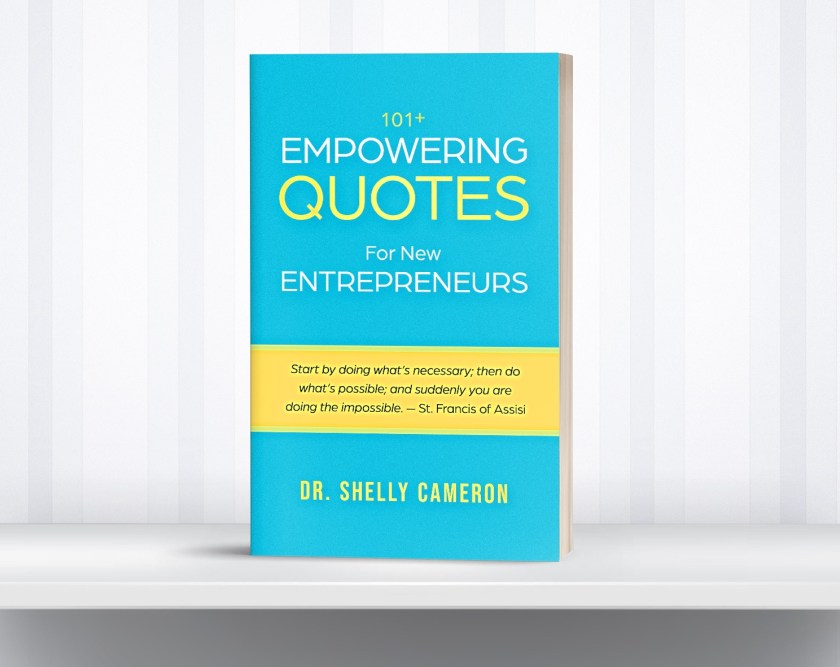
Otherwise, gift a copy of 101+ Empowering Quotes to the entrepreneur in your life. It’s available in eBook, paperback, and hardcover formats, all under $20. It’s the thoughtful gift that fits in a stocking and inspires all year long.

What makes this gift special? It’s genuinely useful. Unlike generic presents that collect dust, this book becomes a go-to resource on tough days. The portable size fits perfectly in stockings, bags, and on desks. And at under $20, you can afford to gift it to your entire network of entrepreneurs, coworkers, or team members.

Give the gift of daily inspiration. Give them the reminder that they’re not alone in this journey.

Why Smart Leaders Get Stuck at Crossroads & How to Move Forward

Subscribe to continue reading

Subscribe to get access to the rest of this post and other subscriber-only content.

What’s The Perfect Door Prize? 21 Gift Ideas for Networking Events That Shine

Show up. Let yourself be seen. ~Brene Brown

What’s a networking event without door prizes? Boring (smile). So, event organizers encourage gifts. They are a simple yet powerful way to boost engagement, excitement, and attendance at networking events. They create a sense of the anticipation and fun, making the event more memorable for participants. Door prizes also encourage people to arrive on time, stay longer, and interact more freely with others. Besides entertainment, they offer a subtle marketing opportunity for sponsors, hosts, or businesses to showcase their products or services in a positive light.

The PSL Business Club asked the question: What is the Perfect door prize to give away at networking events?” Members chimed in. Some suggested giving what you would like to receive. Others suggested giving away high-end gifts that will make you the talk of the event. Gift these over several periods and you’re sure to leave a lasting memory. Here I share key gift ideas extracted as members chimed in.

Gifts That Shine

  1. Wellness bundle energy drinks
  2. Journal, fun pen, small devotional or motivational card set
  3. Cute mugs which says “let’s connect over coffee”
  4. Pair a small gift care ($10-$15) with a handwritten note or business card enclosing a product sample
  5. Branded item that’s actually helpful
  6. Gift cards to local restaurants.
  7. Something useful like Coffee gift cards
  8. Wine or Vodka
  9. Dark chocolate and a gift card or voucher to try branded services
  10. Cool shirt
  11. Stanley or Yeti cup
  12. Gift baskets
  13. Branded swag bundle from the host company
  14. Branded items or one/two from local businesses or gift certificates
  15. Candy
  16. Homemade cookies
  17. Hand-painted items
  18. Chocolates from a chocolatier
  19. Beach accessories
  20. Fun items that’s non-business related
  21. Dot card… to make sharing information easier at networking event

High-End Gifts

Higher end gifts creates a lasting memory of your brand. Such gifts are:

  • Massage or Spa packages
  • Weekend getaway at hotel
  • Dinner for two at a high-end/classy restaurant
  • Tickets to a concert/play

There you have it! Here’s hoping it takes the guess work out of your gift giving when attending your next event.

Monetize Your Writing Skills: 10 Proven Methods

Before you speak, listen. Before you write, think. Before you spend, earn. Before you invest, investigate. Before you criticize, wait. Before you pray, forgive. Before you quit, try. Before you retire, save. Before you die, give. ~William Arthur Ward

Are you a writer living from paycheck to paycheck? Do you want to take that dream vacation but your pocket dictates otherwise? You may just want to purchase that long desired goal but can’t seem to come up with the funds. Well, why not try to boost your income creatively? Here are 10 methods that can turn your talent into money in a flash (legally of course – yikes)!

1.Freelance Writing Platforms

Sign up for sites like:

  • Upwork
  • Fiverr
  • Freelancer
  • PeoplePerHour
    Start with blog posts, bios, product descriptions, or email copy. Quick turnaround = faster pay.

2. Offer Resume & Cover Letter Services

Tons of people need help polishing their resumes. You can charge $50–$200+ depending on your expertise.

3. Sell Digital Products

  • Create and sell templates (journals, planners, ebook templates) on Etsy or Gumroad.
  • If you’ve already written a book, turn it into a workbook or checklist.

4. Pitch Articles

Submit articles to platforms that pay per piece:

  • Medium (via Partner Program)
  • Narratively
  • The Bold Italic
  • Listverse
  • Cracked Some pay $100+ for accepted content.

5. GHOSTWRITING

Offer ghostwriting for blog posts, social media captions, or even eBooks. It’s in high demand, especially for coaches and small businesses.

6. Edit or Proofread

Writers are great editors! Offer fast-turnaround proofreading on Fiverr or Facebook groups.

7. Write LinkedIn Profiles or Bios

Professionals always need help optimizing their online presence.

8. Transcribe Audio for Creators or Podcasters

Great for fast typers. Websites like Rev or TranscribeMe pay per audio minute.

9. Offer Email Newsletter Setup / Writing

Many small biz owners want to start newsletters but don’t know where to begin.

10. Monetize a Blog or Substack Fast

Offer a mix of free content and a paid tier with extra goodies (writing tips, coaching, behind-the-scenes, etc.).

Did any of the above spark your interest to boost your earning potential? Any missing that you would like to add? Do share. We would love to hear.

Cheers!

7+ Ways To Prepare For A Public-Facing Leadership Role

Before you are a leader, success is all about growing yourself. When you become a leader, success is all about growing others.” —Jack Welch

More than two decades ago I started my first leadership role. Always facing an audience through years of athletic performance, the arts, other leadership roles, I was always confident. But this was different. In my HR Leadership role, I faced responsibilities on behalf of the company. No more hiding behind other senior leaders. My boss gave me no choice but to step up to my full responsibilities.

After going through a bout of nervousness that lasted months, I found that it got easier each time. Before long, I prepared for each meeting when I had to address employees performance, achievements and areas of development across the region with confidence.

On observation these days, we see politicians and society’s leaders in public service assuming new roles. Consequently, the question was raised;can a person from behind the scenes excel in a new public-facing role?” The answer is absolutely!

Public-facing means a role where the (individual) exercises managerial authority or control of an entity’s activities.

Here are 7+ points to prepare for a public-facing leadership role. Focus on:

1.Communication Skills

  • Develop clear, compelling public speaking abilities
  • Practice articulating complex ideas simply
  • Learn media training techniques

2.Personal Brand Development

  • Build a professional, authentic public image
  • Be consistent across different platforms
  • Develop a strong personal narrative

3.Continuous Learning

  • Stay updated on industry trends
  • Understand diverse stakeholder perspectives
  • Cultivate emotional intelligence

4.Professional Appearance

  • Dress appropriately for your industry
  • Project confidence through body language
  • Work on your on-camera and in-person presence

5.Media and Presentation Preparation

  • Take media training workshops
  • Practice handling tough questions
  • Learn crisis communication strategies

6.Networking

  • Build relationships with key industry influencers
  • Develop a supportive professional network
  • Seek mentorship from experienced public leaders

7.Digital Literacy

  • Manage social media presence professionally
  • Understand digital communication etiquette
  • Be mindful of online reputation

Bonus: Resilience and Adaptability

  • Develop thick skin for public scrutiny
  • Learn to handle criticism constructively
  • Maintain composure under pressure

Consistent practice and self-reflection are the keys to becoming an effective public-facing leader.

What has been your experience with getting ready for a leadership role? Did you use any of the above strategies? If so, what worked for you? Any other strategy that comes to mind? Do share, we would love to hear.

Cheers!

Travel with Intent

A photographer's view of the world - words and images to inspire your travels and your dreams

Answering daily prompts

In this blog I'm attempting to answer wordpress daily prompts

Alex Tafur

Property Maintenance

Poesy Perspectives

embrace the magic

GREENLiGHT

When God Says Go

HEALTH | INSPIRATION

Health, Reflection, and Poetry for the Journey of Life

My Sister My Friend

Family. Youth. Parenting

Kamileon Photography

Your Focus. Our Lens.