
The Future of Executive Coaching: 10 Trends Every Leader Should Know

If you walk in the footprints of others, you will never make your own.

Constant change, presence and influence, systemic coaching, wellbeing and resilience, purpose and meaning are among the trends associated with the growing coaching evolution. As I shared in 2024 Executive Coaching trends, the executive coaching industry is undergoing a significant shift. Organizations are moving away from viewing coaching as a luxury reserved for senior executives and toward seeing it as a strategic business investment that improves leadership capability, retention, and organizational resilience.

Here are 10 trends every leader should know. As you review, note however that:

  • Ai is changing coaching, but leaders still need wisdom.
  • Data matters, but judgment matters more.
  • Leadership transitions are becoming constant rather than occasional.
  • The best executive coaches bring a proven framework, not just conversations.

1. Coaching as a Strategic Business Tool

Executive coaching is becoming tied directly to measurable business outcomes rather than personal development alone. Organizations increasingly expect coaches to demonstrate impact on:

  • Leadership effectiveness
  • Employee engagement
  • Succession planning
  • Change management
  • Productivity
  • Retention

Opportunity: Coaches who speak the language of business and ROI will have an advantage.

2. Leadership During Constant Change

Organizations no longer experience occasional change. They operate in continual transition. Executives seek coaching around:

  • Organizational restructuring
  • Mergers
  • Economic uncertainty
  • Ai disruption
  • Hybrid leadership
  • Crisis management

This aligns closely with transition-based leadership frameworks such as the GreenLight leadership model.

3. Ai as a Coaching Companion (Not Replacement)

Artificial intelligence is increasingly being used for:

  • Reflection prompts
  • Leadership assessments
  • Meeting summaries
  • Development planning
  • Accountability reminders

However, Ai cannot replace:

  • Trust
  • Emotional intelligence
  • Ethical judgment
  • Difficult conversations
  • Human wisdom

The future appears to be Ai-assisted coaching, rather than Ai replacing experienced executive coaches.

4. Data-Driven Coaching

Organizations want evidence. Growing use of:

  • Leadership assessments
  • 360-degree feedback
  • Behavioral analytics
  • Progress dashboards
  • Coaching metrics

Clients increasingly ask:

“How do we know coaching worked?”

Coaches who combine qualitative insights with measurable outcomes are becoming more competitive.

5. Coaching the Entire Leadership Pipeline

Instead of coaching only CEOs, organizations are investing in:

  • Emerging leaders
  • First-time managers
  • High-potential employees
  • Technical leaders
  • Project managers
  • Future executives

Leadership development is becoming earlier and more continuous.

6. Executive Presence and Influence

Technical expertise alone is no longer sufficient. Many organizations view presence as a competitive leadership capability. Demand continues to grow for coaching in:

  • Executive presence
  • Strategic communication
  • Board presentations
  • Influencing without authority
  • Personal branding
  • Visibility

7. Well-Being, Resilience, and Sustainable Leadership

Burnout has shifted coaching conversations. Organizations increasingly recognize that exhausted leaders cannot sustain high performance. Executives seek support with:

  • Decision fatigue
  • Stress management
  • Energy management
  • Resilience
  • Sustainable performance
  • Work-life integration

8. Coaching Around Purpose and Meaning

More senior leaders are asking questions beyond career advancement:

  • What legacy am I creating?
  • What’s next?
  • Is my work meaningful?
  • How do I align my values with my leadership?

Purpose-driven leadership coaching is expanding, particularly among experienced executives and those approaching career transitions.

9. Team and Systemic Coaching

Organizations increasingly want coaches who can work with leadership teams, not just individuals. The coach becomes a facilitator of collective leadership effectiveness. This includes:

  • Team dynamics
  • Executive alignment
  • Cross-functional collaboration
  • Psychological safety
  • Organizational culture

10. Niche Expertise Wins

The market is becoming crowded with general coaches. Organizations increasingly seek specialists in areas such as:

  • Healthcare leadership
  • Government leadership
  • Women in leadership
  • Family business succession
  • Leadership transitions
  • Founder coaching
  • Board readiness
  • Global leadership

A clearly defined specialty often differentiates coaches more effectively than broad, generic offerings.

Essentially, while coaching methods continue to evolve, one reality remains unchanged: leaders still face moments when everything looks right on paper, yet something doesn’t feel right. Technology can provide information. Assessments can provide data. But discerning when to stop, pause, or move forward remains one of leadership’s most important skills. That’s where frameworks, not just conversations create lasting value.

What Happens When Your Leaders Don’t Know Their Next Move?

One of the leaders I worked with was exceptionally talented. She was respected by her team, consistently delivered results, and had recently been promoted into a larger role. Yet despite her success, she found herself overwhelmed by competing priorities, difficult decisions

Subscribe to continue reading

Subscribe to get access to the rest of this post and other subscriber-only content.

🟢 Pop Culture Contrast: Leadership Is Not Squid Game

When the world watched Squid Game, one scene stood out, the childhood game “Red Light, Green Light.”

Move at the wrong time? You’re eliminated.

In that world, movement is fear-driven.
You move because someone shouts.
You freeze because someone is watching.
You survive by reacting quickly enough.

But leadership is not Squid Game.

In real leadership, “Green Light” is not about external permission.
It’s about internal alignment.

You don’t move because someone says “Go.”
You move because:

  • The timing is right.
  • The values are aligned.
  • The strategy is clear.
  • The cost has been weighed.
  • The mission demands it.

In a fear-based environment, people move to avoid loss.

In a GreenLight environment, leaders move to advance purpose.

One is survival.
The other is significance.

The GreenLight Factor is not about reacting under pressure.
It’s about discerning when to accelerate, when to pause, and when to redirect without panic, performance, or elimination.

Because leadership is not a game.
And your movement should never be dictated by fear.

Need help? Let’s chat

Cheers!

Photo Squid Game

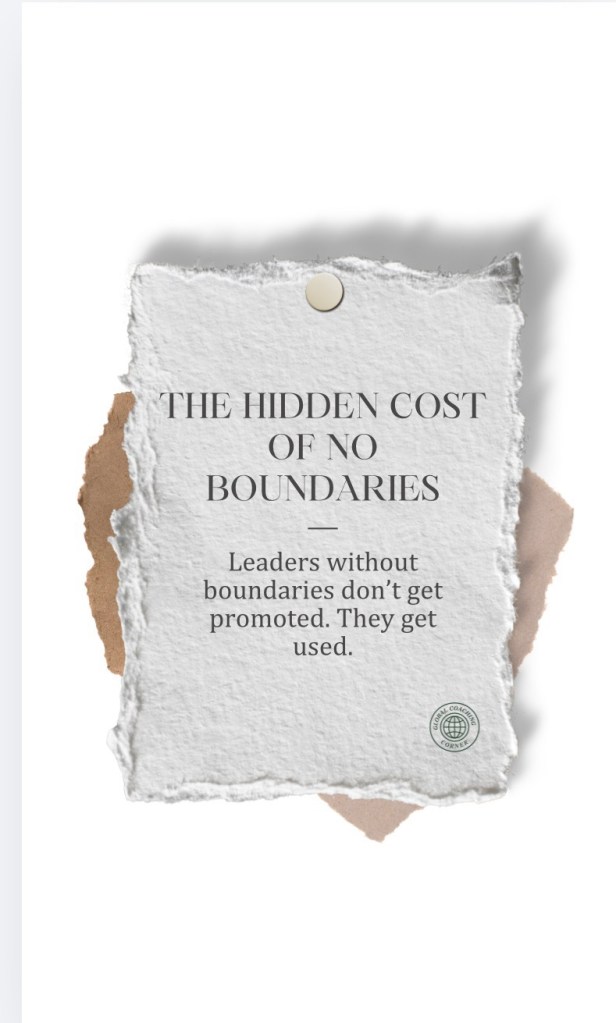
The Hidden Cost Of No Boundaries

Time spent rescuing is time not spent leading.

It’s the Hard truth. Leaders who say ‘yes’ to everything often:

🔭Get seen as Dependable
But not Strategic

🔭Helpful
But not high-level

Because time spent rescuing is time NOT spent leading.

BOUNDARIES create space for:

  • Thinking
  • Strategy
  • Growth
  • Influence

Without them you stay Stuck in reactive mode. Ask yourself, are you Leading or constantly rescuing?

If your leadership feels reactive instead of intentional, it’s not a motivation problem. It’s a boundary problem.

Coaching helps leaders set professional boundaries without guilt or fear. Let’s chat about our boundaries lab if this resonates.

Cheers!

Master Decision-Making with the GreenLight Leadership Framework

Subscribe to continue reading

Subscribe to get access to the rest of this post and other subscriber-only content.

Why Select IG Posters Fear Visibility

Doing it for the Gram

Sherry reached out. She had stopped posting on social media because her colleagues were commenting that they liked what she was posting. Alarmed, she ‘got into her head’ and stopped posting. During a coaching session she shared her inner dialogue as she contemplated her podcasting experience.

This happens all the time. It’s actually a sign the leader is growing and starting to get visibility. It’s not that they are doing anything wrong.

When people begin watching, liking, commenting, and sharing, the individual poster suddenly feels, “They’re watching me.”

  • “Now I have to be perfect.”
  • “What if I say the wrong thing?”
  • “What if they think I’m trying too hard?”
  • “What if I’m judged by colleagues, family, church, old classmates?”
  • “Now I have pressure to keep going.”
  • So instead of it feeling like support, it feels like a spotlight.

What’s Really Happening (The Psychology)

When the audience grows, the individual moves from “posting casually” to feeling like they are:

✅ being evaluated
✅ being monitored
✅ being compared
✅ being expected to perform

It becomes an identity shift, from private person to being a public leader. That transition can trigger fear, perfectionism, and imposter syndrome.

Why the Poster Stops Posting. Here are the most common reasons:

1) Performance Pressure. They think: “Now I have to keep delivering.”
So they pause until they feel “ready” which essentially becomes avoidance.

2) Fear of Judgment. Even positive attention can feel unsafe if they’re not used to being visible.

3) Fear of Success. The brain says: “If I get bigger, I’ll have more responsibility and more criticism.”

4) Over-identifying with the audience. They start posting for approval instead of posting with purpose.

Here’s How to Resolve It

Here are some solutions to resolve it.
1) Reframe: Being watched is a leadership signal. Replace, “They’re watching me” with:

  • “My voice is working.”
  • “I’m building trust.”
  • “People are paying attention because it resonates.”

Remember Visibility is not danger. It’s influence.

2) Create a new rule: “I post to serve, not to impress.” A simple mantra: “I’m not auditioning. I’m contributing.” Or: “This is leadership, not performance.”

3) Lower the stakes with a “minimum posting standard.” Perfection kills consistency. A simple baseline may be:

✅ 2 posts per week
✅ or 1 post + 3 comments per week
✅ or 3 short posts (no more than 5 sentences)

Make it non-negotiable and small. Consistency builds safety.

4) Use a “quiet confidence” posting style. If you’re shy, don’t force yourself to be loud. Formats that feel professional and safe are:

  • “3 quick lessons I learned this week…”
  • “A reminder for leaders navigating change…”
  • “Here’s a simple framework I use with clients…”
  • “One thing many leaders overlook is…”

5) Create boundaries around who gets access. Sometimes the fear is “too many people know me.” Here are some solutions.

  • Hide/limit certain audiences (Facebook has options)
  • Use LinkedIn as their primary “professional stage”
  • Don’t read comments immediately (algorithm aside)
  • Reply in batches (twice a week)
  • Visibility needs boundaries.

6) Normalize the discomfort: it’s growth, not danger. “Your nervous system is not used to being seen. That doesn’t mean stop. It means you’re expanding.”

This is what is called leadership exposure therapy:

  • Post
  • Feel nervous
  • Survive it
  • Repeat

Soon the fear fades.

7) Pre-write content so your emotion doesn’t control your action. Confidence is unreliable, systems are reliable. Try building:

  • 20 post prompts
  • 5 “signature topics”
  • 10 reusable frameworks

In this way you’re not deciding what to post while anxious.

In essence, you’re not shy. You’re adjusting to visibility. People watching means you are becoming influential. If you stop posting, the fear wins, and your future audience loses. So play it safe by using a simple posting schedule and low-pressure formats until visibility feels normal.

What has been your experience? Is there anything you would like to add? What worked for you? Please share. We would love to hear.

Cheers!

Before the New Year Begins: A Leadership Reflection

At a gathering, family and friends were asked to reflect. Sonia asked each to share one thing they were thankful for. Marriage, graduation, opportunities, sports achievement, divine protection, new car, life and the aged still living were among the thoughts shared.

But one thing stood out. As Stephan ended giving thanks collectively in prayer, shouts rang out at her thoughts that hit home. Many rushed with hugs and adoration, but one stood out. George turned to her mom and pointed at her. Without saying a word, his action said it all. Mom had passed the baton to Stephan and stood watching as the group embraced. Indeed mom felt pride that her labor was not in vain.

Before the New Year Begins

As the year comes to a close, leaders are already thinking about goals, plans, and next moves. But before we rush into the next chapter planning our dreams and aspirations, there’s value in pausing to reflect.

Personal growth doesn’t always show up as promotions, metrics, or public wins. Often, the most meaningful growth happens quietly.

This year, growth may have looked like:

  • Choosing courage when fear was familiar.
  • It may have meant staying committed when quitting felt easier.
  • Or letting go of roles, relationships, or expectations that no longer aligned with who you’re becoming.

Understand that Leadership begins within. Before we lead teams, organizations, families or communities forward, we must first acknowledge our own evolution.

As you prepare for the new year, consider these questions:

  • Who have I grown into this year?
  • What did this season teach me about myself?
  • What alignment (not perfection) do I want to carry forward?

Clarity comes after commitment

You don’t need every answer before January 1st. Clarity often comes after commitment.

As the calendar turns, may the next year be marked by your:

  • Intentional leadership
  • Purposeful growth
  • The courage to move forward aligned with who you truly are.

Reflection:

What is one lesson this year taught you about your leadership or personal growth? Think about it. Acknowledge it and Do share. We would love to hear.

Cheers!

3 Tips To Manage Leadership Overthink

Take time to deliberate, but when the time for action has arrived, stop thinking and go in. ~Napoleon Bonaparte

Ever found yourself checking and rechecking about a decision you have to make. It might be a presentation, a college selection, submission of a business proposal or even a marriage proposition (yikes)! It happens. It’s called overthinking which is defined as:

Putting too much time into thinking about or analyzing (something)

Overthinking is one of the biggest blocks for both leaders and business owners because it drains time, energy, and confidence. Here are 3 tips to stop overthinking.

1. Decide. Then Detach

Perfection isn’t progress. Once you’ve made a well-informed decision, commit then detach from the fear of “what if.” Every decision gives feedback: it either moves you forward or teaches you what to adjust. Leaders who wait for certainty often miss their moment.

2. Shift From Thinking to Doing

Action is the antidote to overthinking. When you’re stuck in analysis, your mind loops on the same thoughts. But when you take even a small step, such as sending the email; posting the content, calling the client; actions like these contributes to you gathering real data, not imagined fears.

3. Practice Mental Stillness

Overthinking thrives in noise. Silence and stillness help you separate truth from fear. Try journaling, prayer, or a five-minute “mind reset” before diving into decisions. It’s not laziness, it’s leadership discipline.

COACHING INSIGHT

Overthinking often signals self-doubt, not lack of skill. Leadership coaching helps identify those inner beliefs and build confidence. It then replaces the cycle of worry with a rhythm of wise action.

How about you? Are you an overthinker? Which of the 3 tips can you implement now? On the other hand, were you an overthinker? If so, how did you get over it? Do share. We would love to hear.

Cheers!

Elevate Your Leadership: Key Questions to Shape 2026

Who looks outside dreams; who looks inside, awakens. ~Carl Jung

As the year closes, the most effective leaders are the ones who pause long enough to evaluate, realign, and elevate. These 12 questions are designed to help you step confidently into 2026 with clarity, courage, and intention.

Take a moment to reflect on each. Use them to guide your vision, your team, and your next level of growth. Strong leadership doesn’t happen by accident. It’s built through awareness, alignment, and action.

Reflection Questions

1. What are my top 3 leadership wins from 2025?


2. What drained my energy this year, and why?


3. What habits strengthened my leadership?


4. What habits weakened it?


5. What opportunities did I ignore that I should revisit?


6. What does success look like for me in 2026?


7. What limiting belief must I leave behind?


8. Who do I need to become next year?


9. What relationships do I need to nurture?


10. What boundaries do I need to create?


11. What skills must I develop or sharpen?


12. What is ONE bold move I will take before Jan. 31?

If you’d like support creating a strategic leadership plan for the new year, join the year-end and January coaching sessions. This is designed for leaders in transition and professionals preparing for a stronger 2026.

What will you do differently next year? Which question resonated with you the most? Do share. We would love to hear.

Cheers!

Spooky Leadership: 3 Frights That Haunt the Workplace (and How to Fix Them) …

Spooky Leadership

Do one thing everyday that scares you.

As the spooky season approaches, it’s not just ghosts and goblins giving people chills. Sometimes leadership habits can be downright spooky!

1. The Invisible Leader

Disappears when the team needs them most. No feedback, no presence, just crickets.

FIX: Show up. Visibility builds trust. A simple check-in can turn uncertainty into motivation.

2.The Zombie Communicator

Repeats the same messages with no real emotion or connection. Team meetings feel lifeless.

FIX: Revive communication! Be intentional, listen actively, and personalize your message.

3.The Vampire of Ideas

Sucks up all the credit and leaves others drained. Recognition? Nowhere in sight.

FIX: Share the spotlight. Empower your team and celebrate contributions publicly.

This season, take a moment to unmask your leadership style. Make sure you are not the one haunting your workplace and if you are, let’s connect to clear the spookiness.

Are there thoughts you would like to add? Do share. We would love to hear.

Cheers!

6 Thinking Traps Holding You Back

You can’t grow without letting go. ~Unknown

Gaps in your thinking traps your personal, business, or career Growth.  Here are 6 reasons.

6 Reasons Your Thinking Traps Your Growth

  • The Knowledge Gap: I don’t know how to grow
  • The timing Gap: It’s not the Right time
  • The Mistake Gap: I’m afraid of making mistakes
  • The Perfectionist Gap: I have to find the best way before I start
  • The lack of Inspiration Gap: I don’t feel like doing it
  • The Comparison Gap: Others are better than me

Which one, two or more do you identify with? Think about it and share. We can’t wait to hear.

Cheers!  

Photo by Frank K on Pexels.com

That Wretched Performance Improvement Plan As Leadership Changes

THAT WRETCHED PERFORMANCE IMPROVEMENT PLAN

It’s a devil. I tell you it’s the devil! You work hard. Achieve great results and are applauded for your contribution.

Then a change in leadership! Things go haywire. Goals are thwarted. Messages are confusing. Leaders don’t explain. Midst the changes, the transition in process becomes the focus backed by mixed signals.

Then comes the inevitable performance drop. A lack of clarity, missed communication. Performance improvement plan rears its ugly head. A strong performer, an all star becomes the targeted.

Where did things go wrong?

Ever experienced it? Let’s talk.

Travel with Intent

A photographer's view of the world - words and images to inspire your travels and your dreams

Answering daily prompts

In this blog I'm attempting to answer wordpress daily prompts

Alex Tafur

Property Maintenance

GREENLiGHT

When God Says Go

HEALTH | INSPIRATION

Health, Reflection, and Poetry for the Journey of Life

My Sister My Friend

Family. Youth. Parenting

Kamileon Photography

Your Focus. Our Lens.