Autumn is a time to reignite ambition and transform dreams into reality.

“Leadership is revealed not only by the words we speak, but also by what our words awaken in others.“
I was speaking with an aspiring author who has written about an experience with a vendor. As I listened, I gleaned that he was writing to vent. But a whole book? Yikes!
It is hardly surprising, then, that books written by politicians, public figures, and those sharing stories of survival, or revealing the private lives of the rich and famous, have become commonplace. Consider the late Princess Diana. Decades after her death, her brother has published a book that revisits aspects of Diana’s story, this time from his perspective.
Naturally, books have the power to educate, encourage, entertain, and transform. They can introduce us to unfamiliar worlds, help us understand other people, and give language to experiences we could never explain on our own.
But books can also hurt.
Sometimes that hurt is intentional. Sometimes it results from careless writing. At other times, the pain comes not from anything harmful in the book, but from the memories, emotions, and longings the words awaken within the reader.
Responsible authors do not avoid every difficult truth. They communicate it with wisdom, fairness, compassion, and respect for human dignity. They understand that their words may travel farther and remain longer than they ever anticipated.
Before we speak, write, publish, or post, perhaps we should pause and ask:
What might these words do once they leave my hands?
Words can unite people, but they can also divide them. Books that portray a race, religion, nationality, gender, culture, or community as inferior can reinforce prejudice and inflame hatred.
When writers repeatedly describe certain groups as dangerous, dishonest, unintelligent, or unworthy, readers may begin to accept those portrayals as truth. Stereotypes are no longer merely words on a page; they can influence how people are treated in workplaces, schools, communities, and public life.
Freedom of expression is important, but writers must also recognize the influence their words can carry. A book should not become a weapon that gives people permission to hate.
Some books hurt by damaging the reputation of another person. This can occur through false accusations, distorted stories, exaggerated accounts, or the careless disclosure of private information.
Even when authors are telling their own stories, other people may be part of those experiences. Writing honestly does not remove the responsibility to write fairly. Personal pain can shape how an event is remembered, but one person’s perspective may not represent the entire truth.
Before publishing sensitive information about another person, writers should ask:
A published accusation can follow someone for years. Once damaging words are released, they are difficult to retrieve.
Not every book that hurts is harmful. Some books are born from heartbreak, trauma, disappointment, illness, loss, or years of silent suffering.
Writing can help authors process experiences they have been unable to express aloud. Their words may also become a source of comfort for readers who recognize their own pain in the story.
However, writing from a wound requires care. When the pain is still raw, the author may unintentionally write from anger rather than understanding. The book may reveal more than the author is emotionally prepared to share or reopen wounds that have not yet begun to heal.
Pain can produce powerful writing, but publication should not be confused with healing. An author may need time, reflection, wise counsel, or professional support before sharing deeply personal experiences with the world.
The goal is not to remove the pain from the story. It is to give that pain meaning, direction, and purpose.
Some books hurt gently.
They remind us of childhood homes, people we once loved, dreams we abandoned, traditions that disappeared, or seasons of life we can never revisit. A familiar setting, a line of dialogue, or the description of an old song can awaken feelings that have been resting quietly for years.
These books ignite melancholy, a tender sadness mixed with longing for what once was or what might have been.
Yet this kind of hurt can be meaningful. It reminds us that we have loved, hoped, belonged, and experienced moments worth remembering. A book may cause us to grieve, but it may also help us appreciate what shaped us.
Sometimes the ache is evidence that the words reached a place within us that needed to be acknowledged.
Books dealing with abuse, violence, discrimination, war, illness, or death can unexpectedly trigger painful memories. While difficult subjects should not be avoided, authors and publishers can handle them responsibly.
A brief content note can prepare readers without diminishing the impact of the story. Sensitive experiences should be presented with care rather than used merely for shock, attention, or entertainment.
Writers should consider not only whether a painful scene is powerful, but whether it is necessary and how it may affect those who have lived through similar experiences.
Books can also hurt when they present misinformation as truth. In areas such as health, history, faith, finance, leadership, and personal development, inaccurate claims can influence serious decisions.
A confident writing style does not make information credible. Authors have a responsibility to research carefully, cite reliable sources, acknowledge uncertainty, and avoid making promises their evidence cannot support.
False information may sell books, but it can also cost readers their money, relationships, opportunities, and well-being.
Some books motivate through encouragement. Others attempt to motivate through shame. They suggest that people who are struggling simply lack discipline, faith, ambition, intelligence, or commitment.
This approach ignores the complexity of human life. Readers may be facing grief, illness, discrimination, financial hardship, family responsibilities, or circumstances the author has never experienced.
A helpful book challenges readers without humiliating them. It tells the truth while leaving room for compassion, dignity, and hope.
There is a difference between writing that causes pain and writing that causes harm.
A book may make us uncomfortable because it confronts injustice, exposes wrongdoing, challenges a belief, or reveals a truth we would rather avoid. That discomfort may be necessary for learning and change. Harmful writing, however, dehumanizes, deceives, humiliates, exploits, or attacks without a meaningful purpose. Authors should therefore ask not only, “What do I want to say?” but also:
“What might these words do once they leave my hands?”
Writers cannot control every reader’s reaction, but they can write with truth, fairness, compassion, and responsibility. The strongest books are not necessarily those that avoid pain. They are the ones that handle pain carefully and lead the reader toward greater understanding.
Books can hurt. But when written with wisdom and purpose, they can also help us heal.
Of the seven reasons listed, which resonates most? Any missing that you would like to add? Do share. We would love to hear.
Cheers!
Leadership is not always standing at the center of the room. Sometimes it is building the room, opening the doors and giving others a place to be seen.
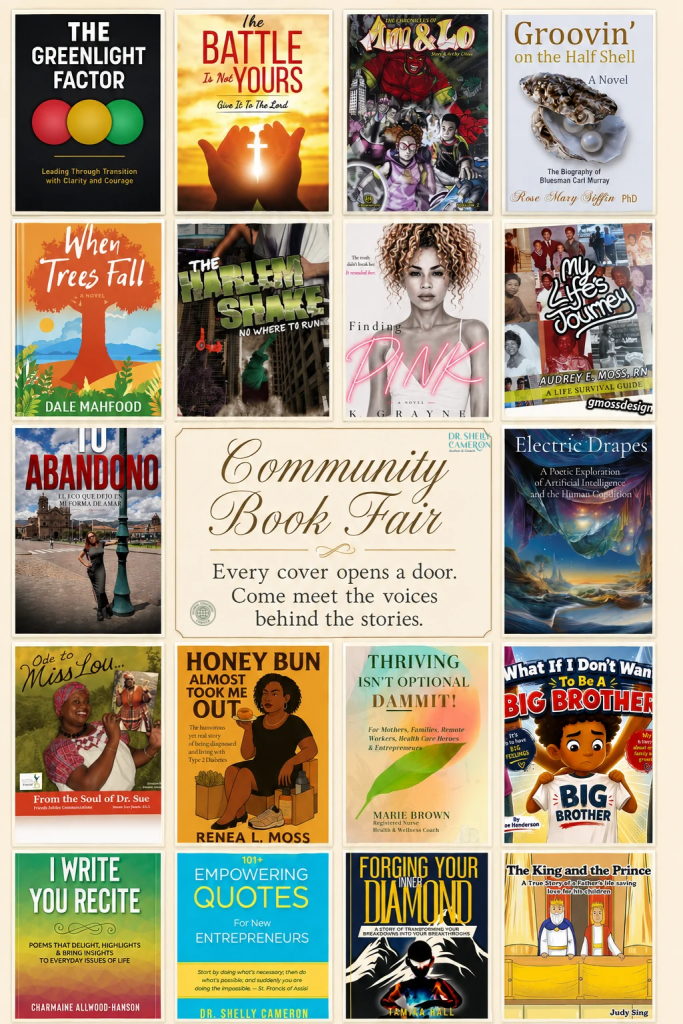
I’ve spent over two decades studying leadership, coaching leaders, and writing about what it takes to lead well. But organizing our community author showcase is prime.
With more than 40 authors converging at the Fred Lippman Cultural Center in the City of Hollywood, Florida, the lineup includes my own presentation co-partnered with Fort Lauderdale’s Jamaica Brew Festival Co-founder, Dale Mahfood. A panel on building author brand, poetry, and a slate of featured authors, this event has become an unexpected classroom. Here’s what it has taught me.
You cannot control 40 authors. You can only choreograph the conditions for them to shine. Every author arrives with a different personality, a different genre, a different idea of what “success” for the day looks like. My job isn’t to manage each of them into compliance, it’s to build a structure flexible enough to hold that many voices without losing coherence. That’s a lesson I’ve taught in leadership development for years. Living it, in real time, with real logistics and real personalities, is a different kind of learning altogether.
Curating the panel on building author brand has been its own leadership exercise. Choosing who sits at that table, what questions get asked, and how the conversation is sequenced is really about clarifying a shared message from different perspectives. That’s what leadership often is: not silencing distinct voices, but helping them harmonize around a purpose bigger than any one of them.
I’ve long been more comfortable letting the work speak rather than putting myself forward. This event has stretched that. I’m not just organizing from behind the curtain this time, I’m also presenting, which means stepping into visibility while still holding the operational threads together. Leadership doesn’t always look like standing at the podium; sometimes it’s making sure the podium, the poetry reading, and the featured author segment all run on time so everyone else can have their moment.
Weaving poetry alongside author presentations and a business-minded panel has reminded me that leadership isn’t one register. Sometimes it calls for strategy and structure. Sometimes it calls for space; for feeling, for art, for the parts of a message that a bullet point can’t carry. A good leader, like a good event, knows when to shift registers.
With 40+ authors, a cultural center, and multiple event formats layered into one day, nothing exposes gaps in planning, communication, or delegation faster than a live event with a fixed date. There’s no theoretical framework that substitutes for the real-time problem-solving this requires and that, more than any case study, is where leadership is truly learned.
As the event approaches, I’m struck by how much this process mirrors the leadership principles I’ve spent my career researching and teaching: clarity of purpose, distributed voice, adaptability, and the discipline to serve something larger than yourself. Sometimes the best leadership lessons don’t come from a classroom or a book, they come from the folding chairs and program schedules of a community event.

A book may be written by one person, but it travels farther when readers choose to carry its message forward.
Writing a book is often a deeply personal accomplishment, but an author’s journey does not end when the book is published. Authors must then work to help readers discover, trust, and connect with their work. Often this happens while managing the costs of publishing, promotion, and public appearances.
When authors speak about meaningful support, they frequently mention more than book sales. They remember the reader who left a thoughtful review, recommended the book to a friend, shared a social media post, attended an event, or introduced them to a new opportunity. These actions may seem small, but collectively they help authors expand their reach and remain encouraged.
Here are five practical ways readers can support authors and help meaningful stories and ideas reach a wider audience.
Essentially, supporting an author goes beyond buying a book. Read it. Review it. Recommend it. Share it. Invite the author into new rooms.
How have you supported an author? Do share. We would love to hear.
Cheeers!

We write with open hands, and not with fists. ~Beth Kephart
Early in life, my mom wanted to write her life story. A trailblazer, she was one of the country’s first female automobile mechanic who was later fired for getting pregnant. Decades later she passed away without collating the details, as only she could.
The most overpowering reason to write your story is because if you don’t, that version of the story dies with you. That’s what happened with my mom. Today, I am a writer of several books, but it would be remiss of me to think that I could capture details the way she would have if only she had written them herself.
I also reflect on the life of Dolly Parton who wrote many songs with tales of female experiences such as “Working-9-to-5, What a Way to Make a Living.” The world was her stage and through her legacy, she left her indelible mark because she chose to capture and impact many through her songwriting endeavors.
So, I encourage you to write. There is only person who holds the full, lived truth of your experience. Not the polished version other people saw, not the résumé version, not even the version your closest family remembers, but the real one. The one with the doubt and the mess and the moment things actually turned. Once you’re gone, that’s gone. No one can reconstruct it from the outside.
In a public forum, a woman shared her desire to write her life story. With confusion she asked, “where do I start?” As members chimed in, I captured some of their feedback to encourage, lead, and guide her how to get it done. Here I share a few:
Hmm, interesting recommendations. What has been your experience? Do share. We would love to hear.
Cheers!

To Focus is to Achieve
The shorter way to do many things is to only do one thing at a time. ~ Mozart
Knife in the right. Fruit in the left. Both hands occupied, me attempting to sit on the kitchen bar stool while adjusting its height was a sure recipe for disaster. And so, it did. Multi-tasking doesn’t work in all situations.
Down I went; fruit, knife, bar stool and me! Wham! I felt that sharp pain as the one-legged bar stool knocked sharply into my right rib! My oldest and her hubby ran to the rescue! But the damage was already done. It’s as though the wind was knocked out of me. I lay on the ground writhing in pain beyond 10-minutes.
When I finally accepted help to get up, I felt like I wanted to simply lay flat. I staggered in hasty retreat to bed. But could hardly get in. The pain was too much to bear and I could hardly breathe. Why does it hurt so bad, I pondered?
The night ended with the Emergency Room Physician telling me post X-Ray that I had bruised by rib, and the healing and pain would ease in three weeks! Internet searches recounted with 4-6 weeks recovery. Others who have gone through it, said the pain lingers beyond that.
Left in daily excruciating pain marked by sleepless nights, that’s the tale of my multi-tasking mishap. Work, sleep, appointments all interrupted but it could have been worse.
While there’s life, there’s hope.
Balance and foresight is important. Multitasking has its limits that leaders should be mindful of. Brown University’s Dr. Jennifer Davis, among others, share hidden costs:
So self-leaders take heed. Manage multi-tasking. The urge to get things done all at once can lead to sad consequences, like mine.
What are your tales and views on multi-tasking? Do share, we would love to hear.
Cheers!

The greatest investment in a leader is not simply preparing them for where they are but equipping them for the decisions, they have yet to face. ~Dr. Shelly
When I look at this collage, I see more than individuals holding copies of The GreenLight Factor. I see an investment.
The books pictured were donated by sponsors who believe in the importance of developing emerging leaders. That distinction matters because the books were not simply gifts or keepsakes from an event. They were placed into the hands of leaders as resources for the journey ahead.
And leadership is certainly a journey.
We often celebrate people when they receive a promotion, accept a new position, earn recognition or step into leadership. What we don’t always see are the decisions that come afterward.
These are the intersections that inspired The GreenLight Factor.
The framework uses something familiar, the traffic light, to encourage a more intentional approach to decisions:
🔴 RedLight: STOP.
Something requires attention. Continuing simply because we have already started isn’t always the best decision.
🟡 YellowLight: ASSESS.
Not knowing doesn’t mean failure. Sometimes wisdom requires slowing down long enough to gather information, reflect, ask questions and gain clarity.
🟢 GreenLight: GO.
There are also times when preparation, opportunity and alignment come together. At that point, continuing to analyze can become its own obstacle. It may simply be time to move.
Organizations often invest in leadership development when something has already gone wrong.
But what if we gave people tools for reflection and decision-making before they reached the crisis? That’s one reason this particular sponsorship meant so much to me.
Someone recognized that investing in emerging leaders isn’t only about celebrating what they have already accomplished. It is also about helping prepare them for what comes next.
No book can make someone’s decisions for them, and it shouldn’t. What a good leadership resource can do is provide language, questions and a framework that helps someone think differently. That is what I hope The GreenLight Factor does.
A reader may recognize that they have been sitting at a RedLight but refusing to stop. Another may realize that they aren’t stuck, they are simply in a YellowLight season that requires additional assessment.
Someone else may discover that they have already done the preparation, asked the questions and gathered the information. Their challenge isn’t clarity anymore. It’s having the courage to GO.
This is also where leadership development and coaching can go deeper.
The book can help identify the signal.
A leadership conversation can help explore what the signal means.
Coaching can help someone determine what to do about the decision directly in front of them.
That’s why I see opportunities for The GreenLight Factor beyond individual readership.
Organizations, associations, educational institutions and community partners can use books as part of leadership development programs, emerging-leader initiatives, new-manager development, facilitated discussions or sponsored book distributions.
The photograph accompanying this article is one example of what that can look like.
We talk frequently about developing the next generation of leaders. Perhaps another question deserves our attention:
What are we actually placing in their hands and in their minds to prepare them for the decisions leadership will require?
My hope is that long after the photograph was taken, there will come a moment when one of them faces an important intersection, remembers the framework and asks:
Do I need to Stop?
Do I need to Assess?
Or is this finally my GreenLight to Go?
That is when the gift of a book becomes something more. It becomes an investment in a leader’s next decision.
The GreenLight Factor is available for individual purchase and can also be incorporated into sponsored book initiatives, leadership-development programs, facilitated conversations and coaching engagements.
If you’ve already read The GreenLight Factor, I invite you to leave an amazon review and share the idea, question or chapter that spoke most strongly to you.
Asking for help is not a sign of weakness – it is the greatest sign of strength. ~Kendra Scott

I was walking through Walmart when an older gentleman spotted me passing by and immediately asked for help. His wife was on FaceTime, but he couldn’t hear her. “Why can’t I hear her?” he asked, placing the phone in my hand before I could even respond. I turned up the volume, and just like that, he was back in conversation with his wife. He was so relieved that he never even stopped to say thank you.
I smiled and walked away. What stayed with me wasn’t the missing “thank you.” It was how easily he had asked a complete stranger for help. He had a problem. He saw someone who might be able to help. So he simply asked.
I was happy to help. But the encounter made me think: How often does this happen around us?
Asking for help is not a sign of weakness – it is the greatest sign of strength. ~Kendra Scott
As the world becomes increasingly digital, some people are unintentionally being left behind. Seniors may struggle with technology that was never part of their everyday lives. Employees arrive at work to discover that a familiar system has changed, sometimes with little or no advance training. Even something as routine as paying a bill can now require navigating an online portal, or facing a late fee for not using the new process correctly.
QR codes. Apps. Online registrations. Electronic programs. Digital payments. Even giving our tithes and offerings has increasingly moved online.
Technology may make life more convenient for many of us, but for others, it can make a once-simple task feel unnecessarily complicated.
And sometimes, there is no real choice. Learn the system, ask someone for help, or risk being left behind.
That’s what brought me back to the gentleman in Walmart. He didn’t pretend to understand. He didn’t allow embarrassment to stop him. He had a problem, saw someone who might be able to help, and he asked.
Perhaps there is a lesson in that for us all as leaders.
Don’t wait for opportunities. Create them. ~ Bruce Lee
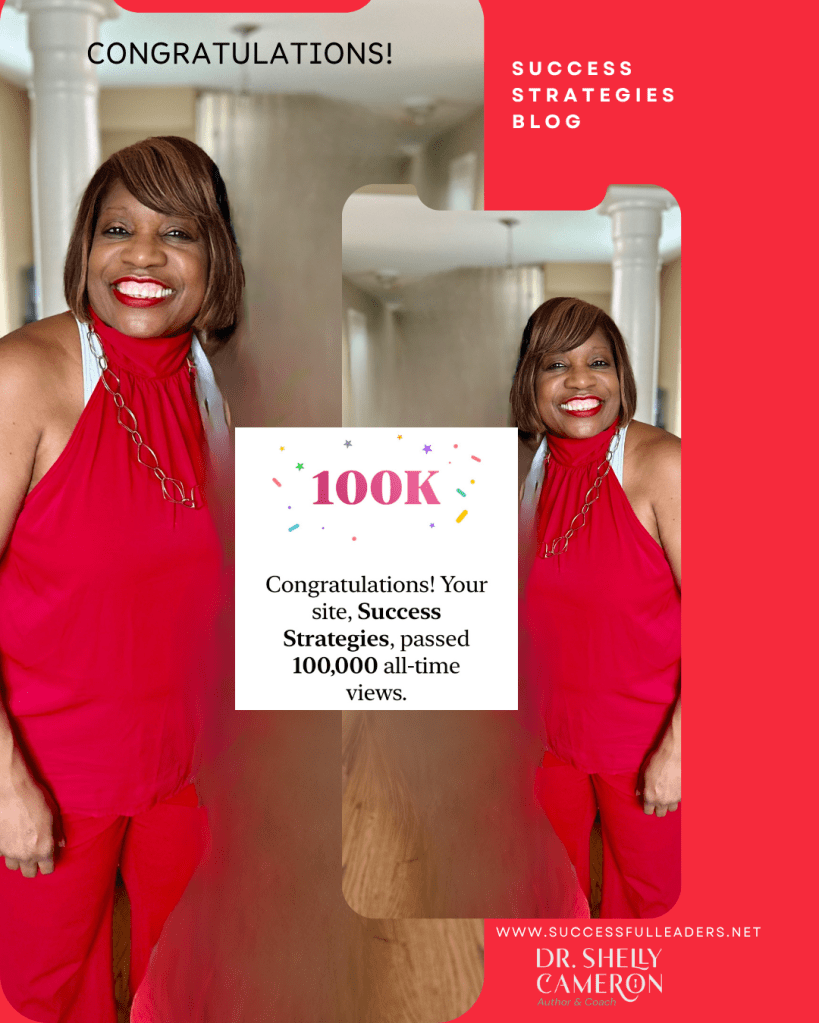
Recently, I received a message from WordPress that stopped me in my tracks: 100,000 all-time blog views. As grateful as I am for the milestone, I quickly realized that this isn’t really my story, it’s ours.
Every view represents someone who paused for a few moments to read an article. Someone looking for encouragement during a season of change. Someone seeking clarity, inspiration, a fresh perspective, or simply a quiet moment to reflect. Whether you’ve been reading for years or have only recently discovered this blog, thank you for allowing me to be part of your journey.
To celebrate this milestone, I wanted to do something a little different. Over the next four weeks, I’ll be opening the archives and sharing collections of some of the most-read articles from this blog. Rather than organizing them by date, I’ve grouped them by the themes that have shaped my writing over the years:
Each collection represents a different part of my journey as a leadership coach, author, researcher, and lifelong learner. Some articles may make you pause and think. Others may inspire your next step, spark your creativity, or simply remind you to slow down and enjoy the journey.
Whether you’re revisiting an old favorite or discovering these articles for the first time, I hope you’ll find something that speaks to where you are today. Thank you for reading, sharing, and growing alongside me. Here’s to the next chapter.
Below are ten reader favorites that invite us to pause, reflect, and reconnect with what matters most. I hope one, or perhaps several, will encourage you this week.
Below are ten reader favorites that invite us to pause, reflect, and reconnect with what matters most. I hope one—or perhaps several—will encourage you this week.
Which article resonated with you the most? Do share. We would love to hear.
Cheers!

I sat in the stillness of the morning dew. Birds chirping quietly. Soft breeze moving through treetops amidst the dew heavy grasses. The cool, still air of sunrise created the perfect moment for my thoughts to breathe.
As I mentally listed the many roles I carry; author, coach, mentor, leadership developer, colleague, mom, and more; I realized someone was missing from the list.
Me.
In the hustle and bustle of life, I had quietly disappeared from my own list. Sadly, that isn’t uncommon. Many leaders become so committed to serving others that they forget to lead themselves.
With trailing thoughts the question arose, “Who is the most important person you will ever lead?” It isn’t your team. It isn’t your organization. It isn’t your family.
It’s You
Yes, you. We spend a great deal of time learning how to lead others: our teams, organizations, and families. But the most important leadership journey begins much closer to home. It begins with leading ourselves.
Self-leadership is the daily practice of managing our thoughts, choices, attitudes, and actions before expecting others to follow our example. It isn’t about perfection. It’s about intentional growth.
The strongest leaders aren’t always the loudest voices in the room. They’re often the ones who have learned to pause before reacting, stay true to their values, admit when they’re wrong, and keep growing long after they have earned the title.
Every day presents us with Choices:
Those quiet decisions shape our leadership more than our title ever will. As you prepare for the week ahead, take a moment to reflect:
Leadership isn’t built in a single moment. It’s built one decision at a time.
The quality of your leadership tomorrow depends on how well you lead yourself today.
What is one self-leadership habit you’re committed to strengthening this week?

The start of something new brings hope and excitement. ~ Gabriel Chase
As leaders, we’re often wired to keep going. We push through deadlines, lead teams, solve problems, and pour our energy into everyone else. After weeks, or even months of operating at full speed, it’s easy to find yourself physically exhausted, mentally drained, and creatively depleted.
Perhaps you’re longing for a vacation, but time, responsibilities, or finances make a dream getaway unrealistic right now. The good news is that renewal doesn’t always require a plane ticket or an expensive resort. Sometimes the most meaningful reset comes from intentionally stepping away, even for a few hours.
These 10 simple, budget-friendly mini-retreat ideas are designed to help you slow down, unwind, reconnect with yourself, and reignite your creativity. Whether you need clarity for your next leadership decision, fresh inspiration for your writing, or simply a moment to breathe, these low-cost escapes can help you return refreshed, refocused, and ready for what’s next.
Leave home by 8:00 a.m. Pack:
Spend the day moving slowly.
Morning:
Late morning:
Afternoon:
Get home before sunset.
There is something incredibly calming about beginning the day before the world gets noisy.
Even one hour feels restorative.
Find an amazing state park for only a small entrance fee.
Instead of shopping, spend two or three hours wandering gardens. The slower pace naturally quiets the mind.
This one sounds simple but is surprisingly restorative.
Morning:
Then:
Then:
Read for pleasure. No notetaking.
Instead of eating inside: Pack:
Find:
Stay three hours. Leave your laptop at home.
If you’re a creator. Spend a day doing things that feed creativity instead of productivity. Maybe:
No pressure to produce anything.

Instead of watching TV, drive to the beach. Watch the sunset. Leave. One hour. Sometimes that’s enough.
One day.
Only:
If you’re a person of faith, and have a daily walk with God, this may be the most renewing option of all.
This may be especially useful for someone like you.
Take your notebook and write:
No action plans. Just possibility.
If you’re a Giver, very few goals may be about giving something back to yourself. The GreenLight Factor teaches people to recognize the right signal before moving forward. This may be your YellowLight season; a reminder to pause, regain clarity and replenish your energy before the next GreenLight (see Chapter 4)
My challenge to you is simple:
Schedule one full “CEO Retreat Day” during the next two weeks. Don’t wait until you can afford a formal vacation. A quiet day with the ocean, a journal, and no agenda may give you exactly the reset you need for everything that’s coming next.
Cheers!
Being stuck at red isn’t a leadership problem. It’s a human problem. And for older adults, the intersections are often more profound than any career decision because they’re asking the deepest questions, Who am I now? What am I still here for? Does my presence still matter?
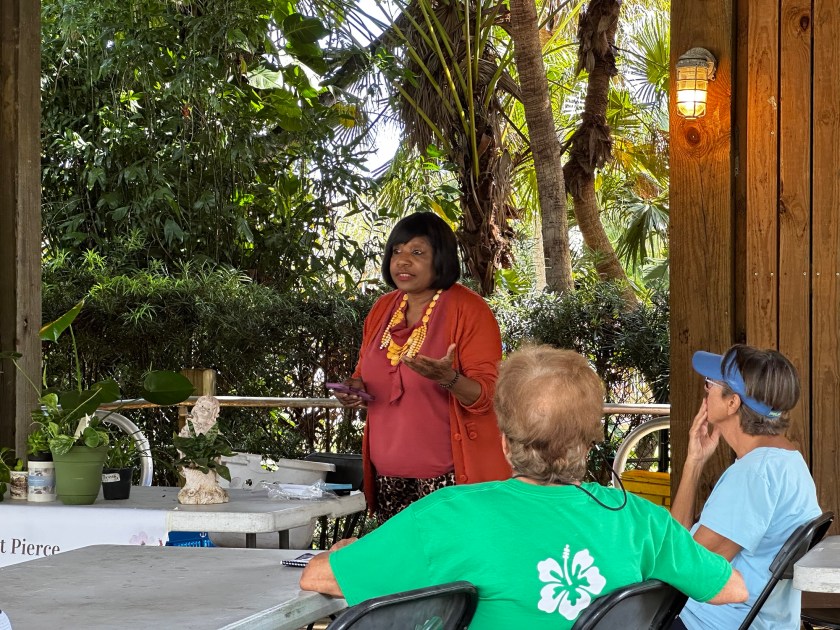
As I shared the major facets of The GreenLight Factor book and its signals at a historic book festival, an 84-year-old woman sat in deep thought. When promptly quietly to share, she quickly responded that she was stuck at a RedLight. This sparked my interest to delve deeper.
That moment with the 84-year-old woman is exactly the kind of thing that reveals how universal the framework really is. The core insight is that the framework doesn’t care about age; it cares about aliveness.
Being stuck at red isn’t a leadership problem. It’s a human problem. And for older adults, the intersections are often more profound than any career decision because they’re asking the deepest questions, Who am I now? What am I still here for? Does my presence still matter?
🔴 Red for older adults often looks like:
🟡 Yellow looks like:
🟢 Green for older adults can be radical and beautiful:
For most working adults, Greenlight is about moving forward in a career. For older adults, it’s about something more essential, permission to still matter. The intersection they are standing at is not about a next job. It’s often the question: Is there a next chapter at all?
That 84-year-old woman didn’t need a leadership framework. She needed someone to hold up a mirror and say, you being stuck is not the end of your story. It’s actually the beginning of your next decision.
The The GreenLight Factor offers a meaningful approach for older adults navigating seasons of transition, reflection, and renewed purpose. Unlike traditional leadership models that focus heavily on career advancement or organizational achievement, this framework recognizes that leadership in later life often centers on wisdom, legacy, identity, and meaningful contribution.
Here are five practical ways the framework can be applied to older audiences:
For older adults, leadership is not always tied to climbing the next professional ladder. Many are navigating retirement, caregiving responsibilities, health changes, relocation, grief, reinvention, or the search for renewed meaning after decades of service.
The GreenLight framework encourages conversations around life transition rather than simply career transition. It honors the reality that later seasons of life still require courage, direction, and thoughtful decision-making. Leadership becomes less about titles and more about navigating change with wisdom and intention.
In many leadership settings, people are asked role-specific questions tied to productivity, promotion, or performance. Older adults, however, are often standing at much deeper intersections.
The more meaningful question becomes:
“What intersection are you standing at right now?”
This question creates space for reflection about identity, relationships, purpose, unfinished dreams, spiritual growth, contribution, and personal fulfillment. It acknowledges that crossroads still exist at every stage of life and that transition itself is a leadership experience.
For older audiences, purpose often matters more than productivity. Many are no longer asking, “What can I achieve next?” but rather, “What still gives my life meaning?” The GreenLight framework creates room for conversations around:
Purpose becomes the guiding light that helps older adults continue moving forward with dignity, clarity, and hope.
Success in later life is often measured differently. The destination is no longer simply accomplishment, it becomes legacy.
A powerful question within the framework is:
“What do you want to have mattered?”
This question invites reflection on impact, relationships, values, wisdom shared, and lives touched. It helps older adults recognize that their experiences still carry tremendous value and that their influence can continue shaping future generations long after their formal careers end.
One of the most important applications of the framework for older adults is the way it reframes the “RedLight” season. In many leadership contexts, being stuck is treated as a problem to solve quickly. But for aging populations, pauses often carry deeper emotional, physical, or spiritual realities.
The framework encourages greater compassion and less urgency. It acknowledges that grief, isolation, uncertainty, health limitations, or fear of change may require gentleness rather than pressure.
Instead of forcing movement, the framework asks:
This compassionate approach allows older adults to process transition with dignity while still recognizing that growth, purpose, and leadership remain possible at every stage of life.
Ultimately, The GreenLight Leadership Framework reminds us that leadership is not confined to age, position, or profession. Even in later years, individuals continue to stand at important intersections capable of reflection, renewal, influence, and meaningful impact.
I remain deeply grateful for the question raised by the 84-year-old woman during that session. Her question created a moment of reflection that expanded my understanding of how the The GreenLight Factor can serve older adults navigating questions of purpose, identity, and transition later in life.
It highlighted a significant gap in the conversations and leadership work being done with and for aging populations, particularly around life after 70, when many individuals are still searching for meaning, contribution, and direction.
What became clear in that moment is that The GreenLight Factor carries a distinct and meaningful voice in this space. The woman who raised her hand was not an exception or an isolated case. Her question represented something much larger: a signal that this framework reaches far beyond its original context and speaks to the universal human experience of transition, reflection, and purpose at every stage of life.
Motivate. Inspire Your Personal Growth & Development | Global Coaching Corner
A photographer's view of the world - words and images to inspire your travels and your dreams
In this blog I'm attempting to answer wordpress daily prompts
Ellen Grace Olinger
Property Maintenance
You are the only person you need to be good enough for
When God Says Go
Health, Reflection, and Poetry for the Journey of Life
Knowing every thing
Family. Youth. Parenting


