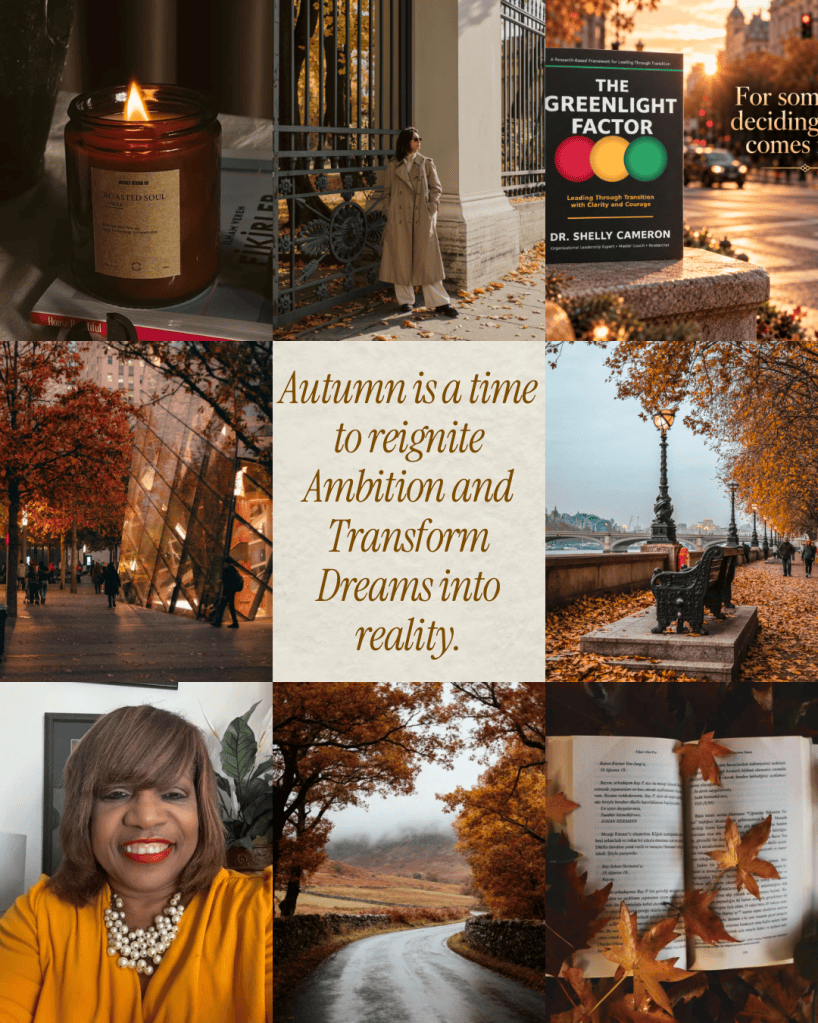
Autumn is a time to reignite ambition and transform dreams into reality.

Managers are asked to guide everyone else. Who helps them prepare for the conversations that matter most?”
Picture a manager leaving a difficult team meeting. She knows the work must improve, but she is unsure how to give honest feedback without discouraging the employee. By the next meeting, the conversation still has not happened.
That hesitation is familiar in many workplaces. Managers are expected to set direction, support performance, handle change, and keep people engaged. Yet they often have little space to practice the conversations those responsibilities require.
The need is becoming more urgent. Gallup reports that global manager engagement fell from 31% in 2022 to 22% in 2025. Its research also points to clear expectations, frequent feedback, and development conversations as practices that shape team engagement.
A workshop can introduce these skills. Coaching helps a manager use them when a real conversation feels uncomfortable. Before the next meeting, a manager can pause and ask:
Developing managers means giving them room to reflect, rehearse, act, and learn from the result. When we invest in those everyday decisions, we strengthen the people responsible for supporting everyone else.
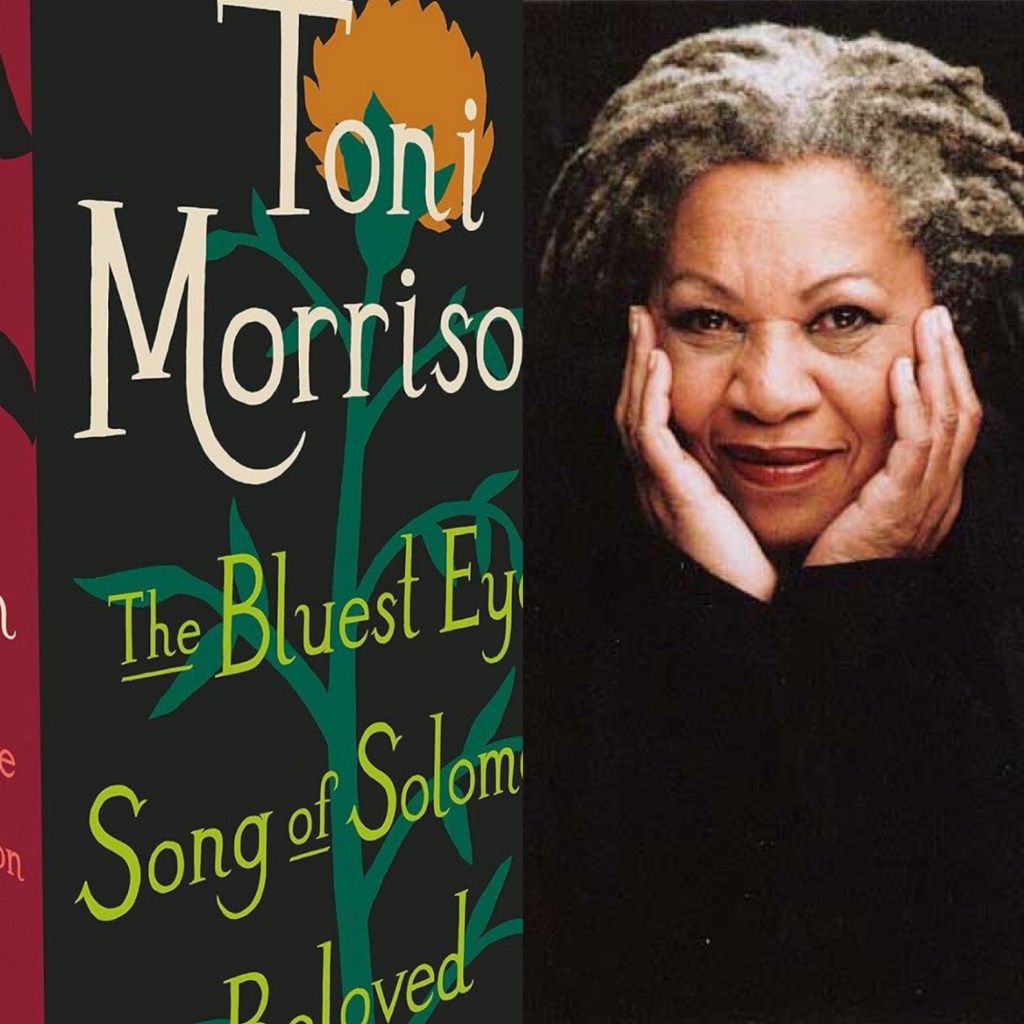
Some books wound by spreading harm; others hurt by awakening truths, memories, and emotions we can no longer ignore.
A couple of years ago, I boarded an eight-hour flight to London. As I settled into my seat, I noticed a gentleman a few rows ahead holding a newly released copy of Prince Harry’s memoir. I gasped with curiosity and immediately asked what he thought of the book. Smiling, he explained that he had just purchased it at the airport and was intrigued by the prospect of learning some of the royal family’s closely guarded stories.
Books have the power to educate, inspire, challenge, and transform. They can also evoke hurt in different ways. Some promote hatred, damage reputations, or spread harmful ideas. Others awaken grief, revisit trauma, expose painful family experiences, or challenge readers and leaders to confront uncomfortable truths.
The books listed below offer examples of these different forms of hurt. Their inclusion does not necessarily mean that they were written to cause harm. Instead, they demonstrate how books can affect individuals, families, communities, and society, sometimes destructively, and at other times in ways that encourage reflection, healing, accountability, or change.
Here are 10 examples representing different ways books can cause hurt:
11.Dare to Lead by Brené Brown
This book can “hurt” constructively by asking leaders to examine vulnerability, fear, trust, values, shame, and the ways they protect themselves from difficult conversations. Brené Brown
12. The Five Dysfunctions of a Team by Patrick Lencioni
It can be uncomfortable because leaders and teams may recognize their own absence of trust, fear of conflict, lack of commitment, avoidance of accountability, and inattention to results. The hurt comes from honest organizational self-recognition. The Table Group
These examples also demonstrate an important distinction. The first three can cause harm by promoting hate or violence, while others may cause pain by helping readers confront grief, trauma, history, and difficult truths.
Are there any books that you can falls into this category that you can recommend? Please share, we would love to hear.
Cheers!
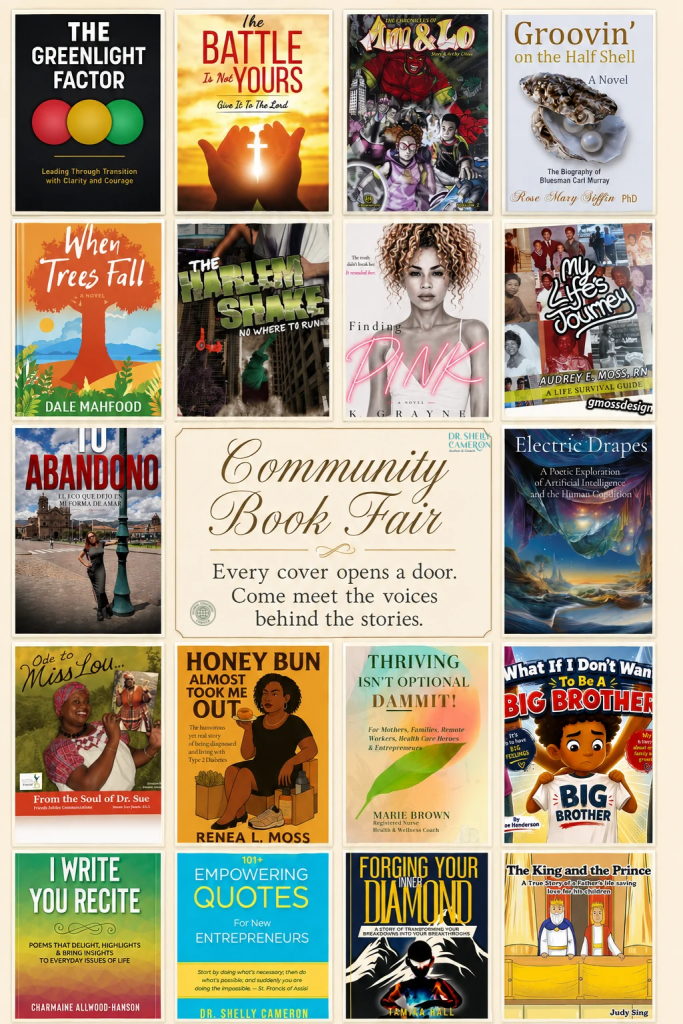
Leadership is not always standing at the center of the room. Sometimes it is building the room, opening the doors and giving others a place to be seen.
I’ve spent over two decades studying leadership, coaching leaders, and writing about what it takes to lead well. But organizing our community author showcase is prime.
With more than 40 authors converging at the Fred Lippman Cultural Center in the City of Hollywood, Florida, the lineup includes my own presentation co-partnered with Fort Lauderdale’s Jamaica Brew Festival Co-founder, Dale Mahfood. A panel on building author brand, poetry, and a slate of featured authors, this event has become an unexpected classroom. Here’s what it has taught me.
You cannot control 40 authors. You can only choreograph the conditions for them to shine. Every author arrives with a different personality, a different genre, a different idea of what “success” for the day looks like. My job isn’t to manage each of them into compliance, it’s to build a structure flexible enough to hold that many voices without losing coherence. That’s a lesson I’ve taught in leadership development for years. Living it, in real time, with real logistics and real personalities, is a different kind of learning altogether.
Curating the panel on building author brand has been its own leadership exercise. Choosing who sits at that table, what questions get asked, and how the conversation is sequenced is really about clarifying a shared message from different perspectives. That’s what leadership often is: not silencing distinct voices, but helping them harmonize around a purpose bigger than any one of them.
I’ve long been more comfortable letting the work speak rather than putting myself forward. This event has stretched that. I’m not just organizing from behind the curtain this time, I’m also presenting, which means stepping into visibility while still holding the operational threads together. Leadership doesn’t always look like standing at the podium; sometimes it’s making sure the podium, the poetry reading, and the featured author segment all run on time so everyone else can have their moment.
Weaving poetry alongside author presentations and a business-minded panel has reminded me that leadership isn’t one register. Sometimes it calls for strategy and structure. Sometimes it calls for space; for feeling, for art, for the parts of a message that a bullet point can’t carry. A good leader, like a good event, knows when to shift registers.
With 40+ authors, a cultural center, and multiple event formats layered into one day, nothing exposes gaps in planning, communication, or delegation faster than a live event with a fixed date. There’s no theoretical framework that substitutes for the real-time problem-solving this requires and that, more than any case study, is where leadership is truly learned.
As the event approaches, I’m struck by how much this process mirrors the leadership principles I’ve spent my career researching and teaching: clarity of purpose, distributed voice, adaptability, and the discipline to serve something larger than yourself. Sometimes the best leadership lessons don’t come from a classroom or a book, they come from the folding chairs and program schedules of a community event.

We write with open hands, and not with fists. ~Beth Kephart
Early in life, my mom wanted to write her life story. A trailblazer, she was one of the country’s first female automobile mechanic who was later fired for getting pregnant. Decades later she passed away without collating the details, as only she could.
The most overpowering reason to write your story is because if you don’t, that version of the story dies with you. That’s what happened with my mom. Today, I am a writer of several books, but it would be remiss of me to think that I could capture details the way she would have if only she had written them herself.
I also reflect on the life of Dolly Parton who wrote many songs with tales of female experiences such as “Working-9-to-5, What a Way to Make a Living.” The world was her stage and through her legacy, she left her indelible mark because she chose to capture and impact many through her songwriting endeavors.
So, I encourage you to write. There is only person who holds the full, lived truth of your experience. Not the polished version other people saw, not the résumé version, not even the version your closest family remembers, but the real one. The one with the doubt and the mess and the moment things actually turned. Once you’re gone, that’s gone. No one can reconstruct it from the outside.
In a public forum, a woman shared her desire to write her life story. With confusion she asked, “where do I start?” As members chimed in, I captured some of their feedback to encourage, lead, and guide her how to get it done. Here I share a few:
Hmm, interesting recommendations. What has been your experience? Do share. We would love to hear.
Cheers!

The greatest investment in a leader is not simply preparing them for where they are but equipping them for the decisions, they have yet to face. ~Dr. Shelly
When I look at this collage, I see more than individuals holding copies of The GreenLight Factor. I see an investment.
The books pictured were donated by sponsors who believe in the importance of developing emerging leaders. That distinction matters because the books were not simply gifts or keepsakes from an event. They were placed into the hands of leaders as resources for the journey ahead.
And leadership is certainly a journey.
We often celebrate people when they receive a promotion, accept a new position, earn recognition or step into leadership. What we don’t always see are the decisions that come afterward.
These are the intersections that inspired The GreenLight Factor.
The framework uses something familiar, the traffic light, to encourage a more intentional approach to decisions:
🔴 RedLight: STOP.
Something requires attention. Continuing simply because we have already started isn’t always the best decision.
🟡 YellowLight: ASSESS.
Not knowing doesn’t mean failure. Sometimes wisdom requires slowing down long enough to gather information, reflect, ask questions and gain clarity.
🟢 GreenLight: GO.
There are also times when preparation, opportunity and alignment come together. At that point, continuing to analyze can become its own obstacle. It may simply be time to move.
Organizations often invest in leadership development when something has already gone wrong.
But what if we gave people tools for reflection and decision-making before they reached the crisis? That’s one reason this particular sponsorship meant so much to me.
Someone recognized that investing in emerging leaders isn’t only about celebrating what they have already accomplished. It is also about helping prepare them for what comes next.
No book can make someone’s decisions for them, and it shouldn’t. What a good leadership resource can do is provide language, questions and a framework that helps someone think differently. That is what I hope The GreenLight Factor does.
A reader may recognize that they have been sitting at a RedLight but refusing to stop. Another may realize that they aren’t stuck, they are simply in a YellowLight season that requires additional assessment.
Someone else may discover that they have already done the preparation, asked the questions and gathered the information. Their challenge isn’t clarity anymore. It’s having the courage to GO.
This is also where leadership development and coaching can go deeper.
The book can help identify the signal.
A leadership conversation can help explore what the signal means.
Coaching can help someone determine what to do about the decision directly in front of them.
That’s why I see opportunities for The GreenLight Factor beyond individual readership.
Organizations, associations, educational institutions and community partners can use books as part of leadership development programs, emerging-leader initiatives, new-manager development, facilitated discussions or sponsored book distributions.
The photograph accompanying this article is one example of what that can look like.
We talk frequently about developing the next generation of leaders. Perhaps another question deserves our attention:
What are we actually placing in their hands and in their minds to prepare them for the decisions leadership will require?
My hope is that long after the photograph was taken, there will come a moment when one of them faces an important intersection, remembers the framework and asks:
Do I need to Stop?
Do I need to Assess?
Or is this finally my GreenLight to Go?
That is when the gift of a book becomes something more. It becomes an investment in a leader’s next decision.
The GreenLight Factor is available for individual purchase and can also be incorporated into sponsored book initiatives, leadership-development programs, facilitated conversations and coaching engagements.
If you’ve already read The GreenLight Factor, I invite you to leave an amazon review and share the idea, question or chapter that spoke most strongly to you.
Asking for help is not a sign of weakness – it is the greatest sign of strength. ~Kendra Scott

I was walking through Walmart when an older gentleman spotted me passing by and immediately asked for help. His wife was on FaceTime, but he couldn’t hear her. “Why can’t I hear her?” he asked, placing the phone in my hand before I could even respond. I turned up the volume, and just like that, he was back in conversation with his wife. He was so relieved that he never even stopped to say thank you.
I smiled and walked away. What stayed with me wasn’t the missing “thank you.” It was how easily he had asked a complete stranger for help. He had a problem. He saw someone who might be able to help. So he simply asked.
I was happy to help. But the encounter made me think: How often does this happen around us?
Asking for help is not a sign of weakness – it is the greatest sign of strength. ~Kendra Scott
As the world becomes increasingly digital, some people are unintentionally being left behind. Seniors may struggle with technology that was never part of their everyday lives. Employees arrive at work to discover that a familiar system has changed, sometimes with little or no advance training. Even something as routine as paying a bill can now require navigating an online portal, or facing a late fee for not using the new process correctly.
QR codes. Apps. Online registrations. Electronic programs. Digital payments. Even giving our tithes and offerings has increasingly moved online.
Technology may make life more convenient for many of us, but for others, it can make a once-simple task feel unnecessarily complicated.
And sometimes, there is no real choice. Learn the system, ask someone for help, or risk being left behind.
That’s what brought me back to the gentleman in Walmart. He didn’t pretend to understand. He didn’t allow embarrassment to stop him. He had a problem, saw someone who might be able to help, and he asked.
Perhaps there is a lesson in that for us all as leaders.

Broken Crayons still color. ~Lifehack
You have the job. The title. The experience. Maybe even the salary you once hoped for. From the outside, everything looks good.
So why doesn’t it feel right?
This is a question many successful professionals quietly wrestle with. Sometimes we remain in situations because they still look like success. We worked hard to get there. Other people admire what we’ve accomplished. Walking away, or even questioning it, can feel ungrateful or irresponsible.
That doesn’t automatically mean it’s time to leave. It may simply mean it’s time to pause. Before making a major career, business, or life decision, give yourself permission to ask:
What has changed?
Is it the environment, or me?
What am I feeling?
Am I tired, frustrated, burned out, bored, or genuinely ready for something different?
What am I holding onto?
Is it purpose, or is it comfort, fear, status, or other people’s expectations?
A resilience mindset that can help us re‑evaluate when things feel wrong.
What would alignment look like now?
Not every uncomfortable season requires an exit. Sometimes we need rest. Sometimes we need boundaries. Sometimes we need a new challenge within the same environment. And sometimes, after careful reflection, we realize that we’ve simply outgrown where we are. The goal isn’t to make a quick move.
The goal is to understand the signal before deciding what comes next.
If everything in your life looks good but something still feels wrong, don’t ignore that feeling. Pause. Reflect. Listen. You may not need an immediate answer. You may simply need enough quiet to hear the question you’ve been too busy to ask.
Reflection: What in your life still looks right on paper, but deserves another look? Do share. We would love to hear!
Cheers!
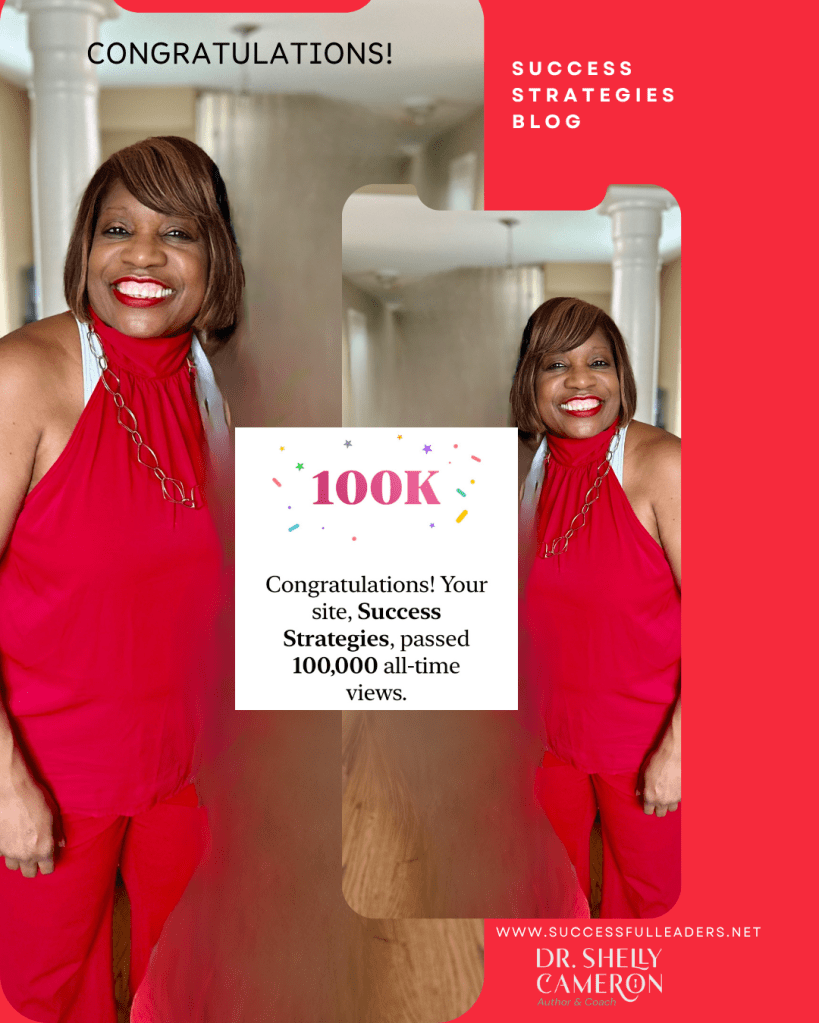
Don’t wait for opportunities. Create them. ~ Bruce Lee
Recently, I received a message from WordPress that stopped me in my tracks: 100,000 all-time blog views. As grateful as I am for the milestone, I quickly realized that this isn’t really my story, it’s ours.
Every view represents someone who paused for a few moments to read an article. Someone looking for encouragement during a season of change. Someone seeking clarity, inspiration, a fresh perspective, or simply a quiet moment to reflect. Whether you’ve been reading for years or have only recently discovered this blog, thank you for allowing me to be part of your journey.
To celebrate this milestone, I wanted to do something a little different. Over the next four weeks, I’ll be opening the archives and sharing collections of some of the most-read articles from this blog. Rather than organizing them by date, I’ve grouped them by the themes that have shaped my writing over the years:
Each collection represents a different part of my journey as a leadership coach, author, researcher, and lifelong learner. Some articles may make you pause and think. Others may inspire your next step, spark your creativity, or simply remind you to slow down and enjoy the journey.
Whether you’re revisiting an old favorite or discovering these articles for the first time, I hope you’ll find something that speaks to where you are today. Thank you for reading, sharing, and growing alongside me. Here’s to the next chapter.
Below are ten reader favorites that invite us to pause, reflect, and reconnect with what matters most. I hope one, or perhaps several, will encourage you this week.
Below are ten reader favorites that invite us to pause, reflect, and reconnect with what matters most. I hope one—or perhaps several—will encourage you this week.
Which article resonated with you the most? Do share. We would love to hear.
Cheers!
Judge people [Not] by their peak of excellence; but by the distance they have traveled from the point where they started. ~Henry Ward Beecher
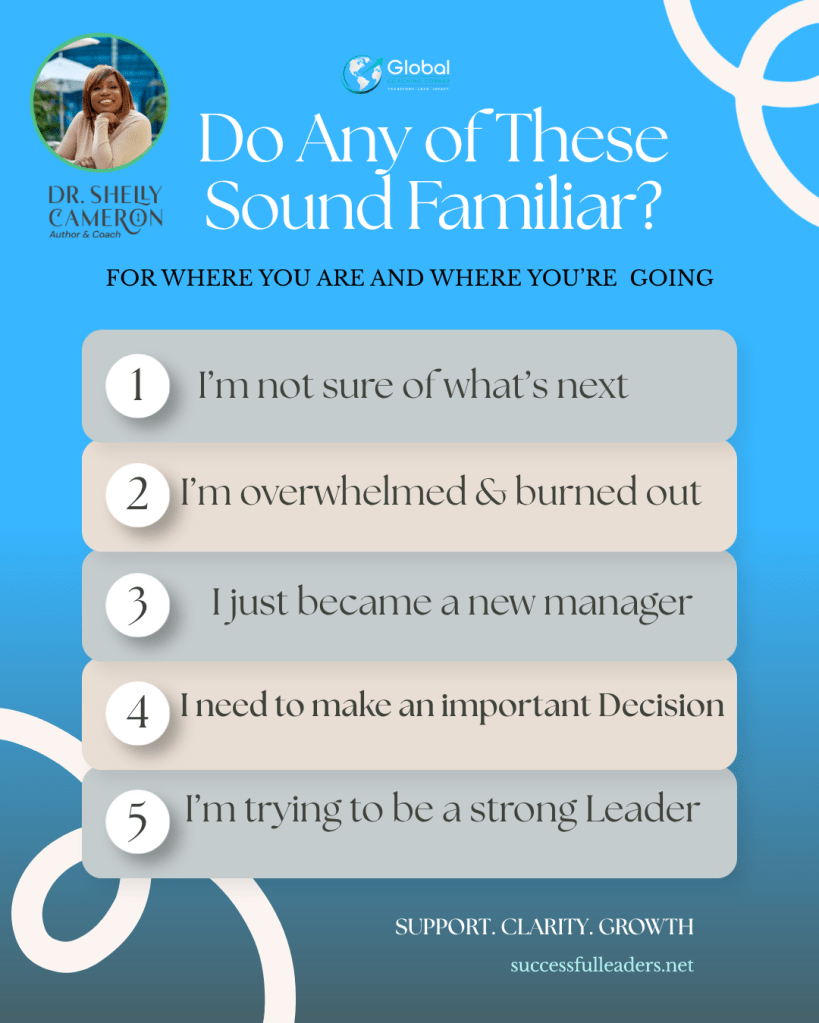
Do any of these thoughts sound familiar?
If any of these resonate, know that you don’t have to figure it out on your own. Make the decision to gain Clarity and build your confidence. Connect with an accountability partner or coach now.
Any you would like to add? Do share. We would love to hear.
Cheers!

I sat in the stillness of the morning dew. Birds chirping quietly. Soft breeze moving through treetops amidst the dew heavy grasses. The cool, still air of sunrise created the perfect moment for my thoughts to breathe.
As I mentally listed the many roles I carry; author, coach, mentor, leadership developer, colleague, mom, and more; I realized someone was missing from the list.
Me.
In the hustle and bustle of life, I had quietly disappeared from my own list. Sadly, that isn’t uncommon. Many leaders become so committed to serving others that they forget to lead themselves.
With trailing thoughts the question arose, “Who is the most important person you will ever lead?” It isn’t your team. It isn’t your organization. It isn’t your family.
It’s You
Yes, you. We spend a great deal of time learning how to lead others: our teams, organizations, and families. But the most important leadership journey begins much closer to home. It begins with leading ourselves.
Self-leadership is the daily practice of managing our thoughts, choices, attitudes, and actions before expecting others to follow our example. It isn’t about perfection. It’s about intentional growth.
The strongest leaders aren’t always the loudest voices in the room. They’re often the ones who have learned to pause before reacting, stay true to their values, admit when they’re wrong, and keep growing long after they have earned the title.
Every day presents us with Choices:
Those quiet decisions shape our leadership more than our title ever will. As you prepare for the week ahead, take a moment to reflect:
Leadership isn’t built in a single moment. It’s built one decision at a time.
The quality of your leadership tomorrow depends on how well you lead yourself today.
What is one self-leadership habit you’re committed to strengthening this week?

If you walk in the footprints of others, you will never make your own.
Constant change, presence and influence, systemic coaching, wellbeing and resilience, purpose and meaning are among the trends associated with the growing coaching evolution. As I shared in 2024 Executive Coaching trends, the executive coaching industry is undergoing a significant shift. Organizations are moving away from viewing coaching as a luxury reserved for senior executives and toward seeing it as a strategic business investment that improves leadership capability, retention, and organizational resilience.
Here are 10 trends every leader should know. As you review, note however that:
Executive coaching is becoming tied directly to measurable business outcomes rather than personal development alone. Organizations increasingly expect coaches to demonstrate impact on:
Opportunity: Coaches who speak the language of business and ROI will have an advantage.
Organizations no longer experience occasional change. They operate in continual transition. Executives seek coaching around:
This aligns closely with transition-based leadership frameworks such as the GreenLight leadership model.
Artificial intelligence is increasingly being used for:
However, Ai cannot replace:
The future appears to be Ai-assisted coaching, rather than Ai replacing experienced executive coaches.
Organizations want evidence. Growing use of:
Clients increasingly ask:
“How do we know coaching worked?”
Coaches who combine qualitative insights with measurable outcomes are becoming more competitive.
Instead of coaching only CEOs, organizations are investing in:
Leadership development is becoming earlier and more continuous.
Technical expertise alone is no longer sufficient. Many organizations view presence as a competitive leadership capability. Demand continues to grow for coaching in:
Burnout has shifted coaching conversations. Organizations increasingly recognize that exhausted leaders cannot sustain high performance. Executives seek support with:
More senior leaders are asking questions beyond career advancement:
Purpose-driven leadership coaching is expanding, particularly among experienced executives and those approaching career transitions.
Organizations increasingly want coaches who can work with leadership teams, not just individuals. The coach becomes a facilitator of collective leadership effectiveness. This includes:
The market is becoming crowded with general coaches. Organizations increasingly seek specialists in areas such as:
A clearly defined specialty often differentiates coaches more effectively than broad, generic offerings.
Essentially, while coaching methods continue to evolve, one reality remains unchanged: leaders still face moments when everything looks right on paper, yet something doesn’t feel right. Technology can provide information. Assessments can provide data. But discerning when to stop, pause, or move forward remains one of leadership’s most important skills. That’s where frameworks, not just conversations create lasting value.
Motivate. Inspire Your Personal Growth & Development | Global Coaching Corner
A photographer's view of the world - words and images to inspire your travels and your dreams
In this blog I'm attempting to answer wordpress daily prompts
Ellen Grace Olinger
Property Maintenance
You are the only person you need to be good enough for
When God Says Go
Health, Reflection, and Poetry for the Journey of Life
Knowing every thing
Family. Youth. Parenting


