
5 Things Organizing Community Events Taught Me About Leadership

Leadership is not always standing at the center of the room. Sometimes it is building the room, opening the doors and giving others a place to be seen.

I’ve spent over two decades studying leadership, coaching leaders, and writing about what it takes to lead well. But organizing our community author showcase is prime.

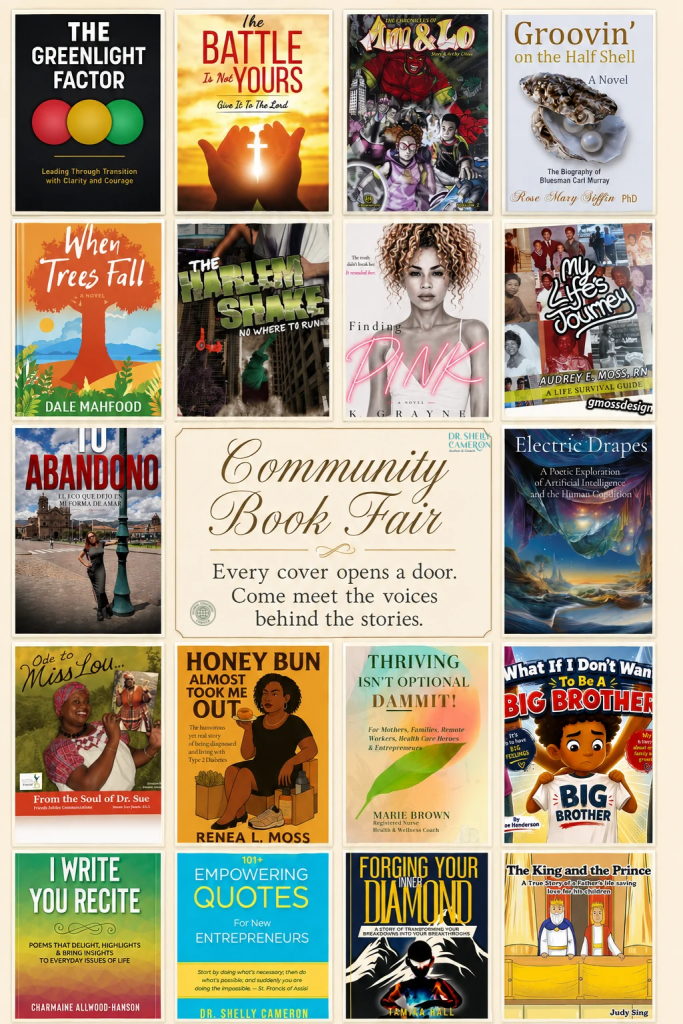
With more than 40 authors converging at the Fred Lippman Cultural Center in the City of Hollywood, Florida, the lineup includes my own presentation co-partnered with Fort Lauderdale’s Jamaica Brew Festival Co-founder, Dale Mahfood. A panel on building author brand, poetry, and a slate of featured authors, this event has become an unexpected classroom. Here’s what it has taught me.

1. Leadership is Choreography, Not Control

You cannot control 40 authors. You can only choreograph the conditions for them to shine. Every author arrives with a different personality, a different genre, a different idea of what “success” for the day looks like. My job isn’t to manage each of them into compliance, it’s to build a structure flexible enough to hold that many voices without losing coherence. That’s a lesson I’ve taught in leadership development for years. Living it, in real time, with real logistics and real personalities, is a different kind of learning altogether.

2. The Panel is a Microcosm of the Whole Event

Curating the panel on building author brand has been its own leadership exercise. Choosing who sits at that table, what questions get asked, and how the conversation is sequenced is really about clarifying a shared message from different perspectives. That’s what leadership often is: not silencing distinct voices, but helping them harmonize around a purpose bigger than any one of them.

3. Behind-the-Scenes Work is Still Leadership

I’ve long been more comfortable letting the work speak rather than putting myself forward. This event has stretched that. I’m not just organizing from behind the curtain this time, I’m also presenting, which means stepping into visibility while still holding the operational threads together. Leadership doesn’t always look like standing at the podium; sometimes it’s making sure the podium, the poetry reading, and the featured author segment all run on time so everyone else can have their moment.

4. Poetry and Prose Remind Me Leadership Needs Range

Weaving poetry alongside author presentations and a business-minded panel has reminded me that leadership isn’t one register. Sometimes it calls for strategy and structure. Sometimes it calls for space; for feeling, for art, for the parts of a message that a bullet point can’t carry. A good leader, like a good event, knows when to shift registers.

5. Community Events Reveal Leadership at Full Scale

With 40+ authors, a cultural center, and multiple event formats layered into one day, nothing exposes gaps in planning, communication, or delegation faster than a live event with a fixed date. There’s no theoretical framework that substitutes for the real-time problem-solving this requires and that, more than any case study, is where leadership is truly learned.

As the event approaches, I’m struck by how much this process mirrors the leadership principles I’ve spent my career researching and teaching: clarity of purpose, distributed voice, adaptability, and the discipline to serve something larger than yourself. Sometimes the best leadership lessons don’t come from a classroom or a book, they come from the folding chairs and program schedules of a community event.

5 Ways Readers Can Support Authors

Book and Art statue

A book may be written by one person, but it travels farther when readers choose to carry its message forward.

Writing a book is often a deeply personal accomplishment, but an author’s journey does not end when the book is published. Authors must then work to help readers discover, trust, and connect with their work. Often this happens while managing the costs of publishing, promotion, and public appearances.

When authors speak about meaningful support, they frequently mention more than book sales. They remember the reader who left a thoughtful review, recommended the book to a friend, shared a social media post, attended an event, or introduced them to a new opportunity. These actions may seem small, but collectively they help authors expand their reach and remain encouraged.

Here are five practical ways readers can support authors and help meaningful stories and ideas reach a wider audience.

  1. Buy their books
    Purchase directly from the author when possible, as this may provide greater financial support.
  2. Leave an honest review
    Reviews on Amazon, Goodreads, Barnes & Noble, and other platforms help increase a book’s credibility and visibility.
  3. Share the book with others
    Recommend it to friends, book clubs, libraries, schools, or community organizations that may find it valuable.
  4. Engage with the author online
    Follow, like, comment on, and share the author’s posts. Consistent engagement helps their work reach new readers.
  5. Invite the author to participate
    Consider them for interviews, podcasts, speaking engagements, workshops, book clubs, panels, or community events.

Essentially, supporting an author goes beyond buying a book. Read it. Review it. Recommend it. Share it. Invite the author into new rooms.

How have you supported an author? Do share. We would love to hear.

Cheeers!

I Want to Write My Life Story. But Where Do I Even Begin?

We write with open hands, and not with fists. ~Beth Kephart

Early in life, my mom wanted to write her life story. A trailblazer, she was one of the country’s first female automobile mechanic who was later fired for getting pregnant. Decades later she passed away without collating the details, as only she could.

The most overpowering reason to write your story is because if you don’t, that version of the story dies with you. That’s what happened with my mom. Today, I am a writer of several books, but it would be remiss of me to think that I could capture details the way she would have if only she had written them herself.

I also reflect on the life of Dolly Parton who wrote many songs with tales of female experiences such as “Working-9-to-5, What a Way to Make a Living.” The world was her stage and through her legacy, she left her indelible mark because she chose to capture and impact many through her songwriting endeavors.

So, I encourage you to write. There is only person who holds the full, lived truth of your experience. Not the polished version other people saw, not the résumé version, not even the version your closest family remembers, but the real one. The one with the doubt and the mess and the moment things actually turned. Once you’re gone, that’s gone. No one can reconstruct it from the outside.

Here’s How Writers Recommend That You Write Your Life Story

In a public forum, a woman shared her desire to write her life story. With confusion she asked, “where do I start?” As members chimed in, I captured some of their feedback to encourage, lead, and guide her how to get it done. Here I share a few:

  1. Write as if you are telling a friend what happened.
  2. Begin with a diary of your current life
  3. Break it down into three parts ages 0 to 21; 22 to 40; 41 to 65. Then make some bullet points of major parts of your life during those periods. Then flesh out each bullet point into a chapter. As you do this, you will remember more things, and more chapters will be born. But breaking the whole down into bite-size chunks like this will help you get started.
  4. You could think of 3-5 of the most impactful moments of your life, both your lowest and highest times. From there you can inquire into your internal state of mind and emotions. Then you will probably begin to connect the dots from other events in your life which will help fill and tell your story.
  5. Just start writing now. What you write will not be the finished article, but just get on with it. Worry about formatting and how to publish later.
  6. Keep the pressure of where to start off of you. Just write something, and then something else, and then something else.
    A beta reader for my novel suggested a late chapter in my novel was the ideal starting chapter. So, I moved it and he was right.
  7. If you have never been a “writer,” this may be much more challenging than you think. Writing a book is hard enough when writing fiction and essays. Journaling is something you may have always practiced and enjoy doing. It’s not impossible to learn for a specific goal, but it may be quite challenging.
  8. From your earliest memory put dates on the entry. When you remember other things from those times you can add them later.
  9. I’d start with the moment or experience that still feels the most alive to you, rather than worrying about telling your entire life story from beginning to end. Write that scene as honestly as you can and let the memories and meaning unfold from there. You don’t need to have the whole structure figured out before you begin. Once you have some pages down, you can start seeing the themes and moments that deserve to become chapters. Most importantly, don’t worry about making it perfect on the first draft. Just tell your story.
  10. Easy. Start writing one memory or scar or grief or shame at a time
  11. All stories need a plot ARC, character ARC, theme, conflict, tension, and resolution. Find those and write.
  12. I did mine–birth to enlistment, 22-year enlistment and post military. (First 18-years, next 22-years and then invite things as they happened). Write everything you can remember. Cut things out later
  13. Think of best or worst thing you ever experienced. Then, jump on your board and ride that wave with your full passion. Not tough. Just need to jump.
    Editing comes later.
  14. Unless the beginning was terrible or horrific or shocking in some way, don’t start there. That’s so boring. Honestly ask yourself, is your life story interesting? Not to you, a friend, a neighbor, or someone who loves or even likes you… but to a complete stranger.
  15. I kind of want to do this too. I thought of starting with a description of the hospital I was born in and a story my mom always told about a man in the waiting room offering to buy a baby. My dad allegedly punched him for asking to buy me. Is it true? Who knows? But kind of a cool story. This was in 1957.
    You could begin by describing the weather the day you were born. (You can look that up). A pregnancy anecdote your mother told; what was going on in the world; etc.
  16. A good way is remembering short stories and then grow them, if you want chronologically after the stories are in place. Also, I read other biographies and finally would ask myself why I am writing it and why would someone who doesn’t know me would want to read it
  17. I’ve just published the final part of my memoir. Two books in all. Once you begin more memories will flood your head. If something happened that defined you, start there. The Following chapters could be looking back. Then continue into the future. Please just start writing, it will come together, you will feel it’s right.
  18. I was told when I began that memoirs only sell if you are famous and debut novels barely sell. My second book released the 15th of August went straight to number 1 on new releases on kindle true crime. Don’t let anyone put you off. Just start writing

Hmm, interesting recommendations. What has been your experience? Do share. We would love to hear.

Cheers!

A Powerful New Book Helps Leaders Stop Waiting & Start Leading

“Most people are not held back by a lack of talent or opportunity. They are held back by waiting for a green light that was never going to come from the outside. This book teaches leaders how to give themselves that green light.”

SOUTH FLORIDA, May 25, 2026. Global Coaching Corner announces the release of The GreenLight Factor: A Leadership Framework, the new book by award-winning author, Certified Master Coach, and HR leadership veteran Dr. Shelly Cameron. Available wherever books are sold. The book introduces a groundbreaking three-part leadership framework that helps individuals move from hesitation and self-doubt into purposeful, confident action.

Drawing on more than two decades of global leadership experience in the pharmaceutical, healthcare and hospitality industries, and research on Caribbean American leaders published in the Journal of American Academy of Business (JAABC), Dr. Cameron has identified the precise mindset shift that separates those who lead boldly from those who remain on the sidelines. The GreenLight Factor distills those insights into a teachable, actionable framework built around a simple but powerful metaphor: the traffic light.

“Most people are not held back by a lack of talent or opportunity. They are held back by waiting for a green light that was never going to come from the outside. This book teaches leaders how to give themselves that green light.”

~ Dr. Shelly Cameron, Author of The GreenLight Factor

About the Book

The GreenLight Factor introduces a three-part framework centered on the universal language of the traffic light. Each signal represents a distinct leadership moment:

The YellowLight guides leaders to pause and reflect, building internal clarity, defining values, and developing the conviction to lead on their own terms.

The GreenLight Factor empowers leaders to move forward with purpose, confidence, and strategy, even when conditions are not perfect and no one has officially told them they are ready.

The book also includes a comprehensive self-assessment tool that helps readers identify which signal they are currently receiving in their leadership journey, along with a curated resource guide of fifteen complementary leadership books.

The GreenLight Factor is designed for emerging leaders stepping into their first role, mid-career professionals navigating transitions, entrepreneurs, and community changemakers, particularly those from under-represented communities who have been conditioned to seek external approval before acting.

Get yours now.

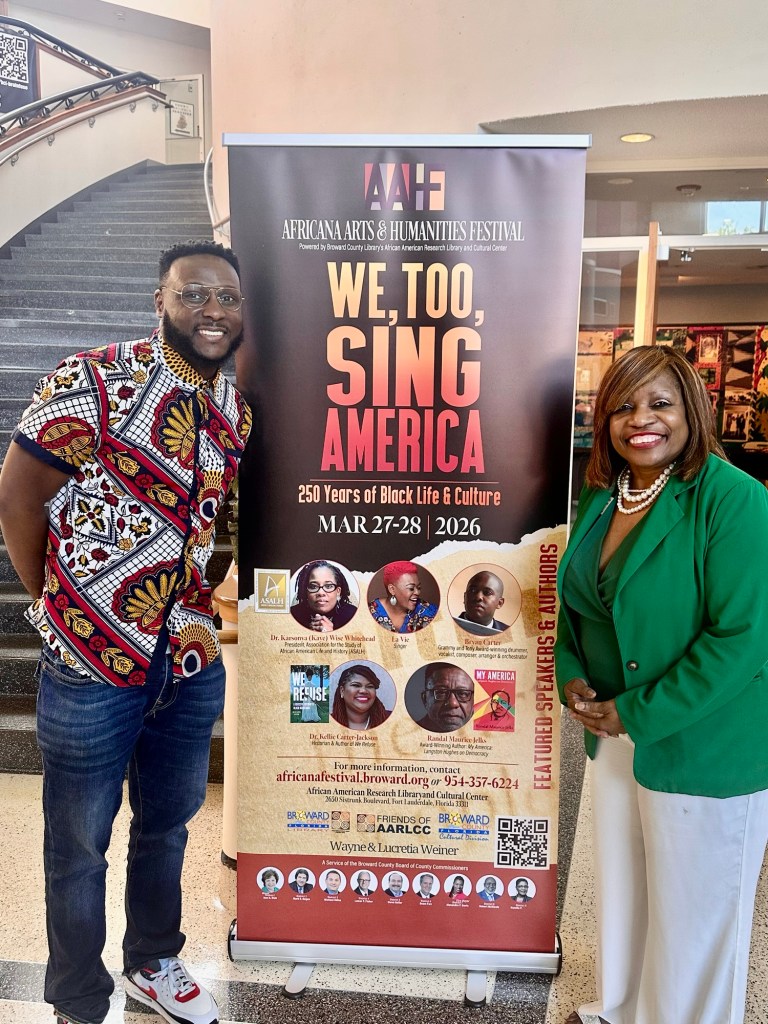
Africana Arts And Humanities Festival

I am still processing the beauty, the brilliance, and the warmth of the Africana Humanities Festival. To the organizers, thank you for creating a space where our stories, our scholarship, and our voices are not just welcomed but celebrated. Being featured as an author and speaker at this 250 anniversary festival was an honor.

Great partnering with co-session presenter R. Manasseh Thornton

To every single person who stopped by my table, sat in my session, picked up the assessment, asked questions, and shared your own stories with me, YOU are the reason this work exists. The conversations we had confirmed everything I believe about why The GreenLight Factor needed to be written.

🚦 So many of you are standing at an intersection right now. A career decision. A relationship. A dream you keep putting on hold. A path that looks right on paper but feels wrong in your body. This book was written for that exact moment.

The GreenLight Factor is coming soon and your pre-order means the world. It tells me the message is landing before the book even hits shelves.

Signup to attend a Greenlight Lab today. Let’s get you to your Greenlight.

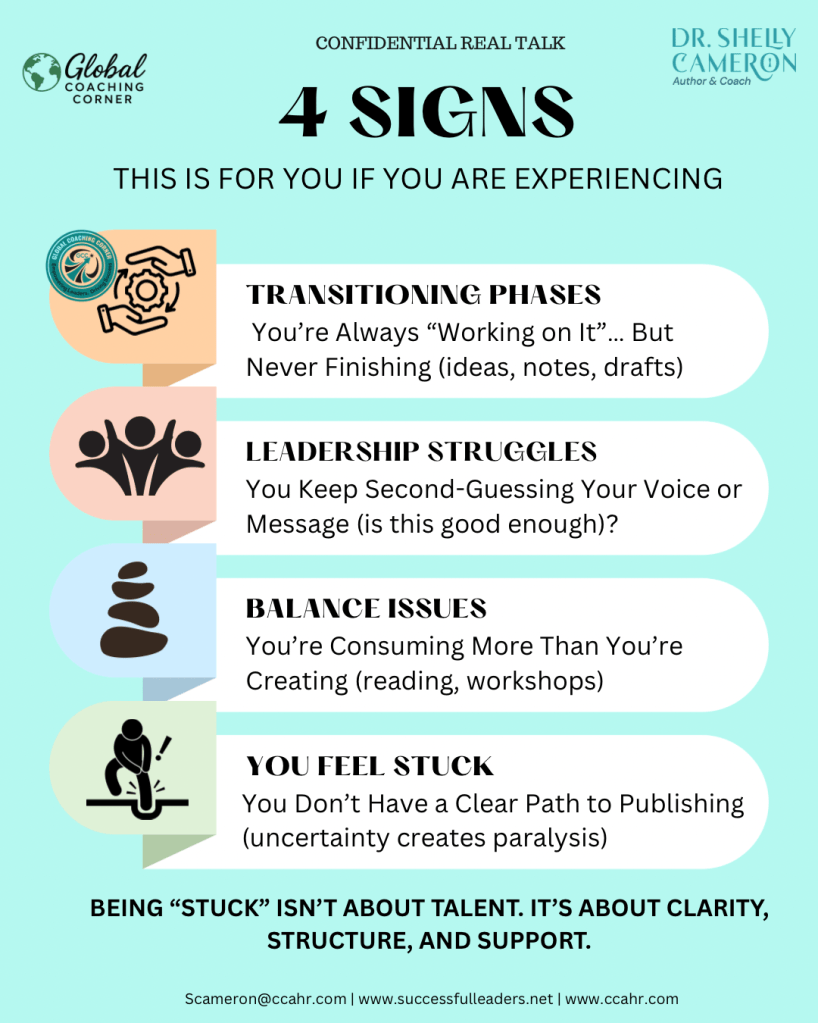
Authors This is For You If You Are Experiencing These 4 Signs

when you have something to do life will not allow you to move forward until you do it. ― Iyanla Vanzant

When you have something to do, life will not allow you to move forward until you do it. So if you caught that writing bug and can’t seem to let it go, then follow that lead. How can you know? Here are for signs that both aspiring and seasoned authors are stuck.

1. You’re Always “Working on It”… But Never Finishing

You have ideas, drafts, notes, and even chapters. But nothing gets completed.
You keep tweaking, rewriting, or starting over instead of moving toward a finished manuscript.

What’s really happening: Perfectionism or lack of structure is keeping you in motion, but not in progress.

2. You Keep Second-Guessing Your Voice or Message

You wonder: “Is this good enough?” “Will anyone read this?” “Should I change direction?” So you rewrite, dilute your message, or abandon strong ideas.

What’s really happening: Lack of clarity and confidence is causing you to disconnect from your authentic voice.

3. You’re Consuming More Than You’re Creating

You’re reading books, watching writing videos, attending workshops. But not actually writing consistently.

What’s really happening: You’re hiding in “learning mode” to avoid the discomfort of execution.

4. You Don’t Have a Clear Path to Publishing

You have written (or started writing), but you don’t know what comes next. Self-publish? Traditional? Hybrid? So, the manuscript sits… and sits.

What’s really happening: Uncertainty about the publishing process is creating paralysis.

Know that being “stuck” isn’t about talent, it’s about clarity, structure, and support. As an author of 11 books, I have been there and now teach the process throughout different communities. If you identified with any of the signs and need help, let’s connect now and get you moving. Clarity is on the other side of the ‘Ask’.

Happy Writing!

5 Tips for Finding Your Perfect Writing Retreat

The Writing Space

Write. Rewrite. When not writing or rewriting, read. I know no shortcuts. ~Larry L. King

Where do I write? In a quiet place. A place where I can hear my thoughts, the stirrings of my heart, my soul. I write whenever it hits. I must stop, record, write. If I do not do so immediately; in a flash, it’s gone. So I have learnt to capture the words as they come. Anywhere, anytime, anyhow.

Create the Mental Space To Write

Here are some thoughtful ways to create that mental space without spending money:

  1. Transform a familiar space into something new. Rearrange your bedroom or living room completely. Move furniture, change what’s on the walls, even face your bed a different direction. The psychological shift of being in a “new” environment can be surprisingly powerful for fresh thinking.

2. Create a personal retreat schedule at home. Pick a day where you treat your home like a retreat center; no work, no obligations, phone on airplane mode. Wake early.

  • Do some stretching or meditation,
  • Make yourself a special breakfast with what you have
  • Spend blocks of time journaling or thinking through your goals
  • Take a long walk,
  • Prepare meals mindfully.

The structure and intentionality matter more than the location.

3. Explore your area like a tourist. Walk or bike to neighborhoods you’ve never been to, even if they’re just a few miles away. Bring a journal and find a park bench, a library reading room or quiet corner in a coffee shop (you don’t have to buy anything). Simply find a place where you can sit and think. The act of physically moving through new spaces often helps mental clarity.

4. Do an overnight “camping” experience somewhere free. Your backyard, a friend’s yard, a balcony, or even just sleeping in a different room with the windows open (yikes)! The change in where you sleep and wake can genuinely shift your perspective.

5. Visit a place of worship or quiet public space. Many churches, temples, or meditation centers welcome people to sit quietly even if you’re not a member. Libraries, botanical gardens, or even certain hospital chapels can offer peaceful refuge for reflection.

The key is breaking your normal patterns (different sights, sounds, routines, even in the sky). This helps your brain step out of autopilot mode and think more expansively about your future.

Here’s hoping these tips will help you as they did me. Where’s your favorite space to write? Any missing that you would like to add? Do share. We would love to hear.

Cheers!
Setting Goals: Key to Overcoming Crises

Together we Grow

Ann, a historian and extreme planner, had an adventurous time touring Greece with her husband. During the trip, she shared photos of places she had learned in her undergraduate program. As they began their return trip, civil unrest occurred blocking all flights to leave Turkey, cruise and all. Quick decision, they decided to get out of the country whichever way they could. Both landed in Paris, only to be separated to get back home to the USA. Separation was a non-issue. Their goal was to return safely to their two kids waiting back home.

Times of Crises

There are times of crises as in Ann’s case. But most often we do have opportunities to plan ahead. Financiers will preach that we should plan for times of crises too.

Why is it important to set goals? Because if you don’t know where you’re going, any road will take you there. Where you will end up, who knows? That’s when you will just have to go with the flow.

Goalsetting is the process of identifying desired outcomes and creating a plan of action to achieve them, providing a sense of direction, motivation and focus

So why do we need to set goals? Because setting goals is the process of identifying desired outcomes and creating a plan of action to achieve them, providing a sense of direction, motivation and focus.

That’s the reason it a pleasure to facilitate the writing process with authors. The event was held at the Broward County’s West Regional Library in Plantation, Florida. This session focused on Writers Goal Setting for 2026 books through the Writers Group of South Florida.

If you are an aspiring author, or are ready to take your leadership to the next level and need a copy of the Goal-Setting guide, connect to get yours today. Leadership Assessment also available.

Not an author but ready to take your leadership to the next level through setting your 2026 goals, let’s chat. Referrals are warmly welcomed.

Cheers!

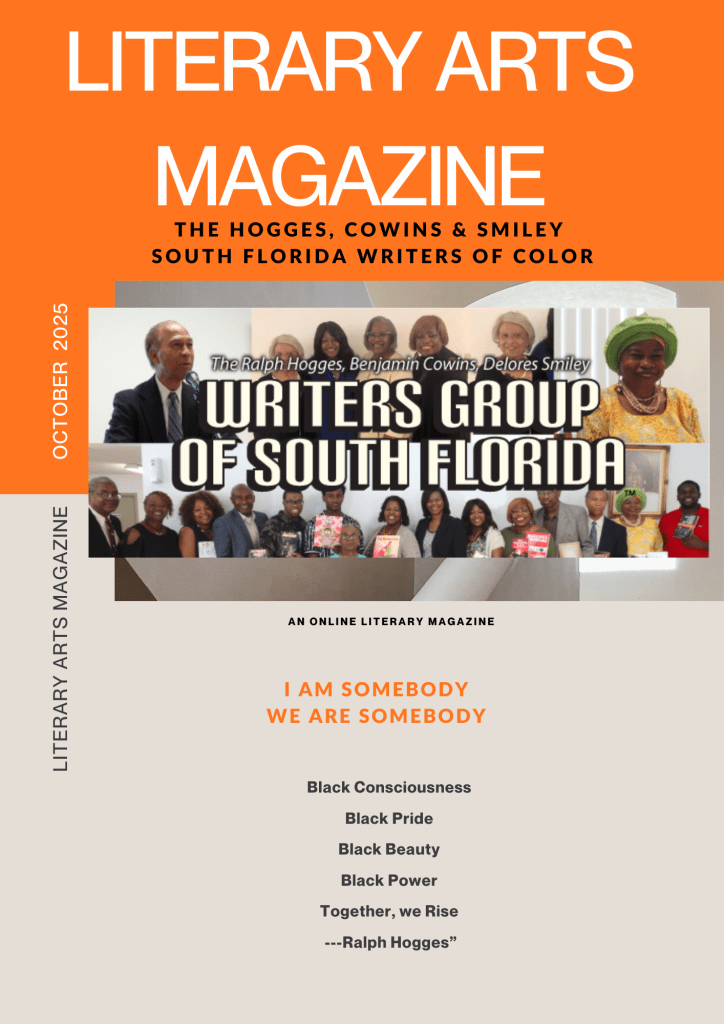
South Florida Writers Of Color Online Literary Magazine…

I am Somebody. We are Somebody. ~ Dr. Ralph Hogges

Beyond the Bend of Trees Avenue

By Patricia Reid-Waugh

You would think that a street named ‘Trees Avenue’ would be lined with tall, manicured trees of exotic variety, standing like sentries on either side of the roadway. Strangers entering the L-shaped avenue might imagine that around the bend, leafy branches would shield them from the blistering sun, and a rustling chorus of leaves would welcome them. But such was not the street on which I lived.

My ‘Trees Avenue’ was no different from other residential roads nearby, paved in asphalt, with a strip of grass separating the roadway from the walls of each property. Neither my parents nor the other homeowners thought it important to give the street a personality matching its name. To the casual visitor, it looked tidy, pleasant, but rather ordinary.

The houses stood close to the front boundaries, verandahs stretching wide to court the evening breeze. These verandahs became living rooms in their own right, alive with laughter, morning greetings, neighborly gossip, and the occasional raised voice.

CHERISH

By S. Ettosi Brooks

I remember my people; like a piece of sweet, firm sugar cane spilling its juice over my tongue and lips; lips framing expressions of a language of thunder and soft rain. My roots – peopled with characters of such unassuming elegance I could not really see them until, exiled, I craved remembrances like sweet sugar cane. What sweeter dance than a handcart man, lithe, muscled – swinging and dipping, black sinews rippling their way down Orange Street.

Journey to Spiritual Growth: A Path Toward Lasting Transformation

By Dr. Delores Smiley

Journey to Spiritual Growth is a Christ-centered ministry designed to guide believers toward a deeper, more intentional walk with God. Rooted in the call to “love the Lord your God with all your heart, soul, mind, and strength,” this ministry provides practical tools and clear teachings to help individuals grow in spiritual knowledge, examine their hearts, and live out the commandments of love – preparing for heaven as the ultimate home. It recognizes that faith is not a single event but a lifelong journey that calls us to grow in understanding, surrender our hearts, and live out the commandments of love.

Maximize Holiday Book Sales: A Month by Month Guide

Effective preparation sets the stage for success and sparks creativity

Authors write, publish and leave expecting miracles. It doesn’t happen. Authorship happens mostly by accident as writers choose to share what’s on their hearts. It might be a memoir, poetry, fiction or non-fiction. As their passion unfold, they write then later realize that they have suddenly been thrust into entrepreneurship! How do they get those books off bookstore shelves? Selected on amazon? Shared among family and friends? It behooves them to sit, pray, and wonder why their books just remains stagnant. Most often these are excellent stories that remains dormant for years, not gleaned by readers.

Realizing this pattern, the Writers Group of South Florida held a workshop. Hosted by the West Regional Library in Plantation. This initiative was facilitated by Dr. Shelly Cameron. Here’s a summary of the takeaway points that attendees authors gleaned.

AUGUST – SEPTEMBER: Build the Foundation & Warm Up Your Audience

  • Update book cover, blurb, and Amazon listing with holiday-friendly touches.
  • Secure podcast, blog, and media features for October–December.
  • Plan holiday content calendar (mix of promos, tips, behind-the-scenes, giveaways).
  • Launch pre-order bonuses or limited-time bundles.

October: Visible Campaign & Early Gift Push

  • Submit to gift guides, bloggers, and niche media lists.
  • Collaborate with other authors for holiday bundles or giveaways.
  • Feature reader testimonials and reviews on social media.
  • Run Early Bird discounts to attract early shoppers.

November: Holiday Sales Mode

  • Run a gratitude-themed campaign for Thanksgiving.
  • Offer Black Friday/Cyber Monday E-Book discounts or signed copy specials.
  • Partner with local stores for Small Business Saturday promotions.
  • Send an email countdown series leading up to Thanksgiving.

December: Final Holiday Push

  • Promote e-Books and gift certificates for last-minute shoppers.
  • Run a “12-Days-of-Christmas” themed social media series.
  • Position your book for New Year’s resolutions or inspiration.
  • Post thank-you messages and celebrate your readers

PRO TIPS for Conversions

  • Author Branding Matters: Use consistent holiday visuals across all platforms.
  • Offer Multiple Formats: Paperback, e-Book, Audio-book—make it easy to gift.
  • Make It Shareable: Create “I’m gifting this book!” social media graphics for readers to post.
  • Always Include a Call-to-Action: Don’t just post pretty images—always link to buy.
  • Track & Adjust: Watch which promos get clicks and double down on what works.

There you have it. Did one, two or a few of the above stand out for you? As a published author, which will you adopt? Do share, we would love to hear.

Happy Promoting!

I Write Because….

I now write with that sense of urgency to get what’s inside of me ….I write because I have learned from the mistakes and mishaps of others.

I Write Because….

Top 12 Places to Donate Your Books

With so many books to choose from, you’ll have the hard part of deciding which one to donate.

On Instagram I shared the hard task of purging my books. I have a million with little or no storage space. But what happened was…. During my purge, I ended up reading and re-claiming books.

I decided to share my work (purge in process), and an interested person asked, “where can you donate books?” I responded briefly but decided to post more here on the blog.

Popular and Unique Places to Donate Books

Local Donation Options

  1. Public Libraries
    • Many libraries accept gently used books for their collections or book sales.
    • Call ahead—they often have specific donation days or guidelines.
  2. Schools & Colleges
    • Especially helpful for children’s books, young adult novels, and textbooks.
    • Contact local principals, librarians, or teachers to ask if they need donations.
  3. Community Centers / YMCA / Local Clubs
    • Often accept books for literacy programs, tutoring, or community libraries.
  4. Hospitals & Nursing Homes
    • They may accept clean, gently used books for waiting rooms or patient use.
  5. Churches / Faith-Based Organizations
    • Great place to donate devotionals, spiritual books, or children’s materials.

Charitable Organizations

  1. Goodwill or Salvation Army
    • Accepts a wide range of books. Proceeds support their employment programs.
  2. Habitat for Humanity ReStores
    • Some locations take books to sell in support of housing projects.
  3. Books for Africa / Books Through Bars / Better World Books
    • Organizations that distribute books to under-served communities locally or globally.
  4. Little Free Library

Online / Specialized Options

  1. Freecycle.org / Buy Nothing Groups (Facebook)
    • Offer books locally for free and connect with those who want them.
  2. Local Prison Programs
    • Many prisons accept paperback books only. Check with local chaplains or nonprofits.
  3. Book Drives / Literacy Nonprofits
    • Check with local literacy organizations or Rotary Clubs—they may be running book drives.

Success Strategies

Motivate. Inspire Your Personal Growth & Development | Global Coaching Corner

Travel with Intent

A photographer's view of the world - words and images to inspire your travels and your dreams

Answering daily prompts

In this blog I'm attempting to answer wordpress daily prompts

Alex Tafur

Property Maintenance

Poesy Perspectives

embrace the magic

GREENLiGHT

When God Says Go

HEALTH | INSPIRATION

Health, Reflection, and Poetry for the Journey of Life

My Sister My Friend

Family. Youth. Parenting