
5 Ways Readers Can Support Authors

Book and Art statue

A book may be written by one person, but it travels farther when readers choose to carry its message forward.

Writing a book is often a deeply personal accomplishment, but an author’s journey does not end when the book is published. Authors must then work to help readers discover, trust, and connect with their work. Often this happens while managing the costs of publishing, promotion, and public appearances.

When authors speak about meaningful support, they frequently mention more than book sales. They remember the reader who left a thoughtful review, recommended the book to a friend, shared a social media post, attended an event, or introduced them to a new opportunity. These actions may seem small, but collectively they help authors expand their reach and remain encouraged.

Here are five practical ways readers can support authors and help meaningful stories and ideas reach a wider audience.

  1. Buy their books
    Purchase directly from the author when possible, as this may provide greater financial support.
  2. Leave an honest review
    Reviews on Amazon, Goodreads, Barnes & Noble, and other platforms help increase a book’s credibility and visibility.
  3. Share the book with others
    Recommend it to friends, book clubs, libraries, schools, or community organizations that may find it valuable.
  4. Engage with the author online
    Follow, like, comment on, and share the author’s posts. Consistent engagement helps their work reach new readers.
  5. Invite the author to participate
    Consider them for interviews, podcasts, speaking engagements, workshops, book clubs, panels, or community events.

Essentially, supporting an author goes beyond buying a book. Read it. Review it. Recommend it. Share it. Invite the author into new rooms.

How have you supported an author? Do share. We would love to hear.

Cheeers!

I Want to Write My Life Story. But Where Do I Even Begin?

We write with open hands, and not with fists. ~Beth Kephart

Early in life, my mom wanted to write her life story. A trailblazer, she was one of the country’s first female automobile mechanic who was later fired for getting pregnant. Decades later she passed away without collating the details, as only she could.

The most overpowering reason to write your story is because if you don’t, that version of the story dies with you. That’s what happened with my mom. Today, I am a writer of several books, but it would be remiss of me to think that I could capture details the way she would have if only she had written them herself.

I also reflect on the life of Dolly Parton who wrote many songs with tales of female experiences such as “Working-9-to-5, What a Way to Make a Living.” The world was her stage and through her legacy, she left her indelible mark because she chose to capture and impact many through her songwriting endeavors.

So, I encourage you to write. There is only person who holds the full, lived truth of your experience. Not the polished version other people saw, not the résumé version, not even the version your closest family remembers, but the real one. The one with the doubt and the mess and the moment things actually turned. Once you’re gone, that’s gone. No one can reconstruct it from the outside.

Here’s How Writers Recommend That You Write Your Life Story

In a public forum, a woman shared her desire to write her life story. With confusion she asked, “where do I start?” As members chimed in, I captured some of their feedback to encourage, lead, and guide her how to get it done. Here I share a few:

  1. Write as if you are telling a friend what happened.
  2. Begin with a diary of your current life
  3. Break it down into three parts ages 0 to 21; 22 to 40; 41 to 65. Then make some bullet points of major parts of your life during those periods. Then flesh out each bullet point into a chapter. As you do this, you will remember more things, and more chapters will be born. But breaking the whole down into bite-size chunks like this will help you get started.
  4. You could think of 3-5 of the most impactful moments of your life, both your lowest and highest times. From there you can inquire into your internal state of mind and emotions. Then you will probably begin to connect the dots from other events in your life which will help fill and tell your story.
  5. Just start writing now. What you write will not be the finished article, but just get on with it. Worry about formatting and how to publish later.
  6. Keep the pressure of where to start off of you. Just write something, and then something else, and then something else.
    A beta reader for my novel suggested a late chapter in my novel was the ideal starting chapter. So, I moved it and he was right.
  7. If you have never been a “writer,” this may be much more challenging than you think. Writing a book is hard enough when writing fiction and essays. Journaling is something you may have always practiced and enjoy doing. It’s not impossible to learn for a specific goal, but it may be quite challenging.
  8. From your earliest memory put dates on the entry. When you remember other things from those times you can add them later.
  9. I’d start with the moment or experience that still feels the most alive to you, rather than worrying about telling your entire life story from beginning to end. Write that scene as honestly as you can and let the memories and meaning unfold from there. You don’t need to have the whole structure figured out before you begin. Once you have some pages down, you can start seeing the themes and moments that deserve to become chapters. Most importantly, don’t worry about making it perfect on the first draft. Just tell your story.
  10. Easy. Start writing one memory or scar or grief or shame at a time
  11. All stories need a plot ARC, character ARC, theme, conflict, tension, and resolution. Find those and write.
  12. I did mine–birth to enlistment, 22-year enlistment and post military. (First 18-years, next 22-years and then invite things as they happened). Write everything you can remember. Cut things out later
  13. Think of best or worst thing you ever experienced. Then, jump on your board and ride that wave with your full passion. Not tough. Just need to jump.
    Editing comes later.
  14. Unless the beginning was terrible or horrific or shocking in some way, don’t start there. That’s so boring. Honestly ask yourself, is your life story interesting? Not to you, a friend, a neighbor, or someone who loves or even likes you… but to a complete stranger.
  15. I kind of want to do this too. I thought of starting with a description of the hospital I was born in and a story my mom always told about a man in the waiting room offering to buy a baby. My dad allegedly punched him for asking to buy me. Is it true? Who knows? But kind of a cool story. This was in 1957.
    You could begin by describing the weather the day you were born. (You can look that up). A pregnancy anecdote your mother told; what was going on in the world; etc.
  16. A good way is remembering short stories and then grow them, if you want chronologically after the stories are in place. Also, I read other biographies and finally would ask myself why I am writing it and why would someone who doesn’t know me would want to read it
  17. I’ve just published the final part of my memoir. Two books in all. Once you begin more memories will flood your head. If something happened that defined you, start there. The Following chapters could be looking back. Then continue into the future. Please just start writing, it will come together, you will feel it’s right.
  18. I was told when I began that memoirs only sell if you are famous and debut novels barely sell. My second book released the 15th of August went straight to number 1 on new releases on kindle true crime. Don’t let anyone put you off. Just start writing

Hmm, interesting recommendations. What has been your experience? Do share. We would love to hear.

Cheers!

When Everything Looks Good But Still Feels Wrong

Broken Crayons still color. ~Lifehack

You have the job. The title. The experience. Maybe even the salary you once hoped for. From the outside, everything looks good.

So why doesn’t it feel right?

This is a question many successful professionals quietly wrestle with. Sometimes we remain in situations because they still look like success. We worked hard to get there. Other people admire what we’ve accomplished. Walking away, or even questioning it, can feel ungrateful or irresponsible.

Growth Has a Way of Making Yesterday’s Dream Feel Different Today

  • What once challenged you may now drain you.
  • What once excited you may no longer inspire you.
  • What once aligned with your goals may no longer align with who you’re becoming.

That doesn’t automatically mean it’s time to leave. It may simply mean it’s time to pause. Before making a major career, business, or life decision, give yourself permission to ask:

What has changed?
Is it the environment, or me?

What am I feeling?
Am I tired, frustrated, burned out, bored, or genuinely ready for something different?

What am I holding onto?
Is it purpose, or is it comfort, fear, status, or other people’s expectations?

A resilience mindset that can help us re‑evaluate when things feel wrong.

What would alignment look like now?

Not every uncomfortable season requires an exit. Sometimes we need rest. Sometimes we need boundaries. Sometimes we need a new challenge within the same environment. And sometimes, after careful reflection, we realize that we’ve simply outgrown where we are. The goal isn’t to make a quick move.

The goal is to understand the signal before deciding what comes next.

If everything in your life looks good but something still feels wrong, don’t ignore that feeling. Pause. Reflect. Listen. You may not need an immediate answer. You may simply need enough quiet to hear the question you’ve been too busy to ask.

Reflection: What in your life still looks right on paper, but deserves another look? Do share. We would love to hear!

Cheers!

100,000 Views: A Journey Through My Most-Read Articles

Don’t wait for opportunities. Create them. ~ Bruce Lee

Recently, I received a message from WordPress that stopped me in my tracks: 100,000 all-time blog views. As grateful as I am for the milestone, I quickly realized that this isn’t really my story, it’s ours.

Every view represents someone who paused for a few moments to read an article. Someone looking for encouragement during a season of change. Someone seeking clarity, inspiration, a fresh perspective, or simply a quiet moment to reflect. Whether you’ve been reading for years or have only recently discovered this blog, thank you for allowing me to be part of your journey.

To celebrate this milestone, I wanted to do something a little different. Over the next four weeks, I’ll be opening the archives and sharing collections of some of the most-read articles from this blog. Rather than organizing them by date, I’ve grouped them by the themes that have shaped my writing over the years:

  • Reflections for the Journey
  • Leadership
  • Writer’s Corner
  • Life’s Serenity

Each collection represents a different part of my journey as a leadership coach, author, researcher, and lifelong learner. Some articles may make you pause and think. Others may inspire your next step, spark your creativity, or simply remind you to slow down and enjoy the journey.

Whether you’re revisiting an old favorite or discovering these articles for the first time, I hope you’ll find something that speaks to where you are today. Thank you for reading, sharing, and growing alongside me. Here’s to the next chapter.

Below are ten reader favorites that invite us to pause, reflect, and reconnect with what matters most. I hope one, or perhaps several, will encourage you this week.

Reflections for the Journey: 10 Reader Favorites

Below are ten reader favorites that invite us to pause, reflect, and reconnect with what matters most. I hope one—or perhaps several—will encourage you this week.

  1. When Everything Stops
  2. The Power of U-Turns
  3. Must Go Faster
  4. Quiet Isn’t Always Peace…
  5. When It’s Time For Something New…
  6. If Your Life Was A Book...
  7. The Journey. Keep Going
  8. Fear of Dying With Unaccomplished Dreams
  9. The Rear View
  10. Don’t Stop Believing: 10 Songs That Inspire

Which article resonated with you the most? Do share. We would love to hear.

Cheers!

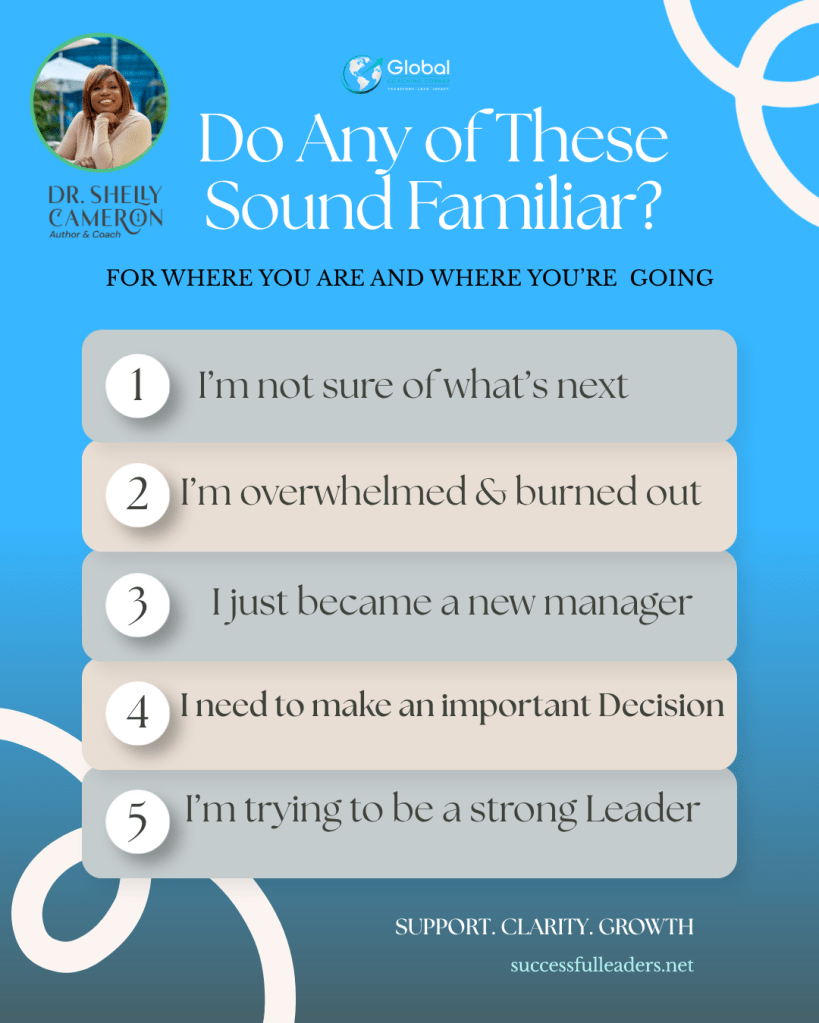
Do Any of These Sound Familiar To Where You Are Going?

Judge people [Not] by their peak of excellence; but by the distance they have traveled from the point where they started. ~Henry Ward Beecher

Do any of these thoughts sound familiar?

  • I’m overwhelmed
  • I’m not sure of what’s next
  • I just became a new manager
  • I’m thinking of starting a business
  • I need to make an important decision
  • I’m burned out
  • I’m trying to be a strong Leader

If any of these resonate, know that you don’t have to figure it out on your own. Make the decision to gain Clarity and build your confidence. Connect with an accountability partner or coach now.

Any you would like to add? Do share. We would love to hear.

Cheers!

10 Mini Retreats To Help You Unwind & Reboot At Almost No Cost

The start of something new brings hope and excitement. ~ Gabriel Chase

As leaders, we’re often wired to keep going. We push through deadlines, lead teams, solve problems, and pour our energy into everyone else. After weeks, or even months of operating at full speed, it’s easy to find yourself physically exhausted, mentally drained, and creatively depleted.

Perhaps you’re longing for a vacation, but time, responsibilities, or finances make a dream getaway unrealistic right now. The good news is that renewal doesn’t always require a plane ticket or an expensive resort. Sometimes the most meaningful reset comes from intentionally stepping away, even for a few hours.

These 10 simple, budget-friendly mini-retreat ideas are designed to help you slow down, unwind, reconnect with yourself, and reignite your creativity. Whether you need clarity for your next leadership decision, fresh inspiration for your writing, or simply a moment to breathe, these low-cost escapes can help you return refreshed, refocused, and ready for what’s next.

1. Create a “CEO Retreat Day”

Leave home by 8:00 a.m. Pack:

  • Your book
  • Journal
  • Beach chair
  • Water
  • Simple lunch
  • Fruit/snacks
  • Favorite music

Spend the day moving slowly.

Morning:

  • Beach walk
  • No phone except photos

Late morning:

  • Journal about life, not business.

Afternoon:

  • Sit under a tree or umbrella and simply watch the ocean.

Get home before sunset.

2. Sunrise Beach Therapy

  • Go before everyone arrives.
  • Bring coffee.
  • No agenda.
  • Watch the sun come up.

There is something incredibly calming about beginning the day before the world gets noisy.

Even one hour feels restorative.

3. State Parks

Find an amazing state park for only a small entrance fee.

  • Take your lunch
  • Read
  • Walk
  • Watch wildlife
  • No meetings

4. Botanical Garden

Instead of shopping, spend two or three hours wandering gardens. The slower pace naturally quiets the mind.

5. Library + Coffee + Beach

This one sounds simple but is surprisingly restorative.

Morning:

  • Browse a library
  • Pick up one inspiring book (not work)

Then:

  • Local coffee shop

Then:

  • Beach

Read for pleasure. No notetaking.

6. Picnic by the Water

Instead of eating inside: Pack:

  • Fresh fruit
  • Sandwiches
  • Sparkling water
  • Blanket

Find:

  • An inlet
  • Marina
  • Quiet beach
  • Lake

Stay three hours. Leave your laptop at home.

7. Artist Day

If you’re a creator. Spend a day doing things that feed creativity instead of productivity. Maybe:

  • Visit an art museum
  • Photograph interesting doors
  • Photograph waves
  • Collect shells
  • Write one poem
  • Sketch

No pressure to produce anything.

8. Sunset Reset

https://images.openai.com/static-rsc-4/kOID_g8y6ctJESCJ6lfxm4Ejisulu2sq_gJZoocvLD5JN_-Jxlb_CBUdyuv5rwtDfQN0DqH1-x_maO5XU9r7t5eANDQCNS1rPGFZWRju2ol1c1jXXTGcWhjTDO8I5VmQmsGhPTnBBqNB2n2aQosUMQajnLa4sxNbf_fIhKadEu5M_6ggXP83-jVAEAuu5xHy?purpose=fullsize

Instead of watching TV, drive to the beach. Watch the sunset. Leave. One hour. Sometimes that’s enough.

9. Personal Silent Retreat

One day.

  • No email.
  • No LinkedIn.
  • No Instagram.
  • No writing projects.
  • No work.

Only:

  • Prayer
  • Reading Scripture
  • Journaling
  • Gratitude
  • Walking
  • Listening

If you’re a person of faith, and have a daily walk with God, this may be the most renewing option of all.

10. “Dream Again” Day

This may be especially useful for someone like you.

  • Not planning.
  • Not budgeting.
  • Not working.
  • Just dreaming.

Take your notebook and write:

  • Where do I want to be in five years?
  • What types of engagements would bring me joy?
  • Which organizations would I love to serve?
  • What legacy do I want to leave?
  • What would make this next chapter lighter?
  • Other

No action plans. Just possibility.

One More Thought

If you’re a Giver, very few goals may be about giving something back to yourself. The GreenLight Factor teaches people to recognize the right signal before moving forward. This may be your YellowLight season; a reminder to pause, regain clarity and replenish your energy before the next GreenLight (see Chapter 4)

My challenge to you is simple:

Schedule one full “CEO Retreat Day” during the next two weeks. Don’t wait until you can afford a formal vacation. A quiet day with the ocean, a journal, and no agenda may give you exactly the reset you need for everything that’s coming next.

Cheers!

What Freedom Means to Leaders

Every year on the Fourth of July, we celebrate freedom. Yet as I reflect on Independence Day this year, I find myself thinking about another kind of freedom. One that rarely makes headlines but shapes our lives every day.

We remember the courage of those who envisioned a future different from the one they inherited. We celebrate the principles of liberty, opportunity, and the right to choose our own path.

It is the freedom to lead.

Not leadership defined by a title or position, but leadership defined by the decisions we make when no one else can make them for us.

Professionals are Held Back by Hesitation

Throughout my years in leadership development, I’ve discovered that many talented professionals are not held back by a lack of ability. They are held back by hesitation.

  • The hesitation to apply for the role.
  • The hesitation to launch the business.
  • The hesitation to write the book.
  • The hesitation to have the difficult conversation.
  • The hesitation to leave what is comfortable for what is possible.

Ironically, many of us are free by every external measure, yet remain imprisoned by uncertainty, fear, or the opinions of others.

Leadership begins the moment we recognize that no one else can grant us permission to move forward.

That realization became one of the inspirations behind The GreenLight Factor. In studying leadership transitions, I observed that successful leaders were not simply those who moved quickly. They were those who learned to recognize the right signal at the right time.

  • Sometimes leadership requires a RedLight. The discipline to stop before making a costly decision.
  • Sometimes leadership requires a YellowLight. The wisdom to pause, gather information, and prepare before moving forward.
  • And sometimes leadership requires a GreenLight. The courage to act with confidence when the opportunity is aligned with purpose, preparation, and timing.

Freedom is not the absence of responsibility. Freedom is the ability to make wise choices.

As leaders, we are constantly navigating intersections: career transitions, organizational change, family responsibilities, new opportunities, and unexpected challenges. At each intersection, we are making decisions that shape not only our own future, but also the lives of those who trust us to lead.

Perhaps the greatest independence we can experience is freedom from the beliefs that tell us:

“I’m not ready.”

Someone else is more qualified.”

Maybe next year.”

Leadership asks Different Questions

What if now is the time?

What if this opportunity was placed before you for a reason?

What if your next GreenLight has already appeared, and all that remains is the decision to move?

As fireworks light the evening sky this Independence Day, they will remind us of moments worth celebrating. But when the celebration ends and ordinary life resumes, our leadership journey continues.

  • Each new day presents another intersection:
    • Another decision
    • Another opportunity to lead with clarity rather than fear
    • Another chance to become the kind of leader who doesn’t simply wait for change but helps create it.

This Independence Day, I encourage you to celebrate more than the freedom of a nation. Celebrate the freedom to choose courage over comfort. Purpose over procrastination. Leadership over hesitation.

Because sometimes the most important declaration we make is not written on paper. It is the quiet decision to move forward when our GreenLight appears.

What is one GreenLight decision you’re ready to make this season? I’d love to hear your thoughts.

What Happens When Your Leaders Don’t Know Their Next Move?

One of the leaders I worked with was exceptionally talented. She was respected by her team, consistently delivered results, and had recently been promoted into a larger role. Yet despite her success, she found herself overwhelmed by competing priorities, difficult decisions

Subscribe to continue reading

Subscribe to get access to the rest of this post and other subscriber-only content.

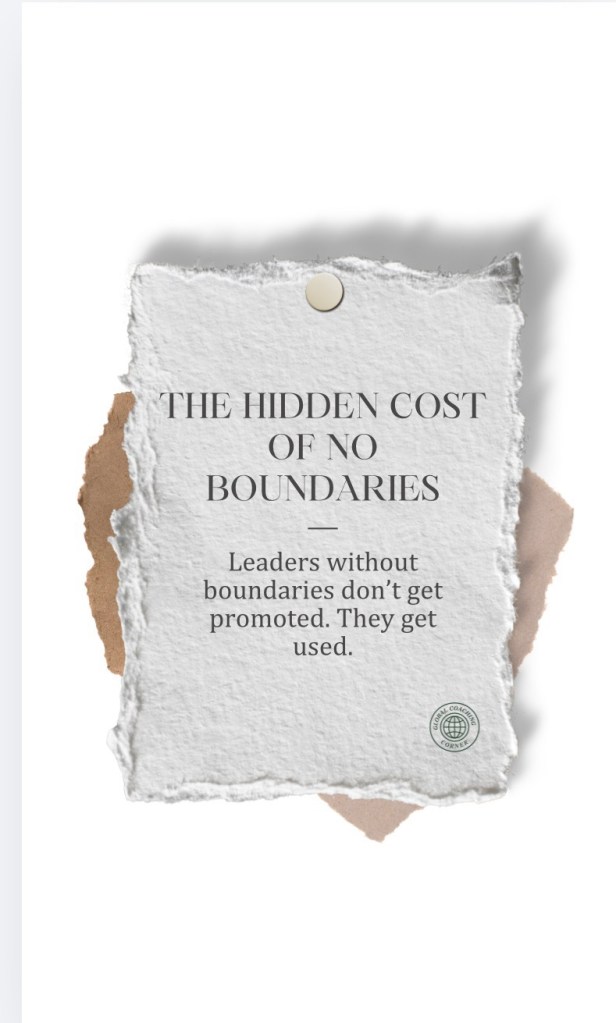
The Hidden Cost Of No Boundaries

Time spent rescuing is time not spent leading.

It’s the Hard truth. Leaders who say ‘yes’ to everything often:

🔭Get seen as Dependable
But not Strategic

🔭Helpful
But not high-level

Because time spent rescuing is time NOT spent leading.

BOUNDARIES create space for:

  • Thinking
  • Strategy
  • Growth
  • Influence

Without them you stay Stuck in reactive mode. Ask yourself, are you Leading or constantly rescuing?

If your leadership feels reactive instead of intentional, it’s not a motivation problem. It’s a boundary problem.

Coaching helps leaders set professional boundaries without guilt or fear. Let’s chat about our boundaries lab if this resonates.

Cheers!

Starting Over At 50. Finding Purpose Again

Midlife transitioners face feelings of sadness especially when work, independence and purpose feel out of reach. This is a common scenario I have found in my coaching practice amongst mature women. They complain, sulk and feel ‘why bother’ (as in the case of a recent discussion). For women experiencing these feelings, here are 7 thoughtful strategies of how 50+-year-old women in this situation can begin moving forward. Adopting these strategies can help them regain control of their life, emotionally, practically, and spiritually.

1.Start With Emotional Healing

Before any external progress, healing the inner voice is key.

  • Acknowledge your feelings; grief, frustration, even shame, as valid. You’re not alone; many older adults feel invisible or “left behind” as the four stages of elimination in life profess.
  • Seek emotional support: a counselor, therapist, or support group for midlife depression can help rebuild self-worth.
  • Practice daily motivation and affirmations: “My life still has purpose.” “I am capable of starting again.” Small mindset shifts add up.
  • Faith & reflection: If you’re spiritually inclined, journaling prayers or reading devotionals about renewal (e.g., Isaiah 43:19… “Behold, I am doing a new thing…”) can anchor your hope.

2.Rebuild Self-Worth and Confidence

Depression often comes from feeling “useless,” so rediscovering value is important.

  • Revisit strengths and experiences. Make a list of past achievements, career skills, and life lessons.
  • Volunteer or mentor. Helping others (e.g., tutoring, mentoring younger professionals, or supporting community causes) reminds her that her wisdom matters.
  • Refresh her image. A new hairstyle, headshot, or wardrobe doesn’t just change how others see her — it helps her feel renewed.

3.Redefine Purpose and Direction

You may be entering a new season, not the end of your working life. Shift from “job-seeking” to “value-offering.” Instead of asking “who will hire me?” you should ask, “where can my experience help someone solve a problem?”

Consider flexible or freelance work:

  • Virtual assistant or remote admin work
  • Customer service, tutoring, or caregiving
  • Consulting in your former field
  • Selling crafts, baked goods, or eBooks online
  • Take free online courses (Coursera, Google Digital Skills, LinkedIn Learning) to update your skillset and confidence.

4.Improve Her Job Search Strategy

Age can be an advantage when presented with confidence and skill.

  • Update your resume and LinkedIn profile. Focus on experience, reliability, and mentoring skills rather than long timelines.
  • Network quietly and personally. Reach out to old colleagues or community connections; many opportunities come through relationships, not job boards.
  • Target age-friendly employers (AARP’s “Employer Pledge Program” lists companies committed to older workers).

5.Stabilize Finances and Environment

Small changes can ease immediate stress.

  • Seek community or senior resources: local housing or utility assistance programs, food banks, or financial coaching through nonprofits.
  • Budget for empowerment, not punishment. Even small control (like managing one bill or goal) restores agency.
  • Explore part-time or gig work (e.g., Instacart, pet-sitting, or online micro-tasks) as temporary bridges.

6. Build a New Daily Routine

Structure gives life purpose.

  • Morning: prayer, gratitude, short walk
  • Midday: job search, learning, or volunteer time
  • Evening: journal one positive action from the day
    Even a simple daily rhythm can counter the “stuck” feeling.

7. Believe in Renewal


It’s never too late to rebuild. Many people in their 50’s and beyond start new careers, businesses, and callings. Your story isn’t over…it’s shifting.
Be encouraged. See yourself not as “unemployed,” but as “relaunching.”

Reflection:

“If I could start fresh today, what small step would make me feel proud by the end of this week?”

Hope these strategies help you overcome these feelings of apathy. If you’re not in that sphere and know someone who might be, please share with them. We are also here to help women regain confidence for their new chapter.

Cheers!

South Florida Writers Of Color Online Literary Magazine…

I am Somebody. We are Somebody. ~ Dr. Ralph Hogges

Beyond the Bend of Trees Avenue

By Patricia Reid-Waugh

You would think that a street named ‘Trees Avenue’ would be lined with tall, manicured trees of exotic variety, standing like sentries on either side of the roadway. Strangers entering the L-shaped avenue might imagine that around the bend, leafy branches would shield them from the blistering sun, and a rustling chorus of leaves would welcome them. But such was not the street on which I lived.

My ‘Trees Avenue’ was no different from other residential roads nearby, paved in asphalt, with a strip of grass separating the roadway from the walls of each property. Neither my parents nor the other homeowners thought it important to give the street a personality matching its name. To the casual visitor, it looked tidy, pleasant, but rather ordinary.

The houses stood close to the front boundaries, verandahs stretching wide to court the evening breeze. These verandahs became living rooms in their own right, alive with laughter, morning greetings, neighborly gossip, and the occasional raised voice.

CHERISH

By S. Ettosi Brooks

I remember my people; like a piece of sweet, firm sugar cane spilling its juice over my tongue and lips; lips framing expressions of a language of thunder and soft rain. My roots – peopled with characters of such unassuming elegance I could not really see them until, exiled, I craved remembrances like sweet sugar cane. What sweeter dance than a handcart man, lithe, muscled – swinging and dipping, black sinews rippling their way down Orange Street.

Journey to Spiritual Growth: A Path Toward Lasting Transformation

By Dr. Delores Smiley

Journey to Spiritual Growth is a Christ-centered ministry designed to guide believers toward a deeper, more intentional walk with God. Rooted in the call to “love the Lord your God with all your heart, soul, mind, and strength,” this ministry provides practical tools and clear teachings to help individuals grow in spiritual knowledge, examine their hearts, and live out the commandments of love – preparing for heaven as the ultimate home. It recognizes that faith is not a single event but a lifelong journey that calls us to grow in understanding, surrender our hearts, and live out the commandments of love.

Maximize Holiday Book Sales: A Month by Month Guide

Effective preparation sets the stage for success and sparks creativity

Authors write, publish and leave expecting miracles. It doesn’t happen. Authorship happens mostly by accident as writers choose to share what’s on their hearts. It might be a memoir, poetry, fiction or non-fiction. As their passion unfold, they write then later realize that they have suddenly been thrust into entrepreneurship! How do they get those books off bookstore shelves? Selected on amazon? Shared among family and friends? It behooves them to sit, pray, and wonder why their books just remains stagnant. Most often these are excellent stories that remains dormant for years, not gleaned by readers.

Realizing this pattern, the Writers Group of South Florida held a workshop. Hosted by the West Regional Library in Plantation. This initiative was facilitated by Dr. Shelly Cameron. Here’s a summary of the takeaway points that attendees authors gleaned.

AUGUST – SEPTEMBER: Build the Foundation & Warm Up Your Audience

  • Update book cover, blurb, and Amazon listing with holiday-friendly touches.
  • Secure podcast, blog, and media features for October–December.
  • Plan holiday content calendar (mix of promos, tips, behind-the-scenes, giveaways).
  • Launch pre-order bonuses or limited-time bundles.

October: Visible Campaign & Early Gift Push

  • Submit to gift guides, bloggers, and niche media lists.
  • Collaborate with other authors for holiday bundles or giveaways.
  • Feature reader testimonials and reviews on social media.
  • Run Early Bird discounts to attract early shoppers.

November: Holiday Sales Mode

  • Run a gratitude-themed campaign for Thanksgiving.
  • Offer Black Friday/Cyber Monday E-Book discounts or signed copy specials.
  • Partner with local stores for Small Business Saturday promotions.
  • Send an email countdown series leading up to Thanksgiving.

December: Final Holiday Push

  • Promote e-Books and gift certificates for last-minute shoppers.
  • Run a “12-Days-of-Christmas” themed social media series.
  • Position your book for New Year’s resolutions or inspiration.
  • Post thank-you messages and celebrate your readers

PRO TIPS for Conversions

  • Author Branding Matters: Use consistent holiday visuals across all platforms.
  • Offer Multiple Formats: Paperback, e-Book, Audio-book—make it easy to gift.
  • Make It Shareable: Create “I’m gifting this book!” social media graphics for readers to post.
  • Always Include a Call-to-Action: Don’t just post pretty images—always link to buy.
  • Track & Adjust: Watch which promos get clicks and double down on what works.

There you have it. Did one, two or a few of the above stand out for you? As a published author, which will you adopt? Do share, we would love to hear.

Happy Promoting!

Success Strategies

Motivate. Inspire Your Personal Growth & Development | Global Coaching Corner

Travel with Intent

A photographer's view of the world - words and images to inspire your travels and your dreams

Answering daily prompts

In this blog I'm attempting to answer wordpress daily prompts

Alex Tafur

Property Maintenance

Poesy Perspectives

embrace the magic

GREENLiGHT

When God Says Go

HEALTH | INSPIRATION

Health, Reflection, and Poetry for the Journey of Life

My Sister My Friend

Family. Youth. Parenting