Leadership is not always standing at the center of the room. Sometimes it is building the room, opening the doors and giving others a place to be seen.
I’ve spent over two decades studying leadership, coaching leaders, and writing about what it takes to lead well. But organizing our community author showcase is prime.
With more than 40 authors converging at the Fred Lippman Cultural Center in the City of Hollywood, Florida, the lineup includes my own presentation co-partnered with Fort Lauderdale’s Jamaica Brew Festival Co-founder, Dale Mahfood. A panel on building author brand, poetry, and a slate of featured authors, this event has become an unexpected classroom. Here’s what it has taught me.
1. Leadership is Choreography, Not Control
You cannot control 40 authors. You can only choreograph the conditions for them to shine. Every author arrives with a different personality, a different genre, a different idea of what “success” for the day looks like. My job isn’t to manage each of them into compliance, it’s to build a structure flexible enough to hold that many voices without losing coherence. That’s a lesson I’ve taught in leadership development for years. Living it, in real time, with real logistics and real personalities, is a different kind of learning altogether.
2. The Panel is a Microcosm of the Whole Event
Curating the panel on building author brand has been its own leadership exercise. Choosing who sits at that table, what questions get asked, and how the conversation is sequenced is really about clarifying a shared message from different perspectives. That’s what leadership often is: not silencing distinct voices, but helping them harmonize around a purpose bigger than any one of them.
3. Behind-the-Scenes Work is Still Leadership
I’ve long been more comfortable letting the work speak rather than putting myself forward. This event has stretched that. I’m not just organizing from behind the curtain this time, I’m also presenting, which means stepping into visibility while still holding the operational threads together. Leadership doesn’t always look like standing at the podium; sometimes it’s making sure the podium, the poetry reading, and the featured author segment all run on time so everyone else can have their moment.
4. Poetry and Prose Remind Me Leadership Needs Range
Weaving poetry alongside author presentations and a business-minded panel has reminded me that leadership isn’t one register. Sometimes it calls for strategy and structure. Sometimes it calls for space; for feeling, for art, for the parts of a message that a bullet point can’t carry. A good leader, like a good event, knows when to shift registers.
5. Community Events Reveal Leadership at Full Scale
With 40+ authors, a cultural center, and multiple event formats layered into one day, nothing exposes gaps in planning, communication, or delegation faster than a live event with a fixed date. There’s no theoretical framework that substitutes for the real-time problem-solving this requires and that, more than any case study, is where leadership is truly learned.
As the event approaches, I’m struck by how much this process mirrors the leadership principles I’ve spent my career researching and teaching: clarity of purpose, distributed voice, adaptability, and the discipline to serve something larger than yourself. Sometimes the best leadership lessons don’t come from a classroom or a book, they come from the folding chairs and program schedules of a community event.
And not every hesitation means no. Sometimes, we simply need a YellowLight.
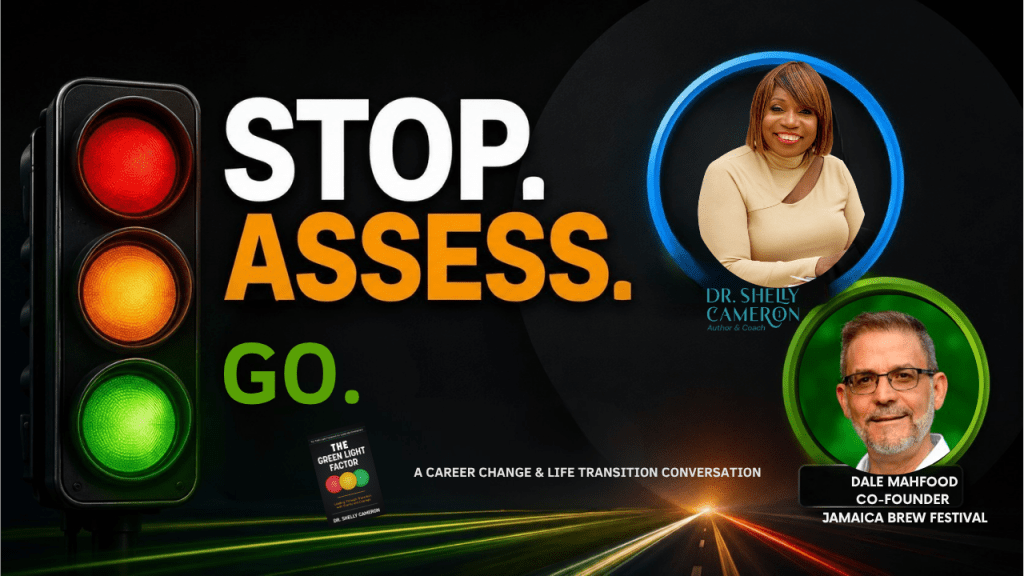
In a recent conversation about The GreenLight Factor, we discussed the RedLight, YellowLight and GreenLight framework for navigating career changes, life transitions and leadership decisions.
One viewer raised a thoughtful question:
How do you know when a YellowLight situation needs more reflection versus simply making the decision and moving on?
It made me pause. Reflection is valuable. It gives us space to examine what we’re feeling, gather information, consider consequences and determine whether an opportunity aligns with where we are, and where we’re going.
But reflection can also become a hiding place.
We can think.
And rethink.
Analyze.
And analyze again.
Eventually, we have to ask: Am I still gathering information, or am I afraid to make the decision?
For me, that’s an important distinction. If critical information is missing, the consequences are significant, or something still feels misaligned, stay at the YellowLight a little longer.
But if you have the information, you need and find yourself repeatedly circling the same questions, perhaps the YellowLight has already done its job.
The goal isn’t to eliminate uncertainty before moving forward. The goal is to gain enough clarity to make an intentional decision.
As you move into a new week, perhaps this is your opportunity to ask:
🔴 What do I need to stop?
🟡 What deserves more reflection?
🟢 What am I ready to move forward with?
And maybe one final question:
Have I reflected long enough, or is it simply time to decide?
I recently had the opportunity to explore these ideas in a conversation about career change, life transitions and The GreenLight Factor: Leadership Framework. I’ll share the video for anyone who would like to listen to the full conversation.
Questions, thoughts? Do share, we would love to hear.
I sat in the stillness of the morning dew. Birds chirping quietly. Soft breeze moving through treetops amidst the dew heavy grasses. The cool, still air of sunrise created the perfect moment for my thoughts to breathe.
As I mentally listed the many roles I carry; author, coach, mentor, leadership developer, colleague, mom, and more; I realized someone was missing from the list.
Me.
In the hustle and bustle of life, I had quietly disappeared from my own list. Sadly, that isn’t uncommon. Many leaders become so committed to serving others that they forget to lead themselves.
With trailing thoughts the question arose, “Who is the most important person you will ever lead?” It isn’t your team. It isn’t your organization. It isn’t your family.
It’s You
Yes, you. We spend a great deal of time learning how to lead others: our teams, organizations, and families. But the most important leadership journey begins much closer to home. It begins with leading ourselves.
Self-leadership is the daily practice of managing our thoughts, choices, attitudes, and actions before expecting others to follow our example. It isn’t about perfection. It’s about intentional growth.
The strongest leaders aren’t always the loudest voices in the room. They’re often the ones who have learned to pause before reacting, stay true to their values, admit when they’re wrong, and keep growing long after they have earned the title.
Every day presents us with Choices:
Will I let fear make this decision?
Will I choose comfort over growth?
Will I respond, or simply react?
Those quiet decisions shape our leadership more than our title ever will. As you prepare for the week ahead, take a moment to reflect:
What habit is helping me become a better leader?
What mindset do I need to leave behind?
What one courageous step will I take this week?
Leadership isn’t built in a single moment. It’s built one decision at a time.
The quality of your leadership tomorrow depends on how well you lead yourself today.
What is one self-leadership habit you’re committed to strengthening this week?
If you walk in the footprints of others, you will never make your own.
Constant change, presence and influence, systemic coaching, wellbeing and resilience, purpose and meaning are among the trends associated with the growing coaching evolution. As I shared in 2024 Executive Coaching trends, the executive coaching industry is undergoing a significant shift. Organizations are moving away from viewing coaching as a luxury reserved for senior executives and toward seeing it as a strategic business investment that improves leadership capability, retention, and organizational resilience.
Here are 10 trends every leader should know. As you review, note however that:
Ai is changing coaching, but leaders still need wisdom.
Data matters, but judgment matters more.
Leadership transitions are becoming constant rather than occasional.
The best executive coaches bring a proven framework, not just conversations.
1. Coaching as a Strategic Business Tool
Executive coaching is becoming tied directly to measurable business outcomes rather than personal development alone. Organizations increasingly expect coaches to demonstrate impact on:
Leadership effectiveness
Employee engagement
Succession planning
Change management
Productivity
Retention
Opportunity: Coaches who speak the language of business and ROI will have an advantage.
2. Leadership During Constant Change
Organizations no longer experience occasional change. They operate in continual transition. Executives seek coaching around:
Organizational restructuring
Mergers
Economic uncertainty
Ai disruption
Hybrid leadership
Crisis management
This aligns closely with transition-based leadership frameworks such as the GreenLight leadership model.
3. Ai as a Coaching Companion (Not Replacement)
Artificial intelligence is increasingly being used for:
Reflection prompts
Leadership assessments
Meeting summaries
Development planning
Accountability reminders
However, Ai cannot replace:
Trust
Emotional intelligence
Ethical judgment
Difficult conversations
Human wisdom
The future appears to be Ai-assisted coaching, rather than Ai replacing experienced executive coaches.
4. Data-Driven Coaching
Organizations want evidence. Growing use of:
Leadership assessments
360-degree feedback
Behavioral analytics
Progress dashboards
Coaching metrics
Clients increasingly ask:
“How do we know coaching worked?”
Coaches who combine qualitative insights with measurable outcomes are becoming more competitive.
5. Coaching the Entire Leadership Pipeline
Instead of coaching only CEOs, organizations are investing in:
Leadership development is becoming earlier and more continuous.
6. Executive Presence and Influence
Technical expertise alone is no longer sufficient. Many organizations view presence as a competitive leadership capability. Demand continues to grow for coaching in:
Executive presence
Strategic communication
Board presentations
Influencing without authority
Personal branding
Visibility
7. Well-Being, Resilience, and Sustainable Leadership
Burnout has shifted coaching conversations. Organizations increasingly recognize that exhausted leaders cannot sustain high performance. Executives seek support with:
Decision fatigue
Stress management
Energy management
Resilience
Sustainable performance
Work-life integration
8. Coaching Around Purpose and Meaning
More senior leaders are asking questions beyond career advancement:
What legacy am I creating?
What’s next?
Is my work meaningful?
How do I align my values with my leadership?
Purpose-driven leadership coaching is expanding, particularly among experienced executives and those approaching career transitions.
9. Team and Systemic Coaching
Organizations increasingly want coaches who can work with leadership teams, not just individuals. The coach becomes a facilitator of collective leadership effectiveness. This includes:
Team dynamics
Executive alignment
Cross-functional collaboration
Psychological safety
Organizational culture
10. Niche Expertise Wins
The market is becoming crowded with general coaches. Organizations increasingly seek specialists in areas such as:
Healthcare leadership
Government leadership
Women in leadership
Family business succession
Leadership transitions
Founder coaching
Board readiness
Global leadership
A clearly defined specialty often differentiates coaches more effectively than broad, generic offerings.
Essentially, while coaching methods continue to evolve, one reality remains unchanged: leaders still face moments when everything looks right on paper, yet something doesn’t feel right. Technology can provide information. Assessments can provide data. But discerning when to stop, pause, or move forward remains one of leadership’s most important skills. That’s where frameworks, not just conversations create lasting value.
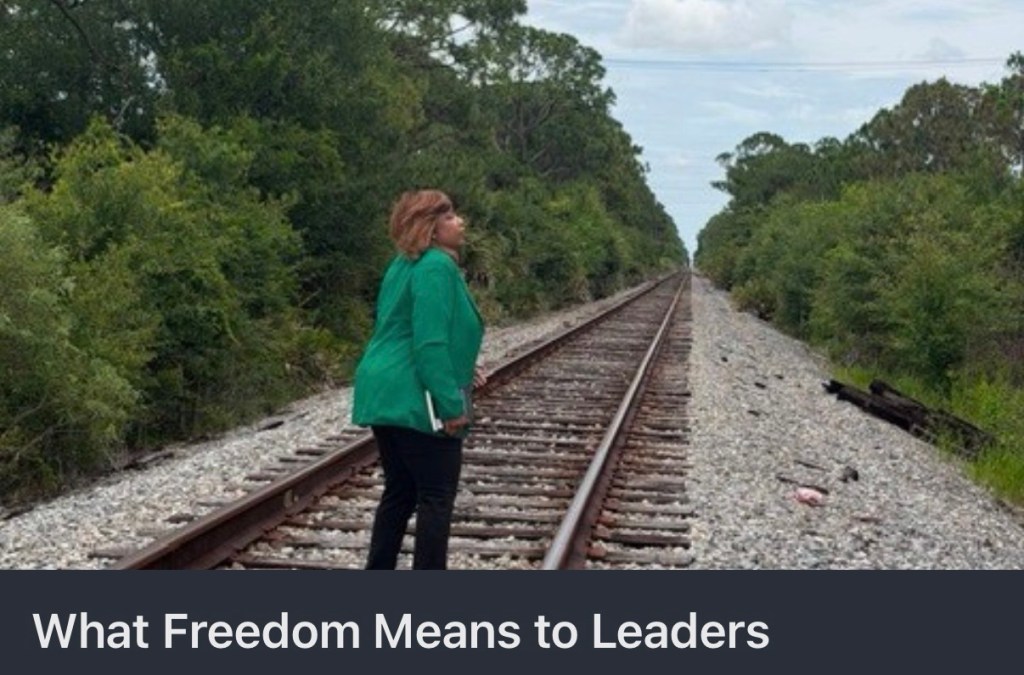
Every year on the Fourth of July, we celebrate freedom. Yet as I reflect on Independence Day this year, I find myself thinking about another kind of freedom. One that rarely makes headlines but shapes our lives every day.
We remember the courage of those who envisioned a future different from the one they inherited. We celebrate the principles of liberty, opportunity, and the right to choose our own path.
It is the freedom to lead.
Not leadership defined by a title or position, but leadership defined by the decisions we make when no one else can make them for us.
Professionals are Held Back by Hesitation
Throughout my years in leadership development, I’ve discovered that many talented professionals are not held back by a lack of ability. They are held back by hesitation.
The hesitation to apply for the role.
The hesitation to launch the business.
The hesitation to write the book.
The hesitation to have the difficult conversation.
The hesitation to leave what is comfortable for what is possible.
Ironically, many of us are free by every external measure, yet remain imprisoned by uncertainty, fear, or the opinions of others.
Leadership begins the moment we recognize that no one else can grant us permission to move forward.
That realization became one of the inspirations behind The GreenLight Factor. In studying leadership transitions, I observed that successful leaders were not simply those who moved quickly. They were those who learned to recognize the right signal at the right time.
Sometimes leadership requires a RedLight. The discipline to stop before making a costly decision.
Sometimes leadership requires a YellowLight. The wisdom to pause, gather information, and prepare before moving forward.
And sometimes leadership requires a GreenLight. The courage to act with confidence when the opportunity is aligned with purpose, preparation, and timing.
Freedom is not the absence of responsibility. Freedom is the ability to make wise choices.
As leaders, we are constantly navigating intersections: career transitions, organizational change, family responsibilities, new opportunities, and unexpected challenges. At each intersection, we are making decisions that shape not only our own future, but also the lives of those who trust us to lead.
Perhaps the greatest independence we can experience is freedom from the beliefs that tell us:
“I’m not ready.”
“Someone else is more qualified.”
“Maybe next year.”
Leadership asks Different Questions
What if now is the time?
What if this opportunity was placed before you for a reason?
What if your next GreenLight has already appeared, and all that remains is the decision to move?
As fireworks light the evening sky this Independence Day, they will remind us of moments worth celebrating. But when the celebration ends and ordinary life resumes, our leadership journey continues.
Each new day presents another intersection:
Another decision
Another opportunity to lead with clarity rather than fear
Another chance to become the kind of leader who doesn’t simply wait for change but helps create it.
This Independence Day, I encourage you to celebrate more than the freedom of a nation. Celebrate the freedom to choose courage over comfort. Purpose over procrastination. Leadership over hesitation.
Because sometimes the most important declaration we make is not written on paper. It is the quiet decision to move forward when our GreenLight appears.
What is one GreenLight decision you’re ready to make this season? I’d love to hear your thoughts.
One of the leaders I worked with was exceptionally talented. She was respected by her team, consistently delivered results, and had recently been promoted into a larger role. Yet despite her success, she found herself overwhelmed by competing priorities, difficult decisions
Subscribe to continue reading
Subscribe to get access to the rest of this post and other subscriber-only content.
Being stuck at red isn’t a leadership problem. It’s a human problem. And for older adults, the intersections are often more profound than any career decision because they’re asking the deepest questions, Who am I now? What am I still here for? Does my presence still matter?
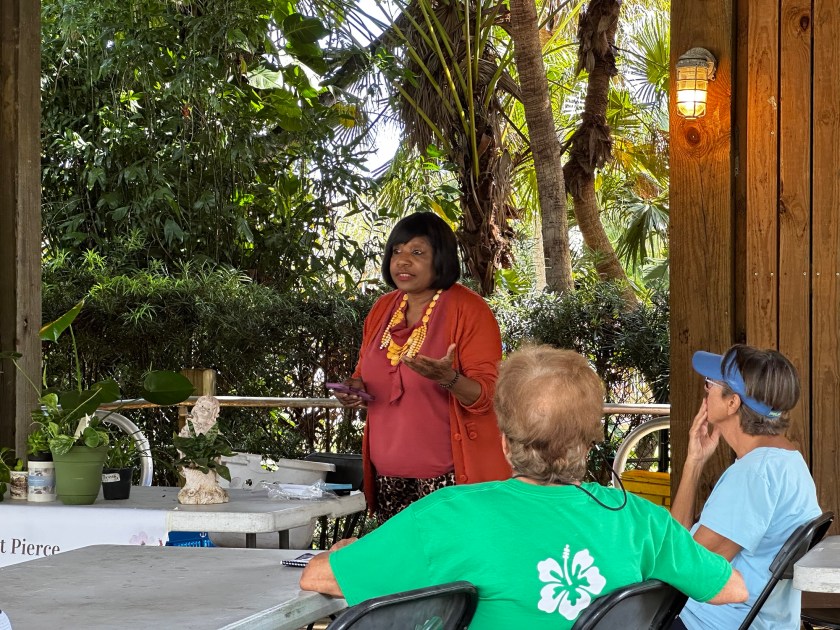
As I shared the major facets of The GreenLight Factor book and its signals at a historic book festival, an 84-year-old woman sat in deep thought. When promptly quietly to share, she quickly responded that she was stuck at a RedLight. This sparked my interest to delve deeper.
That moment with the 84-year-old woman is exactly the kind of thing that reveals how universal the framework really is. The core insight is that the framework doesn’t care about age; it cares about aliveness.
Being stuck at red isn’t a leadership problem. It’s a human problem. And for older adults, the intersections are often more profound than any career decision because they’re asking the deepest questions, Who am I now? What am I still here for? Does my presence still matter?
How the 3 Signals map to aging and latelife transitions
🔴 Red for older adults often looks like:
Retirement that stripped away identity and daily structure
Loss of a spouse, friend, or role that defined them
A body that says stop when the spirit wants to go
The quiet belief that their season of contribution is over
🟡 Yellow looks like:
Sensing there’s still something to give but not knowing what form it takes now
Weighing whether to try something new against the fear of failing late in life
Grief and hope existing at the same time
🟢 Green for older adults can be radical and beautiful:
Deciding to tell their story through writing, recording, or speaking
Mentoring someone younger with everything they know
Choosing joy deliberately, even in a smaller life
Saying I’m not done yet and meaning it
The reframe that makes the framework powerful for Aging Population
For most working adults, Greenlight is about moving forward in a career. For older adults, it’s about something more essential, permission to still matter. The intersection they are standing at is not about a next job. It’s often the question: Is there a next chapter at all?
That 84-year-old woman didn’t need a leadership framework. She needed someone to hold up a mirror and say, you being stuck is not the end of your story. It’s actually the beginning of your next decision.
5 Practical Ways to Apply the Framework For Older Audiences
The The GreenLight Factor offers a meaningful approach for older adults navigating seasons of transition, reflection, and renewed purpose. Unlike traditional leadership models that focus heavily on career advancement or organizational achievement, this framework recognizes that leadership in later life often centers on wisdom, legacy, identity, and meaningful contribution.
Here are five practical ways the framework can be applied to older audiences:
1. The Focus Shifts from Career Transition to Life Transition
For older adults, leadership is not always tied to climbing the next professional ladder. Many are navigating retirement, caregiving responsibilities, health changes, relocation, grief, reinvention, or the search for renewed meaning after decades of service.
The GreenLight framework encourages conversations around life transition rather than simply career transition. It honors the reality that later seasons of life still require courage, direction, and thoughtful decision-making. Leadership becomes less about titles and more about navigating change with wisdom and intention.
2. The Question is: “What Intersection Are You Standing At Right Now?”
In many leadership settings, people are asked role-specific questions tied to productivity, promotion, or performance. Older adults, however, are often standing at much deeper intersections.
The more meaningful question becomes: “What intersection are you standing at right now?”
This question creates space for reflection about identity, relationships, purpose, unfinished dreams, spiritual growth, contribution, and personal fulfillment. It acknowledges that crossroads still exist at every stage of life and that transition itself is a leadership experience.
3. Purpose Becomes the Central Conversation
For older audiences, purpose often matters more than productivity. Many are no longer asking, “What can I achieve next?” but rather, “What still gives my life meaning?” The GreenLight framework creates room for conversations around:
Mentorship
Storytelling
Community contribution
Creativity
Faith
Lifelong learning
Personal fulfillment
Purpose becomes the guiding light that helps older adults continue moving forward with dignity, clarity, and hope.
4. Legacy Defines the GreenLight Destination
Success in later life is often measured differently. The destination is no longer simply accomplishment, it becomes legacy.
A powerful question within the framework is: “What do you want to have mattered?”
This question invites reflection on impact, relationships, values, wisdom shared, and lives touched. It helps older adults recognize that their experiences still carry tremendous value and that their influence can continue shaping future generations long after their formal careers end.
5. Approach the RedLight Season with Compassion, Not Urgency
One of the most important applications of the framework for older adults is the way it reframes the “RedLight” season. In many leadership contexts, being stuck is treated as a problem to solve quickly. But for aging populations, pauses often carry deeper emotional, physical, or spiritual realities.
The framework encourages greater compassion and less urgency. It acknowledges that grief, isolation, uncertainty, health limitations, or fear of change may require gentleness rather than pressure.
Instead of forcing movement, the framework asks:
What needs to be honored here?
What wisdom can emerge from this pause?
What support is needed before moving forward?
This compassionate approach allows older adults to process transition with dignity while still recognizing that growth, purpose, and leadership remain possible at every stage of life.
Ultimately, The GreenLight Leadership Framework reminds us that leadership is not confined to age, position, or profession. Even in later years, individuals continue to stand at important intersections capable of reflection, renewal, influence, and meaningful impact.
Closing The Gap
I remain deeply grateful for the question raised by the 84-year-old woman during that session. Her question created a moment of reflection that expanded my understanding of how the The GreenLight Factor can serve older adults navigating questions of purpose, identity, and transition later in life.
It highlighted a significant gap in the conversations and leadership work being done with and for aging populations, particularly around life after 70, when many individuals are still searching for meaning, contribution, and direction.
What became clear in that moment is that The GreenLight Factor carries a distinct and meaningful voice in this space. The woman who raised her hand was not an exception or an isolated case. Her question represented something much larger: a signal that this framework reaches far beyond its original context and speaks to the universal human experience of transition, reflection, and purpose at every stage of life.
“Most people are not held back by a lack of talent or opportunity. They are held back by waiting for a green light that was never going to come from the outside. This book teaches leaders how to give themselves that green light.”
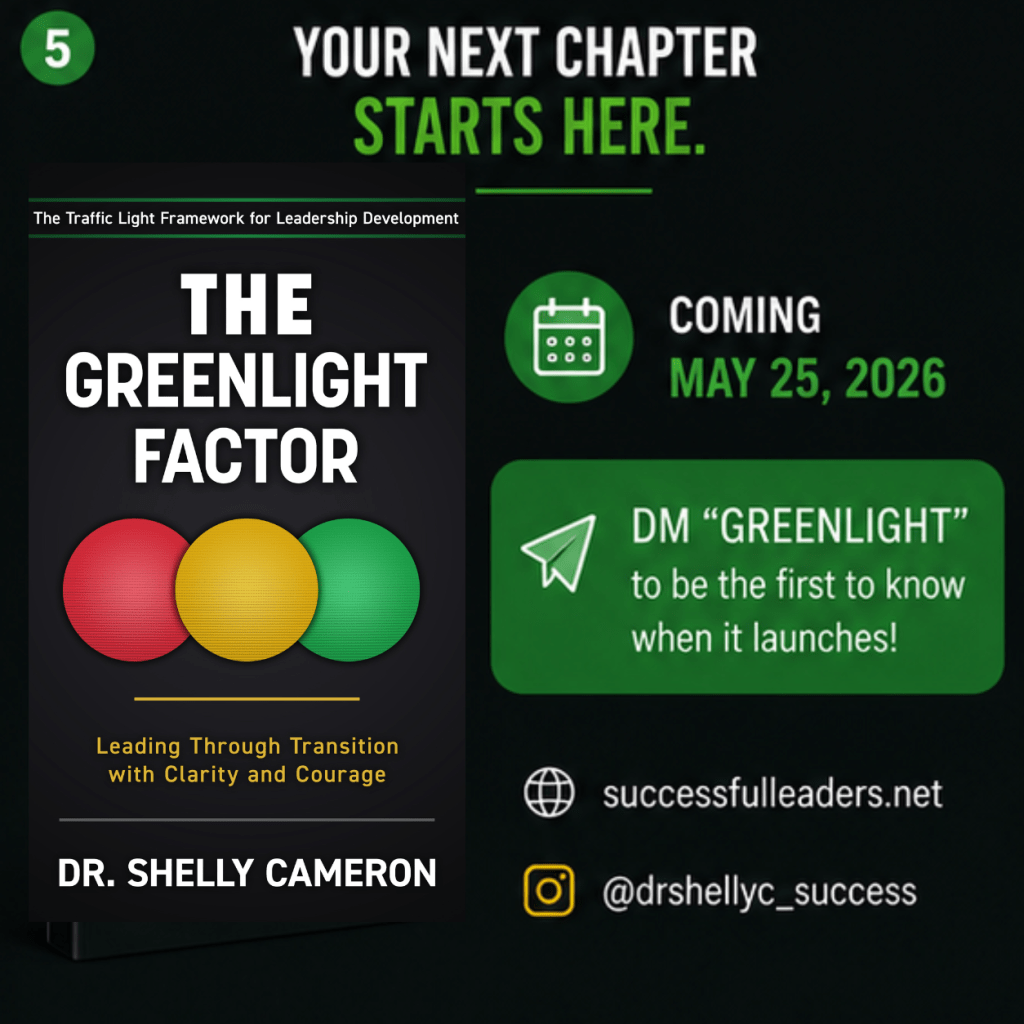
SOUTH FLORIDA, May 25, 2026. Global Coaching Corner announces the release of The GreenLight Factor: A Leadership Framework, the new book by award-winning author, Certified Master Coach, and HR leadership veteran Dr. Shelly Cameron. Available wherever books are sold. The book introduces a groundbreaking three-part leadership framework that helps individuals move from hesitation and self-doubt into purposeful, confident action.
Drawing on more than two decades of global leadership experience in the pharmaceutical, healthcare and hospitality industries, and research on Caribbean American leaders published in the Journal of American Academy of Business (JAABC), Dr. Cameron has identified the precise mindset shift that separates those who lead boldly from those who remain on the sidelines. The GreenLight Factor distills those insights into a teachable, actionable framework built around a simple but powerful metaphor: the traffic light.
“Most people are not held back by a lack of talent or opportunity. They are held back by waiting for a green light that was never going to come from the outside. This book teaches leaders how to give themselves that green light.”
~ Dr. Shelly Cameron, Author of The GreenLight Factor
About the Book
The GreenLight Factor introduces a three-part framework centered on the universal language of the traffic light. Each signal represents a distinct leadership moment:
The RedLight calls leaders to stop and reassess, naming the fears, limiting beliefs, and external expectations that are keeping them stuck.
The YellowLight guides leaders to pause and reflect, building internal clarity, defining values, and developing the conviction to lead on their own terms.
The GreenLight Factor empowers leaders to move forward with purpose, confidence, and strategy, even when conditions are not perfect and no one has officially told them they are ready.
The book also includes a comprehensive self-assessment tool that helps readers identify which signal they are currently receiving in their leadership journey, along with a curated resource guide of fifteen complementary leadership books.
The GreenLight Factor is designed for emerging leaders stepping into their first role, mid-career professionals navigating transitions, entrepreneurs, and community changemakers, particularly those from under-represented communities who have been conditioned to seek external approval before acting.
I was speaking to a graduating class filled with aspiring leaders at a university. Some were confident. Others were still figuring things out. Many were quietly asking themselves, “What’s next for me?”
The beautiful thing about learning is that no one can take it away from you. ~ B.B. King
The question tugged what if your next step doesn’t come with full clarity but just from a green light? I was reminded of this recently while reflecting on a moment with aspiring leaders. It one of those times that makes you pause. I was speaking to a graduating class filled with aspiring leaders at a university. Some were confident. Others were still figuring things out. Many were quietly asking themselves, “What’s next for me?”
What stayed with me wasn’t just the opportunity to speak… It was the weight and privilege of being in a position to influence how someone thinks about their next step.
Because leadership doesn’t begin when someone gets a title. It begins in moments like those. At intersections. In seasons of uncertainty, decision-making, and quiet reflection.
Over the years, I’ve come to understand this more deeply. People aren’t just looking for answers. They are looking for clarity. They are looking for the confidence to move forward, or the wisdom to pause.
That’s the heart behind the work I continue to do. Whether in a conference room, a coaching session, or a leadership lab, the mission remains the same: to support aspiring and emerging leaders as they navigate their path, intentionally.
It’s also the foundation behind my GreenLight framework, helping individuals discern when it’s time to stop, assess, or move forward with conviction.
And while the stages may look different today, the calling hasn’t changed. I’m still committed to showing up in spaces where growth is happening, and where leaders are becoming.
If you’re in a season of transition, decision, or seeking clarity in your leadership journey, know that you don’t have to navigate it alone.
Leadership is unlocking people’s potential to become better.
~Bill Bradley
Inspire others to shine and you will ignite a chain reaction of positive change.
A dialogue began during a session on leaders and their development. I decided to delve further by deeply veering into the topic. Discovered that it is a rich and important conversation that sits at the intersection of leadership development theory, generational expectation, and evaluation equity. Here’s a deeper dive as we breakdown this topic.
Emerging Leaders Characteristics?
Emerging leaders are individuals in the early stages of their leadership journey. They are actively developing their skills, identity, and influence, but not yet at a place of sustained, institutionalized leadership. In research literature, emerging leadership is characterized by three things:
1.Potential over proof. The emphasis is on trajectory where someone is heading, not just what they have already accomplished. Howard Gardner’s work on developmental intelligence makes clear that leadership capacity unfolds over time, not all at once.
2.Learning through doing. Emerging leaders grow by being in the work, making mistakes, gaining feedback, and iterating. This is distinct from experienced leaders, who are expected to execute with consistency.
3.Context dependency. A young person leading a neighborhood initiative at 19 may be demonstrating the same core competencies as a mid-level corporate manager. The distinction lies in the different arena they operate in. One with far fewer resources and far less institutional support.
For the 18–30 age range specifically, research from the Center for Creative Leadership notes that this cohort is navigating identity formation alongside leadership formation. Essentially, this is a dual developmental burden that older leaders simply did not carry at the same career stage.
The Real Tension: Impact vs. Development
The debate being described takes into account the question, are they making deep impact or just learning? This reflects a false binary that can quietly disadvantage young leaders, particularly those from underrepresented communities.
The truth is: learning IS impact when done in community. A 20-year-old who organizes a voter registration drive and turns out 50 first-time voters is both developing their leadership AND creating measurable community change. These are not mutually exclusive.
The problem arises when seasoned leaders apply an experienced leader lens to an emerging leader context. This creates what scholars call developmental mismatch. Essentially, evaluating someone by a standard designed for a stage they haven’t reached yet.
The deeper issue is that “impact” is often unconsciously defined by visible, large-scale outcomes, e.g. numbers, events, funding raised. But leadership science (and my own research on Caribbean American leaders) tells us that transformational influence often begins quietly. It is a mentoring relationship, a cultural shift in a small organization, a peer who was pulled back from the edge.
Bridging the Gap: A Framework for Equitable Evaluation
Here is a practical framework that could guide organizational evaluators in assessing emerging leaders fairly. This is grounded in developmental leadership theory:
1. Evaluate Against a Developmental Rubric, Not an Achievement Rubric The question shouldn’t be “How big was the impact?” but rather “How sophisticated was the leadership relative to their age, resources, and context?” A tiered rubric with age-anchored benchmarks helps evaluators calibrate expectations appropriately.
2. Assess Five Dimensions, Not Just Outcomes Rather than focusing on what was accomplished, evaluate:
Initiative — Did they identify a need and act on it without being told?
Influence — Did they move others toward a shared goal?
Reflection — Can they articulate what they learned and how they would grow?
Resilience — Did they navigate setbacks?
Reach — What was the ripple effect, even if small in scale?
3. Contextualize the Playing Field A young leader with institutional backing (a university, a nonprofit, a mentor network) has a structural advantage over one working with no resources in an under-served community. Evaluators should be trained to add context points, not penalize for resource gaps.
4. Separate Potential from Performance and Score Both A strong evaluation system might include two scores: one for demonstrated impact (what they did) and one for leadership potential (the quality of thinking, character, and vision they showed). This prevents high-potential candidates from being overlooked because their circumstances limited their output.
5. Train Evaluators in Developmental Bias Awareness Many managers don’t realize they are applying a “polished professional” standard to a “learning in public” candidate. A short pre-evaluation calibration session with sample profiles discussed as a group, creates shared understanding and reduces inconsistency across organizations.
6. Let the Candidate Define Their Own Impact Ask candidates directly: “What does success look like at your stage of development?” This echoes my own mantra to define success for yourself. This encourages self-awareness and gives evaluators a window into how intentionally the candidate is approaching their personal growth.
The Bottom Line
Emerging leaders should be evaluated on the quality of their leadership journey, not just the quantity of their outcomes. The goal of programs like the Ignite Caribbean 30 Under 30 is not simply to reward those who have already arrived. It is to identify, affirm, and accelerate those who are on their way. That distinction has to be built into how organizational evaluators prepare for the performance review process.
After ten years of judging hundreds of emerging leaders, one pattern kept showing up, the most extraordinary nominees were not the ones with the biggest platforms or the most resources. They were the ones who had already given themselves permission to lead. They did not wait for a title, a stage, or a panel of judges to tell them they were ready. That observation, among others can be gleaned from the book, The GreenLight Factor (a Leadership Development Framework). Get your copy or join the lab today.
What process does your organization use to ensure equity across performance review assessments? Do share. We would love to hear.
Every book has a story behind it. This one is mine.
Before The GreenLight Factor existed as a book, it existed as a life. A series of roles, rooms, and relationships that quietly shaped everything I now know about leadership.
I want to do something I don’t always make time for: properly introduce myself. Not just my credentials, but the journey behind them.
I Am a Certified Master Leadership Coach
This isn’t a title I hold lightly. Becoming a Certified Master Leadership Coach meant times of deep study, practice, and honest self-examination. It means I have sat across from myriads of leaders. Leaders at all levels and helped them find what was already inside them.
The greatest coaching insight I have ever received? The green light is rarely about permission from the outside. It’s about permission from within.
I was recognized for exemplary service within the community. As a result, I continue my quest to help Crown the Next Generation. Being the strategic leader behind the 30 Under 30 Emerging Leader in Washington DC, is testament to my commitment to emerging leadership development. I have served as Chief Judge and celebrated the 10th Anniversary of the program in 2026.
There is nothing more powerful than watching a young leader step into their own green light.
I Led HR Strategy Across the Andina & Caribe Region for a Big Pharma Company
Operating across cultures, languages, and borders taught me that leadership is not one-size-fits-all. The best leaders I encountered, and tried to be, were the ones who led with both strategy and soul. Who understood that behind every organizational chart is a human being trying to do meaningful work.
That experience is woven into every page of this book.
I Served Four Terms as VP of the Hospitality & Human Resource Association of Broward County (HHRABC), FL and President of the Writers Group of South Florida
I have always believed that leadership must extend beyond the walls of any organization. Community leadership taught me that showing up especially when no one is keeping score, is one of the most important things a leader can do. And leading a writers’ group? That lit a fire in me that culminated from my other books on leadership, success, inspiration and faith.
And Now, here’s my Newest Book
The GreenLight Factor is the book I wish I’d had at the beginning of my leadership journey.
It’s not a manual. It’s a mirror. A roadmap built from real experiences. It exemplifies the wins, the pivots, the moments of doubt. The breakthroughs that came when I finally stopped waiting for someone else to give me permission to lead boldly. I wrote it for:
The leader who knows they are capable of more but keeps waiting for the “right” moment.
The professional who has been told to wait their turn.
Anyone who has ever dimmed their own light to make others more comfortable.
Your green light is already on.
One More Thing
If you stay around long enough, you will also learn that I am a mom to two incredibly driven, slightly workaholic adult children who work in the corporate world. I take partial credit and full responsibility for any overachieving tendencies. 😄
And I am grandmom to two basketball players and yes… two dogs; one a beagle who is without question the wisest member of my younger daughter’s household. These dogs are the greatest teacher of strategic rest I have ever encountered.
I share all of this not to show you that the path to this book was not a straight line. It was a full, layered, beautifully imperfect leadership journey.
And that’s exactly what The GreenLight Factor is about.
Thank you for being here. Follow along. The best is yet to come.