How to Answer ‘Why Did You Leave Your Previous Employer’?

“Change is not a threat, it’s an opportunity. Survival is not the goal,  transformative success is.” — Seth Godin 

I was asked the question how do I respond when asked “why did I leave my previous employer.” I decided to share the response through this scenario.

John’s longtime supervisor transferred to another region, leaving him under new management. Unfortunately, the transition wasn’t smooth—his new supervisor was inexperienced, and their working styles didn’t align. Before long, John was placed on a performance plan with reasons that weren’t clearly defined.

As the situation unfolded, John was given the option to either continue under the plan or move on. After thoughtful consideration and advice from trusted mentors, he chose to resign.

While the experience was challenging, John views it as a turning point. It clarified the kind of environment in which he does his best work—one with clear expectations, collaborative leadership, and mutual respect.

Why did you leave your previous employer?

In interviews, the inevitable “Why did you leave?” question can be answered truthfully yet professionally. In John’s case, he felt overwhelmed and contacted his coach to identify how to appropriately respond. The focus should be on what he learned and how he’s now positioned to contribute more effectively in a role that aligns with his strengths.

Stay Truthful Without Oversharing

How someone frames their exit can make a huge difference in how a future employer perceives them. If an employee was asked to resign, the goal is to stay truthful without oversharing, keep it professional, and pivot the conversation back to strengths and fit.

Here are some ways they can respond depending on the situation:

1. Frame It as a Mutual Decision

  • “The role turned out not to be the best fit for my strengths and career goals. After discussions with leadership, we mutually agreed it would be best for me to move on.”
    This works well if they don’t want to sound negative or defensive.

2. Emphasize Reorganization / Role Misalignment

  • “The company was restructuring, and my role was impacted. While I gained valuable experience, it was the right time to look for opportunities better aligned with my skills.”
    Neutralizes blame and shows adaptability.

3. Focus on Growth & Future

  • “I realized that the position wasn’t the right long-term fit. I decided to transition out so I could pursue opportunities where I can contribute at a higher level.”
    Reframes the resignation as intentional rather than forced.

4. Highlight Lessons Learned

  • “That experience taught me a lot about [communication, leadership, project management, etc.]. I’m now looking forward to applying those lessons in a new environment where I can thrive.”
    Shows maturity, resilience, and a forward-looking attitude.

5. Keep It Brief & Positive

If pressed further:

  • “I’d prefer to focus on the value I can bring to this role. I’m confident the skills I developed will be an asset here.”
    Avoids being dragged into negativity or long explanations.

Avoid:

  • Speaking negatively about the past employer.
  • Using words like “fired,” “forced,” or “terminated” unless directly asked (then explain calmly and factually).
  • Sounding evasive—short, honest, positive answers work best.

If you are in this situation, we hope this helps as a brief guide on how to handle the situation as you transition into new role.

On the other hand, have you ever experienced a case like this? How did you handle this rather sensitive career journey? Do share, we would love to hear.

Maximize Holiday Book Sales: A Month by Month Guide

Effective preparation sets the stage for success and sparks creativity

Authors write, publish and leave expecting miracles. It doesn’t happen. Authorship happens mostly by accident as writers choose to share what’s on their hearts. It might be a memoir, poetry, fiction or non-fiction. As their passion unfold, they write then later realize that they have suddenly been thrust into entrepreneurship! How do they get those books off bookstore shelves? Selected on amazon? Shared among family and friends? It behooves them to sit, pray, and wonder why their books just remains stagnant. Most often these are excellent stories that remains dormant for years, not gleaned by readers.

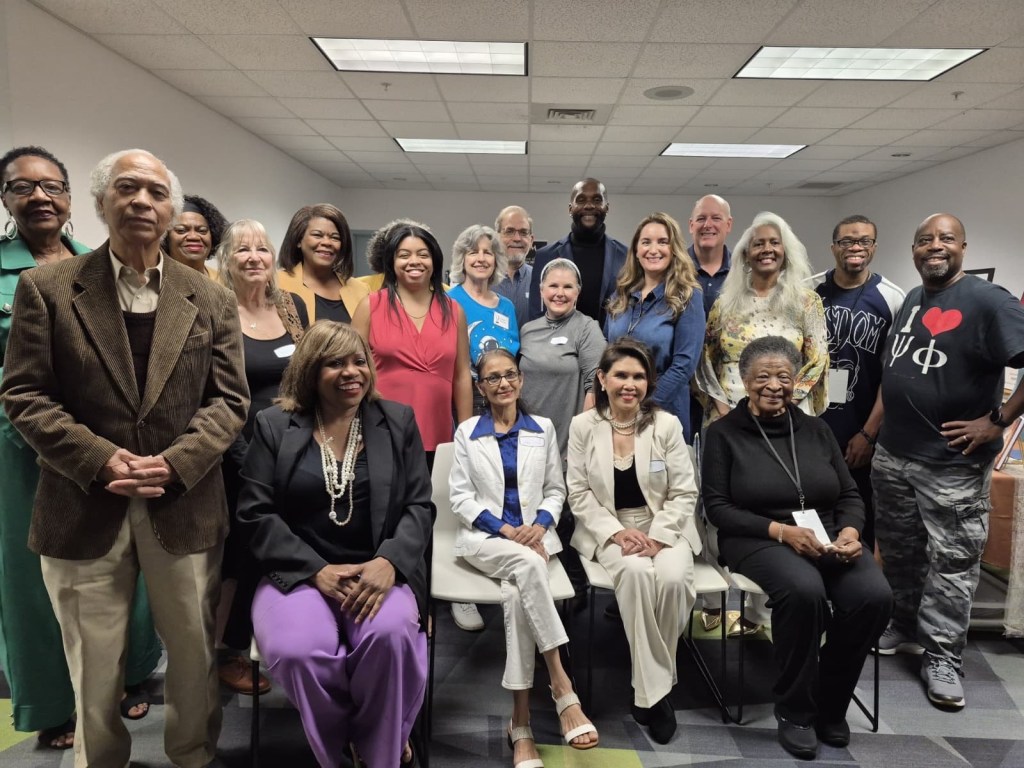
Realizing this pattern, the Writers Group of South Florida held a workshop. Hosted by the West Regional Library in Plantation. This initiative was facilitated by Dr. Shelly Cameron. Here’s a summary of the takeaway points that attendees authors gleaned.

AUGUST – SEPTEMBER: Build the Foundation & Warm Up Your Audience

  • Update book cover, blurb, and Amazon listing with holiday-friendly touches.
  • Secure podcast, blog, and media features for October–December.
  • Plan holiday content calendar (mix of promos, tips, behind-the-scenes, giveaways).
  • Launch pre-order bonuses or limited-time bundles.

October: Visible Campaign & Early Gift Push

  • Submit to gift guides, bloggers, and niche media lists.
  • Collaborate with other authors for holiday bundles or giveaways.
  • Feature reader testimonials and reviews on social media.
  • Run Early Bird discounts to attract early shoppers.

November: Holiday Sales Mode

  • Run a gratitude-themed campaign for Thanksgiving.
  • Offer Black Friday/Cyber Monday E-Book discounts or signed copy specials.
  • Partner with local stores for Small Business Saturday promotions.
  • Send an email countdown series leading up to Thanksgiving.

December: Final Holiday Push

  • Promote e-Books and gift certificates for last-minute shoppers.
  • Run a “12-Days-of-Christmas” themed social media series.
  • Position your book for New Year’s resolutions or inspiration.
  • Post thank-you messages and celebrate your readers

PRO TIPS for Conversions

  • Author Branding Matters: Use consistent holiday visuals across all platforms.
  • Offer Multiple Formats: Paperback, e-Book, Audio-book—make it easy to gift.
  • Make It Shareable: Create “I’m gifting this book!” social media graphics for readers to post.
  • Always Include a Call-to-Action: Don’t just post pretty images—always link to buy.
  • Track & Adjust: Watch which promos get clicks and double down on what works.

There you have it. Did one, two or a few of the above stand out for you? As a published author, which will you adopt? Do share, we would love to hear.

Happy Promoting!

Top 12 Places to Donate Your Books

With so many books to choose from, you’ll have the hard part of deciding which one to donate.

On Instagram I shared the hard task of purging my books. I have a million with little or no storage space. But what happened was…. During my purge, I ended up reading and re-claiming books.

I decided to share my work (purge in process), and an interested person asked, “where can you donate books?” I responded briefly but decided to post more here on the blog.

Popular and Unique Places to Donate Books

Local Donation Options

  1. Public Libraries
    • Many libraries accept gently used books for their collections or book sales.
    • Call ahead—they often have specific donation days or guidelines.
  2. Schools & Colleges
    • Especially helpful for children’s books, young adult novels, and textbooks.
    • Contact local principals, librarians, or teachers to ask if they need donations.
  3. Community Centers / YMCA / Local Clubs
    • Often accept books for literacy programs, tutoring, or community libraries.
  4. Hospitals & Nursing Homes
    • They may accept clean, gently used books for waiting rooms or patient use.
  5. Churches / Faith-Based Organizations
    • Great place to donate devotionals, spiritual books, or children’s materials.

Charitable Organizations

  1. Goodwill or Salvation Army
    • Accepts a wide range of books. Proceeds support their employment programs.
  2. Habitat for Humanity ReStores
    • Some locations take books to sell in support of housing projects.
  3. Books for Africa / Books Through Bars / Better World Books
    • Organizations that distribute books to under-served communities locally or globally.
  4. Little Free Library

Online / Specialized Options

  1. Freecycle.org / Buy Nothing Groups (Facebook)
    • Offer books locally for free and connect with those who want them.
  2. Local Prison Programs
    • Many prisons accept paperback books only. Check with local chaplains or nonprofits.
  3. Book Drives / Literacy Nonprofits
    • Check with local literacy organizations or Rotary Clubs—they may be running book drives.

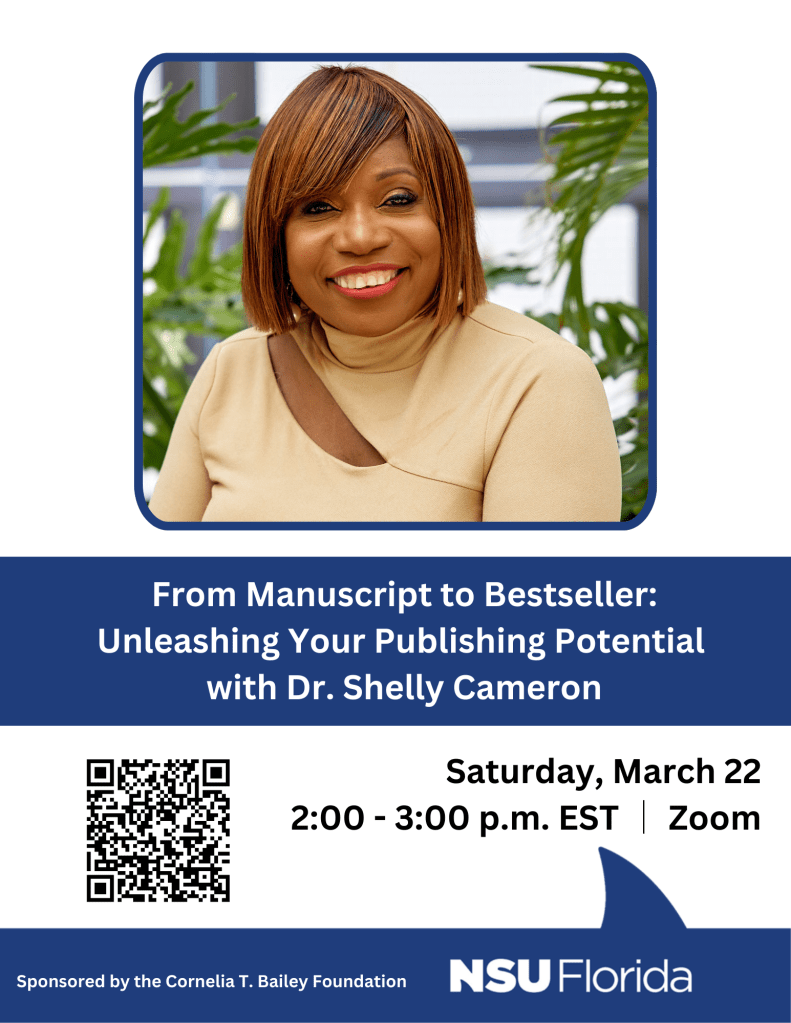
From Manuscript to Bestseller: Unleash Your Publishing Potential

If you want to change the world, pick up your pen and write.

Martin Luther

Listen to the recording here

Are you a writer with a story burning to be told, but feeling overwhelmed by the traditional publishing maze? Listen to this electrifying workshop facilitated by Dr. Shelly Cameron on behalf of Nova Southeastern University’s Alvin Sherman Library. The tips and tricks will transform your publishing dreams from wishful thinking to strategic action.

In this game-changing discussion, you’ll discover the exact blueprint successful self-published authors use to launch their books, build their audience, and generate real income. We’ll pull back the curtain on the traditional vs self-publishing industry, revealing insider strategies that most writers never learn—from choosing the right platforms and mastering digital formatting to marketing techniques that actually sell books. Whether you’re a first-time author or a seasoned writer looking to take control of your publishing journey, this session promises to equip you with practical, immediately actionable insights. Stop waiting for someone else to validate your story. Listen and Learn how to become the author you’ve always dreamed of being—on your own terms, with your own power. Don’t miss your chance to revolutionize your writing career.

Key Insights: Publishing Questions from Authors You Must Know

Many questions were asked throughout the presentation. Here are a 14.

  1. Should you use Ai for Book cover designs?
  2. Are authors required to let readers know that you used Ai?
  3. What is the full marketing potential for a book?
  4. How do you translate a book into another language?
  5. How do you negotiate speaking fees for your book?
  6. Are there any supporting groups to guide on how to format books on KDP?
  7. How can you hire someone to help with publishing?
  8. I’m doing away with writing the Foreword or comments on back of book. What’s the trend?
  9. Do you have resources to look for the audiobooks?
  10. How much can editors charge for beginner writers?
  11. How do you copyright a book?
  12. How do you find someone to edit your work?
  13. How can I get more exposure for sales other than amazon?
  14. Do I have to be a published author to be an editor?

If you’re interested in publishing your book, listen to the presentation and accompanying responses. If you need help, we are passionate about publishing. Reach out for help today and realize your publishing dream!

Happy Writing!

Monetize Your Writing Skills: 10 Proven Methods

Before you speak, listen. Before you write, think. Before you spend, earn. Before you invest, investigate. Before you criticize, wait. Before you pray, forgive. Before you quit, try. Before you retire, save. Before you die, give. ~William Arthur Ward

Are you a writer living from paycheck to paycheck? Do you want to take that dream vacation but your pocket dictates otherwise? You may just want to purchase that long desired goal but can’t seem to come up with the funds. Well, why not try to boost your income creatively? Here are 10 methods that can turn your talent into money in a flash (legally of course – yikes)!

1.Freelance Writing Platforms

Sign up for sites like:

  • Upwork
  • Fiverr
  • Freelancer
  • PeoplePerHour
    Start with blog posts, bios, product descriptions, or email copy. Quick turnaround = faster pay.

2. Offer Resume & Cover Letter Services

Tons of people need help polishing their resumes. You can charge $50–$200+ depending on your expertise.

3. Sell Digital Products

  • Create and sell templates (journals, planners, ebook templates) on Etsy or Gumroad.
  • If you’ve already written a book, turn it into a workbook or checklist.

4. Pitch Articles

Submit articles to platforms that pay per piece:

  • Medium (via Partner Program)
  • Narratively
  • The Bold Italic
  • Listverse
  • Cracked Some pay $100+ for accepted content.

5. GHOSTWRITING

Offer ghostwriting for blog posts, social media captions, or even eBooks. It’s in high demand, especially for coaches and small businesses.

6. Edit or Proofread

Writers are great editors! Offer fast-turnaround proofreading on Fiverr or Facebook groups.

7. Write LinkedIn Profiles or Bios

Professionals always need help optimizing their online presence.

8. Transcribe Audio for Creators or Podcasters

Great for fast typers. Websites like Rev or TranscribeMe pay per audio minute.

9. Offer Email Newsletter Setup / Writing

Many small biz owners want to start newsletters but don’t know where to begin.

10. Monetize a Blog or Substack Fast

Offer a mix of free content and a paid tier with extra goodies (writing tips, coaching, behind-the-scenes, etc.).

Did any of the above spark your interest to boost your earning potential? Any missing that you would like to add? Do share. We would love to hear.

Cheers!

Top 8 Audiobook Publishers You Should Know

Listening to the dulcet tones of a familiar voice is an appealing way to work our way through those books we’ve always meant to get around to, but haven’t.– Clare Thorp

You have written your book! Took it a step further and did the audiobook. Now what do you do? How do you get it into the hands of listeners? The options listed may help.

1. Audible (an Amazon company)

  • What they do: Industry leader in audiobook publishing and distribution.
  • Also produces: Audible Originals (exclusive content).
  • Website: audible.com

2. Tantor Media

  • What they do: Full-service audiobook publisher with a wide range of genres.
  • Known for: High-quality production and professional narration.
  • Website: tantor.com

3. Podium Audio

  • Focus: Sci-fi, fantasy, and thriller genres.
  • Notable for: Discovering and promoting indie authors with huge success (e.g., The Martian by Andy Weir).
  • Website: podiumaudio.com

4. RBmedia

  • What they do: One of the largest audiobook publishers globally.
  • Imprints include: Recorded Books, HighBridge Audio, Tantor Media, and more.
  • Website: rbmediaglobal.com

5. Dreamscape Media

  • What they do: Audiobook production and publishing for libraries, retail, and direct sales.
  • Also handles: Distribution to major platforms like Audible, Hoopla, OverDrive.
  • Website: dreamscapepublishing.com

🧰 Self-Publishing & Hybrid Options

6. ACX (Audiobook Creation Exchange)

  • Owned by: Amazon (works with Audible and iTunes).
  • For: Authors and publishers to create and distribute audiobooks.
  • Website: acx.com

7. Findaway Voices (by Spotify)

  • What they do: Allows authors to produce and distribute audiobooks across 40+ platforms (including Audible, Apple Books, Google, etc.).
  • Website: findawayvoices.com

8. Author’s Republic

  • What they do: Distribute audiobooks globally with easy access for self-published authors.
  • Website: authorsrepublic.com

Questions to Consider

Consider these questions before you make your selection.

  • Is the audiobook already recorded, or do you need help with narration/production? (e.g., voice talent, editing, mastering, etc.)
  • Are you looking to self-publish, or are you open to working with a publisher?
  • What is your target audience and platform preference? e.g., Audible, Spotify, Apple Books, libraries, global reach, etc.)
  • Do you want control over pricing and rights, or are you okay with royalty splits?
  • What’s the genre or focus of the content?
  • (e.g., business, leadership, fiction, memoir, etc.)

Understanding Publishing: Pros and Cons for Aspiring Authors

To write is human, to edit is divine.

Stephen King

New and aspiring writers are curious about the publishing process. As a foundation, it is important to understand the basic advantages and disadvantages of each. These two infographics were prepared as a comparative analysis to help writers understand each especially when navigating the agent-publisher-author relationship.

Here’s hoping it will clarify any confusion associated with the process and help new authors make informed decisions.

Which have you used? Traditional, Self-Publishing, or a combination of both. Do share, we would love to hear.

Cheers!

Success Stories: 15 Women of Color Who Self-Published

“A word after a word after a word is power.”

Margaret Atwood

The publishing process can be intimidating for an unknown writer. The traditional Agent-Publisher-Author relationship is hard. Rejection after rejection is common as Agents say ‘no’. Writers become discouraged and often give up. Manuscripts stay in the darkness of desk drawers for years.

As time has involved, so has the advent of self-publishing. Writers become bold and take advantage of their publishing plight. They make bold moves; step ahead, take the reins to achieve their publishing goal of becoming an author. With low budget and unplanned expenses, some cut corners and quality becomes compromised. Book covers are mediocre. Titles lack depth. Formatting is non-existent, which leads to the demise of some great manuscripts.

On the other hand, some writers step out, work hard, invest, learn the process, and viola! Success follows!

Self-Publishing Success

Here are 15 Authors of color who achieved significant success through self-publishing:

  1. Toni Morrison – While primarily known for her traditionally published works, she self-published her first novel “The Bluest Eye” before gaining wider recognition
  2. Terry McMillan – Initially self-published her debut novel “Mama” before securing a publisher for subsequent works
  3. N.K. Jemisin – First self-published some of her fantasy work before becoming the first author to win the Hugo Award for Best Novel three years in a row
  4. Alexandria House – Found success self-publishing contemporary romance novels featuring Black characters
  5. Kristen Ashley – Built a dedicated following through self-publishing her romance novels before signing with traditional publishers
  6. Brenda Jackson – Pioneer in African American romance who began with self-publishing before becoming a New York Times bestseller
  7. Alyssa Cole – Initially self-published her diverse romance novels before becoming an award-winning author
  8. K.M. Jackson – Self-published romance author who found success writing diverse contemporary stories
  9. Nikki Turner – Self-published her first urban fiction novel before becoming known as the “Queen of Hip-Hop Fiction”
  10. Beverly Jenkins – Started self-publishing historical romances featuring Black characters when traditional publishers showed little interest
  11. Sister Souljah – Self-published “The Coldest Winter Ever” which became a groundbreaking street lit phenomenon
  12. Nnedi Okorafor – Self-published some of her early Africanfuturist works before winning multiple prestigious awards
  13. Kiini Ibura Salaam – Award-winning speculative fiction writer who self-published collections of her short stories
  14. Octavia Butler – Though mostly known for her traditionally published works, she self-published some early stories
  15. Zane – Built an erotic fiction empire beginning with self-published works before launching her own publishing company

These authors demonstrated outstanding entrepreneurial spirit and literary talent often creating space for Black women’s voices. This occurred at a time when traditional publishing wasn’t receptive to their work. Many of these women went on to sign traditional deals. Suffice it to say they proved their commercial viability through self-publishing. Others maintained independence throughout their careers.

Need help to get over your fear to make the leap? Let these women inspire your journey. Thoughts about any of these or other women of color who have experienced success? Do share. We would love to hear.

Cheers!


Top 15 Women Authors Who Achieved Success in Self-Publishing

“Writing is a process, a journey into memory and the soul.”

Isabel Allende

Award-Winning Storyteller and Journalist Sharon Gordon published her debut novel Sheribaby and started off with a bang! Introverts may not be as purposeful due to shyness. They are reserved and avoid putting themselves ‘out there’ for the world to see them and their author life.

That said, here are 15 women authors who found significant success through self-publishing:

  1. Amanda Hocking – Became a millionaire by self-publishing her paranormal romance novels before signing with a traditional publisher
  2. E.L. James – Initially self-published “Fifty Shades of Grey” as fan fiction before it became a global phenomenon
  3. Colleen Hoover – Self-published her debut novel “Slammed” before becoming a #1 New York Times bestselling author
  4. Rachel Abbott – One of the UK’s most successful self-published authors with her thriller novels
  5. Lindsay Buroker – Found success with her Emperor’s Edge fantasy series and numerous other works
  6. Bella Forrest – Self-published the phenomenally successful “A Shade of Vampire” series
  7. H.M. Ward – Romance author who sold millions of copies of her self-published works
  8. Jasinda Wilder – Self-published numerous bestselling romance novels before signing a traditional deal
  9. Vi Keeland – Initially self-published her romance novels before becoming a #1 New York Times bestseller
  10. Penny Reid – Built a successful career with her self-published romantic comedies
  11. Rupi Kaur – Self-published her poetry collection “Milk and Honey” which became a worldwide bestseller
  12. Sierra Simone – Found success with her provocative romance novels
  13. Sarina Bowen – Award-winning romance author who began her career self-publishing
  14. L.J. Shen – Romance author who built a massive following through self-publishing
  15. Lauren Blakely – Multi-million selling self-published romance author

Many of these authors began self-publishing when traditional routes weren’t available to them. They remained independent even after achieving success. Several eventually signed traditional publishing deals after demonstrating their commercial appeal through self-publishing

Need help to get over your fear of leveling up to achieve your goal of being a published author? Let these women inspire you. Have you or someone you know stepped out and achieved success? Do share. We would love to hear.

Cheers!

A Conversation With Journalist & Award Winning Story Teller Sharon Gordon

Absolutely thrilled to announce that Sharon Gordon’s debut book “Sheribaby is NOW AVAILABLE!

Journalist Sharon, is the talented 2025 Award winning Storyteller and niece of beloved Jamaica’s Singer Songwriter Beresford Hammond.

I met Sharon a decade ago when Reggae music matriarch Miss Patricia Chin, hosted my Success Strategies of Caribbean American Leaders book event at VP Records, New York.

It’s been such an honor to guide Sharon through the book publishing journey – from connecting her with Raquel, the perfect editor for her genre, to navigating publisher conversations and finally seeing her words in print.

Her dedication to the craft and willingness to embrace the publishing process made this success inevitable. This is why I do what I do!

Congratulations Sharon! Indeed, hard work pays off!

If you have been dreaming of becoming a published author but aren’t sure where to start, let Sharon’s journey inspire you. With the right guidance, YOUR story could be next on the shelves!

Order your copy of Sheribaby today https://a.co/d/5R50Nwu and follow Sharon’s author journey

Enjoy our literary conversation here.

Writers of Color Women’s Empowerment Initiative

“Ask yourself, what would I do if I weren’t afraid? And then go do it” — Sheryl Sandberg

Inspiring. Intentional. Take charge. Grow. These were common words that described the Writers Group of South Florida’s Women Empowerment Event held at the West Regional Library in Plantation, Florida.

Guests turned out in numbers to be educated or refreshed as seasoned authors shared nuggets on leadership, balance, wellbeing, and becoming financially independent.

Thanks to fellow writer GMoss Designs for being Instrumental and singer songwriter Ettosi Brooks for the delightful music entertainment.

Panelists Award winning Reggae legend Miss Pat Chin and others did an exceptional job in highlighting the challenges women face as well as the Strategies to overcome.

Missed it? Plan for it Next year same time.

Cheers!

2024 South Florida Writers Of Color Online Literary Magazine

The Legacy of Books

As humans, we die, but Books Live on Forever, culturally and intellectually enriching the lives of future generations.

– Ralph Hogges

2024’s Collection of poems, writings and gleanings from The Hogges, Cowins, & Smiley South Florida Writers of Color, literary Magazine shown in the link below.

Travel with Intent

A photographer's view of the world - words and images to inspire your travels and your dreams

Answering daily prompts

In this blog I'm attempting to answer wordpress daily prompts

Alex Tafur

Property Maintenance

Poesy Perspectives

embrace the magic

GREENLiGHT

When God Says Go

HEALTH | INSPIRATION

Mind • Body • Life

My Sister My Friend

Family. Youth. Parenting

Kamileon Photography

Your Focus. Our Lens.