
Overly Nice Leaders Burn Out

Being a “Nice” leader without Boundaries often lead to:

•Overcommitment
•Emotional exhaustion
•Resentment
•Being the default problem-solver for everyone

Support doesn’t mean self-sacrifice.
Availability doesn’t mean 24/7

Boundaries are not unkind.
They are a leadership skill

The leaders who last long-term learn how to say:

🔭I can help. Here’s when
🔭That’s not mine to carry
🔭Let’s find a better process

If you feel stretched thin but still “showing up” for everyone…
It may not be a workload issue
It may be a Boundary Gap.

If this resonates, let’s explore.

Leadership Lesson from Grief: Lean on Your Team

Strength In Life’s Dark Times

My respect for Grieving loss began when I was in elementary/ primary school. I accompanied my grandmother to many funerals. Once I overheard someone asking which side of the family she belonged. She replied, “I don’t even know her.”

Decades later I found myself doing the same thing. Attending funerals to support members of the church I did not even know.

Naturally, as years progressed, I too would lose loved ones including the closest, my mom. Consequently, I was fortunate to have the support of my coworkers and church family. I discovered the burden of grief was made lighter having others around.

It’s the same when leading others despite the type of organization or group you belong. Having others around makes the workflow an easier process. Essentially smoother. We never have to carry the load ourselves.

So today, if you’re a leader, lean on the support of your team. Delegate to those with the relevant skillsets. Doing so makes the workload lighter.

…And if you’re grieving, do the same. Initially, you may need to grieve alone. But as the days progress and arrangements need to be made, accept the support of friends, relatives and colleagues. Most have your best interest at heart.

Remember, together we rise.

Elevate Your Leadership: Key Questions to Shape 2026

Who looks outside dreams; who looks inside, awakens. ~Carl Jung

As the year closes, the most effective leaders are the ones who pause long enough to evaluate, realign, and elevate. These 12 questions are designed to help you step confidently into 2026 with clarity, courage, and intention.

Take a moment to reflect on each. Use them to guide your vision, your team, and your next level of growth. Strong leadership doesn’t happen by accident. It’s built through awareness, alignment, and action.

Reflection Questions

1. What are my top 3 leadership wins from 2025?


2. What drained my energy this year, and why?


3. What habits strengthened my leadership?


4. What habits weakened it?


5. What opportunities did I ignore that I should revisit?


6. What does success look like for me in 2026?


7. What limiting belief must I leave behind?


8. Who do I need to become next year?


9. What relationships do I need to nurture?


10. What boundaries do I need to create?


11. What skills must I develop or sharpen?


12. What is ONE bold move I will take before Jan. 31?

If you’d like support creating a strategic leadership plan for the new year, join the year-end and January coaching sessions. This is designed for leaders in transition and professionals preparing for a stronger 2026.

What will you do differently next year? Which question resonated with you the most? Do share. We would love to hear.

Cheers!

How Can A Business Owner Overcome Fear of Marketing? 4 Steps-To-Success

Overcome Marketing Fear

At a networking event, a bold Networker spoke about her reluctance to use social media. She was hesitant about using it. She asked herself “why not enroll into a social media class?

How can a business owner overcome this fear? This is a powerful and timely question especially as we get close to the peak of the biggest holiday season. Most business owners are confident in their work but hesitant about visibility.

4 Ways to Overcome the Fear of Marketing as a Business Owner

Many business owners love what they do but freeze when it’s time to promote their work. They fear sounding “salesy,” being judged, or stepping into the spotlight. Yet, marketing isn’t about ego, it’s about service and connection. Here are some tips to negate that fear.

  1. Reframe “marketing” as “helping.”

Marketing is simply communicating the value of what you offer to people who need it. When you shift from “selling” to “serving,” fear loses its grip.
Ask yourself: Who needs this solution? How can I make it easier for them to find me?

  1. Start with authenticity, not perfection.

You don’t need perfect videos, fancy funnels, or flawless captions. You just need a clear message and consistency. Share your why, your story, and the transformation you help others achieve. Authenticity builds trust faster than polished perfection.

  1. Use your strengths.

If writing comes naturally, blog or post.
If you’re a people person, go live or network.
If you’re visual, create short reels or carousel posts.
Play to your natural communication style instead of forcing what feels unnatural.

  1. Build confidence through small wins.

Set simple, repeatable goals, one post a week, one short video, one client testimonial shared. Every time you take action, your comfort zone expands.

  1. Get coached through the fear.

A leadership or business coach can help you uncover the root cause of your fear. Whether it’s fear of rejection, comparison, or visibility and replace it with confidence and clarity.

Coaching helps you align your mindset, message, and methods so you can show up as a confident leader of your brand.


Coaching helps you align your mindset, message, and methods so you can show up as a confident leader of your brand.

Remember:
As with the business owner we spoke about, she learnedd that she did not have to love marketing, she just needed to see it as part of her leadership. She did and was happy to shout the benefits.

Remember, your voice, your story, and your offer could be the answer someone is praying for. Don’t let fear keep you silent.

Have you been hesitant to step out and share your work? Do share. We would love to hear.

Need help to make the move? Attend GreenLight Leadership Coaching Workshop

Cheers!

Why Smart Leaders Get Stuck at Crossroads & How to Move Forward

Subscribe to continue reading

Subscribe to get access to the rest of this post and other subscriber-only content.

Spooky Leadership: 3 Frights That Haunt the Workplace (and How to Fix Them) …

Spooky Leadership

Do one thing everyday that scares you.

As the spooky season approaches, it’s not just ghosts and goblins giving people chills. Sometimes leadership habits can be downright spooky!

1. The Invisible Leader

Disappears when the team needs them most. No feedback, no presence, just crickets.

FIX: Show up. Visibility builds trust. A simple check-in can turn uncertainty into motivation.

2.The Zombie Communicator

Repeats the same messages with no real emotion or connection. Team meetings feel lifeless.

FIX: Revive communication! Be intentional, listen actively, and personalize your message.

3.The Vampire of Ideas

Sucks up all the credit and leaves others drained. Recognition? Nowhere in sight.

FIX: Share the spotlight. Empower your team and celebrate contributions publicly.

This season, take a moment to unmask your leadership style. Make sure you are not the one haunting your workplace and if you are, let’s connect to clear the spookiness.

Are there thoughts you would like to add? Do share. We would love to hear.

Cheers!

When Leaders Face Dementia: How Do You Tell The World?

What happens when dementia touches the life of a leader? The impact reaches far beyond the individual. It affects families, caregivers, colleagues, and even public perception.

The Past Prime Minister of Jamaica, Portia Simpson-Miller was diagnosed with Dementia. Actor and famed Die Hard acclaim, Bruce Willis was recently transferred for deeper care. I thought of these leaders and pondered. Then decided to host a conversation to bring light to this issue for those suffering the early stages and the impact on caregivers.

In this thought-provoking panel discussion, Rianna Patterson MBPS a PhD student and former caregiver, Dr. Romario R. Simpson, JP physician, Chris Daley, explores the complexities of communicating, coping, and caring when dementia enters the public eye.

Emotional Challenges

Together, we unpack important questions:

  • How should public figures communicate a diagnosis while maintaining dignity and legacy?
  • What emotional and professional challenges do caregivers face behind the scenes?
  • How can organizations protect an affected leader with empathy and integrity?

This conversation bridges leadership, ethics, and humanity, offering insights for:
•Healthcare and HR professionals
•Executives and communication leaders
•Caregivers and families
•Students and researchers in health and social sciences

Dementia is not just a medical condition, it’s a leadership, communication, and compassion challenge.

Time to Watch

Watch the full discussion on YouTube: https://lnkd.in/eaahEeqc

Join the conversation. Share your thoughts if you or someone you know is struggling with dementia.

That Wretched Performance Improvement Plan As Leadership Changes

THAT WRETCHED PERFORMANCE IMPROVEMENT PLAN

It’s a devil. I tell you it’s the devil! You work hard. Achieve great results and are applauded for your contribution.

Then a change in leadership! Things go haywire. Goals are thwarted. Messages are confusing. Leaders don’t explain. Midst the changes, the transition in process becomes the focus backed by mixed signals.

Then comes the inevitable performance drop. A lack of clarity, missed communication. Performance improvement plan rears its ugly head. A strong performer, an all star becomes the targeted.

Where did things go wrong?

Ever experienced it? Let’s talk.

5 Leadership Lessons from Great Teachers

Dead Poets Society

Clarity builds trust and momentum

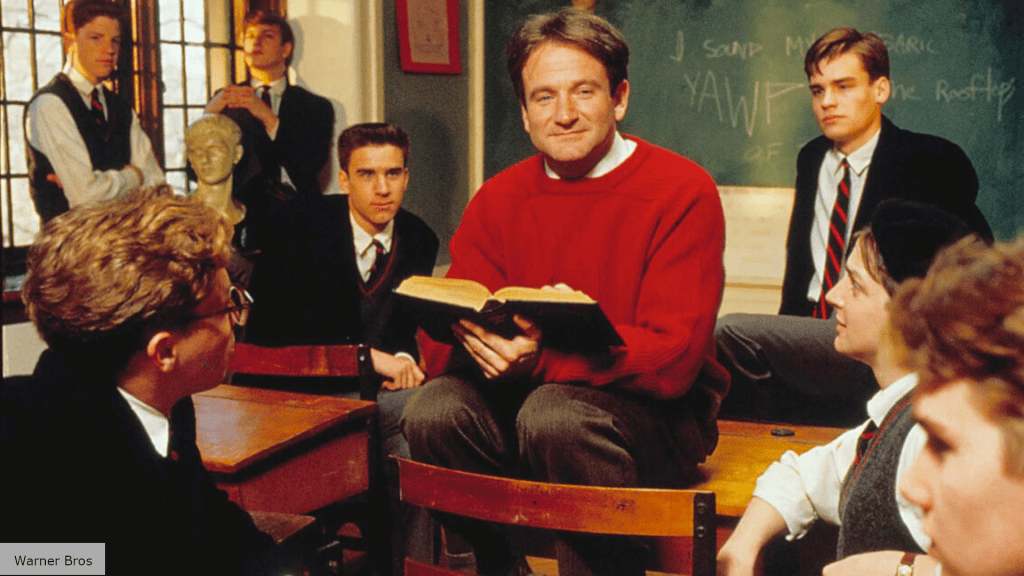
Summer is almost over and it’s time to make all those back-to-school plans. As we make those plans, lets pause for a minute. Think of a teacher or two who made a difference in your life. Personally, as I age, I think about those teaching experiences and the effect they had on my leadership journey. As I look back, I think of society’s great teachers like Erin Gruwell, Maria Montessori, and the fictional Mr. Keating (Dead Poets Society).

Here are 5 lessons leaders can learn from great teachers.

1.Clarity is Powerful

Teachers break down complex topics into simple, digestible pieces.
Leaders must do the same—clearly communicate vision, expectations, and feedback so everyone understands what success looks like.

Lesson: Say less, mean more. Clarity builds trust and momentum.

2. Patience Enables Progress

Teachers know learning takes time and that growth isn’t always linear.
Leaders should extend grace and patience during times of transition, failure, or new learning curves—whether with teams or themselves.

Lesson: Progress often looks like repetition before results.

3. Individual Strengths Matter

Great teachers recognize that not every student learns the same way.
Great leaders acknowledge that not every employee works, leads, or grows the same. They tailor support, roles, and recognition accordingly.

Lesson: Personalize your leadership to bring out the best in each person.

4. Structure Creates Freedom

Teachers use routines and structure to create a safe space for creativity and exploration.
Leaders who implement clear systems give their teams the confidence and autonomy to take initiative.

Lesson: Strong frameworks unlock innovative thinking.

5. Passion Inspires Performance

Teachers who genuinely care spark curiosity and motivation.
Leaders who lead with purpose, authenticity, and heart cultivate higher engagement and loyalty.

Lesson: When you model passion, people give their best

As school begins its opening session, the road becomes a task / lesson plan in and of itself. What are your thoughts on the top five lessons? Anything missing that you would like to add? Do share, we would love to hear.

Don’t forget to connect if you would like to discuss your own leadership growth journey.

5 Great Teachers—Real and Iconic—Who’ve Made a Lasting Impact

What you leave behind is not what is engraved in stone monuments but what is engraved in the lives of others

Pericles

Behind every great leader is a story of someone who taught them how to think, not what to think. Whether in classrooms, communities, or through powerful stories, teachers like Anne Sullivan, Jaime Escalante, Erin Gruwell, Maria Montessori, and even the fictional Mr. Keating from Dead Poets Society have left lasting legacies. They did not just impart knowledge, but they also unlocked human potential. Their bold approaches, deep empathy, and unwavering belief in those they taught offer rich leadership lessons for anyone seeking to inspire, elevate, and transform others.

1. Anne Sullivan – Teacher of Helen Keller

Why she matters: Sullivan’s unshakable belief in Helen’s potential shows the power of persistence, adaptive teaching, and emotional intelligence.

Leadership lesson: Believe in others, even when they can’t yet believe in themselves.

2. Jaime EscalanteMath Teacher, ‘Stand and Deliver

Why he matters: Taught AP Calculus in a struggling inner-city school, proving that high expectations and dedication can change lives.

Leadership lesson: Set the bar high and show people they can reach it.

3. Erin GruwellEnglish Teacher, “Freedom Writers”

  • Why she matters: Helped under-served students find their voices through journaling and literature.
  • Leadership lesson: Create a safe culture for expression and transformation.

4. Maria MontessoriFounder of the Montessori Method

Why she matters: Revolutionized education by emphasizing self-directed learning, observation, and individual strengths.

Leadership lesson: Foster autonomy and trust people to grow when given the right environment.

5. Mr. KeatingFictional Teacher, “Dead Poets Society”

Why he matters: Though fictional, Mr. Keating represents the kind of leader who challenges others to think differently, embrace risk, and “seize the day.”

Leadership lesson: Inspire people to think for themselves and lead with courage.

Which iconic teacher has made a lasting impression on you as a leader? Do share. We would love to hear.

Cheers!

When The Rug Gets Pulled: Navigating Unexpected Job Loss

You gain strength, courage and confidence by every experience in which you really stop to look fear in the face — Eleanor Roosevelt

Uncertainty and fear are common these days as both federal government and private sector battles with job security.

Government jobs once thought of as the most secure are now being eroded. Employees across the board are now forced to adapt quickly or be left behind.

In this video, Chris Daley, and I in my capacity of Certified Master leadership Coach, explore the emotional and practical challenges faced by workers who experience sudden, unexpected job loss. We share how professionals across various industries can arrive at work only to be told their positions had been eliminated—with little to no warning.

The video briefly examines:

📍The initial shock and emotional impact of unexpected termination

📍Common corporate practices that leave employees in the dark

📍Immediate financial concerns and survival strategies

📍The psychological journey from disbelief to acceptance

📍Practical steps to take after job loss.

Whether you’re currently dealing with sudden unemployment or want to prepare for corporate uncertainty, this video offers both emotional support and actionable advice for those facing one of life’s most challenging professional transitions.

If you or someone you know has been affected, DM to connect.

If you’re an employer or business leader who needs help with business transition, reach out today and get the help you need to do it the right way.

7+ Ways To Prepare For A Public-Facing Leadership Role

Before you are a leader, success is all about growing yourself. When you become a leader, success is all about growing others.” —Jack Welch

More than two decades ago I started my first leadership role. Always facing an audience through years of athletic performance, the arts, other leadership roles, I was always confident. But this was different. In my HR Leadership role, I faced responsibilities on behalf of the company. No more hiding behind other senior leaders. My boss gave me no choice but to step up to my full responsibilities.

After going through a bout of nervousness that lasted months, I found that it got easier each time. Before long, I prepared for each meeting when I had to address employees performance, achievements and areas of development across the region with confidence.

On observation these days, we see politicians and society’s leaders in public service assuming new roles. Consequently, the question was raised;can a person from behind the scenes excel in a new public-facing role?” The answer is absolutely!

Public-facing means a role where the (individual) exercises managerial authority or control of an entity’s activities.

Here are 7+ points to prepare for a public-facing leadership role. Focus on:

1.Communication Skills

  • Develop clear, compelling public speaking abilities
  • Practice articulating complex ideas simply
  • Learn media training techniques

2.Personal Brand Development

  • Build a professional, authentic public image
  • Be consistent across different platforms
  • Develop a strong personal narrative

3.Continuous Learning

  • Stay updated on industry trends
  • Understand diverse stakeholder perspectives
  • Cultivate emotional intelligence

4.Professional Appearance

  • Dress appropriately for your industry
  • Project confidence through body language
  • Work on your on-camera and in-person presence

5.Media and Presentation Preparation

  • Take media training workshops
  • Practice handling tough questions
  • Learn crisis communication strategies

6.Networking

  • Build relationships with key industry influencers
  • Develop a supportive professional network
  • Seek mentorship from experienced public leaders

7.Digital Literacy

  • Manage social media presence professionally
  • Understand digital communication etiquette
  • Be mindful of online reputation

Bonus: Resilience and Adaptability

  • Develop thick skin for public scrutiny
  • Learn to handle criticism constructively
  • Maintain composure under pressure

Consistent practice and self-reflection are the keys to becoming an effective public-facing leader.

What has been your experience with getting ready for a leadership role? Did you use any of the above strategies? If so, what worked for you? Any other strategy that comes to mind? Do share, we would love to hear.

Cheers!

Travel with Intent

A photographer's view of the world - words and images to inspire your travels and your dreams

Answering daily prompts

In this blog I'm attempting to answer wordpress daily prompts

Alex Tafur

Property Maintenance

Poesy Perspectives

embrace the magic

GREENLiGHT

When God Says Go

HEALTH | INSPIRATION

Mind • Body • Life

My Sister My Friend

Family. Youth. Parenting

Kamileon Photography

Your Focus. Our Lens.