7+ Ways To Prepare For A Public-Facing Leadership Role

Before you are a leader, success is all about growing yourself. When you become a leader, success is all about growing others.” —Jack Welch

More than two decades ago I started my first leadership role. Always facing an audience through years of athletic performance, the arts, other leadership roles, I was always confident. But this was different. In my HR Leadership role, I faced responsibilities on behalf of the company. No more hiding behind other senior leaders. My boss gave me no choice but to step up to my full responsibilities.

After going through a bout of nervousness that lasted months, I found that it got easier each time. Before long, I prepared for each meeting when I had to address employees performance, achievements and areas of development across the region with confidence.

On observation these days, we see politicians and society’s leaders in public service assuming new roles. Consequently, the question was raised;can a person from behind the scenes excel in a new public-facing role?” The answer is absolutely!

Public-facing means a role where the (individual) exercises managerial authority or control of an entity’s activities.

Here are 7+ points to prepare for a public-facing leadership role. Focus on:

1.Communication Skills

  • Develop clear, compelling public speaking abilities
  • Practice articulating complex ideas simply
  • Learn media training techniques

2.Personal Brand Development

  • Build a professional, authentic public image
  • Be consistent across different platforms
  • Develop a strong personal narrative

3.Continuous Learning

  • Stay updated on industry trends
  • Understand diverse stakeholder perspectives
  • Cultivate emotional intelligence

4.Professional Appearance

  • Dress appropriately for your industry
  • Project confidence through body language
  • Work on your on-camera and in-person presence

5.Media and Presentation Preparation

  • Take media training workshops
  • Practice handling tough questions
  • Learn crisis communication strategies

6.Networking

  • Build relationships with key industry influencers
  • Develop a supportive professional network
  • Seek mentorship from experienced public leaders

7.Digital Literacy

  • Manage social media presence professionally
  • Understand digital communication etiquette
  • Be mindful of online reputation

Bonus: Resilience and Adaptability

  • Develop thick skin for public scrutiny
  • Learn to handle criticism constructively
  • Maintain composure under pressure

Consistent practice and self-reflection are the keys to becoming an effective public-facing leader.

What has been your experience with getting ready for a leadership role? Did you use any of the above strategies? If so, what worked for you? Any other strategy that comes to mind? Do share, we would love to hear.

Cheers!

14 Strategies For Adults Reporting To Millennial Team Leads

The challenge of leadership is to be strong, but not rude; be kind, but not weak; be bold, but not a bully; be thoughtful, but not lazy; be humble, but not timid; be proud, but not arrogant; have humor, but without folly. ~Jim Rohn

“I report to Jen who is in her late 30s and is as old as my daughter” Cindy said aloud to the group. She respects me though. The diverse group of women nodded in agreement. There are others who are not as lucky as Cindy, not necessarily because of being older but because they complain of having more experience than the Millennial who supervise them. They often take offense at any task given because they do not believe they should report to someone younger than themselves.

This is an increasingly common situation as workplace demographics change. Here are some strategies older adults can use when reporting to or being supervised by millennials:

  1. Focus on mutual respect:
    • Recognize that your millennial supervisor has earned their position.
    • Treat them with the same respect you’d expect, regardless of age.
  2. Leverage your experience tactfully:
    • Offer your insights and experience as a resource, not a challenge to authority.
    • Frame suggestions as “In my experience…” rather than “You should…”
  3. Embrace learning opportunities:
    • Be open to new ideas and approaches your younger supervisor might introduce.
    • Show enthusiasm for learning new skills or technologies.
  4. Adapt to communication styles:
    • Be flexible with communication methods (e.g., instant messaging, video calls).
    • Understand and respect different communication preferences.
  5. Manage your own biases:
    • Challenge any preconceived notions you might have about younger managers.
    • Focus on their skills and leadership qualities rather than age.
  6. Highlight your strengths:
    • Demonstrate how your experience and skills complement the team’s needs.
    • Show how your long-term perspective can be valuable for strategic planning.
  7. Be a team player:
    • It’s no playtime. Support your supervisor’s decisions publicly, even if you disagree privately.
    • Offer constructive feedback in appropriate settings.
  8. Stay current:
    • Keep up with industry trends and new technologies.
    • Show initiative in updating your skills.
  9. Practice active listening:
    • Give full attention to your supervisor’s ideas and directives.
    • Ask clarifying questions to ensure understanding.
  10. Seek feedback proactively:
    • Ask for regular performance feedback.
    • Show willingness to adapt based on constructive criticism.
  11. Find common ground:
    • Look for shared interests or values beyond work.
    • Build a relationship based on mutual understanding and respect.
  12. Offer mentorship subtly:
    • If appropriate, offer to share your knowledge in areas where you have deep expertise.
    • Frame it as supporting their success rather than undermining their authority.
  13. Embrace change:
    • Be open to new processes or workflows your millennial supervisor might implement.
    • Demonstrate flexibility and adaptability.
  14. Focus on results:
    • Align your work with the goals and metrics your supervisor values.
    • Demonstrate your value through your performance and outcomes.

It’s hard and often uncomfortable. But remember, successful intergenerational workplace relationships are built on mutual respect, open communication, and a willingness to learn from each other. By focusing on these elements, older adults can create positive and productive relationships with their millennial supervisors.

10 Thoughtful And Practical Gift Ideas For Women Leaders This Mother’s Day

The Perfect Gift for Her

Some gifts are big. Others are small. But the ones that come from the heart are the best gifts of all.

Tinku Razoria

Celebrations, Birthdays, Mother’s Day, Selfcare Days…. no matter the occasion, it is always hard to find the ideal gift for the perfect mom, sister, co-worker, best friend to encourage or simply to say Thanks to one who did a kind deed. Here are 10 thoughtful and practical gift ideas for women leaders.

Gifts for Her

  1. Professional Development Books: Gift a selection of books on leadership, personal development, or career advancement. Choose titles that align with the recipient’s interests and goals, such as “Ditch It, Switch It“, “Lean In” by Sheryl Sandberg or “Dare to Lead” by Brené Brown.
  2. Journal or Planner: A stylish journal or planner can help women leaders stay organized, set goals, and track their progress. Look for a high-quality notebook with inspirational quotes or customizable sections for reflection and planning.
  3. Online Course or Workshop: Invest in an online course or workshop that aligns with the recipient’s professional development goals. Whether it’s leadership skills, negotiation tactics, or public speaking, there are plenty of options available to enhance their skills and knowledge.
  4. Executive Coaching Sessions: Provide the gift of personalized coaching sessions with a professional executive coach. This one-on-one support can help women leaders overcome challenges, set strategic goals, and accelerate their career growth.
  5. Membership to Professional Networks: Consider gifting a membership to a professional organization or networking group tailored to women leaders in their industry. This provides opportunities for networking, mentorship, and access to valuable resources and events.
  6. Tech Gadgets or Accessories: Surprise her with a stylish and functional tech gadget or accessory that enhances productivity and efficiency, such as a smartwatch, wireless headphones, or a sleek laptop bag.
  7. Self-Care Package: Put together a self-care package filled with pampering essentials like scented candles, bath salts, herbal teas, and skincare products. Encourage women leaders to prioritize their well-being and recharge their batteries.
  8. Mindfulness or Meditation Tools: Help women leaders manage stress and promote mindfulness with gifts like a meditation app subscription, aromatherapy diffuser, or a set of meditation cushions.
  9. Personalized Leadership Assessment: Invest in a personalized leadership assessment tool or 360-degree feedback survey to help women leaders gain valuable insights into their strengths, areas for improvement, and leadership style.
  10. Inspiring Artwork or Decor: Choose a piece of artwork or decor that inspires and motivates women leaders in their workspace. Whether it’s a motivational quote print, a vibrant painting, or a decorative desk accessory, find something that resonates with their aspirations and values.

These gift ideas for women leaders combine practicality, inspiration, and personalization to support their professional growth and well-being.

Which gift pulls you in? Is there another or a few that you would like to add? Do share. We would love to hear.

Connect now to gift that personalized gift of Executive Coaching or personalized leadership assessment today. It is the gift that keeps on giving.

Cheers!

Photo by Ioana Motoc on Pexels.com

9 Investment Strategies For New Entrepreneurs On A Tight Budget

Don’t get distracted. Never tell yourself that you need to be the biggest brand in the whole world. Start by working on what you need at the present moment and then what you need to do tomorrow. So, set yourself manageable targets.

Jas Bagniewski

20% of new startups fail within the first year of business. This can be scary for first time entrepreneurs. So, the more prepared small businesses are, the more they can survive especially as it concerns making bold marketing steps which require some upfront investment. That said, here are some ideas to counteract those costs for a new business owner on a tight budget:

  1. Leverage free platforms – For example, start a free blog, post on LinkedIn, use free webinar services, publish a podcast using free hosting.

2. Barter services – Exchange things like hosting an event or providing content in return for exposure from partnerships.

3.Get sponsorships – Seek sponsorships from vendors/partners to help fund events, ads, giveaways. Offer sponsor visibility.

4. Use DIY options – Design your own simple website, create your own flyers, give free talks at local libraries versus paid venues.

5. Offer packages – Offer bundles and multi-session discounts to incentive larger purchases to increase revenue.

6.Be guest instead of host – Guest blog, speak at other events instead of funding your own. Reduces costs.

7. Tap into your network – Ask connections to share content, provide referrals, submit testimonials, write guest posts.

8. Focus locally first – Start by promoting heavily just within your local community to establish proof of concept.

9. Only invest where needed – Don’t overspend on unnecessary items. Prioritize money only where it will derive direct value.

Essentially, the goal is to maximize existing free resources and opportunities where you can exchange services. The aim is to become creative in order to access cost-effective resources until you gain proof of return on investment, then you can increase spending.

Which of the methods have you used? Can you add another method that has proven helpful? Do share. We would love to hear.

Cheers!

15 Steps To The Ideal Career For The New Ambitious Professional …

Natalie, a frustrated high school graduate, had been in and out of jobs for four years after graduating high school. She was referred for coaching because she was annoyed at the way employers treated her and she refused to accept it. The lack of income did not help as she needed to meet her needs.

This situation is common among young adults who are in the early stages of their career and ‘waiting’ for their ideal job (and yessss among others with years of experience too). The 15 Strategies listed can be adapted to secure employment, gain valuable experience and bring you closer to your ideal career.

Career Goals: 15 Steps To Success

1. Apply For Entry-Level Positions
  • Target entry-level positions in your field of interest.
  • Look for internships, apprenticeships, or part-time positions to gain hands-on experience.
2. Enhance Your Resume
  • Highlight relevant skills, coursework, and any extracurricular activities.
  • Tailor your resume for each application to match the specific job requirements.
3. Networking
  • Attend industry events, workshops, and networking mixers.
  • Connect with professionals on LinkedIn and engage in conversations.
4. Online Job Platforms
  • Explore job search platforms like LinkedIn, Indeed, Glassdoor, and company websites.
  • Set up job alerts to receive notifications for relevant positions.
5. Temporary Work or Freelancing
  • Consider taking temporary positions or freelancing opportunities to build your skills and network.
  • Platforms like Upwork or Fiverr can be good for freelancing gigs.
6. Professional Development
  • Take online courses or certifications to enhance your skills.
  • Mention ongoing learning initiatives on your resume to showcase your commitment to personal and professional development.
7. Volunteer Work
  • Offer your time to non-profit organizations or community projects.
  • Volunteering can provide valuable experience and demonstrate your dedication.
8. Informational Interviews
  • Reach out to professionals in your field for informational interviews.
  • Gather insights, seek advice, and express your eagerness to learn from their experiences.
9. Create Online Portfolio
  • Build an online portfolio showcasing your projects, coursework, or any freelance work.
  • Include a link to your portfolio on your resume and LinkedIn profile
10. Skill Development
  • Identify skills in demand within your industry and work on acquiring them.
  • Online platforms like Coursera, Udemy, or Skillshare offer a variety of courses.
11. Professional Social Media Presence
  • Ensure your LinkedIn profile is complete and professional.
  • Share relevant content and engage with professionals in your field.
12. Industry Research
  • Stay informed about trends and changes in your desired industry.
  • Use this knowledge to tailor your applications and interviews.
13. Career Counseling Services
  • Seek guidance from career counseling services offered by educational institutions or career centers.
  • They can provide insights into job opportunities and help you refine your career goals.
14. Participate in Job Fairs

Attend job fairs, both virtual and in-person, to connect with employers and explore potential opportunities.

15. Soft Skills Development
  • Work on developing essential soft skills such as communication, teamwork, and adaptability.
  • These skills are often highly valued by employers.

Remember, the job search process can take time, and being open to various opportunities can lead to unexpected but valuable experiences. Stay persistent, connect with a coach, maintain a positive attitude, and continuously refine your approach based on feedback and experiences.

Cheers to a revealing journey of learning!

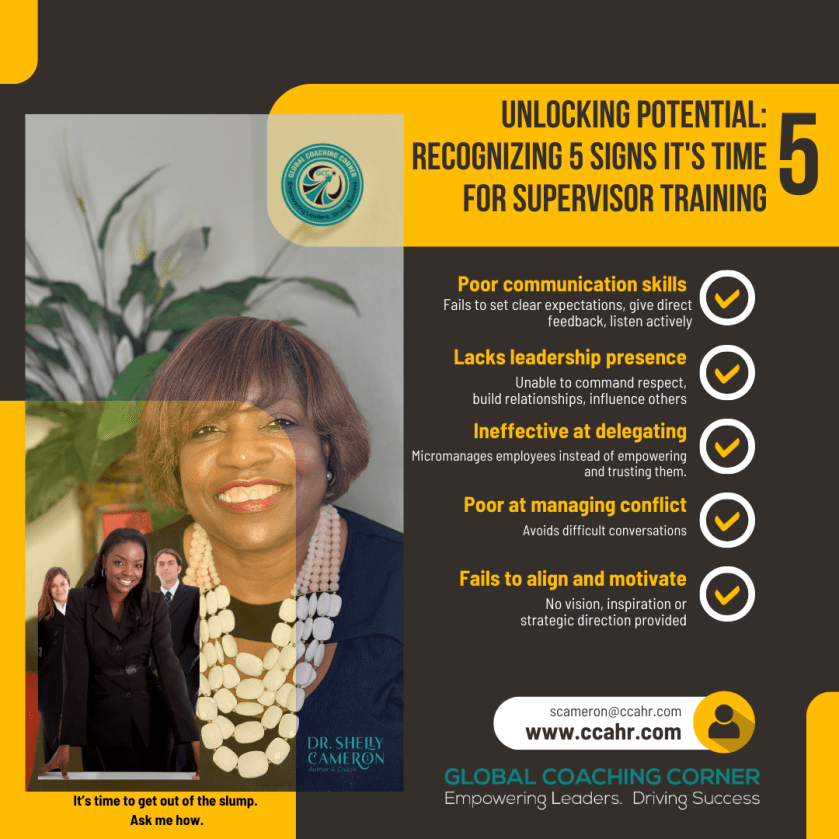
Unlocking Potential: 5 Signs It’s Time for Supervisor Training

Leadership and learning are indispensable to each other.

John F. Kennedy

New supervisors are hesitant yet eager to dive into the job. Without training, mistakes happen. Behaviors indicating the need for supervisory training are shown here. Take a look and based on your observation, identify any that may need to be corrected.

1. Poor Communication

Poor communication skills exhibited when supervisor fails to set clear expectations, give direct feedback, listen actively.

2. Lack Leadership Presence

I’m not gonna lie, leadership ain’t easy. Managers who lack leadership presence are unable to command respect, build relationships, or influence others.

3. Ineffective Delegation

Ineffective at delegating – micromanages employees instead of empowering and trusting

4. Unable to Develop Team

Supervisors are unable to develop team – little coaching or support for the team’s professional growth

5. Poor at Managing Conflict

Poor at managing conflict shown through avoiding difficult conversations. Often, they let issues fester.

6. Fails to Align and Motivate

Failing to align and motivate employees. No vision, inspiration or strategic direction provided.

Recognize any of these behaviors in yourself, co-worker, family member or friend? It’s not a tradition. There is always hope. Training, one on one or group coaching can improve the behaviors those supervising leaders can received.

Need help? Lets connect.

Lazy Days By The Seashore Meanders Among 5 Of My Favorite Things …

Lazy Days by the Seashore

The beach is my happy place

A ‘former workaholic’ I now realize the importance of work/ life balance.

Selfcare is the process of establishing behaviors to ensure holistic well-being of oneself, to promote health, and actively manage illness when it occurs. Individuals engage in some form of self-care daily with food choices, exercise, sleep, and hygiene (wiki).

As I reflect, I realize my favorite things work wonders for my relaxation and wellbeing. Here I share five things that I totally enjoy!

  1. Writing is fun!
  2. Coaching and helping others achieve success gives thrill
  3. Lazy Days by the seashore is Fun
  4. Family time is magic
  5. Peace, Quiet and times of solitude is blissful
  6. BONUS … all things spiritual is my safe place

These are a few of my favorite things. What’s yours?

Shelly. Meaning, Significance, Etymology

The beginning is always today

Mary Shelley

The question was asked… what is the meaning, significance etymology of your first name. Intrigued I search up the meaning of my first name – Shelly. Other spelling includes Shelley. Here’s what I found.

Shelley as a girl’s name is of Old English origin meaning “sloped meadow“.

It derived from the Gaelic word ‘sealbhach,’ which means ‘wealthy’ or ‘having possessions.

Origin:Hebrew. Meaning:ewe, female sheep; little rock; rest; sloped meadow. Shelly is a cute gender-neutral name with Hebrew, German, and English origins.

Some people believe Shelly is derived from Hebrew and means ‘like God. ‘ Another possible meaning from Hebrew could be ‘little lamb,’ ‘ewe,’ or ‘one with purity.

It also Means clearing on a bank.

When I was a young elementary student at a Girl Scout camp, one leader exclaimed “what a beautiful name for such an ugly girl”. She said it with a hug and a smile so I know she meant well.

My own mom (now deceased) told me that she had named me after an actress called Ellie Mae. At the time I didn’t dig any deeper but what she had mentioned was her quest for success for her daughter.

As I matured I researched the topics of success and leadership. I have published several books on both. So my mom was right.

What’s your take on your own name? Do share, we would love to hear.

Cheers.

Book Festival And Writers

Book Festival and Writers Conference February 17-18, 2024. Plan to attend. Hosted by the Urban League of Greater Miami.

I’ll be there presenting my new GreenLight book series. Writers and Readers Come join the fun, listen and hear literary artists and creatives.

5-Day Road Trip Plan To Captiva Island

Wander. Get lost on an intriguing Road Trip. Discover the new.

~Dr Shelly

Stone building designer Chrissy dreamt of getting away. She was exhausted. We connected. She was open to whatever plan I could come up with. It was awhile since she took a work break. Quickly I planned a getaway to Captiva Island, Florida. Here I share.

5-Day Getaway Plan

Day 1:
Road trip to Captiva
Lunch at Wicked Wings, a low-keyed hole in the wall pub that satisfies starving travelers before hitting the road to their final destination

Day 2:
Relax in the Sun, Sand, Sea engulfed in a delightful adventure riding the waves

Day 3:
Spa Day – Body massage, Facial, Mani and Pedi, a sure rejuvenation for the exhausted

Day 4
Shopping and Late dinner at the Harbor Side Bar and Grill

Day 5
Early morning beach wet. Late breakfast followed by reluctant afternoon drive back to the fast life.

Where’s your favorite getaway space? Do share. We would love to hear!

Cheers!

Me? A Business? That’s Crazy!

The only way to do great work is to love what you do

Steve Jobs

We all walk around with our heads low. Reading, being distracted by the the gadget–the iPhone. Competitors copy. Employers stipulate policies for and against. Regulators step in because the unscrupulous also fell for it, devising schemes that trick the unsuspecting.

Isn’t it Crazy To Think You Can Start A Business? Yet again one that will succeed? Sure, you can. Let’s take Steve Jobs for instance. He started a business doing things he liked. Things he was passionate about. Plain and Simple. He started while he was down on his luck. Then voila! With work, consistency and the right attitude, it grew.

Big Idea

So, what’s your Big Idea? If you’re passionate about it, go for it! Stay focused. Be consistent and you will achieve success for sure.

Happy crazy business building!

Travel with Intent

A photographer's view of the world - words and images to inspire your travels and your dreams

Answering daily prompts

In this blog I'm attempting to answer wordpress daily prompts

Alex Tafur

Property Maintenance

Poesy Perspectives

embrace the magic

GREENLiGHT

When God Says Go

HEALTH | INSPIRATION

Mind • Body • Life

My Sister My Friend

Family. Youth. Parenting

Kamileon Photography

Your Focus. Our Lens.