10 Protocol Keys For Aspiring Leaders Attending Professional Events

Etiquette is what you are doing and saying when people are looking and listening. What you are thinking is your business. ~Virginia Cary Hudson

Navigating business events can be challenging, especially for aspiring young adult leaders. Learn the essential Etiquette Tips to help you make a great impression. Pay keen attention to the do’s and don’ts of professional conduct, from networking to dress code, and ensure you stand out for all the right reasons! Brief chat with Executive Coach, Maxine Barnett provides an engaging snippet. Focusing on the ensuing key points will propel your personal growth.

Dressing For Success

  1. Understand the Dress Code: Research and adhere to the dress code of the organization or event. If unsure, err on the side of being slightly more formal.
  2. Professional Attire: Opt for business suits, blazers, and dress shirts for a formal setting. Business casual might include smart trousers or skirts paired with a blouse or collared shirt.
  3. Grooming: Ensure personal grooming is impeccable. Hair should be neat, nails clean, and makeup (if worn) should be subtle and professional.
  4. Comfortable Footwear: Choose polished, comfortable shoes. Avoid overly casual footwear.
  5. Minimal Accessories: Keep accessories minimal and tasteful. Avoid flashy jewelry or anything that might be distracting.

Conducting Yourself

  1. Punctuality: Always arrive on time. Plan to be there at least 10 minutes early to settle in and prepare.
  2. Body Language: Maintain good posture, make eye contact, and offer a firm handshake. These non-verbal cues convey confidence and attentiveness.
  3. Active Listening: Show that you are engaged by nodding, smiling, and taking notes. Avoid interrupting the speaker.
  4. Clear Communication: Speak clearly and concisely. Be mindful of your tone and ensure it is respectful and professional.
  5. Preparedness: Come to the meeting prepared with any necessary documents, reports, or notes. Familiarize yourself with the agenda and topics of discussion.
  6. Participation: Contribute to discussions thoughtfully. Offer insights and ask relevant questions, but avoid dominating the conversation.
  7. Respect: Show respect for all attendees, regardless of their position. Listen to differing viewpoints and avoid any negative or dismissive behavior.
  8. Technology Etiquette: Silence your phone and other devices. If you must use a laptop or tablet, do so discreetly and only for meeting-related tasks.
  9. Follow-Up: After the meeting, send follow-up emails if necessary, summarizing key points or next steps. This demonstrates attention to detail and commitment to ongoing communication.
  10. Professional Relationships: Use the opportunity to build and nurture professional relationships. Network courteously and express appreciation for the time and input of others.

By following these guidelines, you, as an aspiring leaders can present yourself as professional, competent, and respectful participants in any business meeting.

Are there any points you would like to add? Do share, we would love to hear.

Cheers!

Will Anyone Want To Read What You Write?

Raise your words not your voice. It’s rain that grows flowers not thunder ~Rumi

With exclamation signs and all the teacher sent an email titled “Important! Please read!” Parents rolled their eyes. Who wants to read a lengthy email captioned like that? The essence of what she wrote was students folders were sent home with report cards. Why not just say that? What parent isn’t interested in his/her child’s performance?

Corporate Communication

It’s the same with communication sent to employees by supervisors and managers. That’s essentially what  Aaron Orendorff   discussed in his insightful New York Times article Your Colleagues don’t read anything you write.

Simply say what you mean. No need to shout. It’s what Rumi’s quote alluded to Raise your words not your voice. It’s rain that grows flowers not thunder. 

3 Communication Gems

Personally, I walked away with three gems:

  1. Put action words in your subject line
  2. Listen more. Talk less
  3. Don’t answer. Ask

Often it’s not what we say but how. So check your manner, tone, words and how you speak. Chances are your tone precedes your voice. Something to think about.

Cheers!

Silence…

Be silent, or say something better than silence. Pythagoras

My three-year-old nephew was playing hide and seek with the other boys when one of the boys came over to hide near where I was sitting. He started giggling. I told him not to because it’s a secret. Maybe that was his first time being exposed to the word because he started shouting secret! Secret! It was hilarious!

Think Before You Speak

But what about us? Do we do the same in our daily lives, jobs, business or entrepreneurship endeavors? Do we publicize or quietly share what others tell us in secret? Do we know when to speak and when to be silent? Do we know what to to share and when to share it? Communication is key to relationships and knowing the right time to speak is even more important.

Many are the secrets that have been espoused that have destroyed organizations, relationships and families. Remember speech is silver, silence is golden.

Let’s make it a habit to think before we speak.

Cheers!

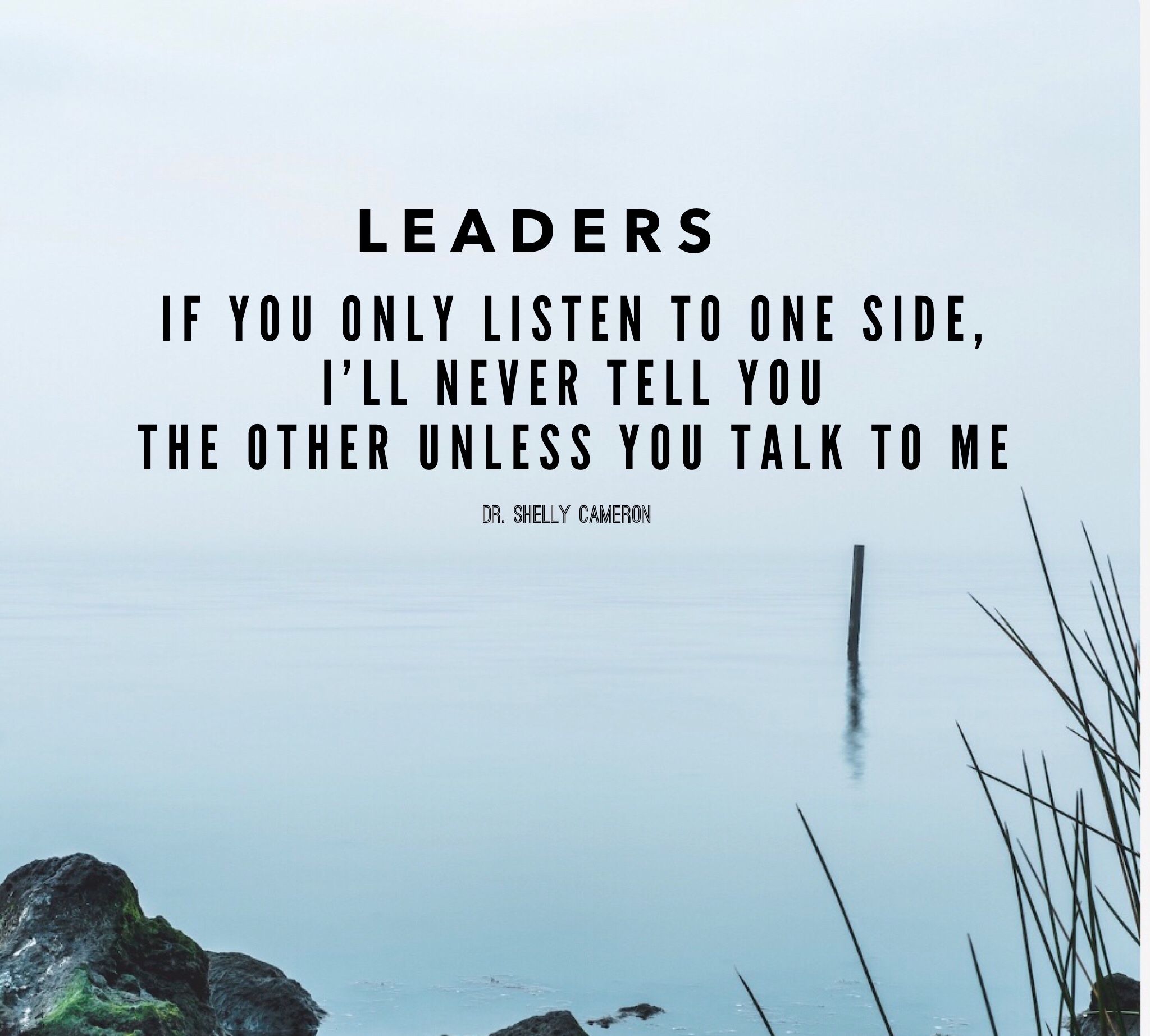
Listen Leaders, Listen…

If you only listen to one side, I’ll never tell you the other unless you talk to me. ~Dr.Shelly Cameron

No Doubt You Can Relate To This…

CNN Headline News revealed the list of the top 4 most annoying words from a study done.

Sticks and stones may break my bones but words can never hurt me.

Remember the saying sticks and stones may break my bones but words can never hurt me? Not true. Words do hurt, sometimes even more than physical pain.

CNN Headline News revealed the list of the top 4 most annoying words from a study done.

Top 4 Most Annoying Words

1. Whatever

2. Fake news

3. No offense

4. Literally

5. You know what I mean

When someone says ‘whatever‘ it means they are dismissing you or whatever you have said, and they can’t be bothered.

Whenever they say “no offense” it means they are about to offend you.

It’s often said “don’t take this literally”.  Chances are… it is literal (smile).

“You know what I mean”… most often we don’t know what they mean

So if you can Relate and  find yourself saying these words or some others, remember they hurt. Resolve to think before you speak (you know what I mean, right)? Hey no pun intended (smile).

Cheers!

Travel with Intent

A photographer's view of the world - words and images to inspire your travels and your dreams

Answering daily prompts

In this blog I'm attempting to answer wordpress daily prompts

Alex Tafur

Property Maintenance

Poesy Perspectives

embrace the magic

GREENLiGHT

When God Says Go

HEALTH | INSPIRATION

Mind • Body • Life

My Sister My Friend

Family. Youth. Parenting

Kamileon Photography

Your Focus. Our Lens.