
Which Type of Entrepreneur Are You And What’s Your Biggest Challenge?

Life’s too short to learn from your own mistakes. Learn from others.

Every entrepreneur faces moments of doubt, exhaustion, and uncertainty. First-time founders, side hustlers, and small business owners constantly navigate the ups and downs of entrepreneurship. Whether they are launching their first startup, grinding through a side hustle, or scaling past a plateau; mindset shifts and motivation is needed to keep pushing forward.

Here are the top 5 Challenges Entrepreneurs face. As you review these characteristics, which can you identify with the most?

1.The First-Time Founder (0-2 years in business)

Characteristic: Everything is new, scary, and overwhelming. They’re discovering that entrepreneurship is 10 times harder than they imagined. Every setback feels like potential failure.

What they’re dealing with:

  • Imposter syndrome at peak levels
  • No roadmap or proven process to follow
  • Financial stress and uncertainty
  • Isolation (left their corporate network behind)
  • Constant self-doubt about their decisions

How to Stay Motivated: “You’re not alone in feeling this way.” Know that “It gets easier as you learn”

2.The Side Hustler (Building while Employed)

Characteristic: They’re living a double life. They are exhausted, stretched thin, and constantly questioning if they should quit their job or give up the dream.

What they’re dealing with:

  • Working 60-80 hour weeks between job + business
  • Guilt about time away from family
  • Progress feels painfully slow
  • Watching others succeed faster
  • Energy depletion and burnout risk

How to Stay Motivated: “Your pace is valid” + “Every hour invested compounds”

3.The Struggling Scaler (Stuck at a revenue plateau)

Characteristic: They’ve proven the concept works, but can’t break through to the next level. The excitement has worn off, replaced by grinding frustration.

What they’re dealing with:

  • Revenue flatlined for 6-12+ months
  • Doing everything themselves (can’t afford to hire)
  • Comparing themselves to “overnight successes”
  • Questioning their business model
  • Burnout from working IN the business vs ON it

How to Stay Motivated: “Plateaus are part of growth” + “Breakthrough is closer than you think”

4.The Solopreneur (No co-founder, no team)

Characteristic: They make every decision alone, celebrate wins alone, and face failures alone. The loneliness is crushing.

What they’re dealing with:

  • Decision fatigue (no one to bounce ideas off)
  • Wearing every hat (CEO, marketer, accountant, customer service)
  • No one to catch them if they fall
  • Feeling like giving up but having no one to hold them accountable
  • Craving validation that they’re on the right track

How to stay Motivated: “Your independence is strength” + “Solitude doesn’t mean you’re doing it wrong”

5.The Comeback Entrepreneur (Failed before, trying again)

Characteristic: They’re carrying baggage from past failures. Every challenge triggers memories of “what happened last time.” They need courage to keep going despite the scars.

What they’re dealing with:

  • Fear of repeating past mistakes
  • Judgment from people who saw them fail
  • Financial pressure (often starting with less capital)
  • Self-trust issues (“Can I actually do this?”)
  • Imposter syndrome amplified by previous failure

How to Stay Motivated: “Failure was data, not destiny” + “Most successful entrepreneurs failed first”

Honorable Mentions:

  • The Mid-Life Career Changer: Left stability for uncertainty, facing age discrimination and “what have I done?” panic
  • The Minority/Underrepresented Entrepreneur: Fighting systemic barriers while building, needing validation in spaces that don’t always welcome them
  • The Post-Pivot Founder: Had to abandon their original idea and start over, grieving the old vision while building the new one

Which did you identify with most? Deeply reflect and if you need help, let’s connect.
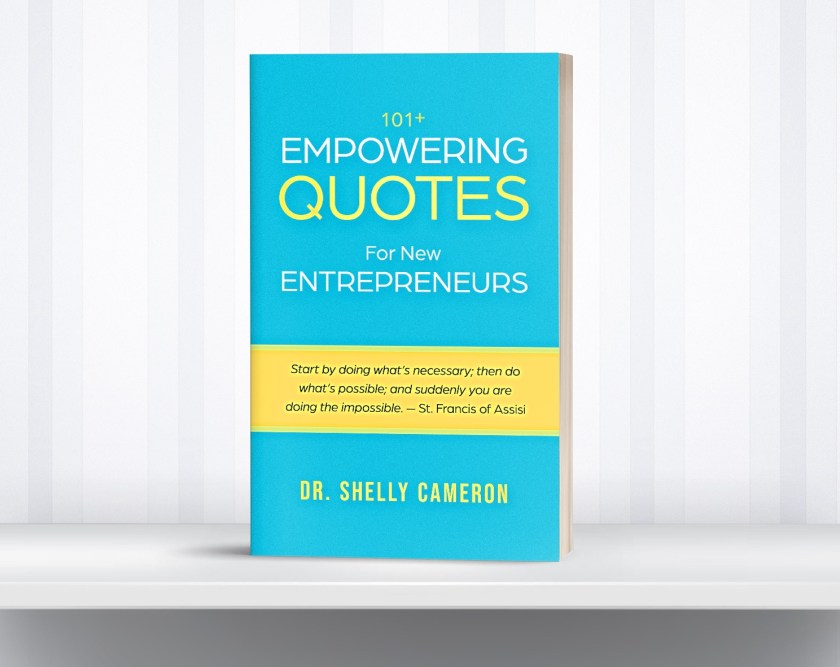
Otherwise, gift a copy of 101+ Empowering Quotes to the entrepreneur in your life. It’s available in eBook, paperback, and hardcover formats, all under $20. It’s the thoughtful gift that fits in a stocking and inspires all year long.

What makes this gift special? It’s genuinely useful. Unlike generic presents that collect dust, this book becomes a go-to resource on tough days. The portable size fits perfectly in stockings, bags, and on desks. And at under $20, you can afford to gift it to your entire network of entrepreneurs, coworkers, or team members.

Give the gift of daily inspiration. Give them the reminder that they’re not alone in this journey.


What’s The Perfect Door Prize? 21 Gift Ideas for Networking Events That Shine

Show up. Let yourself be seen. ~Brene Brown

What’s a networking event without door prizes? Boring (smile). So, event organizers encourage gifts. They are a simple yet powerful way to boost engagement, excitement, and attendance at networking events. They create a sense of the anticipation and fun, making the event more memorable for participants. Door prizes also encourage people to arrive on time, stay longer, and interact more freely with others. Besides entertainment, they offer a subtle marketing opportunity for sponsors, hosts, or businesses to showcase their products or services in a positive light.

The PSL Business Club asked the question: What is the Perfect door prize to give away at networking events?” Members chimed in. Some suggested giving what you would like to receive. Others suggested giving away high-end gifts that will make you the talk of the event. Gift these over several periods and you’re sure to leave a lasting memory. Here I share key gift ideas extracted as members chimed in.

Gifts That Shine

  1. Wellness bundle energy drinks
  2. Journal, fun pen, small devotional or motivational card set
  3. Cute mugs which says “let’s connect over coffee”
  4. Pair a small gift care ($10-$15) with a handwritten note or business card enclosing a product sample
  5. Branded item that’s actually helpful
  6. Gift cards to local restaurants.
  7. Something useful like Coffee gift cards
  8. Wine or Vodka
  9. Dark chocolate and a gift card or voucher to try branded services
  10. Cool shirt
  11. Stanley or Yeti cup
  12. Gift baskets
  13. Branded swag bundle from the host company
  14. Branded items or one/two from local businesses or gift certificates
  15. Candy
  16. Homemade cookies
  17. Hand-painted items
  18. Chocolates from a chocolatier
  19. Beach accessories
  20. Fun items that’s non-business related
  21. Dot card… to make sharing information easier at networking event

High-End Gifts

Higher end gifts creates a lasting memory of your brand. Such gifts are:

  • Massage or Spa packages
  • Weekend getaway at hotel
  • Dinner for two at a high-end/classy restaurant
  • Tickets to a concert/play

There you have it! Here’s hoping it takes the guess work out of your gift giving when attending your next event.

9 Investment Strategies For New Entrepreneurs On A Tight Budget

Don’t get distracted. Never tell yourself that you need to be the biggest brand in the whole world. Start by working on what you need at the present moment and then what you need to do tomorrow. So, set yourself manageable targets.

Jas Bagniewski

20% of new startups fail within the first year of business. This can be scary for first time entrepreneurs. So, the more prepared small businesses are, the more they can survive especially as it concerns making bold marketing steps which require some upfront investment. That said, here are some ideas to counteract those costs for a new business owner on a tight budget:

  1. Leverage free platforms – For example, start a free blog, post on LinkedIn, use free webinar services, publish a podcast using free hosting.

2. Barter services – Exchange things like hosting an event or providing content in return for exposure from partnerships.

3.Get sponsorships – Seek sponsorships from vendors/partners to help fund events, ads, giveaways. Offer sponsor visibility.

4. Use DIY options – Design your own simple website, create your own flyers, give free talks at local libraries versus paid venues.

5. Offer packages – Offer bundles and multi-session discounts to incentive larger purchases to increase revenue.

6.Be guest instead of host – Guest blog, speak at other events instead of funding your own. Reduces costs.

7. Tap into your network – Ask connections to share content, provide referrals, submit testimonials, write guest posts.

8. Focus locally first – Start by promoting heavily just within your local community to establish proof of concept.

9. Only invest where needed – Don’t overspend on unnecessary items. Prioritize money only where it will derive direct value.

Essentially, the goal is to maximize existing free resources and opportunities where you can exchange services. The aim is to become creative in order to access cost-effective resources until you gain proof of return on investment, then you can increase spending.

Which of the methods have you used? Can you add another method that has proven helpful? Do share. We would love to hear.

Cheers!

10 Tips On How To Coach Employees on Career Development Without Micromanaging

Change a game.

Change a life.

A good coach can change a game. A great coach can change a life.

John Wooden

She ran to the restroom and screamed. Sabrina had a job to do, and her manager knew she could do it well, but she kept questioning her over the past six months. As the year-end drew near, the project was near due. But the constant checking in was more of a time waster than productive. Sabrina became frustrated. How could she tell her manager to allow her to focus?

Coaching employees on career development without resorting to micromanagement requires a delicate balance of support, guidance, and autonomy. As a leadership coach, I recommend employing a coaching approach that fosters individual growth and self-driven progress is important. Here’s a brief summary of 10 tips on how to approach this:

  1. Establish Trusting Relationships: The foundation of effective coaching is trust. Build strong, open, and honest relationships with employees, creating a safe space for them to share their career aspirations, concerns, and challenges.
  2. Active Listening: Actively listen to employees, understand their goals, strengths, and areas for improvement. By attentively hearing their needs, supervisors can tailor coaching discussions to their unique career paths.
  3. Goal Setting: Together with employees, collaboratively set clear, SMART (Specific, Measurable, Achievable, Relevant, Time-bound) goals. This ensures that their career objectives are well-defined and realistic.
  4. Empower and Encourage: Instead of micromanaging, empower employees to take ownership of their career development. Encourage them to seek out opportunities, challenge themselves, and take initiative in their professional growth.
  5. Provide Resources: Offer guidance on available resources, such as training programs, workshops, or mentorship opportunities, that can aid employees in acquiring new skills and knowledge aligned with their career goals.
  6. Feedback and Reflection: Promote a culture of continuous feedback and reflection. By offering constructive feedback and encouraging employees to assess their progress, they become more self-aware and adaptable.
  7. Accountability: Employees are encouraged to hold themselves accountable for their career development. As a leadership coach, it is recommended that supervisors help employees establish milestones and regularly check in on their progress without micromanaging their day-to-day tasks.
  8. Supportive Coaching: Through regular coaching sessions, provide a supportive framework where employees can discuss challenges, seek guidance, and refine their strategies for career advancement.
  9. Celebrate Achievements: Recognizing and celebrating milestones and achievements is crucial for motivation. Acknowledge employees’ accomplishments, reinforcing their sense of progress and satisfaction.
  10. Adaptability: Recognize that career paths may evolve, be flexible and adapt coaching strategies to align with changing goals and circumstances.

By coaching employees in this manner, we can empower them to take control of their career development journey. It fosters a sense of autonomy, motivation, and engagement while avoiding the pitfalls of micromanagement. Ultimately, the goal is to help individuals thrive and achieve their career aspirations in a supportive and non-intrusive manner.

To Fail Or Not To Fail? Entrepreneurs Speak…

Dr. Shelly's avatarSuccess Strategies

Failure will never overtake me if my determination to succeed is strong enough. ~Og Madino

To fail or not to fail? That is the question. Fail Fast. How about don’t fail at all?  That was the statement James Altucher posed in a public forum. Entrepreneurs jumped in sharing their beliefs, values and thoughts on the concept of failure.  Names have been omitted as I share excerpts:

What It Means To Fail

  • A person who hasn’t failed is more likely to have never been successful
  • The message of “fail fast” is not to encourage failure. What it speaks to is moving action with ideas instead of analysis paralysis and never-ending planning. No amount of analysis and planning can prepare you for the reality of launching something. This is what “fail fast” means. It does not mean to emphasize failure. Build it (now). Measure it. Learn from it.
  • The wisdom in “failing fast”…

View original post 432 more words

7 Biggest Recruitment Mistakes Business Owners Make And How To Avoid Them

Financial drain. Legal Risks. Frustrating people problems. Not cool at all. Totally not cool. Mark owns a small Crisp insurance agency where he hires various professionals to manage his clients needs. Because of the market demands his business has been growing faster than anticipated over the past 3 years. His desire to meet the demand has caused him to hire anyone he interviews. Faced with problems in different areas, he does not understand the Hidden reasons some of his workers have quit, not met their job requirements, while others are disgruntled because they have had to do the job of the team members who have slackened, or quit.

Sounds familiar? Sure! It happens so very often and leads to wasted resources. As a professional with a track record of solid business management, I have looked at some of the BIGGEST Recruitment Risks Companies Make That Expose Them To Damaging Financial Drain, Frustrating People Problems, and Serious Legal Risks. I have listed the top 7.

The 7 BIGGEST Recruitment Mistakes Business Owners Make

1. Panic (warm body hiring)

2. Don’t Know Their Why | Business strategy  misalignment

3. Wrong Source of supply

4. One-size-fits-all Interview Specs

5. Compensation Woes

6. The Next Step Disconnect

7. Revolving Cycle That Leads to Financial Drain

If you are a business owner or self-managed leader and these 7 Mistakes resonate, then do something about it. Connect with me to get the full details on these 7 Mistakes, and learn the Polished strategies to avoid them. Can’t wait to connect!

Cheers!

Follow me on Instagram for Daily Motivation.

Travel with Intent

A photographer's view of the world - words and images to inspire your travels and your dreams

Answering daily prompts

In this blog I'm attempting to answer wordpress daily prompts

Alex Tafur

Property Maintenance

Poesy Perspectives

embrace the magic

GREENLiGHT

When God Says Go

HEALTH | INSPIRATION

Mind • Body • Life

My Sister My Friend

Family. Youth. Parenting

Kamileon Photography

Your Focus. Our Lens.