Take time to deliberate, but when the time for action has arrived, stop thinking and go in. ~Napoleon Bonaparte
Ever found yourself checking and rechecking about a decision you have to make. It might be a presentation, a college selection, submission of a business proposal or even a marriage proposition (yikes)! It happens. It’s called overthinking which is defined as:
Putting too much time into thinking about or analyzing (something)
Overthinking is one of the biggest blocks for both leaders and business owners because it drains time, energy, and confidence. Here are 3 tips to stop overthinking.
1. Decide. Then Detach
Perfection isn’t progress. Once you’ve made a well-informed decision, commit then detach from the fear of “what if.” Every decision gives feedback: it either moves you forward or teaches you what to adjust. Leaders who wait for certainty often miss their moment.
Try this: Set a “decision deadline” give yourself 24 hours to choose, then move on confidently.
2. Shift From Thinking to Doing
Action is the antidote to overthinking. When you’re stuck in analysis, your mind loops on the same thoughts. But when you take even a small step, such as sending the email; posting the content, calling the client; actions like these contributes to you gathering real data, not imagined fears.
Ask yourself: What’s one small action I can take right now?
3. Practice Mental Stillness
Overthinking thrives in noise. Silence and stillness help you separate truth from fear. Try journaling, prayer, or a five-minute “mind reset” before diving into decisions. It’s not laziness, it’s leadership discipline.
Remember: Still minds make strong moves.
COACHING INSIGHT
Overthinking often signals self-doubt, not lack of skill. Leadership coaching helps identify those inner beliefs and build confidence. It then replaces the cycle of worry with a rhythm of wise action.
How about you? Are you an overthinker? Which of the 3 tips can you implement now? On the other hand, were you an overthinker? If so, how did you get over it? Do share. We would love to hear.
All I want for Christmas is …. the Pain to go away! The Pain of Not knowing what to do about your next steps has many effects. And year-end triggers deep reflection. Here are a few pain points:
Underdeveloped Potential:
Talented individuals Stay Stuck in survival mode. They fail to unlock their genius because no one helps them think strategically about their Growth.
Career Plateau
Professionals with great resumes stall out due to poor networking, weak positioning, or self-limiting beliefs.
Global Irrelevance
In our rapidly changing world where soft skills, emotional intelligence, and AI adaptability are important assets, people fall behind.
Silent Suffering
Many carry silent frustrations. “I’m better than this, but I don’t know how to rise”.
COACHING is the bridge out of that quiet despair 💥 If One or two resonate of these pain points resonated with you:
Thanksgiving may have passed, but the spirit of gratitude is one of the most powerful leadership tools we carry into the rest of the year.
This is the season where leaders shift from reflection to readiness. While many people slow down mentally, high-impact leaders use this window to recalibrate. It’s not about rushing to finish tasks. It’s about finishing the year with clarity and intention.
Gratitude sharpens our focus. It grounds our decisions. And it reminds us that leadership is not measured only by what we achieve, but by who we become along the way.
As we move toward the close of 2025, here’s a question I encourage leaders to sit with:
What is ONE decision you can make right now that will set you up for meaningful growth in 2026?
This may be a decision to: • Delegate more intentionally • Step into a new direction • Release what no longer aligns • Seek clarity before making your next move • Invest in development (your own or someone else’s)
The weeks between Thanksgiving and New Year are the most underestimated leadership window, and yet one of the most powerful. Small shifts made now create profound momentum in the new year.
If you are a leader navigating transition, stepping into a new role, launching something new, or simply needing clarity for 2026, support is available.
And if you know someone in your organization, circle, or family who needs that guidance… this season is the perfect time to gift it.
Let’s finish strong, lead with intention, and walk boldly into the year ahead.
Who looks outside dreams; who looks inside, awakens. ~Carl Jung
As the year closes, the most effective leaders are the ones who pause long enough to evaluate, realign, and elevate. These 12 questions are designed to help you step confidently into 2026 with clarity, courage, and intention.
Take a moment to reflect on each. Use them to guide your vision, your team, and your next level of growth. Strong leadership doesn’t happen by accident. It’s built through awareness, alignment, and action.
Reflection Questions
1. What are my top 3 leadership wins from 2025?
2. What drained my energy this year, and why?
3. What habits strengthened my leadership?
4. What habits weakened it?
5. What opportunities did I ignore that I should revisit?
6. What does success look like for me in 2026?
7. What limiting belief must I leave behind?
8. Who do I need to become next year?
9. What relationships do I need to nurture?
10. What boundaries do I need to create?
11. What skills must I develop or sharpen?
12. What is ONE bold move I will take before Jan. 31?
If you’d like support creating a strategic leadership plan for the new year, join the year-end and January coaching sessions. This is designed for leaders in transition and professionals preparing for a stronger 2026.
What will you do differently next year? Which question resonated with you the most? Do share. We would love to hear.
Ann, a historian and extreme planner, had an adventurous time touring Greece with her husband. During the trip, she shared photos of places she had learned in her undergraduate program. As they began their return trip, civil unrest occurred blocking all flights to leave Turkey, cruise and all. Quick decision, they decided to get out of the country whichever way they could. Both landed in Paris, only to be separated to get back home to the USA. Separation was a non-issue. Their goal was to return safely to their two kids waiting back home.
Times of Crises
There are times of crises as in Ann’s case. But most often we do have opportunities to plan ahead. Financiers will preach that we should plan for times of crises too.
Why is it important to set goals? Because if you don’t know where you’re going, any road will take you there. Where you will end up, who knows? That’s when you will just have to go with the flow.
Goalsetting is the process of identifying desired outcomes and creating a plan of action to achieve them, providing a sense of direction, motivation and focus
So why do we need to set goals? Because setting goals is the process of identifying desired outcomes and creating a plan of action to achieve them, providing a sense of direction, motivation and focus.
That’s the reason it a pleasure to facilitate the writing process with authors. The event was held at the Broward County’s West Regional Library in Plantation, Florida. This session focused on Writers Goal Setting for 2026 books through the Writers Group of South Florida.
If you are an aspiring author, or are ready to take your leadership to the next level and need a copy of the Goal-Setting guide, connect to get yours today. Leadership Assessment also available.
Not an author but ready to take your leadership to the next level through setting your 2026 goals, let’s chat. Referrals are warmly welcomed.
Life’s too short to learn from your own mistakes. Learn from others.
Every entrepreneur faces moments of doubt, exhaustion, and uncertainty. First-time founders, side hustlers, and small business owners constantly navigate the ups and downs of entrepreneurship. Whether they are launching their first startup, grinding through a side hustle, or scaling past a plateau; mindset shifts and motivation is needed to keep pushing forward.
Here are the top 5 Challenges Entrepreneurs face. As you review these characteristics, which can you identify with the most?
1.The First-Time Founder (0-2 years in business)
Characteristic: Everything is new, scary, and overwhelming. They’re discovering that entrepreneurship is 10 times harder than they imagined. Every setback feels like potential failure.
What they’re dealing with:
Imposter syndrome at peak levels
No roadmap or proven process to follow
Financial stress and uncertainty
Isolation (left their corporate network behind)
Constant self-doubt about their decisions
How to Stay Motivated:“You’re not alone in feeling this way.” Know that “It gets easier as you learn”
2.The Side Hustler (Building while Employed)
Characteristic: They’re living a double life. They are exhausted, stretched thin, and constantly questioning if they should quit their job or give up the dream.
What they’re dealing with:
Working 60-80 hour weeks between job + business
Guilt about time away from family
Progress feels painfully slow
Watching others succeed faster
Energy depletion and burnout risk
How to Stay Motivated: “Your pace is valid” + “Every hour invested compounds”
3.The Struggling Scaler (Stuck at a revenue plateau)
Characteristic: They’ve proven the concept works, but can’t break through to the next level. The excitement has worn off, replaced by grinding frustration.
What they’re dealing with:
Revenue flatlined for 6-12+ months
Doing everything themselves (can’t afford to hire)
Comparing themselves to “overnight successes”
Questioning their business model
Burnout from working IN the business vs ON it
How to Stay Motivated: “Plateaus are part of growth” + “Breakthrough is closer than you think”
4.The Solopreneur (No co-founder, no team)
Characteristic: They make every decision alone, celebrate wins alone, and face failures alone. The loneliness is crushing.
What they’re dealing with:
Decision fatigue (no one to bounce ideas off)
Wearing every hat (CEO, marketer, accountant, customer service)
No one to catch them if they fall
Feeling like giving up but having no one to hold them accountable
Craving validation that they’re on the right track
How to stay Motivated: “Your independence is strength” + “Solitude doesn’t mean you’re doing it wrong”
Characteristic: They’re carrying baggage from past failures. Every challenge triggers memories of “what happened last time.” They need courage to keep going despite the scars.
What they’re dealing with:
Fear of repeating past mistakes
Judgment from people who saw them fail
Financial pressure (often starting with less capital)
Self-trust issues (“Can I actually do this?”)
Imposter syndrome amplified by previous failure
How to Stay Motivated: “Failure was data, not destiny” + “Most successful entrepreneurs failed first”
Honorable Mentions:
The Mid-Life Career Changer: Left stability for uncertainty, facing age discrimination and “what have I done?” panic
The Minority/Underrepresented Entrepreneur: Fighting systemic barriers while building, needing validation in spaces that don’t always welcome them
The Post-Pivot Founder: Had to abandon their original idea and start over, grieving the old vision while building the new one
Which did you identify with most? Deeply reflect and if you need help, let’s connect.
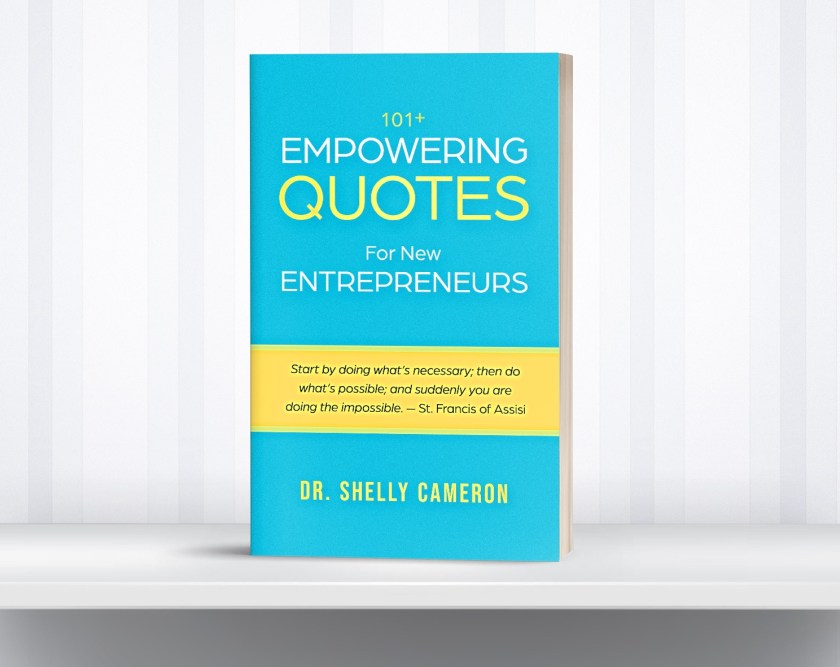
Otherwise, gift a copy of 101+ Empowering Quotes to the entrepreneur in your life. It’s available in eBook, paperback, and hardcover formats, all under $20. It’s the thoughtful gift that fits in a stocking and inspires all year long.
What makes this gift special? It’s genuinely useful. Unlike generic presents that collect dust, this book becomes a go-to resource on tough days. The portable size fits perfectly in stockings, bags, and on desks. And at under $20, you can afford to gift it to your entire network of entrepreneurs, coworkers, or team members.
Give the gift of daily inspiration. Give them the reminder that they’re not alone in this journey.
Midlife transitioners face feelings of sadness especially when work, independence and purpose feel out of reach. This is a common scenario I have found in my coaching practice amongst mature women. They complain, sulk and feel ‘why bother’ (as in the case of a recent discussion). For women experiencing these feelings, here are 7 thoughtful strategies of how 50+-year-old women in this situation can begin moving forward. Adopting these strategies can help them regain control of their life, emotionally, practically, and spiritually.
1.Start With Emotional Healing
Before any external progress, healing the inner voice is key.
Acknowledge your feelings; grief, frustration, even shame, as valid. You’re not alone; many older adults feel invisible or “left behind” as the four stages of elimination in life profess.
Seek emotional support: a counselor, therapist, or support group for midlife depression can help rebuild self-worth.
Practice daily motivation and affirmations: “My life still has purpose.” “I am capable of starting again.” Small mindset shifts add up.
Faith & reflection: If you’re spiritually inclined, journaling prayers or reading devotionals about renewal (e.g., Isaiah 43:19… “Behold, I am doing a new thing…”) can anchor your hope.
2.Rebuild Self-Worth and Confidence
Depression often comes from feeling “useless,” so rediscovering value is important.
Revisit strengths and experiences. Make a list of past achievements, career skills, and life lessons.
Volunteer or mentor. Helping others (e.g., tutoring, mentoring younger professionals, or supporting community causes) reminds her that her wisdom matters.
Refresh her image. A new hairstyle, headshot, or wardrobe doesn’t just change how others see her — it helps her feel renewed.
3.Redefine Purpose and Direction
You may be entering a new season, not the end of your working life. Shift from “job-seeking” to “value-offering.” Instead of asking “who will hire me?” you should ask, “where can my experience help someone solve a problem?”
Consider flexible or freelance work:
Virtual assistant or remote admin work
Customer service, tutoring, or caregiving
Consulting in your former field
Selling crafts, baked goods, or eBooks online
Take free online courses (Coursera, Google Digital Skills, LinkedIn Learning) to update your skillset and confidence.
4.Improve Her Job Search Strategy
Age can be an advantage when presented with confidence and skill.
Update your resume and LinkedIn profile. Focus on experience, reliability, and mentoring skills rather than long timelines.
Network quietly and personally. Reach out to old colleagues or community connections; many opportunities come through relationships, not job boards.
Seek community or senior resources: local housing or utility assistance programs, food banks, or financial coaching through nonprofits.
Budget for empowerment, not punishment. Even small control (like managing one bill or goal) restores agency.
Explore part-time or gig work (e.g., Instacart, pet-sitting, or online micro-tasks) as temporary bridges.
6. Build a New Daily Routine
Structure gives life purpose.
Morning: prayer, gratitude, short walk
Midday: job search, learning, or volunteer time
Evening: journal one positive action from the day Even a simple daily rhythm can counter the “stuck” feeling.
7. Believe in Renewal
It’s never too late to rebuild. Many people in their 50’s and beyond start new careers, businesses, and callings. Your story isn’t over…it’s shifting. Be encouraged. See yourself not as “unemployed,” but as “relaunching.”
Reflection:
“If I could start fresh today, what small step would make me feel proud by the end of this week?”
Hope these strategies help you overcome these feelings of apathy. If you’re not in that sphere and know someone who might be, please share with them. We are also here to help women regain confidence for their new chapter.
What’s an Author and Leadership Coach presenting at a Garden Fall Festival? Aah but there are similarities. My work is about Personal Growth. Just like farmers plant seeds, all of us plant Goals. The idea is to water and care for them just like we do plants.
Personally, I love plants but I’m a ‘plant killer’, be it orchids or other beautiful plants. They all end up withered. As time passed, I started gifting them or hiring professionals to care for them. That’s a gift that I didn’t get.
Against that background, here I share 3 points that I hope will help you reflect this Fall.
1.Plant with Intention
Every great harvest begins with a seed, and so do your dreams. Whether your goal is to start a business, write a book, get healthier, or grow spiritually, you must plant it intentionally. Don’t just wish, sow. Choose what you want to see in your future and begin with small, consistent actions.
2.Nurture with Patience
A seed doesn’t sprout overnight. It takes watering, sunlight, and care. Likewise, your goals need patience, persistence, and faith. You may not see progress immediately, but don’t stop nurturing your vision. Keep showing up, keep learning, and trust the process.
3.Protect Your Growth
Every garden has weeds and pests—and life has distractions and doubts. Protect your goals from negativity, procrastination, and fear. Surround yourself with people and environments that feed your growth, not drain it.
4.Reap With Gratitude
When your harvest comes, whether it’s success, a new opportunity, or even lessons learned, celebrate it. Give thanks for the journey, the people who supported you, and the challenges that helped you grow stronger.
This Fall, as we celebrate the physical harvest around us let’s also think about the seeds we’re planting in our lives. Because what you plant today you harvest tomorrow.
So plant wisely, nurture faithfully and reap joyfully. Thank you, and may your harvest overflow with abundant blessings.
Get Ready for a change this season by connecting now. Level up your motivation with your copy of Motivational Quotes Book available now.
As the spooky season approaches, it’s not just ghosts and goblins giving people chills. Sometimes leadership habits can be downright spooky!
1. The Invisible Leader
Disappears when the team needs them most. No feedback, no presence, just crickets.
FIX: Show up. Visibility builds trust. A simple check-in can turn uncertainty into motivation.
2.The Zombie Communicator
Repeats the same messages with no real emotion or connection. Team meetings feel lifeless.
FIX: Revive communication! Be intentional, listen actively, and personalize your message.
3.The Vampire of Ideas
Sucks up all the credit and leaves others drained. Recognition? Nowhere in sight.
FIX: Share the spotlight. Empower your team and celebrate contributions publicly.
This season, take a moment to unmask your leadership style. Make sure you are not the one haunting your workplace and if you are, let’s connect to clear the spookiness.
Are there thoughts you would like to add? Do share. We would love to hear.
I am Somebody. We are Somebody. ~ Dr. Ralph Hogges
Beyond the Bend of Trees Avenue
By Patricia Reid-Waugh
You would think that a street named ‘Trees Avenue’ would be lined with tall, manicured trees of exotic variety, standing like sentries on either side of the roadway. Strangers entering the L-shaped avenue might imagine that around the bend, leafy branches would shield them from the blistering sun, and a rustling chorus of leaves would welcome them. But such was not the street on which I lived.
My ‘Trees Avenue’ was no different from other residential roads nearby, paved in asphalt, with a strip of grass separating the roadway from the walls of each property. Neither my parents nor the other homeowners thought it important to give the street a personality matching its name. To the casual visitor, it looked tidy, pleasant, but rather ordinary.
The houses stood close to the front boundaries, verandahs stretching wide to court the evening breeze. These verandahs became living rooms in their own right, alive with laughter, morning greetings, neighborly gossip, and the occasional raised voice.
I remember my people; like a piece of sweet, firm sugar cane spilling its juice over my tongue and lips; lips framing expressions of a language of thunder and soft rain. My roots – peopled with characters of such unassuming elegance I could not really see them until, exiled, I craved remembrances like sweet sugar cane. What sweeter dance than a handcart man, lithe, muscled – swinging and dipping, black sinews rippling their way down Orange Street.
Journey to Spiritual Growth: A Path Toward Lasting Transformation
By Dr. Delores Smiley
Journey to Spiritual Growth is a Christ-centered ministry designed to guide believers toward a deeper, more intentional walk with God. Rooted in the call to “love the Lord your God with all your heart, soul, mind, and strength,” this ministry provides practical tools and clear teachings to help individuals grow in spiritual knowledge, examine their hearts, and live out the commandments of love – preparing for heaven as the ultimate home. It recognizes that faith is not a single event but a lifelong journey that calls us to grow in understanding, surrender our hearts, and live out the commandments of love.
If you can’t pay it back, pay it forward. ~Catherine Ryan Hyde
Standing in line at the cashier, I decided to pay with the cash I had on hand. The amount came to the exact dollar amount in my wallet, except it needed thirteen cents more. I rummaged through my handbag to cover the difference. The woman behind me said, “Hey, I’ll get it for you.”
Instead of accepting her offer, I searched frantically for the coins, only to remember that I keep my change in the car. She repeated gently, “I’ll get it.” I insisted that I would pay her back when we got outside. She simply replied, “Pay it forward.” Immediately, I understood and promised I would.
I left the store, found the coins in my car, and was about to give her a quarter as she exited. Then I was reminded of her words about paying it forward. I took a deep breath, sighed, and drove away.
How many times has this happened to me? I genuinely like to give but am always hesitant to receive. As I coach my clients, I recognize it’s important to do both—give generously and also be willing to accept graciously in return. One friend once countered my reluctance by saying, “Don’t stop my blessings.”
Leaders Struggle
This simple exchange reveals a profound leadership lesson about the grace of receiving. Many leaders struggle with accepting help, viewing it as weakness or loss of control. However, graceful receiving is actually a powerful leadership skill that creates deeper connections and empowers others.
When we refuse help, we inadvertently rob others of the joy of giving and contributing. We also model unhealthy self-reliance that can isolate us from our teams and communities. The most effective leaders understand that accepting assistance with gratitude creates a culture of mutual support and reciprocity.
Consider this: Every time someone offers to help you—whether it’s covering thirteen cents, sharing an idea, or taking on a task—they’re extending trust and care. Your gracious acceptance validates their value and strengthens the relationship.
Challenge yourself this week to practice receiving with the same intentionality you bring to giving. Say “thank you” instead of “you didn’t have to.” Accept compliments without deflecting. Allow others to contribute to your success. Remember, true leadership isn’t about having all the answers or resources—it’s about creating an environment where everyone can contribute their gifts, including to you.
Pay it forward, yes. But first, allow yourself to receive what’s being offered.