At a gathering, family and friends were asked to reflect. Sonia asked each to share one thing they were thankful for. Marriage, graduation, opportunities, sports achievement, divine protection, new car, life and the aged still living were among the thoughts shared.
But one thing stood out. As Stephan ended giving thanks collectively in prayer, shouts rang out at her thoughts that hit home. Many rushed with hugs and adoration, but one stood out. George turned to her mom and pointed at her. Without saying a word, his action said it all. Mom had passed the baton to Stephan and stood watching as the group embraced. Indeed mom felt pride that her labor was not in vain.
Before the New Year Begins
As the year comes to a close, leaders are already thinking about goals, plans, and next moves. But before we rush into the next chapter planning our dreams and aspirations, there’s value in pausing to reflect.
Personal growth doesn’t always show up as promotions, metrics, or public wins. Often, the most meaningful growth happens quietly.
This year, growth may have looked like:
Choosing courage when fear was familiar.
It may have meant staying committed when quitting felt easier.
Or letting goof roles, relationships, or expectations that no longer aligned with who you’re becoming.
Understand that Leadership begins within. Before we lead teams, organizations, families or communities forward, we must first acknowledge our own evolution.
As you prepare for the new year, consider these questions:
Who have I grown into this year?
What did this season teach me about myself?
What alignment (not perfection) do I want to carry forward?
Clarity comes after commitment
You don’t need every answer before January 1st. Clarity often comes after commitment.
As the calendar turns, may the next year be marked by your:
Intentional leadership
Purposeful growth
The courage to move forward aligned with who you truly are.
Reflection:
What is one lesson this year taught you about your leadership or personal growth? Think about it. Acknowledge it and Do share. We would love to hear.
Write. Rewrite. When not writing or rewriting, read. I know no shortcuts. ~Larry L. King
Where do I write? In a quiet place. A place where I can hear my thoughts, the stirrings of my heart, my soul. I write whenever it hits. I must stop, record, write. If I do not do so immediately; in a flash, it’s gone. So I have learnt to capture the words as they come. Anywhere, anytime, anyhow.
Create the Mental Space To Write
Here are some thoughtful ways to create that mental space without spending money:
Transform a familiar space into something new. Rearrange your bedroom or living room completely. Move furniture, change what’s on the walls, even face your bed a different direction. The psychological shift of being in a “new” environment can be surprisingly powerful for fresh thinking.
2. Create a personal retreat schedule at home. Pick a day where you treat your home like a retreat center; no work, no obligations, phone on airplane mode. Wake early.
Do some stretching or meditation,
Make yourself a special breakfast with what you have
Spend blocks of time journaling or thinking through your goals
Take a long walk,
Prepare meals mindfully.
The structure and intentionality matter more than the location.
3. Explore your area like a tourist. Walk or bike to neighborhoods you’ve never been to, even if they’re just a few miles away. Bring a journal and find a park bench, a library reading room or quiet corner in a coffee shop (you don’t have to buy anything). Simply find a place where you can sit and think. The act of physically moving through new spaces often helps mental clarity.
4. Do an overnight “camping” experience somewhere free. Your backyard, a friend’s yard, a balcony, or even just sleeping in a different room with the windows open (yikes)! The change in where you sleep and wake can genuinely shift your perspective.
5. Visit a place of worship or quiet public space. Many churches, temples, or meditation centers welcome people to sit quietly even if you’re not a member. Libraries, botanical gardens, or even certain hospital chapels can offer peaceful refuge for reflection.
The key is breaking your normal patterns (different sights, sounds, routines, even in the sky). This helps your brain step out of autopilot mode and think more expansively about your future.
Here’s hoping these tips will help you as they did me. Where’s your favorite space to write? Any missing that you would like to add? Do share. We would love to hear.
Making money is easy. It is. The difficult thing in life is not making it. It’s keeping it. ~Jim Rohn
Sophie reflected on the plans she desired to achieve. The challenge? Achieving them required money beyond her regular earnings to cover monthly expenses (mortgage, childcare, general living). But what about things like student loan debt, a special birthday getaway trip? Things that are not the norm but the exception? Things that your regular budget will not allow? Not to mention income diversification and financial independence. These are so important these days yet it seems out of reach for many. Here are 10 side hustles for the brave goal hustler:
Financial Coaching or Career Coaching (High Demand). Perfect if you enjoy guiding people. You can specialize in:
Budgeting + debt payoff coaching
Career coaching for early professionals in finance
Money-mindset coaching
Financial wellness workshops for small businesses
Income Range: $75–$250/hour Why it works: People need guidance but don’t always need a financial advisor.
Bookkeeping Services for Small Businesses. Many small entrepreneurs don’t need a full CFO, just someone to handle:
QuickBooks setup
Monthly bookkeeping
Payroll
Reconciliation
Income Range: $300–$2,500 per client monthly Easy entry: QuickBooks and Xero both offer certifications.
Freelance Financial Analyst. Offer your skills on platforms like Upwork or Fiverr. Build financial models:
Market analysis
Profitability reviews
Budget creation
Forecasting
Income Range: $30 – $150/hour Why it works: High-demand specialized skillset.
Tax Preparation (Seasonal but Lucrative). If you’re familiar with taxation, this is one of the most reliable recurring side hustles.
Individual tax returns
Small business tax support
Tax planning sessions
Income Range: $150–$1,500 per client Bonus: High repeat business.
Financial Content Creation. You can earn by creating:
YouTube videos
LinkedIn ghostwriting for finance CEOs
Personal finance blogs
Paid workshops or courses
Instagram carousels on money tips
Income Range: $500–$5,000/month (once consistent) Your finance background makes your insight more credible.
Build & Sell Financial Templates. If you like Excel or Google Sheets, create:
Budget spreadsheets
Loan calculators
Investment trackers
Business financial dashboards
Startup financial model templates
Sell on Etsy, Gumroad, or your website. Income Range: $500–$7,000/month (passive once created)
Virtual CFO or Fractional Finance Manager. For small and mid-sized businesses that can’t afford a full-time CFO. You help with:
Profit strategy
Cash flow improvement
Cost reduction
Financial decisions and KPIs
Income Range: $1,500–$10,000/month per client Very strong for someone with corporate finance or HR background.
Corporate Training & Workshops. As a finance professional, you can teach:
Financial literacy
Budgeting for non-financial managers
How to read financial statements
Cash-flow management for entrepreneurs
Income Range: $750–$5,000 per workshop Perfect for in-person or online seminars.
Real Estate Analysis or Consulting. You don’t need to be a realtor. You can help:
Investors analyze deals
Provide ROI calculations
Compare rental vs purchase
Run cash-flow models
Income Range: $150–$1,000+ per project.
Grant Budget Preparation. Nonprofits often struggle with the financial portion of grants. You can prepare:
Grant budgets
Financial narratives
Cost allocation
Income Range: $300–$3,000 per grant Very high need in small nonprofits.
There you have it. Ideas to start earning dollars on the side. Go ahead choose one or two if you dare. But remember, balance is key and maintaining your regular job obligations is important.
Any missing that you would like to add? Do share. We would love to hear!
I am struggling to get inspiration to continue writing a story I started. What do I do? ~New writer
Writers often face that daunting moment when the initial excitement fades and the blank page becomes a fighting nightmare. You may be many chapters in, or just past the opening scene, losing momentum is one of the most common challenges in the creative process. But the good news is that writer’s block and motivational slumps are not permanent. They are signals that you need to shift your approach. Reconnect with your story’s core or simply give yourself permission to write imperfectly.
Here are 23 strategies offered by seasoned authors. These are designed to help you rediscover your pulse and move ahead with renewed energy. Yep, sometimes inspiration can feel frustrating and out of reach. That’s when you dig deep. Adopt a strategy or two to use whenever the writing drought hits.
How To Get Back in the Writing Game
Read books
Keep writing
Go for an isolated nature walk
Relax. The story will write itself if you stop worrying about it
Keep a journal for each project. Write why you can’t think of anything to write
Free write your story until you get a flow going
Follow the advice of keep writing. But be prepared to write stuff you don’t feel okay with. This is how you break the barrier
Write for the sake of writing.
Draw inspiration: music and movies. Inspiration is fuel. Don’t wait for it to fall in your lap
Move. Exercise. It Stimulates your brain
Try dancing
Write one true sentence about your story and repeat it until you get some momentum
Outline the next couple of chapters. Start high level then fill in details. Keep iterating. Often you find there is something in your story that is giving you doubt and this helps to resolve that too
Go hiking with friends and bounce ideas off them
Walk away. Write another book. Sometimes you need space to think
Go on “Artiste Date” (solo excursion somewhere you like). This will help your creative. You need to stock the pond to catch anything worthwhile
Add a new character
Write another element: poetry, prose, scripts
Keep writing. Some days it’s inspiring and exciting. Other days its drudgery. But you sit down and keep writing
Do art. Draw, music, painting, dance, even cooking. Get that creative right brain firing on all cylinders
Make a list of ‘why you like your story and why you’re writing it
Write the ending and then go back and write your way to it
Think “what if”. What if your character got abducted? What if another love comes along? What if the treasure you sought in the jungle housed vampires? Don’t dismiss ideas. Just write them down and then brainstorm it further.
Are you a writer? Is a tip or two missing? Do share. We would love to hear.
The Christmas Spirit is a feeling of joy, generosity, kindness, and goodwill toward others often evoked by holiday traditions like decorating, gift-giving, music and spending time with loved ones. It’s also associated with fostering a festive, charitable, and warm atmosphere, often seen in acts of service and connecting with family, friends and even strangers during the winter season. (wikiHow)
Depending on how your year has been, you may have come into contact with individuals who complain of not experiencing that Christmas feeling. It is that spirit associated with past customs. Many force themselves into that feeling or pretend to get into the Christmas spirit. Some don’t bother and succumb to being depressed after suffering the loss of a loved one, familiar surroundings, or even a job.
Here are some uplifting, practical, and non-financial ways to help you or a colleague, get into the Christmas spirit. The season may feel heavy, disappointing, or overwhelming. So let’s see what we can do to overcome that feeling.
Ways to Get into the Christmas Spirit (Even When Life Feels Heavy)
1. Create a Simple “Good Moments” Ritual
Even during a difficult season, one meaningful moment a day can shift your emotions. These cost nothing yet helps your mind anchor in peace.
When life feels disappointing, purpose restores hope. Here are some non-financial ways to give back. Remember, helping someone else elevates your own spirit.
Call someone you haven’t spoken to in a while
Write a handwritten encouragement note
Volunteer for 1 hour at a community event
Help a neighbor carry groceries or decorate
Read a Christmas story to a child or senior
4. Declutter One Small Space
A clearer environment creates emotional room for joy. Try any of these which will give you a sense of renewal going into the new year.
Cleaning one drawer
Tidying your desk
Freshening your bedroom with a sheet change
Hanging a single string of lights or placing one ornament in a meaningful spot
5. Start a Personal Christmas Gratitude List
Write down 12 things you are grateful for this year, even if they are small. Focus areas could be:
Growth
Lessons Learned
People who supported you
Unexpected blessings
6. Create a New Tradition (Simple or Free)
Traditions don’t need to be expensive. New traditions can help you reclaim the season in a way that fits your life now. For example, my own tradition started with hosting Christmas morning breakfast with family and close friends. That way, family members were available for evening dinner with the in-laws. We exchange gifts and more. As the kids grew, budget became an issue (hint – teenagers). We then adopted a young adult gift exchange as is done in corporate jobs.
Eat by candlelight for the month of December
Go for a night walk or drive to look at neighborhood lights
Bake something simple like Christmas cake or banana bread
Host a zoom or phone call “Christmas check-in” with a friend group
7. Limit the Noise and Protect Your Peace
Sometimes, the best way into the Christmas spirit is finding quiet. Give yourself permission to slow down without guilt.
Turn off the news for a day
Unfollow accounts that drain your emotions
Say “no” to events that overwhelm you
8. Play Christmas Music or Ambient Sounds
Music is emotionally powerful. Let sound create the atmosphere.
Free playlists on YouTube
Gospel Christmas songs
Instrumental Christmas Jazz
Nativity meditation music
Fireplace or snowy cabin ambience videos
9. Journal Your Feelings But End With Hope
Disappointment is real. Letting it out helps you move forward. Take a look at these prompts, then end with one hopeful expectation for 2026.
What has been hard for you this season?
What do you need emotionally right now?
Where have you seen God’s hand even in small ways?
What’s one hopeful expectation for 2026?
10. Connect Spiritually
The holidays are the perfect time to reconnect with faith. Spiritual grounding brings meaning beyond the festivities.
Read a daily advent devotional
Join a free online Christmas service
Mediate on peace, hope, joy and renewal
Take a quiet prayer walk
These 10 tips were non-financial ways. With the commercialization of the season, Christmas can attract expenses. Here are a few that comes with financial input.
Attend a low-cost community concert or holiday market
Essentially, getting into the Christmas spirit is not about perfection, money, or big celebrations. It’s about small, intentional choices that bring warmth, connection and hope back into your day.
Here’s hoping these tips will help boost your spirit this holiday. Now it’s your turn. Are there annual customs that you would like to add? Is any missing that you plan to implement as a new tradition? Please share. We would love to hear!
Take time to deliberate, but when the time for action has arrived, stop thinking and go in. ~Napoleon Bonaparte
Ever found yourself checking and rechecking about a decision you have to make. It might be a presentation, a college selection, submission of a business proposal or even a marriage proposition (yikes)! It happens. It’s called overthinking which is defined as:
Putting too much time into thinking about or analyzing (something)
Overthinking is one of the biggest blocks for both leaders and business owners because it drains time, energy, and confidence. Here are 3 tips to stop overthinking.
1. Decide. Then Detach
Perfection isn’t progress. Once you’ve made a well-informed decision, commit then detach from the fear of “what if.” Every decision gives feedback: it either moves you forward or teaches you what to adjust. Leaders who wait for certainty often miss their moment.
Try this: Set a “decision deadline” give yourself 24 hours to choose, then move on confidently.
2. Shift From Thinking to Doing
Action is the antidote to overthinking. When you’re stuck in analysis, your mind loops on the same thoughts. But when you take even a small step, such as sending the email; posting the content, calling the client; actions like these contributes to you gathering real data, not imagined fears.
Ask yourself: What’s one small action I can take right now?
3. Practice Mental Stillness
Overthinking thrives in noise. Silence and stillness help you separate truth from fear. Try journaling, prayer, or a five-minute “mind reset” before diving into decisions. It’s not laziness, it’s leadership discipline.
Remember: Still minds make strong moves.
COACHING INSIGHT
Overthinking often signals self-doubt, not lack of skill. Leadership coaching helps identify those inner beliefs and build confidence. It then replaces the cycle of worry with a rhythm of wise action.
How about you? Are you an overthinker? Which of the 3 tips can you implement now? On the other hand, were you an overthinker? If so, how did you get over it? Do share. We would love to hear.
All I want for Christmas is …. the Pain to go away! The Pain of Not knowing what to do about your next steps has many effects. And year-end triggers deep reflection. Here are a few pain points:
Underdeveloped Potential:
Talented individuals Stay Stuck in survival mode. They fail to unlock their genius because no one helps them think strategically about their Growth.
Career Plateau
Professionals with great resumes stall out due to poor networking, weak positioning, or self-limiting beliefs.
Global Irrelevance
In our rapidly changing world where soft skills, emotional intelligence, and AI adaptability are important assets, people fall behind.
Silent Suffering
Many carry silent frustrations. “I’m better than this, but I don’t know how to rise”.
COACHING is the bridge out of that quiet despair 💥 If One or two resonate of these pain points resonated with you:
Thanksgiving may have passed, but the spirit of gratitude is one of the most powerful leadership tools we carry into the rest of the year.
This is the season where leaders shift from reflection to readiness. While many people slow down mentally, high-impact leaders use this window to recalibrate. It’s not about rushing to finish tasks. It’s about finishing the year with clarity and intention.
Gratitude sharpens our focus. It grounds our decisions. And it reminds us that leadership is not measured only by what we achieve, but by who we become along the way.
As we move toward the close of 2025, here’s a question I encourage leaders to sit with:
What is ONE decision you can make right now that will set you up for meaningful growth in 2026?
This may be a decision to: • Delegate more intentionally • Step into a new direction • Release what no longer aligns • Seek clarity before making your next move • Invest in development (your own or someone else’s)
The weeks between Thanksgiving and New Year are the most underestimated leadership window, and yet one of the most powerful. Small shifts made now create profound momentum in the new year.
If you are a leader navigating transition, stepping into a new role, launching something new, or simply needing clarity for 2026, support is available.
And if you know someone in your organization, circle, or family who needs that guidance… this season is the perfect time to gift it.
Let’s finish strong, lead with intention, and walk boldly into the year ahead.
Who looks outside dreams; who looks inside, awakens. ~Carl Jung
As the year closes, the most effective leaders are the ones who pause long enough to evaluate, realign, and elevate. These 12 questions are designed to help you step confidently into 2026 with clarity, courage, and intention.
Take a moment to reflect on each. Use them to guide your vision, your team, and your next level of growth. Strong leadership doesn’t happen by accident. It’s built through awareness, alignment, and action.
Reflection Questions
1. What are my top 3 leadership wins from 2025?
2. What drained my energy this year, and why?
3. What habits strengthened my leadership?
4. What habits weakened it?
5. What opportunities did I ignore that I should revisit?
6. What does success look like for me in 2026?
7. What limiting belief must I leave behind?
8. Who do I need to become next year?
9. What relationships do I need to nurture?
10. What boundaries do I need to create?
11. What skills must I develop or sharpen?
12. What is ONE bold move I will take before Jan. 31?
If you’d like support creating a strategic leadership plan for the new year, join the year-end and January coaching sessions. This is designed for leaders in transition and professionals preparing for a stronger 2026.
What will you do differently next year? Which question resonated with you the most? Do share. We would love to hear.
Ann, a historian and extreme planner, had an adventurous time touring Greece with her husband. During the trip, she shared photos of places she had learned in her undergraduate program. As they began their return trip, civil unrest occurred blocking all flights to leave Turkey, cruise and all. Quick decision, they decided to get out of the country whichever way they could. Both landed in Paris, only to be separated to get back home to the USA. Separation was a non-issue. Their goal was to return safely to their two kids waiting back home.
Times of Crises
There are times of crises as in Ann’s case. But most often we do have opportunities to plan ahead. Financiers will preach that we should plan for times of crises too.
Why is it important to set goals? Because if you don’t know where you’re going, any road will take you there. Where you will end up, who knows? That’s when you will just have to go with the flow.
Goalsetting is the process of identifying desired outcomes and creating a plan of action to achieve them, providing a sense of direction, motivation and focus
So why do we need to set goals? Because setting goals is the process of identifying desired outcomes and creating a plan of action to achieve them, providing a sense of direction, motivation and focus.
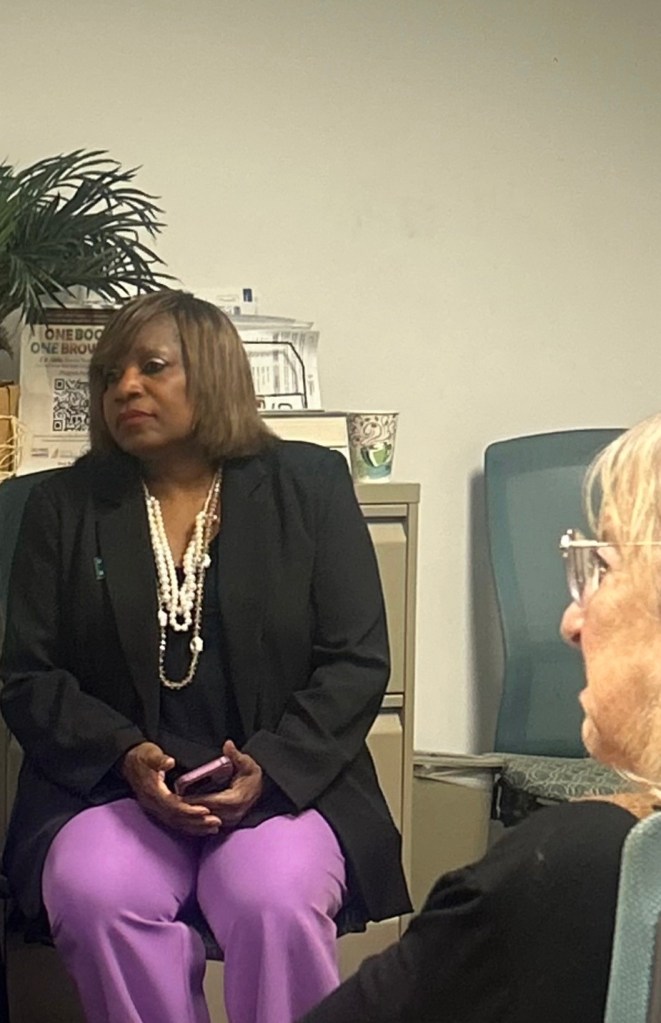
That’s the reason it a pleasure to facilitate the writing process with authors. The event was held at the Broward County’s West Regional Library in Plantation, Florida. This session focused on Writers Goal Setting for 2026 books through the Writers Group of South Florida.
If you are an aspiring author, or are ready to take your leadership to the next level and need a copy of the Goal-Setting guide, connect to get yours today. Leadership Assessment also available.
Not an author but ready to take your leadership to the next level through setting your 2026 goals, let’s chat. Referrals are warmly welcomed.
Life’s too short to learn from your own mistakes. Learn from others.
Every entrepreneur faces moments of doubt, exhaustion, and uncertainty. First-time founders, side hustlers, and small business owners constantly navigate the ups and downs of entrepreneurship. Whether they are launching their first startup, grinding through a side hustle, or scaling past a plateau; mindset shifts and motivation is needed to keep pushing forward.
Here are the top 5 Challenges Entrepreneurs face. As you review these characteristics, which can you identify with the most?
1.The First-Time Founder (0-2 years in business)
Characteristic: Everything is new, scary, and overwhelming. They’re discovering that entrepreneurship is 10 times harder than they imagined. Every setback feels like potential failure.
What they’re dealing with:
Imposter syndrome at peak levels
No roadmap or proven process to follow
Financial stress and uncertainty
Isolation (left their corporate network behind)
Constant self-doubt about their decisions
How to Stay Motivated:“You’re not alone in feeling this way.” Know that “It gets easier as you learn”
2.The Side Hustler (Building while Employed)
Characteristic: They’re living a double life. They are exhausted, stretched thin, and constantly questioning if they should quit their job or give up the dream.
What they’re dealing with:
Working 60-80 hour weeks between job + business
Guilt about time away from family
Progress feels painfully slow
Watching others succeed faster
Energy depletion and burnout risk
How to Stay Motivated: “Your pace is valid” + “Every hour invested compounds”
3.The Struggling Scaler (Stuck at a revenue plateau)
Characteristic: They’ve proven the concept works, but can’t break through to the next level. The excitement has worn off, replaced by grinding frustration.
What they’re dealing with:
Revenue flatlined for 6-12+ months
Doing everything themselves (can’t afford to hire)
Comparing themselves to “overnight successes”
Questioning their business model
Burnout from working IN the business vs ON it
How to Stay Motivated: “Plateaus are part of growth” + “Breakthrough is closer than you think”
4.The Solopreneur (No co-founder, no team)
Characteristic: They make every decision alone, celebrate wins alone, and face failures alone. The loneliness is crushing.
What they’re dealing with:
Decision fatigue (no one to bounce ideas off)
Wearing every hat (CEO, marketer, accountant, customer service)
No one to catch them if they fall
Feeling like giving up but having no one to hold them accountable
Craving validation that they’re on the right track
How to stay Motivated: “Your independence is strength” + “Solitude doesn’t mean you’re doing it wrong”
Characteristic: They’re carrying baggage from past failures. Every challenge triggers memories of “what happened last time.” They need courage to keep going despite the scars.
What they’re dealing with:
Fear of repeating past mistakes
Judgment from people who saw them fail
Financial pressure (often starting with less capital)
Self-trust issues (“Can I actually do this?”)
Imposter syndrome amplified by previous failure
How to Stay Motivated: “Failure was data, not destiny” + “Most successful entrepreneurs failed first”
Honorable Mentions:
The Mid-Life Career Changer: Left stability for uncertainty, facing age discrimination and “what have I done?” panic
The Minority/Underrepresented Entrepreneur: Fighting systemic barriers while building, needing validation in spaces that don’t always welcome them
The Post-Pivot Founder: Had to abandon their original idea and start over, grieving the old vision while building the new one
Which did you identify with most? Deeply reflect and if you need help, let’s connect.
Otherwise, gift a copy of 101+ Empowering Quotes to the entrepreneur in your life. It’s available in eBook, paperback, and hardcover formats, all under $20. It’s the thoughtful gift that fits in a stocking and inspires all year long.
What makes this gift special? It’s genuinely useful. Unlike generic presents that collect dust, this book becomes a go-to resource on tough days. The portable size fits perfectly in stockings, bags, and on desks. And at under $20, you can afford to gift it to your entire network of entrepreneurs, coworkers, or team members.
Give the gift of daily inspiration. Give them the reminder that they’re not alone in this journey.