“Turn your midlife crisis to your own advantage by making it a time for renewal of your body and mind, rather than stand by helplessly and watch them decline.” – Jane Brody
Many fall into a state of wonder and shock as they approach midlife. Alas even before at age 30 changers are experiencing alarm. Questions reign as they look back. Am I where I want to be? What should I do to achieve? And many more.
Here are four (4) strategies that can prove valuable as you approach midlife:
1.Career Evaluation
Evaluate your career satisfaction and alignment with personal values
Consider whether a career change or advancement is necessary for fulfillment
2.Financial Planning
Reassess financial goals and create a long-term financial plan
Consider investments, savings and retirement accounts
3.Personal Relationships
Nurture and strengthen personal relationships
Evaluate the impact of relationships on overall happiness and well-being
Mid-life Learning
Embrace a mindset of continuous learning and personal growth
Explore new hobbies or interests that bring joy and fulfillment
A person whose personality has a balance of extrovert and introvert features.
In a world of entrepreneurs, networking is key to land those great opportunities. The introvert just wants to stand in a corner and watch others while waiting for the event to end. Extroverts go wild, walking around, meeting and greeting others and frown when the event ends. Then there are the Ambiverts who possess a unique blend of strengths that allow them to navigate a variety of social and professional situations with ease. Wow to the ideal.
Here are the top strengths of the Ambivert:
Adapt between Different Environments
One of their key strengths lies in their ability to adapt to different environments. Ambiverts are comfortable in both introverted and extroverted settings, enabling them to connect with a diverse range of individuals and build strong relationships.
Balanced Communication
Ambiverts exudes a balanced approach to communication. They are adept at both listening attentively and expressing themselves effectively, making them valuable collaborators and team members. This versatility allows ambiverts to excel in roles that require effective communication and interpersonal skills.
High Emotional Intelligence
Ambiverts possess a high degree of emotional intelligence. They are attuned to the needs and feelings of others, which enables them to navigate social dynamics with empathy and understanding. This makes them effective leaders, as they can inspire and motivate others while also fostering a supportive and inclusive environment.
Weaknesses of an Ambivert
Ambiverts may also face certain challenges. Here are a few potential weaknesses:
Difficulty with Decision-Making: Ambiverts may struggle with decision-making due to their tendency to weigh both introverted and extroverted perspectives. This can lead to indecisiveness or hesitation in taking action.
Balancing Social Needs: Ambiverts may find it challenging to balance their need for social interaction with their need for solitude. They may feel torn between wanting to engage with others and seeking time alone to recharge, which can lead to feelings of inconsistency or restlessness.
Overwhelmed by Social Demands: Ambiverts may become overwhelmed by social demands if they are unable to establish clear boundaries. They may feel pressure to continuously switch between socializing and solitary activities, leading to exhaustion or burnout.
Difficulty Establishing Identity: Ambiverts may struggle with establishing a clear sense of identity, as they may not fully align with either introverted or extroverted traits. This ambiguity can sometimes lead to feelings of self-doubt or confusion about their place in social or professional settings.
Potential for Misunderstanding: Ambiverts’ ability to adapt to different social situations may sometimes be misinterpreted as inconsistency or unpredictability by others. This can lead to misunderstandings or difficulty forming deeper connections with others.
Tendency to Overextend: Due to their ability to engage in both introverted and extroverted activities, ambiverts may sometimes overextend themselves by taking on too many commitments. This can lead to feelings of overwhelm or difficulty maintaining work-life balance.
There you have it. Which trait do you identify with – introvert, extrovert, or ambivert? Do share, we would love to hear.
By the age of twenty, you know you’re not going to be a rock star. By twenty-five, you know you’re not going to be a dentist or any kind of professional. And by thirty, darkness starts moving in- you wonder if you’re ever going to be fulfilled, let alone wealthy and successful. By thirty-five, you know, basically, what you’re going to be doing for the rest of your life, and you become resigned to your fate…
Doug Couplan
Anthony felt like Doug’s quote when he cried out for help. It seems like doomsday to him. We began chatting with the goal to put some things in place because all is not lost.
For those turning age 30 and feel alone as if they’re fighting to achieve their dreams, this is the stage where you should be self-reflecting, skill evaluating, engaging in healthy habits and networking. Here each point is explained.
Self-Reflection:
Reflect on your achievements and experiences so far.
Identify personal and professional goals for the next decade.
Skill Enhancement:
Assess your skillset and consider acquiring new skills.
Explore educational opportunities or certifications that align with your career goals.
Healthy Habits:
Establish and prioritize healthy lifestyle habits.
Focus on physical and mental well-being to set a foundation for the future.
Networking:
Build and strengthen professional networks.
Seek mentorship and guidance from experienced individuals in your field.
Are you age 30 and experiencing any of these signs? You may also have already turned 30 and have lots to share about your journey. Do share. We would love to hear.
Leadership and learning are indispensable to each other.
John F. Kennedy
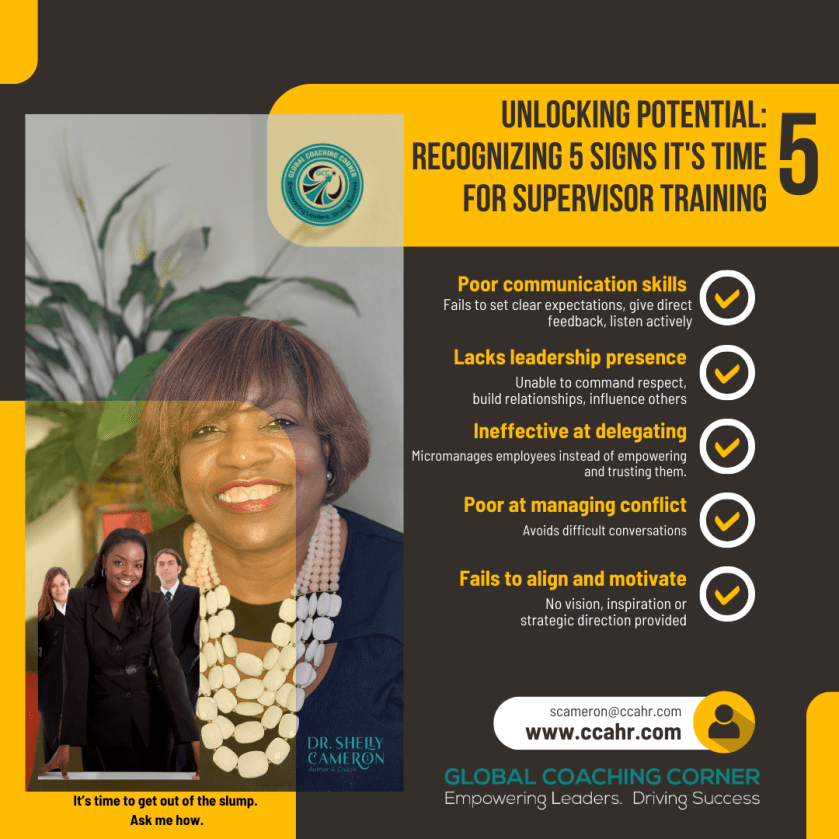
New supervisors are hesitant yet eager to dive into the job. Without training, mistakes happen. Behaviors indicating the need for supervisory training are shown here. Take a look and based on your observation, identify any that may need to be corrected.
1. Poor Communication
Poor communication skills exhibited when supervisor fails to set clear expectations, give direct feedback, listen actively.
Ineffective at delegating – micromanages employees instead of empowering and trusting
4. Unable to Develop Team
Supervisors are unable to develop team – little coaching or support for the team’s professional growth
5. Poor at Managing Conflict
Poor at managing conflict shown through avoiding difficult conversations. Often, they let issues fester.
6. Fails to Align and Motivate
Failing to align and motivate employees. No vision, inspiration or strategic direction provided.
Recognize any of these behaviors in yourself, co-worker, family member or friend? It’s not a tradition. There is always hope. Training, one on one or group coaching can improve the behaviors those supervising leaders can received.
Try these and more and make someone feel special this holiday season
Let’s face it, things happen. Sometimes we falter and find it difficult to do things that are not necessarily costly but nice to do. This may happen when we lose a job or loved one that was the sole breadwinner. It may also happen when we focus on reaching a set goal and the financial means defy us.
Here are 6 ways that you can still bring joy during the holidays:
6 Meaningful Holiday Gifts
DIY Crafts or Homemade Treats: Create handmade crafts, artwork, or bake homemade treats that reflect your thoughtfulness and effort.
Acts of Service: Offer your time and help with tasks like babysitting, organizing, or providing tech support—whatever would be genuinely useful.
Shared Experiences: Plan a day trip, picnic, or a movie night at home. Spending quality time together can be priceless.
Memory Collages or Photo Albums: Compile cherished memories into a photo album or collage, reminiscing about good times shared.
Offering Skills or Lessons: Teach a skill you excel at—whether it’s cooking, playing an instrument, writing, or a particular hobby.
Letters or Poems: Write heartfelt letters or poems expressing your gratitude and love for them.
Try these and more and make someone feel special this holiday season and throughout the year. Remember, the most meaningful gifts are those that come from the thought and effort put into them and not from their monetary value.
Now it Your Turn
Are there any thoughtful gifts missing from the list? Do share. We would love to hear!
Janet was elated when she was promoted for her exceptional skills and expertise in performing her job. Within a few weeks she called expressing her frustration as she felt like an imposter. She was finding it difficult to handle the challenges of her new role.
Challenges and Problems New Supervisors Face
Here are some common problems and challenges new supervisors often face:
Lack Authority -Promoted but struggle to influence former peers.
Ineffective Delegation – New supervisors may want to prove themselves by doing it all without delegating. End up micromanaging or miss opportunities to empower their team.
Poor Time Management – Often end up buried in daily tasks compromising productivity.
Mishandling Performance – avoid difficult conversation or acting too aggressively to assert authority.
Poor Communication skills -Giving direction or feedback is unclear, not listening or making assumptions.
Maintaining friendships – Boundaries blur as new supervisors must now manage former co-workers who were friends.
Lack of leadership training – often promoted without receiving adequate training.
Unrealistic expectations – new supervisors may feel they know everything already or may want to quick-fix long standing issues quickly.
Imposter syndrome – doubt their abilities, lack confidence, or feel underqualified.
Stress and work/life balance – they become overwhelmed by the pressures of the responsibilities of the new role.
Go it Alone – Does not seek help from a coach who can help them navigate the new role.
With proper mentoring, training, and experience over time, these common pitfalls can be overcome. Patience, self-awareness, and a learning mindset are key for successfully transitioning to supervisor.
Connect with a leadership coach who will help you confidentially maneuver the challenges of your new role.
Questions or need to add any missing challenge? Do share, we would be glad to hear.
You cannot escape the responsibility of tomorrow by evading it today.
Abraham Lincoln
A colleague shared her exhaustion with what she termed as her habitual procrastination. She was tired of incomplete tasks in her life and asked for help.
Avoiding procrastination is essential for leaders and professionals to maintain productivity and achieve goals. Here are 9+ key points shared to help overcome this practice.
1.Self-Awareness
Recognize your procrastination habits and understand the underlying causes. Self-awareness is the first step to change.
2.Prioritization
Prioritizing tasks is essential. Leaders should focus on high-impact, high-priority activities first.
3.Set Clear Goals
Set specific, measurable, achievable, relevant, and time-bound (SMART) goals. Having clear objectives provides motivation and direction.
4.Time Management
Use effective time management techniques, such as time blocking, to help you allocate your time efficiently.
5. Break Tasks into Smaller Steps
Practice breaking larger tasks into smaller, manageable steps. This makes tasks less daunting and more achievable.
6.Delegation
Trust more. Delegate tasks to capable team members when possible. Delegation frees up time for strategic thinking and higher-priority activities.
7. Overcoming Perfectionism
Are you a perfectionist? Often this tendency fuels procrastination through delaying completing projects until they are perfect. Focus on progress, not perfection.
8. Accountability
Set up an accountability system, such as working with a mentor, coach, or a peer who can hold you responsible for deadlines and commitments.
9. Eliminate Distractions
Identify strategies to minimize distractions, whether it’s turning off notifications, setting specific work hours, or creating a clutter-free workspace.
10. Self-Motivation
Identify your intrinsic motivation. What drives them to succeed? Connecting with their personal “why” can provide the push you need.
11. Time for Self-Care
Practice taking regular breaks and prioritize self-care. A well-rested and healthy leader is less likely to procrastinate.
12. Mindfulness and Focus
Adopt mindfulness practices and techniques that can improve focus and attention, reducing the temptation to procrastinate.
13. Positive Self-Talk
Replace negative self-talk with positive affirmations. Confidence can help combat procrastination.
14. Celebrate Achievements
Acknowledge and celebrate your accomplishments, no matter how small. Positive reinforcement can reinforce productivity.
15. Continuous Improvement
Focus on the concept of continuous improvement. As a Leader, it is important to regularly assess your time management and productivity strategies and adjust as needed.
16. Seek Professional Support
If procrastination is chronic and significantly hinders your leadership effectiveness, seek support from a therapist or counselor who specializes in procrastination or time management issues.
As a certified Master leadership coach, I provide support, guidance, and accountability to leaders to help them work to overcome procrastination. Implementing the strategies articulated here and developing healthy habits will lead to more effective and efficient leadership.
Want to succeed in the new year? Set goals! It’s a big deal because setting goals can help you get where you want to be. The 10 steps that follow make it super simple for you. Whether you’re a leader, professional or just someone who wants to grow, these steps will guide you through the strategies to set goals that really work. The aim is to help you stay motivated and focused on your path to success.
Define the Objective: What is the specific area or aspect of life where you want to set a goal? What is the purpose of this goal?
Step 2: SMART Goals
Specific: Make the goal specific, avoiding vague language. What exactly do you want to accomplish?
Measurable: Ensure the goal can be quantified in some way. How will you measure your progress and know when you’ve achieved it?
Achievable: Assess whether the goal is realistic and attainable. Is it within your reach, given your current resources and constraints?
Relevant: Does the goal align with your values, long-term objectives, and the bigger picture of your life. Is it meaningful?
Time-Bound: Set a clear timeframe or deadline for achieving the goal. When will you complete it?
Step 3: Break It Down
Break It Into Smaller Steps: Divide the larger goal into smaller, manageable tasks or milestones. What steps need to be taken to reach the goal?
Step 4: Prioritize
Prioritize Tasks: Determine the order of importance for each task. Which steps should be tackled first, and which can follow?
Step 5: Visualize Success
Create a Mental Image: Ask the individual to visualize themselves successfully achieving the goal. How will it feel? What will it look like?
Step 6: Identify Obstacles
Recognize Challenges: Reflect on potential obstacles, difficulties, or setbacks you may encounter on your journey to the goal. How can you prepare to overcome these challenges?
Step 7: Develop a Plan
Create an Action Plan: Outline the tasks, deadlines, and resources required to achieve the goal. What specific actions will you take?
Step 8: Monitor and Adjust
Regular Review: Emphasize the importance of monitoring progress regularly. How are you doing in relation to the goal? Are you on track?
Adjust and Adapt: Be flexible in adapting the plan as needed. If you encounter unexpected obstacles or need to change your approach, how will you do so?
Step 9: Accountability
Accountability Partners: Have an accountability partner, such as a coach, mentor, or friend, who can provide support and hold you responsible for your commitments.
Step 10: Celebrate Success
Acknowledge Achievements: When you reach your goal, celebrate the achievement. Do some self-reflection and recognition of your progress.
By following this step-by-step process, you can set and achieve goals that align with your values and aspirations.
Need an accountability partner to help you set your goals and stay on track? Let’s connect
A good coach can change a game. A great coach can change a life.
John Wooden
She ran to the restroom and screamed. Sabrina had a job to do, and her manager knew she could do it well, but she kept questioning her over the past six months. As the year-end drew near, the project was near due. But the constant checking in was more of a time waster than productive. Sabrina became frustrated. How could she tell her manager to allow her to focus?
Coaching employees on career development without resorting to micromanagement requires a delicate balance of support, guidance, and autonomy. As a leadership coach, I recommend employing a coaching approach that fosters individual growth and self-driven progress is important. Here’s a brief summary of 10 tips on how to approach this:
Establish Trusting Relationships: The foundation of effective coaching is trust. Build strong, open, and honest relationships with employees, creating a safe space for them to share their career aspirations, concerns, and challenges.
Active Listening: Actively listen to employees, understand their goals, strengths, and areas for improvement. By attentively hearing their needs, supervisors can tailor coaching discussions to their unique career paths.
Goal Setting: Together with employees, collaboratively set clear, SMART (Specific, Measurable, Achievable, Relevant, Time-bound) goals. This ensures that their career objectives are well-defined and realistic.
Empower and Encourage: Instead of micromanaging, empower employees to take ownership of their career development. Encourage them to seek out opportunities, challenge themselves, and take initiative in their professional growth.
Provide Resources: Offer guidance on available resources, such as training programs, workshops, or mentorship opportunities, that can aid employees in acquiring new skills and knowledge aligned with their career goals.
Feedback and Reflection: Promote a culture of continuous feedback and reflection. By offering constructive feedback and encouraging employees to assess their progress, they become more self-aware and adaptable.
Accountability: Employees are encouraged to hold themselves accountable for their career development. As a leadership coach, it is recommended that supervisors help employees establish milestones and regularly check in on their progress without micromanaging their day-to-day tasks.
Supportive Coaching: Through regular coaching sessions, provide a supportive framework where employees can discuss challenges, seek guidance, and refine their strategies for career advancement.
Celebrate Achievements: Recognizing and celebrating milestones and achievements is crucial for motivation. Acknowledge employees’ accomplishments, reinforcing their sense of progress and satisfaction.
Adaptability: Recognize that career paths may evolve, be flexible and adapt coaching strategies to align with changing goals and circumstances.
By coaching employees in this manner, we can empower them to take control of their career development journey. It fosters a sense of autonomy, motivation, and engagement while avoiding the pitfalls of micromanagement. Ultimately, the goal is to help individuals thrive and achieve their career aspirations in a supportive and non-intrusive manner.
Be exposed to exclusive insights from accomplished beauty pageant contestants who have mastered the art of goal-setting and achieving remarkable success.
In this captivating video, you will be exposed to exclusive insights from accomplished beauty pageant contestants who have mastered the art of goal-setting and achieving remarkable success.
Listen in as Miss Universe Trinidad & Tobago Dalise Lockhart and Miss New England Petite, Kimberly Campbell share their personal journeys, strategies, and invaluable wisdom on setting and reaching your aspirations.
Discover the secrets to turning dreams into reality
Overcoming obstacles
Staying motivated on your path to success.
Whether you’re striving for success in pageantry, your career, or life in general, these beauty queens’ experiences and expertise will provide you with practical tips and inspiration to help you unlock your full potential.
Don’t miss out on this empowering conversation with some of the most accomplished individuals in the world of beauty pageants. Share with your friends who are on their journey to achieving greatness. Get ready to ignite your passion, set ambitious goals, and embark on a journey to success. Lean in and listen and let’s begin this exciting adventure together!
Grab a Friend and Get ready to level up 2024 at the Goal Setting Retreat, where we’ll dive deep into setting & crushing your goals while enjoying fun.
Get ready to level up 2024 at the Goal Setting Retreat, where we’ll dive deep into setting & crushing your goals while enjoying fun.
2024 Goal Setting Retreat for Empowered Leadership
Buy One Bring a Friend 50 Percent offand join us for the 2024 Goal Setting Retreat for Empowered Leadership! This intimate small group in-person event will take place on Saturday, November 4, 2023, starting at 9:30 AM (EDT), at the lovely Hutchinson Island.
Are you a seasoned corporate Leader, professional, entrepreneur or desiring a change to take your career to the next level? This retreat is designed to empower and inspire you to set ambitious goals and achieve extraordinary results. Whether you’re a seasoned leader or just starting out, this event is for you!
OBJECTIVES include reflection & assessment; defining your vision; goal planning & strategy; overcoming challenges and staying motivated; tracking progress and adjusting.
During this retreat, you’ll have the opportunity to connect with like-minded individuals, learn from experienced mentors, get clarity and valuable insights into effective goal setting strategies. Gain insights from shared personal experiences and get practical tips to help you unlock your full leadership potential.
Get ready for a day filled with interactive, engaging discussions, personal reflections, learning stories from the field, networking opportunities, and rejuvenating fun on Florida’s sun, sea,and sand. You’ll leave feeling motivated, energized, and equipped with the tools to create a clear roadmap for success.
Don’t miss out on this incredible opportunity to invest in your leadership journey. Reserve your spot today and get ready to set yourself up for a successful 2024!
Doubt increases with inaction. Clarity reveals itself in momentum. Growth comes from progress. For all these reasons, BEGIN.
Brendon Burchard
My niece is a celebrity makeup artist. She has done many. When they come to see her, they come just as they are–plain, messy, but ready to rock. Together they work on their goals. What’s the problem? What’s the occasion (wedding, birthday celebration, rebranding)? What’s the purpose (new business, product, new album, video)? They then work together to make their goals beautiful.
Same with the healing power. The sick goes to the doctor to be healed. They’re not well. They try home remedies and nothing works. But pretty soon they come to the realization that they need help.
Coaching is just like that. Come messy. Come stuck. come with your frustrations, your limitations, procrastinations. We work together to identify goals, explore possibilities, get clarity, strategize follow through and make dreams come through.
COACHING: THE CONTEXT
Coaching is one of the most powerful tools because it acts as a catalyst. Coaching gives our clients the right motivation to take actions that make them successful. As coaches we provide inspiration, motivation, and encouragement to help our clients attain their goals. We seek to discover and understand context and help clients define key areas of leadership development that will lead to transformational outcomes.
That’s what we do. Let’s connect. Come messy, leave happy.
Have you ever experienced coaching? What was the outcome? Do share, we would love to hear.