Take time to deliberate, but when the time for action has arrived, stop thinking and go in. ~Napoleon Bonaparte
Ever found yourself checking and rechecking about a decision you have to make. It might be a presentation, a college selection, submission of a business proposal or even a marriage proposition (yikes)! It happens. It’s called overthinking which is defined as:
Putting too much time into thinking about or analyzing (something)
Overthinking is one of the biggest blocks for both leaders and business owners because it drains time, energy, and confidence. Here are 3 tips to stop overthinking.
1. Decide. Then Detach
Perfection isn’t progress. Once you’ve made a well-informed decision, commit then detach from the fear of “what if.” Every decision gives feedback: it either moves you forward or teaches you what to adjust. Leaders who wait for certainty often miss their moment.
Try this: Set a “decision deadline” give yourself 24 hours to choose, then move on confidently.
2. Shift From Thinking to Doing
Action is the antidote to overthinking. When you’re stuck in analysis, your mind loops on the same thoughts. But when you take even a small step, such as sending the email; posting the content, calling the client; actions like these contributes to you gathering real data, not imagined fears.
Ask yourself: What’s one small action I can take right now?
3. Practice Mental Stillness
Overthinking thrives in noise. Silence and stillness help you separate truth from fear. Try journaling, prayer, or a five-minute “mind reset” before diving into decisions. It’s not laziness, it’s leadership discipline.
Remember: Still minds make strong moves.
COACHING INSIGHT
Overthinking often signals self-doubt, not lack of skill. Leadership coaching helps identify those inner beliefs and build confidence. It then replaces the cycle of worry with a rhythm of wise action.
How about you? Are you an overthinker? Which of the 3 tips can you implement now? On the other hand, were you an overthinker? If so, how did you get over it? Do share. We would love to hear.
All I want for Christmas is …. the Pain to go away! The Pain of Not knowing what to do about your next steps has many effects. And year-end triggers deep reflection. Here are a few pain points:
Underdeveloped Potential:
Talented individuals Stay Stuck in survival mode. They fail to unlock their genius because no one helps them think strategically about their Growth.
Career Plateau
Professionals with great resumes stall out due to poor networking, weak positioning, or self-limiting beliefs.
Global Irrelevance
In our rapidly changing world where soft skills, emotional intelligence, and AI adaptability are important assets, people fall behind.
Silent Suffering
Many carry silent frustrations. “I’m better than this, but I don’t know how to rise”.
COACHING is the bridge out of that quiet despair 💥 If One or two resonate of these pain points resonated with you:
Who looks outside dreams; who looks inside, awakens. ~Carl Jung
As the year closes, the most effective leaders are the ones who pause long enough to evaluate, realign, and elevate. These 12 questions are designed to help you step confidently into 2026 with clarity, courage, and intention.
Take a moment to reflect on each. Use them to guide your vision, your team, and your next level of growth. Strong leadership doesn’t happen by accident. It’s built through awareness, alignment, and action.
Reflection Questions
1. What are my top 3 leadership wins from 2025?
2. What drained my energy this year, and why?
3. What habits strengthened my leadership?
4. What habits weakened it?
5. What opportunities did I ignore that I should revisit?
6. What does success look like for me in 2026?
7. What limiting belief must I leave behind?
8. Who do I need to become next year?
9. What relationships do I need to nurture?
10. What boundaries do I need to create?
11. What skills must I develop or sharpen?
12. What is ONE bold move I will take before Jan. 31?
If you’d like support creating a strategic leadership plan for the new year, join the year-end and January coaching sessions. This is designed for leaders in transition and professionals preparing for a stronger 2026.
What will you do differently next year? Which question resonated with you the most? Do share. We would love to hear.
Life’s too short to learn from your own mistakes. Learn from others.
Every entrepreneur faces moments of doubt, exhaustion, and uncertainty. First-time founders, side hustlers, and small business owners constantly navigate the ups and downs of entrepreneurship. Whether they are launching their first startup, grinding through a side hustle, or scaling past a plateau; mindset shifts and motivation is needed to keep pushing forward.
Here are the top 5 Challenges Entrepreneurs face. As you review these characteristics, which can you identify with the most?
1.The First-Time Founder (0-2 years in business)
Characteristic: Everything is new, scary, and overwhelming. They’re discovering that entrepreneurship is 10 times harder than they imagined. Every setback feels like potential failure.
What they’re dealing with:
Imposter syndrome at peak levels
No roadmap or proven process to follow
Financial stress and uncertainty
Isolation (left their corporate network behind)
Constant self-doubt about their decisions
How to Stay Motivated:“You’re not alone in feeling this way.” Know that “It gets easier as you learn”
2.The Side Hustler (Building while Employed)
Characteristic: They’re living a double life. They are exhausted, stretched thin, and constantly questioning if they should quit their job or give up the dream.
What they’re dealing with:
Working 60-80 hour weeks between job + business
Guilt about time away from family
Progress feels painfully slow
Watching others succeed faster
Energy depletion and burnout risk
How to Stay Motivated: “Your pace is valid” + “Every hour invested compounds”
3.The Struggling Scaler (Stuck at a revenue plateau)
Characteristic: They’ve proven the concept works, but can’t break through to the next level. The excitement has worn off, replaced by grinding frustration.
What they’re dealing with:
Revenue flatlined for 6-12+ months
Doing everything themselves (can’t afford to hire)
Comparing themselves to “overnight successes”
Questioning their business model
Burnout from working IN the business vs ON it
How to Stay Motivated: “Plateaus are part of growth” + “Breakthrough is closer than you think”
4.The Solopreneur (No co-founder, no team)
Characteristic: They make every decision alone, celebrate wins alone, and face failures alone. The loneliness is crushing.
What they’re dealing with:
Decision fatigue (no one to bounce ideas off)
Wearing every hat (CEO, marketer, accountant, customer service)
No one to catch them if they fall
Feeling like giving up but having no one to hold them accountable
Craving validation that they’re on the right track
How to stay Motivated: “Your independence is strength” + “Solitude doesn’t mean you’re doing it wrong”
Characteristic: They’re carrying baggage from past failures. Every challenge triggers memories of “what happened last time.” They need courage to keep going despite the scars.
What they’re dealing with:
Fear of repeating past mistakes
Judgment from people who saw them fail
Financial pressure (often starting with less capital)
Self-trust issues (“Can I actually do this?”)
Imposter syndrome amplified by previous failure
How to Stay Motivated: “Failure was data, not destiny” + “Most successful entrepreneurs failed first”
Honorable Mentions:
The Mid-Life Career Changer: Left stability for uncertainty, facing age discrimination and “what have I done?” panic
The Minority/Underrepresented Entrepreneur: Fighting systemic barriers while building, needing validation in spaces that don’t always welcome them
The Post-Pivot Founder: Had to abandon their original idea and start over, grieving the old vision while building the new one
Which did you identify with most? Deeply reflect and if you need help, let’s connect.
Otherwise, gift a copy of 101+ Empowering Quotes to the entrepreneur in your life. It’s available in eBook, paperback, and hardcover formats, all under $20. It’s the thoughtful gift that fits in a stocking and inspires all year long.
What makes this gift special? It’s genuinely useful. Unlike generic presents that collect dust, this book becomes a go-to resource on tough days. The portable size fits perfectly in stockings, bags, and on desks. And at under $20, you can afford to gift it to your entire network of entrepreneurs, coworkers, or team members.
Give the gift of daily inspiration. Give them the reminder that they’re not alone in this journey.
Midlife transitioners face feelings of sadness especially when work, independence and purpose feel out of reach. This is a common scenario I have found in my coaching practice amongst mature women. They complain, sulk and feel ‘why bother’ (as in the case of a recent discussion). For women experiencing these feelings, here are 7 thoughtful strategies of how 50+-year-old women in this situation can begin moving forward. Adopting these strategies can help them regain control of their life, emotionally, practically, and spiritually.
1.Start With Emotional Healing
Before any external progress, healing the inner voice is key.
Acknowledge your feelings; grief, frustration, even shame, as valid. You’re not alone; many older adults feel invisible or “left behind” as the four stages of elimination in life profess.
Seek emotional support: a counselor, therapist, or support group for midlife depression can help rebuild self-worth.
Practice daily motivation and affirmations: “My life still has purpose.” “I am capable of starting again.” Small mindset shifts add up.
Faith & reflection: If you’re spiritually inclined, journaling prayers or reading devotionals about renewal (e.g., Isaiah 43:19… “Behold, I am doing a new thing…”) can anchor your hope.
2.Rebuild Self-Worth and Confidence
Depression often comes from feeling “useless,” so rediscovering value is important.
Revisit strengths and experiences. Make a list of past achievements, career skills, and life lessons.
Volunteer or mentor. Helping others (e.g., tutoring, mentoring younger professionals, or supporting community causes) reminds her that her wisdom matters.
Refresh her image. A new hairstyle, headshot, or wardrobe doesn’t just change how others see her — it helps her feel renewed.
3.Redefine Purpose and Direction
You may be entering a new season, not the end of your working life. Shift from “job-seeking” to “value-offering.” Instead of asking “who will hire me?” you should ask, “where can my experience help someone solve a problem?”
Consider flexible or freelance work:
Virtual assistant or remote admin work
Customer service, tutoring, or caregiving
Consulting in your former field
Selling crafts, baked goods, or eBooks online
Take free online courses (Coursera, Google Digital Skills, LinkedIn Learning) to update your skillset and confidence.
4.Improve Her Job Search Strategy
Age can be an advantage when presented with confidence and skill.
Update your resume and LinkedIn profile. Focus on experience, reliability, and mentoring skills rather than long timelines.
Network quietly and personally. Reach out to old colleagues or community connections; many opportunities come through relationships, not job boards.
Seek community or senior resources: local housing or utility assistance programs, food banks, or financial coaching through nonprofits.
Budget for empowerment, not punishment. Even small control (like managing one bill or goal) restores agency.
Explore part-time or gig work (e.g., Instacart, pet-sitting, or online micro-tasks) as temporary bridges.
6. Build a New Daily Routine
Structure gives life purpose.
Morning: prayer, gratitude, short walk
Midday: job search, learning, or volunteer time
Evening: journal one positive action from the day Even a simple daily rhythm can counter the “stuck” feeling.
7. Believe in Renewal
It’s never too late to rebuild. Many people in their 50’s and beyond start new careers, businesses, and callings. Your story isn’t over…it’s shifting. Be encouraged. See yourself not as “unemployed,” but as “relaunching.”
Reflection:
“If I could start fresh today, what small step would make me feel proud by the end of this week?”
Hope these strategies help you overcome these feelings of apathy. If you’re not in that sphere and know someone who might be, please share with them. We are also here to help women regain confidence for their new chapter.
At a networking event, a bold Networker spoke about her reluctance to use social media. She was hesitant about using it. She asked herself “why not enroll into a social media class?
How can a business owner overcome this fear? This is a powerful and timely question especially as we get close to the peak of the biggest holiday season. Most business owners are confident in their work but hesitant about visibility.
4 Ways to Overcome the Fear of Marketing as a Business Owner
Many business owners love what they do but freeze when it’s time to promote their work. They fear sounding “salesy,” being judged, or stepping into the spotlight. Yet, marketing isn’t about ego, it’s about service and connection. Here are some tips to negate that fear.
Reframe “marketing” as “helping.”
Marketing is simply communicating the value of what you offer to people who need it. When you shift from “selling” to “serving,” fear loses its grip. Ask yourself: Who needs this solution? How can I make it easier for them to find me?
Start with authenticity, not perfection.
You don’t need perfect videos, fancy funnels, or flawless captions. You just need a clear message and consistency. Share your why, your story, and the transformation you help others achieve. Authenticity builds trust faster than polished perfection.
Use your strengths.
If writing comes naturally, blog or post. If you’re a people person, go live or network. If you’re visual, create short reels or carousel posts. Play to your natural communication style instead of forcing what feels unnatural.
Build confidence through small wins.
Set simple, repeatable goals, one post a week, one short video, one client testimonial shared. Every time you take action, your comfort zone expands.
A leadership or business coach can help you uncover the root cause of your fear. Whether it’s fear of rejection, comparison, or visibility and replace it with confidence and clarity.
Coaching helps you align your mindset, message, and methods so you can show up as a confident leader of your brand.
Coaching helps you align your mindset, message, and methods so you can show up as a confident leader of your brand.
Remember: As with the business owner we spoke about, she learnedd that she did not have to love marketing, she just needed to see it as part of her leadership. She did and was happy to shout the benefits.
Remember, your voice, your story, and your offer could be the answer someone is praying for. Don’t let fear keep you silent.
Have you been hesitant to step out and share your work? Do share. We would love to hear.
If you can’t pay it back, pay it forward. ~Catherine Ryan Hyde
Standing in line at the cashier, I decided to pay with the cash I had on hand. The amount came to the exact dollar amount in my wallet, except it needed thirteen cents more. I rummaged through my handbag to cover the difference. The woman behind me said, “Hey, I’ll get it for you.”
Instead of accepting her offer, I searched frantically for the coins, only to remember that I keep my change in the car. She repeated gently, “I’ll get it.” I insisted that I would pay her back when we got outside. She simply replied, “Pay it forward.” Immediately, I understood and promised I would.
I left the store, found the coins in my car, and was about to give her a quarter as she exited. Then I was reminded of her words about paying it forward. I took a deep breath, sighed, and drove away.
How many times has this happened to me? I genuinely like to give but am always hesitant to receive. As I coach my clients, I recognize it’s important to do both—give generously and also be willing to accept graciously in return. One friend once countered my reluctance by saying, “Don’t stop my blessings.”
Leaders Struggle
This simple exchange reveals a profound leadership lesson about the grace of receiving. Many leaders struggle with accepting help, viewing it as weakness or loss of control. However, graceful receiving is actually a powerful leadership skill that creates deeper connections and empowers others.
When we refuse help, we inadvertently rob others of the joy of giving and contributing. We also model unhealthy self-reliance that can isolate us from our teams and communities. The most effective leaders understand that accepting assistance with gratitude creates a culture of mutual support and reciprocity.
Consider this: Every time someone offers to help you—whether it’s covering thirteen cents, sharing an idea, or taking on a task—they’re extending trust and care. Your gracious acceptance validates their value and strengthens the relationship.
Challenge yourself this week to practice receiving with the same intentionality you bring to giving. Say “thank you” instead of “you didn’t have to.” Accept compliments without deflecting. Allow others to contribute to your success. Remember, true leadership isn’t about having all the answers or resources—it’s about creating an environment where everyone can contribute their gifts, including to you.
Pay it forward, yes. But first, allow yourself to receive what’s being offered.
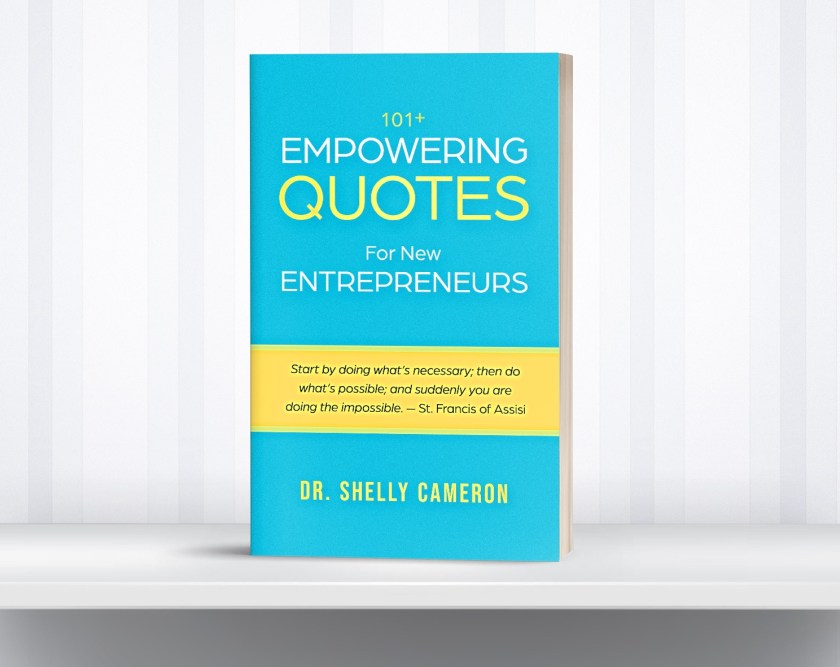
Start by doing what’s necessary l; then do what’s possible; and suddenly you’re doing the impossible. ~St. Francis of Assisi
Starting something new takes courage. Whether it’s launching a business, chasing a career dream, or stepping into the unknown, the journey can feel exciting—but also overwhelming. Fear, doubt, and challenges often show up uninvited, tempting us to give up before we’ve even begun.
This isn’t just another quote collection. It’s a daily dose of encouragement designed to remind you that setbacks are temporary, obstacles are stepping stones, and success is possible when you keep moving forward.
Why This Book Matters
Every entrepreneur and dreamer knows the reality: there will be days when you question yourself. This book is here for those exact moments—when you need that spark to reignite your drive.
Inside, you’ll discover: ✨ Quotes that challenge fear and fuel confidence ✨ Encouragement to push through hard days and keep showing up ✨ Wisdom from timeless voices that inspire resilience and growth
Whether you’re building a business, pursuing a new career path, or simply in need of a reminder to keep going, these words of encouragement will meet you where you are.
Here’s how you can support and spread empowerment:
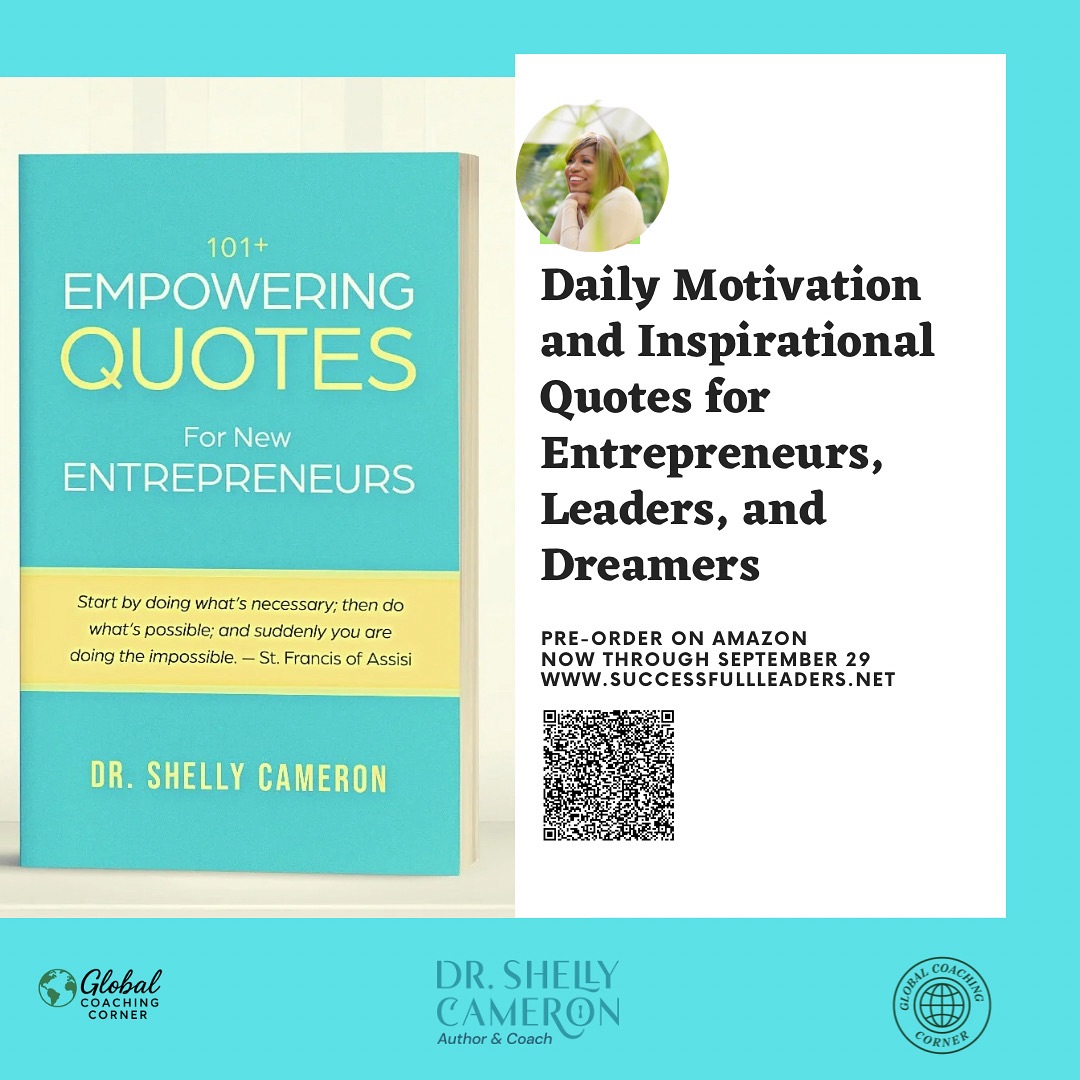
Order your copy today and be among the first to receive it.
Leave a review once you’ve read it—your feedback encourages others to join the journey.
Gift a copy (or two!) to the entrepreneurs, creators, and go-getters in your life who could use a reminder that giving up is never an option.
Final Thoughts
Dreams are built one step at a time. Challenges are part of the process. And sometimes, all you need is the right word at the right time to keep moving forward.
This book is that reminder.
Don’t wait—101+ Empowering Quotes for New Entrepreneurs now. Join me in fueling a movement of empowered entrepreneurs who choose courage over fear and persistence over giving up.
Effective preparation sets the stage for success and sparks creativity
Authors write, publish and leave expecting miracles. It doesn’t happen. Authorship happens mostly by accident as writers choose to share what’s on their hearts. It might be a memoir, poetry, fiction or non-fiction. As their passion unfold, they write then later realize that they have suddenly been thrust into entrepreneurship! How do they get those books off bookstore shelves? Selected on amazon? Shared among family and friends? It behooves them to sit, pray, and wonder why their books just remains stagnant. Most often these are excellent stories that remains dormant for years, not gleaned by readers.
Realizing this pattern, the Writers Group of South Florida held a workshop. Hosted by the West Regional Library in Plantation. This initiative was facilitated by Dr. Shelly Cameron. Here’s a summary of the takeaway points that attendees authors gleaned.
AUGUST – SEPTEMBER: Build the Foundation & Warm Up Your Audience
Update book cover, blurb, and Amazon listing with holiday-friendly touches.
Secure podcast, blog, and media features for October–December.
Plan holiday content calendar (mix of promos, tips, behind-the-scenes, giveaways).
Launch pre-order bonuses or limited-time bundles.
October: Visible Campaign & Early Gift Push
Submit to gift guides, bloggers, and niche media lists.
Collaborate with other authors for holiday bundles or giveaways.
Feature reader testimonials and reviews on social media.
Run Early Bird discounts to attract early shoppers.
November: Holiday Sales Mode
Run a gratitude-themed campaign for Thanksgiving.
Offer Black Friday/Cyber Monday E-Book discounts or signed copy specials.
Partner with local stores for Small Business Saturday promotions.
Send an email countdown series leading up to Thanksgiving.
December: Final Holiday Push
Promote e-Books and gift certificates for last-minute shoppers.
Run a “12-Days-of-Christmas” themed social media series.
Position your book for New Year’s resolutions or inspiration.
Post thank-you messages and celebrate your readers
PRO TIPS for Conversions
Author Branding Matters: Use consistent holiday visuals across all platforms.
Offer Multiple Formats: Paperback, e-Book, Audio-book—make it easy to gift.
Make It Shareable: Create “I’m gifting this book!” social media graphics for readers to post.
Always Include a Call-to-Action: Don’t just post pretty images—always link to buy.
Track & Adjust: Watch which promos get clicks and double down on what works.
There you have it. Did one, two or a few of the above stand out for you? As a published author, which will you adopt? Do share, we would love to hear.
Summer is almost over and it’s time to make all those back-to-school plans. As we make those plans, lets pause for a minute. Think of a teacher or two who made a difference in your life. Personally, as I age, I think about those teaching experiences and the effect they had on my leadership journey. As I look back, I think of society’s great teachers like Erin Gruwell, Maria Montessori, and the fictional Mr. Keating (Dead Poets Society).
Here are 5 lessons leaders can learn from great teachers.
1.Clarity is Powerful
Teachers break down complex topics into simple, digestible pieces. Leaders must do the same—clearly communicate vision, expectations, and feedback so everyone understands what success looks like.
Lesson: Say less, mean more. Clarity builds trust and momentum.
2. Patience Enables Progress
Teachers know learning takes time and that growth isn’t always linear. Leaders should extend grace and patience during times of transition, failure, or new learning curves—whether with teams or themselves.
Lesson: Progress often looks like repetition before results.
3. Individual Strengths Matter
Great teachers recognize that not every student learns the same way. Great leaders acknowledge that not every employee works, leads, or grows the same. They tailor support, roles, and recognition accordingly.
Lesson: Personalize your leadership to bring out the best in each person.
4. Structure Creates Freedom
Teachers use routines and structure to create a safe space for creativity and exploration. Leaders who implement clear systems give their teams the confidence and autonomy to take initiative.
Teachers who genuinely care spark curiosity and motivation. Leaders who lead with purpose, authenticity, and heart cultivate higher engagement and loyalty.
Lesson: When you model passion, people give their best
As school begins its opening session, the road becomes a task / lesson plan in and of itself. What are your thoughts on the top five lessons? Anything missing that you would like to add? Do share, we would love to hear.
Don’t forget to connect if you would like to discuss your own leadership growth journey.