Stop asking why they keep doing it and start asking why you keep allowing it.
Setting boundaries involves defining expectations and limits in relationship (Positive Psychology). Here are 5 characteristics to help balance your work/ life.
1. Self-Care Prioritization
Regular exercise
Quality sleep
Healthy nutrition
Meditation/stress management techniques
2. Boundaries Setting
Clear work-life separation
Learning to say no
Limiting overtime
Scheduling personal time
3. Professional Support
Discuss workload with supervisor
Seek workplace accommodations
Consider professional counseling
Join support groups
4. Mental Reset Techniques
Take regular breaks
Practice mindfulness
Use vacation days
Pursue hobbies outside work
5. Systematic Recovery
Identify stress triggers
Develop coping strategies
Regular mental health check-ins
Gradual lifestyle adjustments
Here’s hoping these tips will help you achieve your work / life balance goals.
66 Percent of Projects fail to meet their original Business intent due to poor prioritization, while 96 percent of Leaders feel they are working with limited time and resources.
Begin with the end in mind. ~Steven Covey
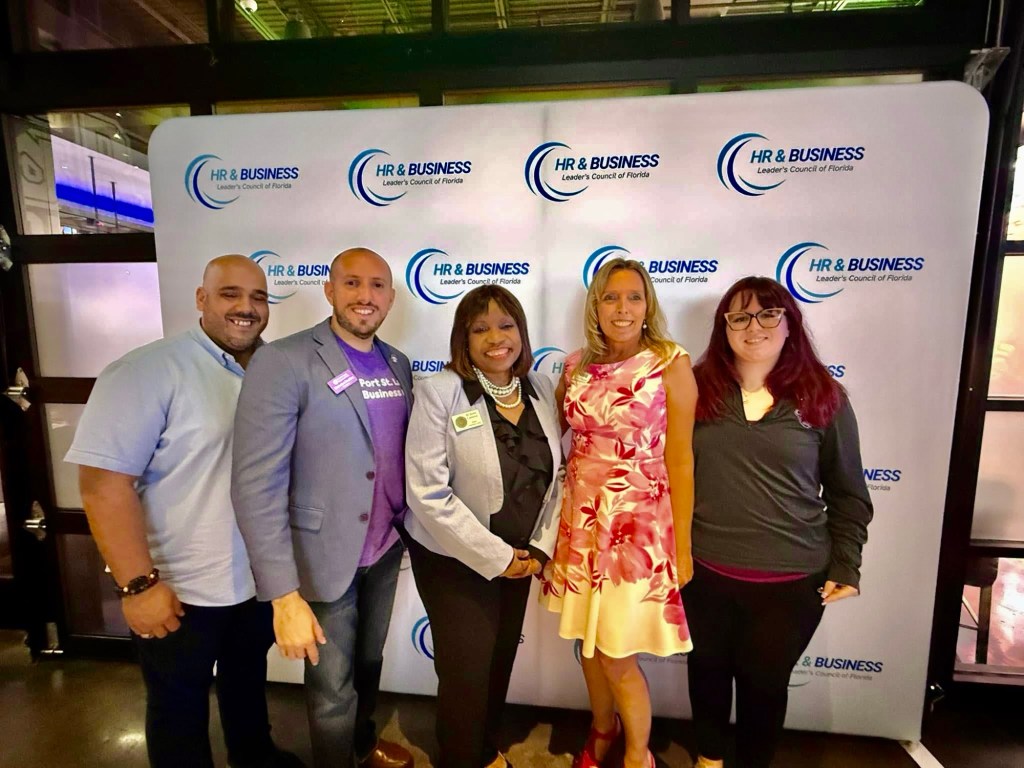
It was a pleasure to speak on the topic Prioritizing Workloads at the HR and Business Leader’s Council of Florida Education, Social Impact and Networking event.
A fitting topic as 66% of Projects fail to meet their original Business intent due to poor prioritization, while 96% of Leaders feel they are working with limited time and resources.
As we forge through the new year, it’s statistics like these and the impact on organizational and personal stress that led to the Council’s forward thinking to bring it to the forefront of the business leader’s mind.
How can we prepare? How can leaders take charge of their limited resources to achieve better outcomes?
Covey steered strategists to Begin with the End in mind. 🎯 Prioritizing limited time and resources work wonders. Most of all learn to say ‘No’ to time wasters and set boundaries. 🚫
Suffice it to say, there was much to synergize and Dave & Buster’s Inc. provided the right space.
It’s time to take charge of your priorities. Stay tuned for more on the Urgent vs. Important Matrix.
Before you are a leader, success is all about growing yourself. When you become a leader, success is all about growing others.” —Jack Welch
More than two decades ago I started my first leadership role. Always facing an audience through years of athletic performance, the arts, other leadership roles, I was always confident. But this was different. In my HR Leadership role, I faced responsibilities on behalf of the company. No more hiding behind other senior leaders. My boss gave me no choice but to step up to my full responsibilities.
After going through a bout of nervousness that lasted months, I found that it got easier each time. Before long, I prepared for each meeting when I had to address employees performance, achievements and areas of development across the region with confidence.
On observation these days, we see politicians and society’s leaders in public service assuming new roles. Consequently, the question was raised; “can a person from behind the scenes excel in a new public-facing role?” The answer is absolutely!
Public-facing means a role where the (individual) exercises managerial authority or control of an entity’s activities.
Here are 7+ points to prepare for a public-facing leadership role. Focus on:
1.Communication Skills
Develop clear, compelling public speaking abilities
Practice articulating complex ideas simply
Learn media training techniques
2.Personal Brand Development
Build a professional, authentic public image
Be consistent across different platforms
Develop a strong personal narrative
3.Continuous Learning
Stay updated on industry trends
Understand diverse stakeholder perspectives
Cultivate emotional intelligence
4.Professional Appearance
Dress appropriately for your industry
Project confidence through body language
Work on your on-camera and in-person presence
5.Media and Presentation Preparation
Take media training workshops
Practice handling tough questions
Learn crisis communication strategies
6.Networking
Build relationships with key industry influencers
Develop a supportive professional network
Seek mentorship from experienced public leaders
7.Digital Literacy
Manage social media presence professionally
Understand digital communication etiquette
Be mindful of online reputation
Bonus: Resilience and Adaptability
Develop thick skin for public scrutiny
Learn to handle criticism constructively
Maintain composure under pressure
Consistent practice and self-reflection are the keys to becoming an effective public-facing leader.
What has been your experience with getting ready for a leadership role? Did you use any of the above strategies? If so, what worked for you? Any other strategy that comes to mind? Do share, we would love to hear.
To live a fulfilled life, we need to keep creating the “what is next” of our lives. Without dreams and goals there is no living, only merely existing. – Mark Twain
Goals are the links in the chain that connect activity to accomplishment. —Zig Ziglar
Another year filled with regret at not achieving the goals Sabrina had set. Throughout her career she had helped others achieve their goals, yet it was at the expense of achieving her own personal goals. Something has to give.
If you are like Sabrina, here are some practical steps to help you achieve your goals:
1.Break Down Large Goals
Divide big goals into smaller, manageable sub-goals
Create a step-by-step action plan
Make each milestone specific and measurable
Set realistic timelines for each sub-goal
2.Develop a Concrete Action Plan
Write down your goals in detail
Specify exactly what you want to achieve
Include specific deadlines
Identify potential obstacles in advance
Create strategies to overcome these obstacles
3.Prioritize and Track Progress
Use tools like:
Goal tracking apps
Physical planners
Digital spreadsheets
Regularly review and assess your progress
Adjust your plan if needed
Celebrate small victories along the way
4. Build Accountability
Share your goals with trusted friends/family
Find an accountability partner
Join support groups related to your goals
Consider working with a coach or mentor
5. Develop Consistent Habits
Create daily/weekly routines supporting your goals
You can get excited about the future. The past won’t mind. ~Hillary DePiano
The end of the year naturally invokes a period of career reflection, which serves as a psychological milestone that compels professionals to pause and assess their journey. As the calendar approaches its final weeks, individuals are instinctively drawn to introspection, triggered by a combination of cultural traditions, personal goal-setting practices, and an innate human desire for growth and meaning. This time of reflection is fueled by the contrast between the year’s accomplishments and unfulfilled aspirations, creating the opportunity for honest self-evaluation (hint …that common ideal weight loss plan).
The approaching new year symbolizes renewal and potential, encouraging professionals to reflect on their career trajectory, measure progress against past objectives, and recalibrate their professional vision. Factors like annual performance reviews, financial assessments, industry shifts, and personal life changes converge during this period, making it an ideal time to critically reflect on career satisfaction, skill development, alignment with long-term goals, and potential opportunities for growth or transformation.
Consequently, here are a number of pointers that discusses this period of reflection along with recommendation. Not a self-starter , we can help.
Natural Evaluation Period
Annual performance reviews
Reflecting on past year’s achievements
Setting new personal goals
Psychological reset moment
Emotional Triggers
Holiday season brings perspective
Family gatherings prompt life discussions
Increased time for self-reflection
Motivation from new year anticipation
Professional Burnout
Accumulated workplace stress
Desire for meaningful change
Recognizing current job’s limitations
Seeking personal fulfillment
External Evaluation
Social conversations about resolutions
Seeing others make bold moves
Increased motivational content
Feeling inspired by potential
Strategic Approach
Budget reassessment
Career growth opportunities
Market trend observations
Personal development planning
Motivational Approach
Embrace fear as growth signal
Start with small, low-risk steps
Build confidence gradually
Seek professional guidance
Create solid transition plan
Recommended Actions
Self-assessment
Skill inventory
Informational interviews
Part-time exploration
Professional coaching
Continuous learning
Are you experiencing any of these signs? If so, it’s time to do something about it. Adapt the motivational approach along with the recommended actions. But if you need the expertise of a coach who can help. Better yet, purchase a gift certificate for a friend experiencing these signs and help him/her kick off the new year with a difference.
The interesting thing about coaching is that you have to trouble the comfortable and comfort the troubled.
Ric Charlesworth
Professional development involves coaching. It is a process of self-awareness, application and reflection. Improving yourself through learning and training has advantages. Just as great sportsmen hire coaches, professionals can improve their craft with a personalized and objective coach.
That said, people’s perceptions of coaching necessity vary and there are myths, but there is a growing recognition of its value in professional development.
General perception: There’s been an increasing trend towards viewing coaching as valuable, particularly in corporate settings. However, it’s not universally seen as “necessary.”
Executive coaching: A survey by the International Coach Federation (ICF) found that about 86% of organizations saw a return on investment from coaching. This suggests a high perceived value among those who have experienced it.
Leadership coaching: Many large companies now include coaching as part of leadership development programs, indicating its perceived importance.
Career coaching: The demand for career coaching has grown, especially with the rapid changes in the job market and increased career transitions.
Percentage who think it’s necessary: It’s challenging to give an exact percentage as perceptions vary widely across industries, cultures, and individual experiences. However, here are some relevant statistics:
A study by the Harvard Business Review found that 48% of CEOs who had coaching said they were open to changing their behavior as a result.
According to a report by PwC, 50% of firms surveyed used coaching as a key part of their learning and development programs.
These numbers suggest that while coaching is increasingly valued, it’s not universally seen as “necessary” by everyone. The perception tends to be more positive among those who have experienced coaching or work in organizations that regularly use coaching services.
It is important to note that these figures can change over time and may vary significantly depending on the specific context (e.g., industry, individuals, company size).
So there you have it. Different perceptions of coaching and it’s necessity. Many understand and appreciate its value. Are you one of them? What’s your own perspective? Do share. We would love to hear.
“Ask yourself, what would I do if I weren’t afraid? And then go do it” — Sheryl Sandberg
Inspiring. Intentional. Take charge. Grow. These were common words that described the Writers Group of South Florida’s Women Empowerment Event held at the West Regional Library in Plantation, Florida.
Guests turned out in numbers to be educated or refreshed as seasoned authors shared nuggets on leadership, balance, wellbeing, and becoming financially independent.
Thanks to fellow writer GMoss Designs for being Instrumental and singer songwriter Ettosi Brooks for the delightful music entertainment.
Panelists Award winning Reggae legend Miss Pat Chin and others did an exceptional job in highlighting the challenges women face as well as the Strategies to overcome.
The challenge of leadership is to be strong, but not rude; be kind, but not weak; be bold, but not a bully; be thoughtful, but not lazy; be humble, but not timid; be proud, but not arrogant; have humor, but without folly. ~Jim Rohn
“I report to Jen who is in her late 30s and is as old as my daughter” Cindy said aloud to the group. She respects me though. The diverse group of women nodded in agreement. There are others who are not as lucky as Cindy, not necessarily because of being older but because they complain of having more experience than the Millennial who supervise them. They often take offense at any task given because they do not believe they should report to someone younger than themselves.
This is an increasingly common situation as workplace demographics change. Here are some strategies older adults can use when reporting to or being supervised by millennials:
Focus on mutual respect:
Recognize that your millennial supervisor has earned their position.
Treat them with the same respect you’d expect, regardless of age.
Leverage your experience tactfully:
Offer your insights and experience as a resource, not a challenge to authority.
Frame suggestions as “In my experience…” rather than “You should…”
Embrace learning opportunities:
Be open to new ideas and approaches your younger supervisor might introduce.
Show enthusiasm for learning new skills or technologies.
Adapt to communication styles:
Be flexible with communication methods (e.g., instant messaging, video calls).
Understand and respect different communication preferences.
Manage your own biases:
Challenge any preconceived notions you might have about younger managers.
Focus on their skills and leadership qualities rather than age.
Highlight your strengths:
Demonstrate how your experience and skills complement the team’s needs.
Show how your long-term perspective can be valuable for strategic planning.
Be a team player:
It’s no playtime. Support your supervisor’s decisions publicly, even if you disagree privately.
Offer constructive feedback in appropriate settings.
Stay current:
Keep up with industry trends and new technologies.
Show initiative in updating your skills.
Practice active listening:
Give full attention to your supervisor’s ideas and directives.
Ask clarifying questions to ensure understanding.
Seek feedback proactively:
Ask for regular performance feedback.
Show willingness to adapt based on constructive criticism.
Find common ground:
Look for shared interests or values beyond work.
Build a relationship based on mutual understanding and respect.
Offer mentorship subtly:
If appropriate, offer to share your knowledge in areas where you have deep expertise.
Frame it as supporting their success rather than undermining their authority.
Embrace change:
Be open to new processes or workflows your millennial supervisor might implement.
Demonstrate flexibility and adaptability.
Focus on results:
Align your work with the goals and metrics your supervisor values.
Demonstrate your value through your performance and outcomes.
It’s hard and often uncomfortable. But remember, successful intergenerational workplace relationships are built on mutual respect, open communication, and a willingness to learn from each other. By focusing on these elements, older adults can create positive and productive relationships with their millennial supervisors.
It’s not how much money you make, but how much money you keep, how hard it works for you, and how many generations you keep it for.
Robert Kiyosaki
Women often face unique financial challenges due to various societal, economic, and cultural factors. These challenges have been exacerbated especially since the pandemic. To become financially independent simple solutions through participating in additional income streams can help.
There are many side hustles people pursue to earn extra income. Here’s a list of common and popular options.
When considering a side hustle, it’s important to:
Assess your skills and interests
Consider the time commitment required
Evaluate the potential income versus effort
Ensure it doesn’t conflict with your primary job
Research any legal or tax implications
Did any of the above side hustles appeal to you? Here’s hoping you got a few ideas to choose from. The only caution is to make sure that your skills are up to par with the side hustle selected. And also to be mindful of your work/life balance.
At the end of the day, we can endure much more than we think we can.
Frida Kahlo
Women often face unique financial challenges due to various societal, economic, and cultural factors. Lots of changes on the horizon albeit slow. Here are some common financial problems that women frequently encounter:
Gender pay gap: On average, women earn less than men for comparable work, which affects their overall financial health.
Career interruptions: Women are more likely to take time off work for caregiving responsibilities (children or elderly parents), impacting their earning potential and career advancement.
Longer life expectancy: Women generally live longer than men, requiring more savings for retirement and potentially facing years of managing finances alone.
Lower lifetime earnings: Due to pay gaps and career interruptions, women often accumulate less wealth over their lifetimes.
Underrepresentation in high-paying fields: Women are often underrepresented in STEM and other high-paying industries.
Financial literacy: There’s often a gap in financial education and confidence in managing complex financial matters.
Divorce financial impact: Women may face significant financial challenges following divorce, especially if they were not the primary earner.
Single parenthood: Single mothers often face additional financial strain managing household expenses on a single income.
Investment gap: Women tend to invest less and more conservatively than men, potentially leading to lower long-term wealth accumulation.
Healthcare costs: Women typically have higher healthcare expenses over their lifetime, including reproductive health costs.
Debt: Women, on average, carry more student loan debt and may take longer to pay it off due to lower earnings.
Entrepreneurship challenges: Women-owned businesses often face greater difficulties in securing funding and investments.
Can you align with one, two or a few? Any challenges missing that you can add? Please share. We would love to hear.
Empowering Women’s Ascent. A great event for sisters, friends or colleagues to boost your self esteem, increase your knowledge, set goals, become assertive, practice self-care and more. The Writers Group of South Florida’s upcoming Women’s Empowerment event promises to be inspiring and an event not to be missed. It will be held at the West Regional Library Broward Boulevard, Plantation, Florida on Saturday, September 28.
Attendees will be inspired by thought provoking topics including:
Women in Leadership: Empowering Women to rise into leadership roles to reach their full potential
Learn the Challenges women face and the strategies to overcome
Breakthrough: Transitioning from Burnout to Balance helping driven women and busy moms transform their thinking and redefine balance in their lives
Achieving Financial Independence: Enabling women to gain control of their financial futures and becoming financially secure.
The event will be cemented by an exciting Panel Discussion with Founder, VP Records and Lifetime Achievement Award Recipient Patricia Chin (Miss Pat).
Other guest speakers include Dr. Susan Davis, Attorney Asiah Wolfolk Manning, The Sisters and yours truly, Dr. Shelly.
This empowerment event promises to be great. In South Florida? Plan to attend and if you’re not, we will revert with all the Deets post event.