I have found that nothing in life is worthwhile unless you take risks. Fall forward… never be discouraged. Never look back. Give everything you’ve got. And when you fall throughout life, fall forward.
Denzel Washington
Just graduated and feeling unsure about your next steps? You’re not alone. In a world of economic shifts, global challenges, and evolving job markets, launching your career can feel overwhelming — but it doesn’t have to be.
Are you a writer with a story burning to be told, but feeling overwhelmed by the traditional publishing maze? Listen to this electrifying workshop facilitated by Dr. Shelly Cameron on behalf of Nova Southeastern University’s Alvin Sherman Library. The tips and tricks will transform your publishing dreams from wishful thinking to strategic action.
In this game-changing discussion, you’ll discover the exact blueprint successful self-published authors use to launch their books, build their audience, and generate real income. We’ll pull back the curtain on the traditional vs self-publishing industry, revealing insider strategies that most writers never learn—from choosing the right platforms and mastering digital formatting to marketing techniques that actually sell books. Whether you’re a first-time author or a seasoned writer looking to take control of your publishing journey, this session promises to equip you with practical, immediately actionable insights. Stop waiting for someone else to validate your story. Listen and Learn how to become the author you’ve always dreamed of being—on your own terms, with your own power. Don’t miss your chance to revolutionize your writing career.
Key Insights: Publishing Questions from Authors You Must Know
Many questions were asked throughout the presentation. Here are a 14.
Should you use Ai for Book cover designs?
Are authors required to let readers know that you used Ai?
What is the full marketing potential for a book?
How do you translate a book into another language?
How do you negotiate speaking fees for your book?
Are there any supporting groups to guide on how to format books on KDP?
How can you hire someone to help with publishing?
I’m doing away with writing the Foreword or comments on back of book. What’s the trend?
Do you have resources to look for the audiobooks?
How much can editors charge for beginner writers?
How do you copyright a book?
How do you find someone to edit your work?
How can I get more exposure for sales other than amazon?
Do I have to be a published author to be an editor?
If you’re interested in publishing your book, listen to the presentation and accompanying responses. If you need help, we are passionate about publishing. Reach out for help today and realize your publishing dream!
Before you speak, listen. Before you write, think. Before you spend, earn. Before you invest, investigate. Before you criticize, wait. Before you pray, forgive. Before you quit, try. Before you retire, save. Before you die, give. ~William Arthur Ward
Are you a writer living from paycheck to paycheck? Do you want to take that dream vacation but your pocket dictates otherwise? You may just want to purchase that long desired goal but can’t seem to come up with the funds. Well, why not try to boost your income creatively? Here are 10 methods that can turn your talent into money in a flash (legally of course – yikes)!
1.Freelance Writing Platforms
Sign up for sites like:
Upwork
Fiverr
Freelancer
PeoplePerHour Start with blog posts, bios, product descriptions, or email copy. Quick turnaround = faster pay.
2. Offer Resume & Cover Letter Services
Tons of people need help polishing their resumes. You can charge $50–$200+ depending on your expertise.
3. Sell Digital Products
Create and sell templates (journals, planners, ebook templates) on Etsy or Gumroad.
If you’ve already written a book, turn it into a workbook or checklist.
4. Pitch Articles
Submit articles to platforms that pay per piece:
Medium (via Partner Program)
Narratively
The Bold Italic
Listverse
Cracked Some pay $100+ for accepted content.
5. GHOSTWRITING
Offer ghostwriting for blog posts, social media captions, or even eBooks. It’s in high demand, especially for coaches and small businesses.
6. Edit or Proofread
Writers are great editors! Offer fast-turnaround proofreading on Fiverr or Facebook groups.
7. Write LinkedIn Profiles or Bios
Professionals always need help optimizing their online presence.
8. Transcribe Audio for Creators or Podcasters
Great for fast typers. Websites like Rev or TranscribeMe pay per audio minute.
9. Offer Email Newsletter Setup / Writing
Many small biz owners want to start newsletters but don’t know where to begin.
10. Monetize a Blog or Substack Fast
Offer a mix of free content and a paid tier with extra goodies (writing tips, coaching, behind-the-scenes, etc.).
Did any of the above spark your interest to boost your earning potential? Any missing that you would like to add? Do share. We would love to hear.
Listening to the dulcet tones of a familiar voice is an appealing way to work our way through those books we’ve always meant to get around to, but haven’t.– Clare Thorp
You have written your book! Took it a step further and did the audiobook. Now what do you do? How do you get it into the hands of listeners? The options listed may help.
1. Audible (an Amazon company)
What they do: Industry leader in audiobook publishing and distribution.
Also produces: Audible Originals (exclusive content).
New and aspiring writers are curious about the publishing process. As a foundation, it is important to understand the basic advantages and disadvantages of each. These two infographics were prepared as a comparative analysis to help writers understand each especially when navigating the agent-publisher-author relationship.
Here’s hoping it will clarify any confusion associated with the process and help new authors make informed decisions.
Which have you used? Traditional, Self-Publishing, or a combination of both. Do share, we would love to hear.
“Writing is a process, a journey into memory and the soul.”
Isabel Allende
Award-Winning Storyteller and Journalist Sharon Gordon published her debut novel Sheribaby and started off with a bang! Introverts may not be as purposeful due to shyness. They are reserved and avoid putting themselves ‘out there’ for the world to see them and their author life.
That said, here are 15 women authors who found significant success through self-publishing:
Amanda Hocking – Became a millionaire by self-publishing her paranormal romance novels before signing with a traditional publisher
E.L. James – Initially self-published “Fifty Shades of Grey” as fan fiction before it became a global phenomenon
Colleen Hoover – Self-published her debut novel “Slammed” before becoming a #1 New York Times bestselling author
Rachel Abbott – One of the UK’s most successful self-published authors with her thriller novels
Lindsay Buroker – Found success with her Emperor’s Edge fantasy series and numerous other works
Bella Forrest – Self-published the phenomenally successful “A Shade of Vampire” series
H.M. Ward – Romance author who sold millions of copies of her self-published works
Jasinda Wilder – Self-published numerous bestselling romance novels before signing a traditional deal
Vi Keeland – Initially self-published her romance novels before becoming a #1 New York Times bestseller
Penny Reid – Built a successful career with her self-published romantic comedies
Rupi Kaur – Self-published her poetry collection “Milk and Honey” which became a worldwide bestseller
Sierra Simone – Found success with her provocative romance novels
Sarina Bowen – Award-winning romance author who began her career self-publishing
L.J. Shen – Romance author who built a massive following through self-publishing
Many of these authors began self-publishing when traditional routes weren’t available to them. They remained independent even after achieving success. Several eventually signed traditional publishing deals after demonstrating their commercial appeal through self-publishing
Need help to get over your fear of leveling up to achieve your goal of being a published author? Let these women inspire you. Have you or someone you know stepped out and achieved success? Do share. We would love to hear.
Stop asking why they keep doing it and start asking why you keep allowing it.
Setting boundaries involves defining expectations and limits in relationship (Positive Psychology). Here are 5 characteristics to help balance your work/ life.
1. Self-Care Prioritization
Regular exercise
Quality sleep
Healthy nutrition
Meditation/stress management techniques
2. Boundaries Setting
Clear work-life separation
Learning to say no
Limiting overtime
Scheduling personal time
3. Professional Support
Discuss workload with supervisor
Seek workplace accommodations
Consider professional counseling
Join support groups
4. Mental Reset Techniques
Take regular breaks
Practice mindfulness
Use vacation days
Pursue hobbies outside work
5. Systematic Recovery
Identify stress triggers
Develop coping strategies
Regular mental health check-ins
Gradual lifestyle adjustments
Here’s hoping these tips will help you achieve your work / life balance goals.
66 Percent of Projects fail to meet their original Business intent due to poor prioritization, while 96 percent of Leaders feel they are working with limited time and resources.
Begin with the end in mind. ~Steven Covey
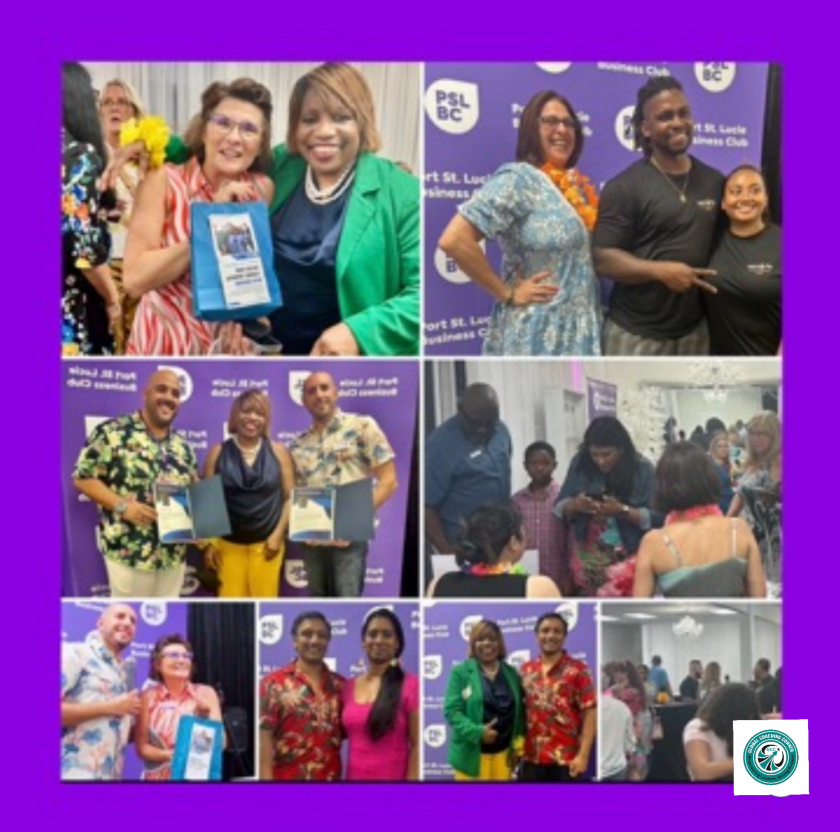
It was a pleasure to speak on the topic Prioritizing Workloads at the HR and Business Leader’s Council of Florida Education, Social Impact and Networking event.
A fitting topic as 66% of Projects fail to meet their original Business intent due to poor prioritization, while 96% of Leaders feel they are working with limited time and resources.
As we forge through the new year, it’s statistics like these and the impact on organizational and personal stress that led to the Council’s forward thinking to bring it to the forefront of the business leader’s mind.
How can we prepare? How can leaders take charge of their limited resources to achieve better outcomes?
Covey steered strategists to Begin with the End in mind. 🎯 Prioritizing limited time and resources work wonders. Most of all learn to say ‘No’ to time wasters and set boundaries. 🚫
Suffice it to say, there was much to synergize and Dave & Buster’s Inc. provided the right space.
It’s time to take charge of your priorities. Stay tuned for more on the Urgent vs. Important Matrix.
Before you are a leader, success is all about growing yourself. When you become a leader, success is all about growing others.” —Jack Welch
More than two decades ago I started my first leadership role. Always facing an audience through years of athletic performance, the arts, other leadership roles, I was always confident. But this was different. In my HR Leadership role, I faced responsibilities on behalf of the company. No more hiding behind other senior leaders. My boss gave me no choice but to step up to my full responsibilities.
After going through a bout of nervousness that lasted months, I found that it got easier each time. Before long, I prepared for each meeting when I had to address employees performance, achievements and areas of development across the region with confidence.
On observation these days, we see politicians and society’s leaders in public service assuming new roles. Consequently, the question was raised; “can a person from behind the scenes excel in a new public-facing role?” The answer is absolutely!
Public-facing means a role where the (individual) exercises managerial authority or control of an entity’s activities.
Here are 7+ points to prepare for a public-facing leadership role. Focus on:
1.Communication Skills
Develop clear, compelling public speaking abilities
Practice articulating complex ideas simply
Learn media training techniques
2.Personal Brand Development
Build a professional, authentic public image
Be consistent across different platforms
Develop a strong personal narrative
3.Continuous Learning
Stay updated on industry trends
Understand diverse stakeholder perspectives
Cultivate emotional intelligence
4.Professional Appearance
Dress appropriately for your industry
Project confidence through body language
Work on your on-camera and in-person presence
5.Media and Presentation Preparation
Take media training workshops
Practice handling tough questions
Learn crisis communication strategies
6.Networking
Build relationships with key industry influencers
Develop a supportive professional network
Seek mentorship from experienced public leaders
7.Digital Literacy
Manage social media presence professionally
Understand digital communication etiquette
Be mindful of online reputation
Bonus: Resilience and Adaptability
Develop thick skin for public scrutiny
Learn to handle criticism constructively
Maintain composure under pressure
Consistent practice and self-reflection are the keys to becoming an effective public-facing leader.
What has been your experience with getting ready for a leadership role? Did you use any of the above strategies? If so, what worked for you? Any other strategy that comes to mind? Do share, we would love to hear.
To live a fulfilled life, we need to keep creating the “what is next” of our lives. Without dreams and goals there is no living, only merely existing. – Mark Twain
Goals are the links in the chain that connect activity to accomplishment. —Zig Ziglar
Another year filled with regret at not achieving the goals Sabrina had set. Throughout her career she had helped others achieve their goals, yet it was at the expense of achieving her own personal goals. Something has to give.
If you are like Sabrina, here are some practical steps to help you achieve your goals:
1.Break Down Large Goals
Divide big goals into smaller, manageable sub-goals
Create a step-by-step action plan
Make each milestone specific and measurable
Set realistic timelines for each sub-goal
2.Develop a Concrete Action Plan
Write down your goals in detail
Specify exactly what you want to achieve
Include specific deadlines
Identify potential obstacles in advance
Create strategies to overcome these obstacles
3.Prioritize and Track Progress
Use tools like:
Goal tracking apps
Physical planners
Digital spreadsheets
Regularly review and assess your progress
Adjust your plan if needed
Celebrate small victories along the way
4. Build Accountability
Share your goals with trusted friends/family
Find an accountability partner
Join support groups related to your goals
Consider working with a coach or mentor
5. Develop Consistent Habits
Create daily/weekly routines supporting your goals