
3 Tips To Manage Leadership Overthink

Take time to deliberate, but when the time for action has arrived, stop thinking and go in. ~Napoleon Bonaparte

Ever found yourself checking and rechecking about a decision you have to make. It might be a presentation, a college selection, submission of a business proposal or even a marriage proposition (yikes)! It happens. It’s called overthinking which is defined as:

Putting too much time into thinking about or analyzing (something)

Overthinking is one of the biggest blocks for both leaders and business owners because it drains time, energy, and confidence. Here are 3 tips to stop overthinking.

1. Decide. Then Detach

Perfection isn’t progress. Once you’ve made a well-informed decision, commit then detach from the fear of “what if.” Every decision gives feedback: it either moves you forward or teaches you what to adjust. Leaders who wait for certainty often miss their moment.

2. Shift From Thinking to Doing

Action is the antidote to overthinking. When you’re stuck in analysis, your mind loops on the same thoughts. But when you take even a small step, such as sending the email; posting the content, calling the client; actions like these contributes to you gathering real data, not imagined fears.

3. Practice Mental Stillness

Overthinking thrives in noise. Silence and stillness help you separate truth from fear. Try journaling, prayer, or a five-minute “mind reset” before diving into decisions. It’s not laziness, it’s leadership discipline.

COACHING INSIGHT

Overthinking often signals self-doubt, not lack of skill. Leadership coaching helps identify those inner beliefs and build confidence. It then replaces the cycle of worry with a rhythm of wise action.

How about you? Are you an overthinker? Which of the 3 tips can you implement now? On the other hand, were you an overthinker? If so, how did you get over it? Do share. We would love to hear.

Cheers!

Break Free from Silent Frustrations: A Path to Growth

All I want for Christmas is …. the Pain to go away! The Pain of Not knowing what to do about your next steps has many effects. And year-end triggers deep reflection. Here are a few pain points:

Underdeveloped Potential:

Talented individuals Stay Stuck in survival mode. They fail to unlock their genius because no one helps them think strategically about their Growth.

Career Plateau

Professionals with great resumes stall out due to poor networking, weak positioning, or self-limiting beliefs.

Global Irrelevance

In our rapidly changing world where soft skills, emotional intelligence, and AI adaptability are important assets, people fall behind.

Silent Suffering

Many carry silent frustrations. “I’m better than this, but I don’t know how to rise”.

COACHING is the bridge out of that quiet despair 💥 If One or two resonate of these pain points resonated with you:

Book your clarity call here

GIFT Certificates Now Available for the Holidays. It’s the perfect GIFT for family, friend or co-worker that will last beyond the holidays.

Get it here now.

Why Smart Leaders Get Stuck at Crossroads & How to Move Forward

Subscribe to continue reading

Subscribe to get access to the rest of this post and other subscriber-only content.

10 Myths About Coaching

Coaching is partnering with clients in a thought-provoking and creative process that inspires them to maximize their personal and professional potential. The process of coaching often unlocks previously untapped sources of imagination, productivity and leadership (International Coaching Federation – ICF)

People often misunderstand what coaching is. It is often misinterpreted as only being needed by people who need to improve their on-the-job performance or when facing challenges. To provide clarity, here are some common myths about coaching:

  1. Coaching is only for underperformers or people with problems
  2. Coaches need to be experts in their client’s field
  3. Coaching is the same as mentoring or consulting
  4. Coaching is only for executives or high-level leaders
  5. Coaching is a quick fix for complex issues
  6. Good coaches always have the answers
  7. Coaching is just giving advice
  8. Coaching is only focused on professional development
  9. You only need coaching when you’re facing a crisis
  10. Coaching is an unnecessary expense

If any or a few of the above stands out to you, lets connect to demystify the myths. Connect to learn the value.

Cheers!

10 Emerging Trends Of The Executive Coaching Industry

If you walk in the footprints of others you will never make your own.

Leader overwhelm. Personal transitions. Change. Stuck. These are but a few of the signs associated with coaching. As these signs become more common, so has the evolution of the demand for coaching. No longer is it limited to basketball players, Olympians, or sports, we all need a coach. Hence the rise compounded with the needs and desires for accountability.

The executive coaching industry has been growing rapidly, driven by increased recognition of its value in personal and professional development. Here are some interesting facts and trends about the industry:

Interesting Facts

  1. Market Growth: The executive coaching industry is part of the larger coaching market, which was estimated to be worth over $2.8 billion globally in 2021 and continues to grow at a robust pace.
  2. High ROI: Studies have shown that executive coaching can offer a return on investment (ROI) of up to 700%, with significant improvements in productivity, employee engagement, and leadership effectiveness.
  3. Wide Adoption: Approximately 86% of companies utilize coaching, and about 70% of these organizations offer coaching to their executives and high-potential employees.
  4. Diverse Applications: Executive coaching is used across various sectors including corporate, non-profit, and government organizations. It addresses a wide range of leadership challenges, from strategic thinking to emotional intelligence.
  5. Credentials and Standards: The industry has seen an increase in professional standards, with many coaches obtaining certifications from organizations like the International Coach Federation (ICF) and the Center for Credentialing & Education (CCE).

Emerging Trends

  1. Integration of Technology: The use of digital tools, AI, and virtual platforms has become prevalent, making coaching more accessible and personalized. Online coaching platforms and apps are increasingly popular.
  2. Focus on Well-being: There is a growing emphasis on holistic coaching that includes mental health and well-being alongside traditional leadership and performance coaching.
  3. Data-Driven Coaching: The incorporation of data analytics and psychometric assessments is helping to provide more tailored and effective coaching interventions.
  4. Diversity and Inclusion: Coaching programs are increasingly addressing issues of diversity, equity, and inclusion, helping leaders to foster inclusive workplace cultures.
  5. Short-Term, High-Impact Sessions: There is a trend towards shorter, more intensive coaching engagements designed to address specific challenges or goals in a condensed timeframe.
  6. Group and Team Coaching: Beyond one-on-one coaching, there is a rise in group and team coaching, which aims to improve overall team dynamics and performance.
  7. Leadership Development Programs: More organizations are integrating executive coaching into broader leadership development programs, recognizing the synergistic benefits.
  8. Coaching for All Levels: While traditionally reserved for senior executives, coaching is increasingly being made available to employees at all levels, including mid-level managers and emerging leaders.
  9. Emphasis on Soft Skills: There is a heightened focus on developing soft skills such as emotional intelligence, communication, and resilience, which are critical for effective leadership.
  10. Sustainable Leadership: Coaching is increasingly focusing on sustainable leadership practices, encouraging leaders to consider the long-term impact of their decisions on people and the planet.

Personally, as a certified leadership coach, These trends reflect the dynamic nature of the executive coaching industry and its critical role in developing effective leaders in our rapidly changing business environment.

What has been your experience in coaching? Anything missing from the above? Do share. We would love to hear!

Cheers!

HBR’s 3 Ways To Work With Difficult People

Practice the Pause

We’ve all been there. Work we must, yet doing so with difficult people makes it harder. Here’s an Harvard Business Review (HBR) perspective that can help to make it easier in 3 ways:

Leading When The Going Gets Tough

•Reflect on the cause of tension and how you are responding to it

•Work harder to understand the other person’s perspective

•Become a problem solver rather than a critic or competitor.

Read details here;

https://rb.gy/4zdxew

Are these tops insightful? Are there any you have used, or wish to add? Do share. We would love to hear.

Cheers!

10 Thoughtful And Practical Gift Ideas For Women Leaders This Mother’s Day

The Perfect Gift for Her

Some gifts are big. Others are small. But the ones that come from the heart are the best gifts of all.

Tinku Razoria

Celebrations, Birthdays, Mother’s Day, Selfcare Days…. no matter the occasion, it is always hard to find the ideal gift for the perfect mom, sister, co-worker, best friend to encourage or simply to say Thanks to one who did a kind deed. Here are 10 thoughtful and practical gift ideas for women leaders.

Gifts for Her

  1. Professional Development Books: Gift a selection of books on leadership, personal development, or career advancement. Choose titles that align with the recipient’s interests and goals, such as “Ditch It, Switch It“, “Lean In” by Sheryl Sandberg or “Dare to Lead” by Brené Brown.
  2. Journal or Planner: A stylish journal or planner can help women leaders stay organized, set goals, and track their progress. Look for a high-quality notebook with inspirational quotes or customizable sections for reflection and planning.
  3. Online Course or Workshop: Invest in an online course or workshop that aligns with the recipient’s professional development goals. Whether it’s leadership skills, negotiation tactics, or public speaking, there are plenty of options available to enhance their skills and knowledge.
  4. Executive Coaching Sessions: Provide the gift of personalized coaching sessions with a professional executive coach. This one-on-one support can help women leaders overcome challenges, set strategic goals, and accelerate their career growth.
  5. Membership to Professional Networks: Consider gifting a membership to a professional organization or networking group tailored to women leaders in their industry. This provides opportunities for networking, mentorship, and access to valuable resources and events.
  6. Tech Gadgets or Accessories: Surprise her with a stylish and functional tech gadget or accessory that enhances productivity and efficiency, such as a smartwatch, wireless headphones, or a sleek laptop bag.
  7. Self-Care Package: Put together a self-care package filled with pampering essentials like scented candles, bath salts, herbal teas, and skincare products. Encourage women leaders to prioritize their well-being and recharge their batteries.
  8. Mindfulness or Meditation Tools: Help women leaders manage stress and promote mindfulness with gifts like a meditation app subscription, aromatherapy diffuser, or a set of meditation cushions.
  9. Personalized Leadership Assessment: Invest in a personalized leadership assessment tool or 360-degree feedback survey to help women leaders gain valuable insights into their strengths, areas for improvement, and leadership style.
  10. Inspiring Artwork or Decor: Choose a piece of artwork or decor that inspires and motivates women leaders in their workspace. Whether it’s a motivational quote print, a vibrant painting, or a decorative desk accessory, find something that resonates with their aspirations and values.

These gift ideas for women leaders combine practicality, inspiration, and personalization to support their professional growth and well-being.

Which gift pulls you in? Is there another or a few that you would like to add? Do share. We would love to hear.

Connect now to gift that personalized gift of Executive Coaching or personalized leadership assessment today. It is the gift that keeps on giving.

Cheers!

Photo by Ioana Motoc on Pexels.com

New Entrepreneurs Growing Pains: 5 Factors To Consider

Entrepreneur Growing Pains

Joy was excited about launching her business and she did! Now six months later, she has been finding it difficult to survive financially. With rising debt and living expenses, she is unable to make ends meet. She reached out for coaching to tackle her inner stress while pondering if she had made a mistake.

This situation is common to many first-time entrepreneurs. Statistics show that many small businesses fail during the first year. Most ponder giving up or staying the course. The decision between working on their new business or getting a job often depends on various factors. Here are a few:

  1. Financial Stability: If an entrepreneur’s financial situation is precarious and their business isn’t generating immediate income, getting a job might be necessary to cover living expenses and support the business financially.
  2. Business Stage: Early-stage businesses might require time and effort before becoming profitable. In such cases, working on the business while having a part-time job or a source of stable income could be a feasible option.
  3. Learning Curve: New entrepreneurs might benefit from working in the industry they’re entering. A job can offer insights, experience, and networking opportunities that can be invaluable for their business.
  4. Time Commitment: Running a business demands a significant time commitment. If the business requires full-time attention to get off the ground, working solely on the business might be necessary initially.
  5. Risk Tolerance: Some entrepreneurs prefer to dedicate all their time and energy to their business, even if it means financial strain initially, while others might opt for a more gradual approach to reduce financial risk.

In many cases, a hybrid approach—working part-time or freelancing while gradually growing the business—can strike a balance between financial stability and business development. It allows entrepreneurs to sustain themselves while dedicating time to their entrepreneurial venture.

Ultimately, it’s crucial to assess individual circumstances, weigh the pros and cons, and make a decision that aligns with both the financial needs and the growth potential of the business.

Are you a new entrepreneur experiencing first year growth pains? Which of the above will you adopt and apply to your situation? Are there any others that you have considered? Do share. We would love to hear.

Cheers!

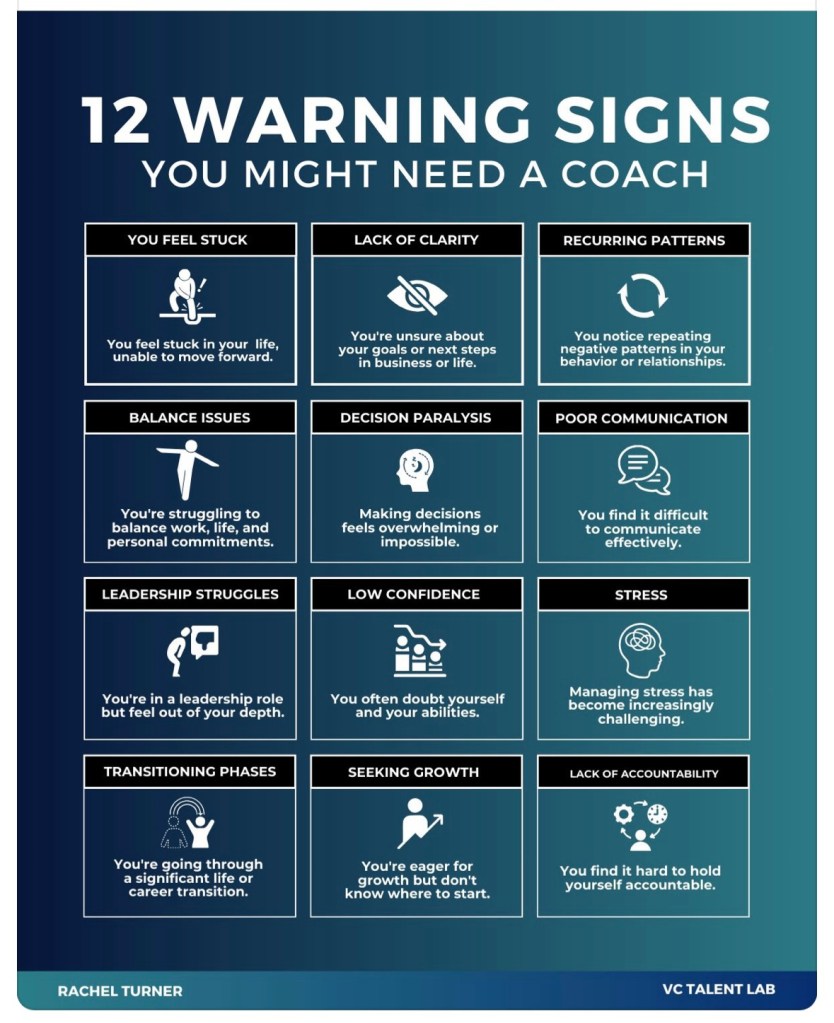
12 Warning Signs You Might Need A Coach

The 12 warning signs you might need a coach a stellar Rachel Turner share. A list you would be mad to miss:

  1. You feel stuck.
    You feel stuck in your personal or professional life, unable to move forward.
  2. Lack of clarity.
    You’re unsure about your goals or next steps in life.
  3. Recurring negative patterns. 
    You notice repeating negative patterns in your behavior or relationships.
  4. Balance issues.
    You’re struggling to balance work, life, and personal commitments.
  5. Decision paralysis.
    Making decisions feels overwhelming or impossible.
  6. Low confidence.
    You often doubt yourself and your abilities.
  7. Communication challenges.
    You find it difficult to communicate effectively in personal or professional settings.
  8. Leadership struggles.
    You’re in a leadership role but feel out of your depth.
  9. Chronic stress.
    Managing stress has become increasingly challenging.
  10. Transitioning phases.
    You’re going through a significant life or career transition.
  11. Seeking growth.
    You’re eager for personal or professional growth but don’t know where to start.
  12. Lack of accountability.
    You find it hard to hold yourself accountable.

Here’s what a coach can do:

✨ Provide clarity in your chaos.
✨ Offer unbiased feedback.
✨ Help you identify and break negative patterns.
✨ Guide you through life’s transitions.
✨ Boost your decision-making skills.
✨ Elevate your leadership abilities.

Because sometimes, the only thing standing between you and your goals is you.

9+ Ways To Defeat Procrastination

You cannot escape the responsibility of tomorrow by evading it today.

Abraham Lincoln

A colleague shared her exhaustion with what she termed as her habitual procrastination. She was tired of incomplete tasks in her life and asked for help.

Avoiding procrastination is essential for leaders and professionals to maintain productivity and achieve goals. Here are 9+ key points shared to help overcome this practice.

1.Self-Awareness

Recognize your procrastination habits and understand the underlying causes. Self-awareness is the first step to change.

2.Prioritization

Prioritizing tasks is essential. Leaders should focus on high-impact, high-priority activities first.

3.Set Clear Goals

Set specific, measurable, achievable, relevant, and time-bound (SMART) goals. Having clear objectives provides motivation and direction.

4.Time Management

Use effective time management techniques, such as time blocking, to help you allocate your time efficiently.

5. Break Tasks into Smaller Steps

Practice breaking larger tasks into smaller, manageable steps. This makes tasks less daunting and more achievable.

6.Delegation

Trust more. Delegate tasks to capable team members when possible. Delegation frees up time for strategic thinking and higher-priority activities.

7. Overcoming Perfectionism

Are you a perfectionist? Often this tendency fuels procrastination through delaying completing projects until they are perfect. Focus on progress, not perfection.

8. Accountability

Set up an accountability system, such as working with a mentor, coach, or a peer who can hold you responsible for deadlines and commitments.

9. Eliminate Distractions

Identify strategies to minimize distractions, whether it’s turning off notifications, setting specific work hours, or creating a clutter-free workspace.

10. Self-Motivation

Identify your intrinsic motivation. What drives them to succeed? Connecting with their personal “why” can provide the push you need.

11. Time for Self-Care

Practice taking regular breaks and prioritize self-care. A well-rested and healthy leader is less likely to procrastinate.

12. Mindfulness and Focus

Adopt mindfulness practices and techniques that can improve focus and attention, reducing the temptation to procrastinate.

13. Positive Self-Talk

Replace negative self-talk with positive affirmations. Confidence can help combat procrastination.

14. Celebrate Achievements

Acknowledge and celebrate your accomplishments, no matter how small. Positive reinforcement can reinforce productivity.

15. Continuous Improvement

Focus on the concept of continuous improvement. As a Leader, it is important to regularly assess your time management and productivity strategies and adjust as needed.

16. Seek Professional Support

If procrastination is chronic and significantly hinders your leadership effectiveness, seek support from a therapist or counselor who specializes in procrastination or time management issues.

As a certified Master leadership coach, I provide support, guidance, and accountability to leaders to help them work to overcome procrastination. Implementing the strategies articulated here and developing healthy habits will lead to more effective and efficient leadership.

Need help, lets connect today.

Cheers!

Mastering The Art Of Goal Setting In 10 Steps …

Want to succeed in the new year? Set goals! It’s a big deal because setting goals can help you get where you want to be. The 10 steps that follow make it super simple for you. Whether you’re a leader, professional or just someone who wants to grow, these steps will guide you through the strategies to set goals that really work. The aim is to help you stay motivated and focused on your path to success.

So, watch Aim High and Master the Art of Goal Setting and let’s get started on this journey to make your dreams come true!

Step 1: Clarify the Purpose

Define the Objective: What is the specific area or aspect of life where you want to set a goal? What is the purpose of this goal?

Step 2: SMART Goals

  • Specific: Make the goal specific, avoiding vague language. What exactly do you want to accomplish?
  • Measurable: Ensure the goal can be quantified in some way. How will you measure your progress and know when you’ve achieved it?
  • Achievable: Assess whether the goal is realistic and attainable. Is it within your reach, given your current resources and constraints?
  • Relevant: Does the goal align with your values, long-term objectives, and the bigger picture of your life. Is it meaningful?
  • Time-Bound: Set a clear timeframe or deadline for achieving the goal. When will you complete it?

Step 3: Break It Down

Break It Into Smaller Steps: Divide the larger goal into smaller, manageable tasks or milestones. What steps need to be taken to reach the goal?

Step 4: Prioritize

Prioritize Tasks: Determine the order of importance for each task. Which steps should be tackled first, and which can follow?

Step 5: Visualize Success

Create a Mental Image: Ask the individual to visualize themselves successfully achieving the goal. How will it feel? What will it look like?

Step 6: Identify Obstacles

Recognize Challenges: Reflect on potential obstacles, difficulties, or setbacks you may encounter on your journey to the goal. How can you prepare to overcome these challenges?

Step 7: Develop a Plan

Create an Action Plan: Outline the tasks, deadlines, and resources required to achieve the goal. What specific actions will you take?

Step 8: Monitor and Adjust

Regular Review: Emphasize the importance of monitoring progress regularly. How are you doing in relation to the goal? Are you on track?

Adjust and Adapt: Be flexible in adapting the plan as needed. If you encounter unexpected obstacles or need to change your approach, how will you do so?

Step 9: Accountability

Accountability Partners: Have an accountability partner, such as a coach, mentor, or friend, who can provide support and hold you responsible for your commitments.

Step 10: Celebrate Success

Acknowledge Achievements: When you reach your goal, celebrate the achievement. Do some self-reflection and recognition of your progress.

By following this step-by-step process, you can set and achieve goals that align with your values and aspirations.

Need an accountability partner to help you set your goals and stay on track? Let’s connect

Cheers!

Beauty Pageant Contestants Share Expert Goal-Setting Tips

Be exposed to exclusive insights from accomplished beauty pageant contestants who have mastered the art of goal-setting and achieving remarkable success.

In this captivating video, you will be exposed to exclusive insights from accomplished beauty pageant contestants who have mastered the art of goal-setting and achieving remarkable success.

Listen in as Miss Universe Trinidad & Tobago Dalise Lockhart and Miss New England Petite, Kimberly Campbell share their personal journeys, strategies, and invaluable wisdom on setting and reaching your aspirations.

  • Discover the secrets to turning dreams into reality
  • Overcoming obstacles
  • Staying motivated on your path to success.

Whether you’re striving for success in pageantry, your career, or life in general, these beauty queens’ experiences and expertise will provide you with practical tips and inspiration to help you unlock your full potential.

Don’t miss out on this empowering conversation with some of the most accomplished individuals in the world of beauty pageants. Share with your friends who are on their journey to achieving greatness. Get ready to ignite your passion, set ambitious goals, and embark on a journey to success. Lean in and listen and let’s begin this exciting adventure together!

Cheers!

Travel with Intent

A photographer's view of the world - words and images to inspire your travels and your dreams

Answering daily prompts

In this blog I'm attempting to answer wordpress daily prompts

Alex Tafur

Property Maintenance

Poesy Perspectives

embrace the magic

GREENLiGHT

When God Says Go

HEALTH | INSPIRATION

Mind • Body • Life

My Sister My Friend

Family. Youth. Parenting

Kamileon Photography

Your Focus. Our Lens.